



There is rarely a more sinking feeling than turning your 2026 Guide to Jump-Starting Your Car or pressing the start button only to hear a weak “click-click-click” or, worse, absolute silence. A dead battery can happen to anyone—left headlights on, a sudden cold snap in the Canadian winter, or simply an old battery reaching its expiration date.
The good news? Jump-starting a car is a fundamental skill that every driver should have. In 2026, with the rise of hybrid and electric vehicles (EVs), the process has changed slightly, but the core principles of safety and electricity remain the same. This guide will walk you through the safest way to get your engine roaring again.
Safety First: What You 2026 Guide to Jump-Starting Your Car
Before you reach for those cables, you must ensure the environment is safe. Lead-acid batteries contain sulfuric acid and can produce flammable hydrogen gas.
Essential Safety Checklist
Inspect the Battery: Never attempt to jump-start a battery that is cracked, leaking, or bulging. If it looks damaged, call a tow truck.
Remove Jewelry: Metal rings, watches, and necklaces can conduct electricity and cause severe burns if they touch a battery terminal.
Keep Cars Apart: Ensure the two vehicles are not touching each other. If they touch, it can create a ground circuit that damages the cars’ sensitive electronics.
Weather Precautions: If it is raining heavily, try to find cover or dry the terminals. Water increases the risk of an electrical short.
Gathering Your Tools
To do this right, you need high-quality jumper cables. In 2026, we recommend 4-gauge or 2-gauge cables. Thinner, cheaper cables (like 8-gauge or 10-gauge) often fail to carry enough current for larger SUVs or trucks. Alternatively, a portable lithium-ion jump starter pack is a modern must-have that allows you to jump-start your car without needing a second vehicle.
Step-by-Step Guide: Using Jumper Cables
If you have a “booster” car (the one with the good battery) and your “dead” car, follow this specific order to minimize sparks.
Position and Prepare
Park the booster car so the batteries are as close as possible (usually nose-to-nose). Turn off the ignition in both cars. Set the parking brakes and ensure both are in Park (Automatic) or Neutral (Manual).
The Positive Connection (Red)
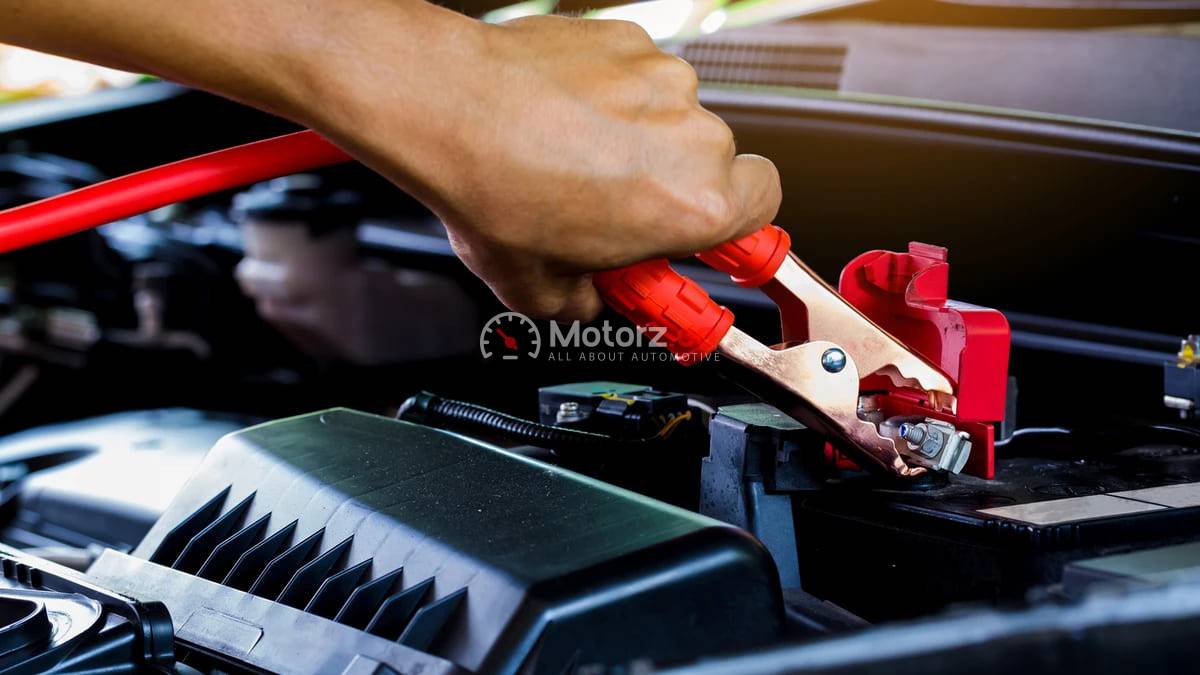
Attach one Red (+) clamp to the positive terminal of the dead battery.
Attach the other Red (+) clamp to the positive terminal of the booster battery.
The Negative Connection (Black)
Attach one Black (-) clamp to the negative terminal of the booster battery.
CRITICAL: Attach the final Black (-) clamp to an unpainted metal surface on the engine block or frame of the dead car.
Note: Do not attach this last clamp to the negative terminal of the dead battery. This prevents a potential spark from igniting battery gases.
Start the Engines
Start the booster car and let it idle for about 3 to 5 minutes. This “trickle charges” the dead battery. Now, try to start the dead car. If it doesn’t start, wait another 5 minutes and try again.
Disconnect in Reverse
Once the dead car is running, do not turn it off! Disconnect the cables in the exact reverse order:
Remove the black clamp from the dead car’s metal ground.
Remove the black clamp from the booster car.
Remove the red clamp from the booster car.
Remove the red clamp from the dead car.
How to Use a Portable Jump Starter Pack
In 2026, many drivers prefer the convenience of a portable power pack. These devices are essentially massive power banks for your car.
Check the Charge: Ensure your jump pack has at least 50% to 75% power.
Connect Clamps: Connect the red clamp to the positive (+) and the black clamp to a metal ground (or the negative terminal if the pack instructions specifically allow it).
Power On: Turn the jump pack on.
Start Car: Attempt to start the vehicle.
Remove: Once the engine is running, turn the pack off and remove the cables (Black first, then Red).
Special Considerations: Hybrids and Electric Vehicles (EVs)
Can you jump-start a modern hybrid or EV? Yes, but the rules are different.
Jump-Starting a Hybrid
Most hybrids have a standard 12V battery used to “wake up” the computer system. You can usually jump this 12V battery just like a gas car. However, many hybrids (like the Toyota Prius) have a specific jump-start terminal located inside the fuse box under the hood, rather than on the battery itself.
Jump-Starting an EV
If an EV’s 12V battery is dead, the car won’t start even if the “big” traction battery is full. You can jump-start the 12V battery to get the electronics running. Important: Never use an EV to jump-start a gas car, as the high-voltage system in the EV is not designed to handle the massive current surge required by a traditional starter motor.
Troubleshooting: What if the Car Won’t Start?
If you’ve followed the steps and the car still won’t turn over, check these common culprits:
Corrosion: If the battery terminals are covered in white or green powder, the clamps can’t make a good connection. Use a wire brush to clean them.
Bad Starter: If you hear a loud “click” but the engine doesn’t turn, your starter motor might be dead.
Cables are Too Thin: If the cables are getting hot but the car isn’t starting, you need thicker (lower gauge) cables.
Neutral Safety Switch: Ensure the car is firmly in Park. Sometimes shifting to Neutral and back to Park can resolve a sensor issue.
Keep Your Battery Healthy
Jump-starting is a great temporary fix, but it’s a warning sign. After a successful jump, you should drive the car for at least 30 minutes to allow the alternator to fully recharge the battery. If your battery is more than 3 to 5 years old, head to a local shop for a “load test” to see if it needs replacement.
Being prepared is half the battle. Keep a set of cables or a charged jump pack in your trunk, and you’ll never be truly stranded.