



It’s the sound every Road Damage dreads: a sudden, violent thud followed by the unsettling feeling of your car tracking slightly to the left. You’ve just hit a pothole. In 2026, as climate patterns shift and infrastructure budgets are stretched, potholes have become more than just a nuisance—they are a significant financial risk.
According to recent 2025 data, pothole-related breakdowns have surged by nearly 25 percent year-over-year. The average repair bill for a severe impact now sits at roughly 600 units, covering everything from shredded tires to cracked suspension components. While some vehicles are built to shrug off these craters, others are essentially “sitting ducks” for road damage.
In this troubleshooter guide, we will analyze which vehicles are most at risk, the hidden damage you can’t see, and how to protect your car from becoming another statistic on the side of the road.
The Vulnerability Profile: Is Your Car a Target?
Not all vehicles handle a vertical drop in the pavement the same way. Engineering choices made for style or handling often come at the expense of pothole resilience.
The Low-Profile Tire Trap
If your car has large, stylish rims and “thin” rubber tires (low-profile), you are at the highest risk.
The Physics: A standard tire acts as a shock absorber, with a thick cushion of air to protect the metal rim. Low-profile tires have very little “sidewall.” When you hit a pothole, the tire compresses instantly, allowing the hard edge of the crater to slam directly into the aluminum wheel.
The Result: This often leads to “pinch shocks,” where the tire sidewall is sliced from the inside, or the rim itself becomes bent or cracked.
Ground Clearance and Modern Sedans
The trend toward aerodynamic, low-slung electric vehicles (EVs) and sports sedans has created a new vulnerability.
Bottoming Out: A deep pothole can cause a low-clearance vehicle to “bottom out,” meaning the undercarriage strikes the asphalt. In a gas car, this might dent an exhaust pipe; in an EV, this could potentially scrape the protective shielding of the high-voltage battery pack—a much more expensive repair.
The Five Major Impact Zones
A pothole doesn’t just hurt your tires; it sends a kinetic shockwave through the entire mechanical structure of your car.
Tires and Wheels
This is the front line. Look for sidewall bulges (bubbles), which indicate that the internal structure of the tire has failed. Even if the tire holds air, a bulge is a “blowout” waiting to happen at highway speeds.
Suspension and Shocks
Your shocks and struts are designed to handle bumps, but a pothole is an “extreme event.”
Leaking Struts: A heavy jolt can “blow the seals” on your struts, causing hydraulic fluid to leak out.
The “Crouch” Test: If your car nosedives excessively when you hit the brakes or feels like a “bucking bronco” on uneven roads, your suspension has likely been compromised.
Steering Alignment
Even if nothing breaks, the force of a pothole can knock your steering components out of their precise alignment.
Symptoms: Your steering wheel is off-center when driving straight, or the car “drifts” to one side when you let go of the wheel.
The Exhaust System
Since exhaust pipes run along the belly of the car, they are susceptible to being crushed or punctured if the car dips too deep into a hole. If your car suddenly sounds like a race car or you smell exhaust fumes in the cabin, inspect your pipes immediately.
The Undercarriage and Oil Pan
A deep enough hole can strike the oil pan or transmission housing. A small crack here can lead to a slow leak that eventually destroys your engine or gearbox.
How to Detect Hidden Damage
Pothole damage isn’t always immediate. Sometimes the “injury” takes days or weeks to manifest as a serious problem.
The Vibration Check: Pay attention to the steering wheel at highway speeds. A new vibration usually means a wheel weight has been knocked off or a rim is slightly bent (out of round).
The Tread Wear Watch: Check your tires two weeks after a big hit. If you see “feathering” or one side of the tire wearing faster than the other, your alignment is skewed.
Fluid Spots: Check your driveway in the morning. New oily spots after a pothole hit are a red flag for suspension or engine damage.
Pothole Survival Tactics: Preparation and Poise
You can’t always avoid the hole, but you can change how your car reacts to it.
Proper Inflation is Your Best Defense
A properly inflated tire provides the maximum “cushion” between the road and your rim. An under-inflated tire is much easier to “pinch,” leading to instant sidewall failure. Check your pressure at least once a month.
Don’t Brake In the Hole
This is the most common mistake. When you see a pothole, your instinct is to slam on the brakes.
The Physics: Braking “loads” the front suspension, compressing the springs and making them rigid.
The Strategy: Slow down before the hole. If you can’t avoid it, release the brakes just before impact. This allows the suspension to be “loose” and travel through its full range, absorbing the energy rather than snapping a component.
Treat Puddles as Hazards
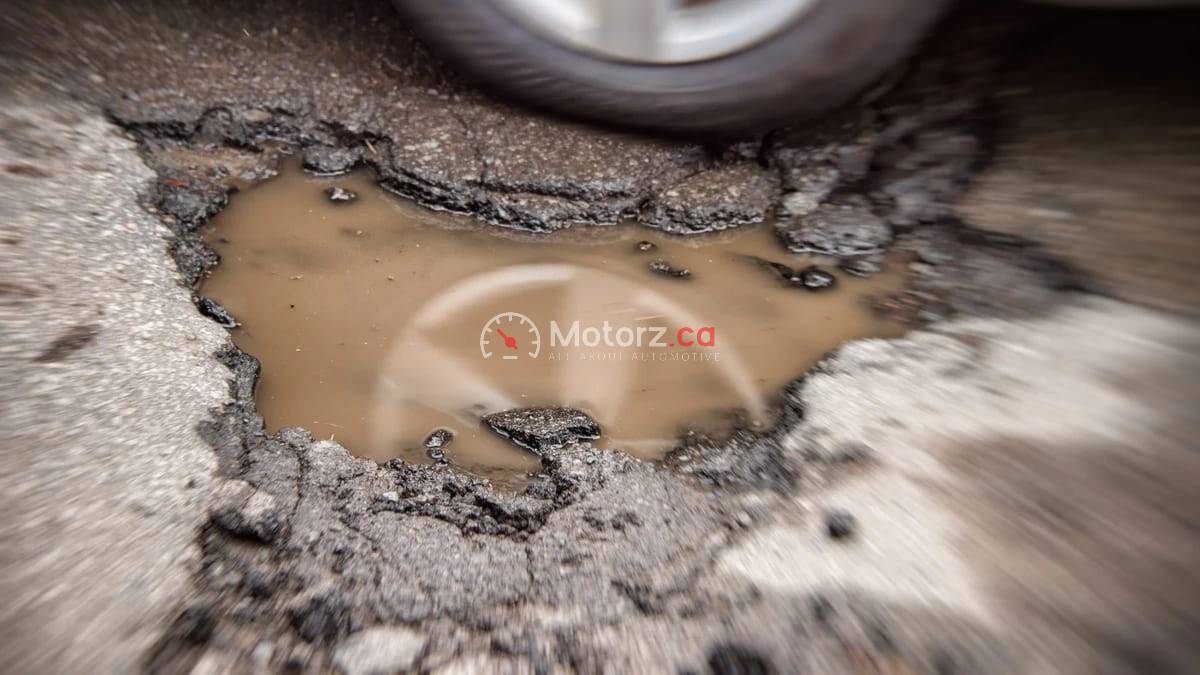
In 2026, heavy rain often masks the depth of road damage. A “small puddle” can easily be a six-inch-deep crater. If you can’t see the bottom of the water, assume it is a pothole and navigate around it safely.
Don’t Let a Small Hole Become a Big Bill
Potholes are an inevitable part of modern driving, but they don’t have to be a mechanical death sentence for your car. By understanding your vehicle’s specific vulnerabilities—especially if you drive a low-clearance sedan or a car with low-profile tires—you can take proactive steps to minimize the impact.
If you’ve recently had a “hard hit,” don’t wait for a flat tire to tell you something is wrong. A quick visual inspection of your sidewalls and a “hands-off” alignment test on a flat road can save you thousands in long-term repair costs.