



You are Car Sounds That Stress Us in total silence when you suddenly hear it—a faint tick-tick-tick coming from the engine bay. Or perhaps it is a strange whirring sound after you turn off the ignition in your driveway. Your stomach drops. You immediately start calculating the cost of a new transmission or a trip to the mechanic.
But here is a secret that many mechanics won’t tell you: modern cars are incredibly noisy machines by design. As engines become more efficient and cabins become quieter through better soundproofing, we are starting to hear “normal” mechanical signatures that were previously drowned out.
In this Troubleshooter guide, we are looking at the vehicle noises that shouldn’t bother us, but still do. We will help you distinguish between a harmless mechanical quirk and a genuine cry for help, potentially saving you hours of worry and hundreds of units of currency in unnecessary diagnostic fees.
Car Sounds That Stress Us: Gasoline Direct Injection (GDI)
One of the most common “scary” noises in modern cars is a persistent, metallic ticking sound at idle. Many drivers fear this is “lifter tick” or a sign of low oil pressure.
Why It’s Normal
If you own a car made in the last decade, it likely uses Gasoline Direct Injection (GDI). To achieve high fuel efficiency, these systems use injectors that fire fuel directly into the combustion chamber at incredibly high pressure. This creates a mechanical “clicking” or “ticking” sound that is perfectly normal.
How to Tell the Difference
Normal GDI Noise: A consistent, rapid ticking that stays steady and is most noticeable when the hood is open.
Problem Noise: A heavy “knock” or a “clunk” that gets significantly louder when you press the gas pedal.
Post-Ignition Whirring: The After-Run Cooling Fan
You park your car, take the keys out, and walk away—only to hear a loud fan start blowing under the hood. It sounds like your car is about to take off, even though the engine is off.
Why It’s Normal
Modern engines run hot to burn fuel more efficiently. When you stop driving, the “heat soak” can cause temperatures to rise under the hood because there is no longer a breeze from driving. The Electric Cooling Fan may stay on for 5 to 10 minutes after the car is off to protect plastic components and prevent the coolant from boiling.
How to Tell the Difference
Normal: The fan runs for a few minutes and shuts off automatically.
Problem: The fan runs for hours (potentially draining your battery) or the “Engine Overheat” light was on during your drive.
The ABS Self-Test: Clunks in the Morning
You start your car, shift into drive, and move forward about 10 to 20 feet. Suddenly, you hear a quick clunk-clunk or feel a slight thud in the brake pedal.
Why It’s Normal
This is the Anti-lock Braking System (ABS) performing a self-diagnostic test. The system briefly cycles the pump and valves to ensure they are ready for an emergency. It typically happens once per “key cycle” after the vehicle reaches a specific speed.
How to Tell the Difference
Normal: It happens once, shortly after you start moving, and doesn’t happen again until the next time you start the car.
Problem: A grinding noise every time you touch the brakes or an “ABS” warning light on the dashboard.
The Fuel Tank Thump: Evaporative Emission System (EVAP)
While sitting at a red light or idling in your driveway, you might hear a faint, rhythmic thumping or a “purring” sound coming from the rear of the vehicle.
Why It’s Normal
Your car has an EVAP system designed to trap gasoline vapors so they don’t leak into the atmosphere. Part of this system involves a “purge valve” and a leak-detection pump. These components can click or thump as they move vapors from the charcoal canister to the engine.
How to Tell the Difference
Normal: A faint, intermittent noise that you can only hear if the radio is off.
Problem: A loud, persistent banging or a strong smell of raw gasoline inside the cabin.
Brake Squeal on Cold Mornings
You back out of your driveway in the morning and the brakes let out a high-pitched scream that wakes up the neighbors. By the time you get to the end of the street, the noise is gone.
Why It’s Normal
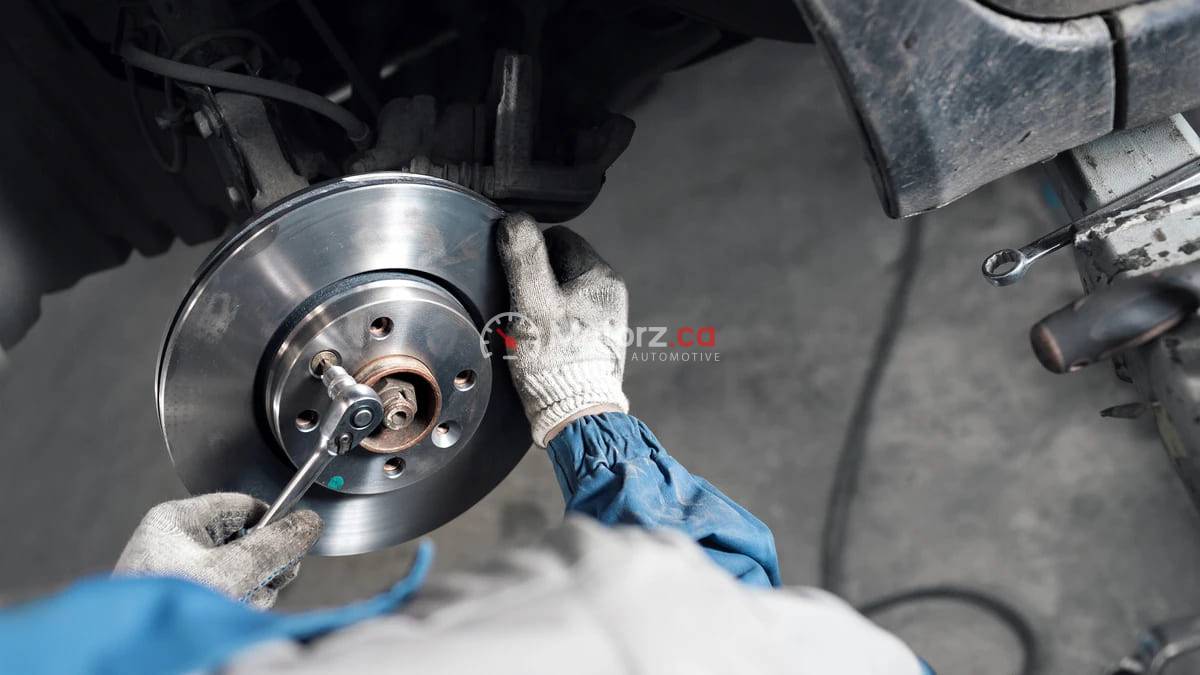
Overnight, moisture in the air can cause a thin layer of surface rust (flash rust) to form on your iron brake rotors. The squeal you hear is the brake pads “scraping” that microscopic layer of rust off. Once the rotors are clean (usually after two or three stops), the noise disappears.
How to Tell the Difference
Normal: High-pitched squeal that goes away after the first few minutes of driving.
Problem: A metallic grinding (metal-on-metal) sound that happens every time you brake, regardless of how long you have been driving.
The “A/C Sigh”: Refrigerant Equalization
After you turn off the car, you might hear a hissing or “sighing” sound coming from the dashboard area. It sounds like a slow air leak.
Why It’s Normal
This is simply the Air Conditioning refrigerant equalizing pressure. When the A/C compressor stops, the high-pressure gas moves to the low-pressure side of the system through an expansion valve. It is essentially the car “exhaling.”
How to Tell the Difference
Normal: A soft hiss that lasts for 30 to 60 seconds after the car is turned off.
Problem: A loud, constant hissing accompanied by the A/C failing to blow cold air.
Why These Noises Bother Us So Much
Psychologically, we are wired to associate “noise” with “friction,” and friction with “failure.” In an older car, a new noise almost always meant something was breaking. However, in modern vehicles, many of these sounds are proof that the car’s Active Systems are working.
Modern cars are also much quieter inside. With acoustic glass and better insulation, the “noise floor” of the cabin has dropped. This means that sounds like the fuel pump or the electronic steering motor, which were always there, are now audible for the first time.
Trust, but Verify
While many vehicle noises shouldn’t bother us, you should never ignore a change in your car’s behavior. If a noise is accompanied by a vibrati
on, a weird smell, or a warning light, it is time to see a professional.
However, if your car is performing perfectly and you just hear the occasional tick or hum, take a deep breath. It is likely just your car’s complex systems doing their jobs. Knowing which sounds are “part of the machine” can save you unnecessary stress and help you enjoy the drive.