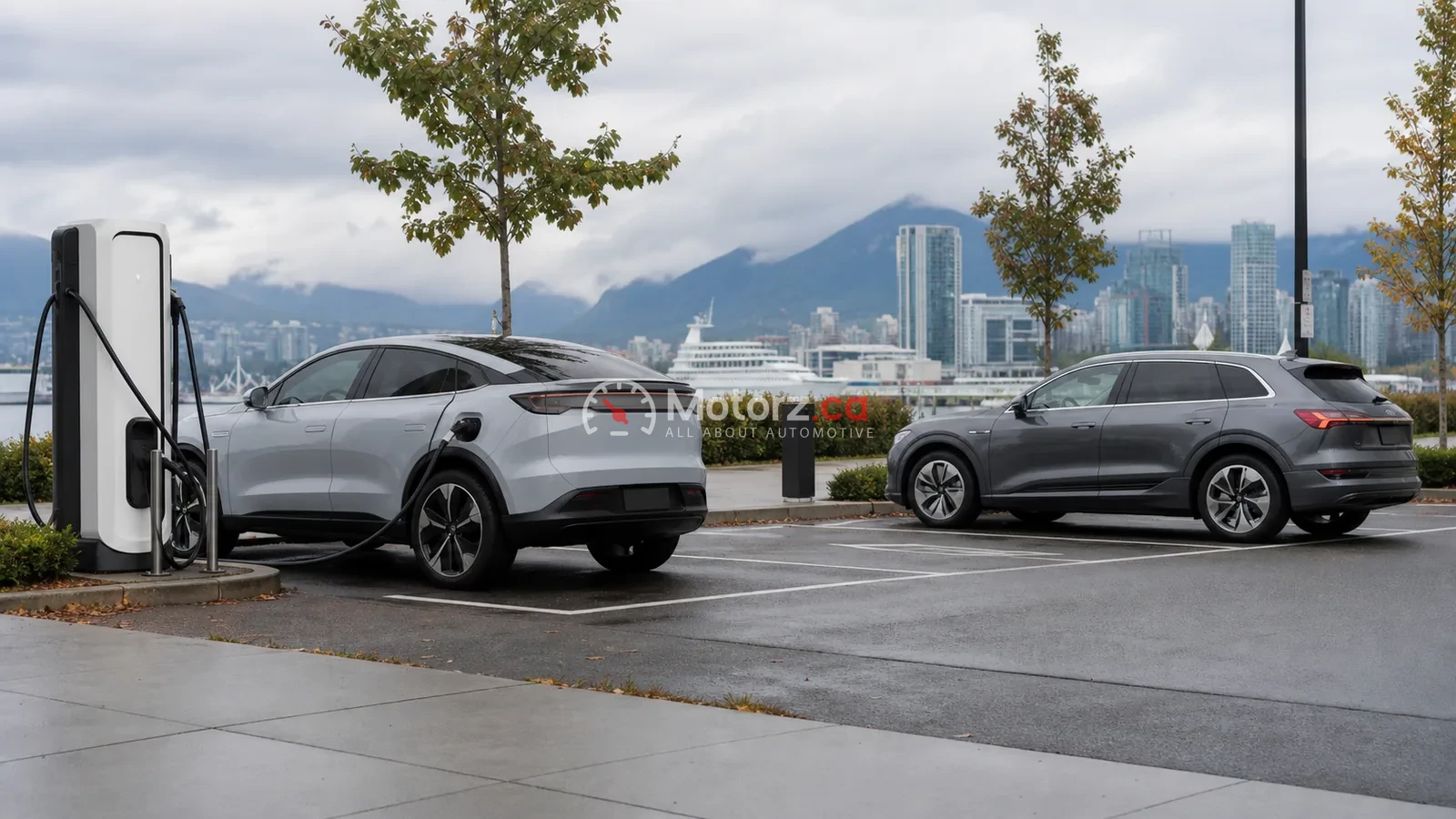
At a Vancouver public EV charger, read the site rules, confirm the session has started, monitor the vehicle and move it promptly when charging ends.
The direct answer
A charging stall is a place to charge, not general EV parking. Use a connector approved for your vehicle, follow the instructions on the charger and in the operator app, and remain able to return when the session finishes. At some Vancouver locations, charging and parking are separate charges. Rules and prices differ by site, so the sign and operator screen take priority over any general guide.
Check the stall before you plug in
Read every posted sign, including parking hours, time limits, accessibility restrictions and whether the stall is reserved for a vehicle that is actively charging. The City of Vancouver says charging fees are separate from parking fees at paid locations. Paying for energy does not automatically pay the meter.
Check that the connector is compatible with the vehicle and inspect the cable and handle for obvious damage. If equipment appears damaged, do not improvise a repair or force a connection. Use the support information shown on the charger. Never move, unplug or handle another driver’s cable.
Start the session and verify it
- Park fully within the marked charging stall without blocking another space or travel lane.
- Follow the vehicle and charging-network instructions for connecting.
- Start the session using an available approved method, such as the operator app, RFID card or payment terminal.
- Confirm on the charger or vehicle display that energy is flowing before walking away.
- Enable session notifications where the operator provides them.
BC Hydro’s help centre lists several ways to start a session and lets account users select notifications for the end of charging and the start of an idle-fee period. Other networks may use different authentication, payment and notification systems.
Monitor the session and return on time
Public fast chargers are shared infrastructure. Check the estimated completion time, keep notifications active and return before the vehicle finishes. If the energy needed for the next part of the trip has already been delivered, ending the session can free the charger for another driver.
There is no universal percentage at which every driver must stop. Charging speed and travel needs vary by vehicle and trip. Follow the vehicle maker’s instructions and the site’s rules rather than treating a general “80 per cent rule” as law.
Idle fees depend on the operator
The City of Vancouver’s published rates effective April 1, 2026 include an idle fee at City-owned DC fast chargers after a five-minute grace period once charging stops. The City says that idle fees do not apply to its Level 2 chargers, but drivers should still move promptly.
BC Hydro also publishes a five-minute grace period and an idle fee for its fast-charging network. These are separate programs, even when their current rules look similar. A privately operated charger may have a different price, grace period or parking condition. Check the live operator information before relying on a dollar figure.
Respect queues, accessibility and site safety
- Do not occupy a charging stall when the vehicle does not need a session.
- Keep access aisles, accessible stalls, sidewalks and neighbouring connectors clear.
- Coil or return the cable as the equipment directs so it does not become a trip hazard.
- Follow the posted queue or app system instead of creating a conflicting informal line.
- Keep disagreements calm and contact the operator or site staff when help is needed.
Vancouver’s curbside charging guidelines state that designated curbside stalls are for electric vehicles that are plugged in and actively charging. Metered parking can remain in effect, and drivers remain responsible for parking as well as charging fees.
Plan before arriving
Check the network app or map for connector type, status and access details before leaving. Motorz’s Vancouver EV charging map overview explains the location-planning intent, while this article focuses on conduct at the stall. For outages, follow the operator’s reporting process and identify a backup site rather than depending on one charger.
Public charging is also different from using a compatible vehicle as backup power. The separate EV emergency home-power explainer describes that distinction without treating a public charging connector as household electrical equipment.
A final departure check
- End the session through the required vehicle or operator control.
- Disconnect only your own vehicle and return the connector correctly.
- Confirm that the app or charger shows the session has ended.
- Move the vehicle out of the charging stall promptly.
- Retain the receipt if one is needed for your records.
Rates and parking restrictions can change. This guide was verified against City of Vancouver, BC Hydro and Plug In BC information available in August 2026; the current on-site sign and operator terms remain authoritative.