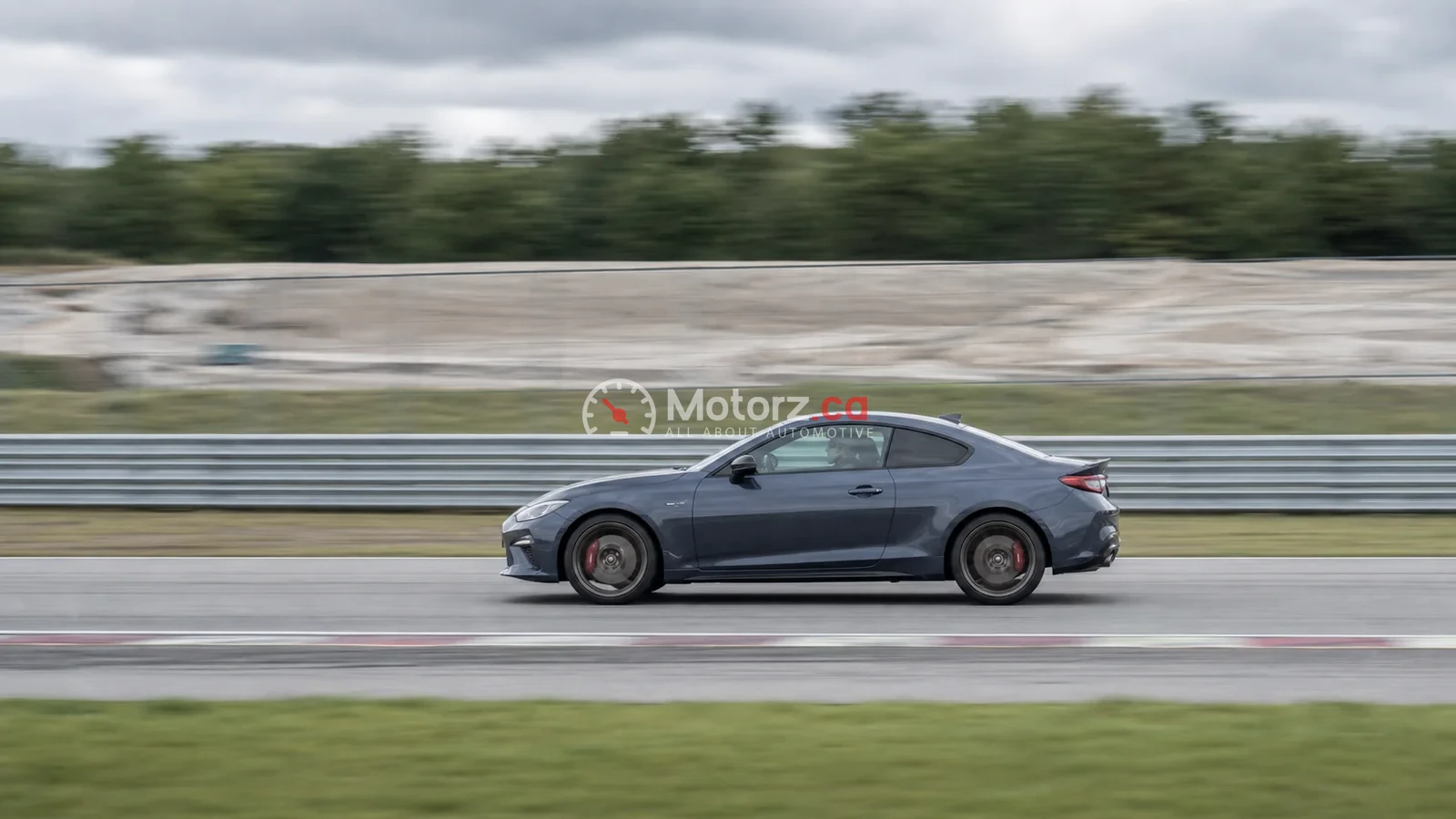
Panning means following a moving vehicle during the exposure so the car can remain comparatively clear while the background records directional blur.
The direct answer
Use a stationary, permitted position away from traffic, select shutter-priority mode, acquire the vehicle early, turn smoothly with its motion and continue after releasing the shutter. Adjust one setting at a time because speed, distance, focal length and tracking consistency all change the result.
Safety and location come before settings
Never operate a camera while driving. Work from a permitted public or event position behind the applicable barrier and do not obstruct a road or shoulder. Do not direct a driver to repeat an unsafe manoeuvre for a photograph.
A practical starting setup
Shutter Priority is often marked S or Tv. Continuous autofocus can help with a moving subject, while prefocus can suit a predictable path. Burst mode is optional. Stabilization modes vary, so consult the camera or lens manual rather than applying a universal on/off rule.
There is no magic shutter speed
Begin with a relatively conservative setting, review the frame, then slow the shutter gradually for more background and wheel blur. Around 1/125 to 1/250 second can be an easier experiment for some situations; 1/30 to 1/60 can create stronger blur but is harder to track. These are starting experiments, not guarantees.
Move smoothly through the exposure
- Pre-frame the safe part of the vehicle’s path.
- Acquire the subject before the desired composition.
- Turn smoothly through the torso while matching its apparent speed.
- Release the shutter gently.
- Continue the motion after the exposure.
Diagnose the result
- If the whole frame is smeared, improve stability or use a faster shutter.
- If the background streaks but the vehicle is unclear, tracking or focus may not match the subject.
- If there is little sense of motion, slow the shutter or choose a more detailed background.
- If exposure is too bright, lower ISO or use a smaller aperture before considering an optional neutral-density filter.
Practice from a safe position with predictable motion, compare the image settings and expect unsuccessful frames. Panning is a coordination skill, not proof of equipment quality or professional credentials.