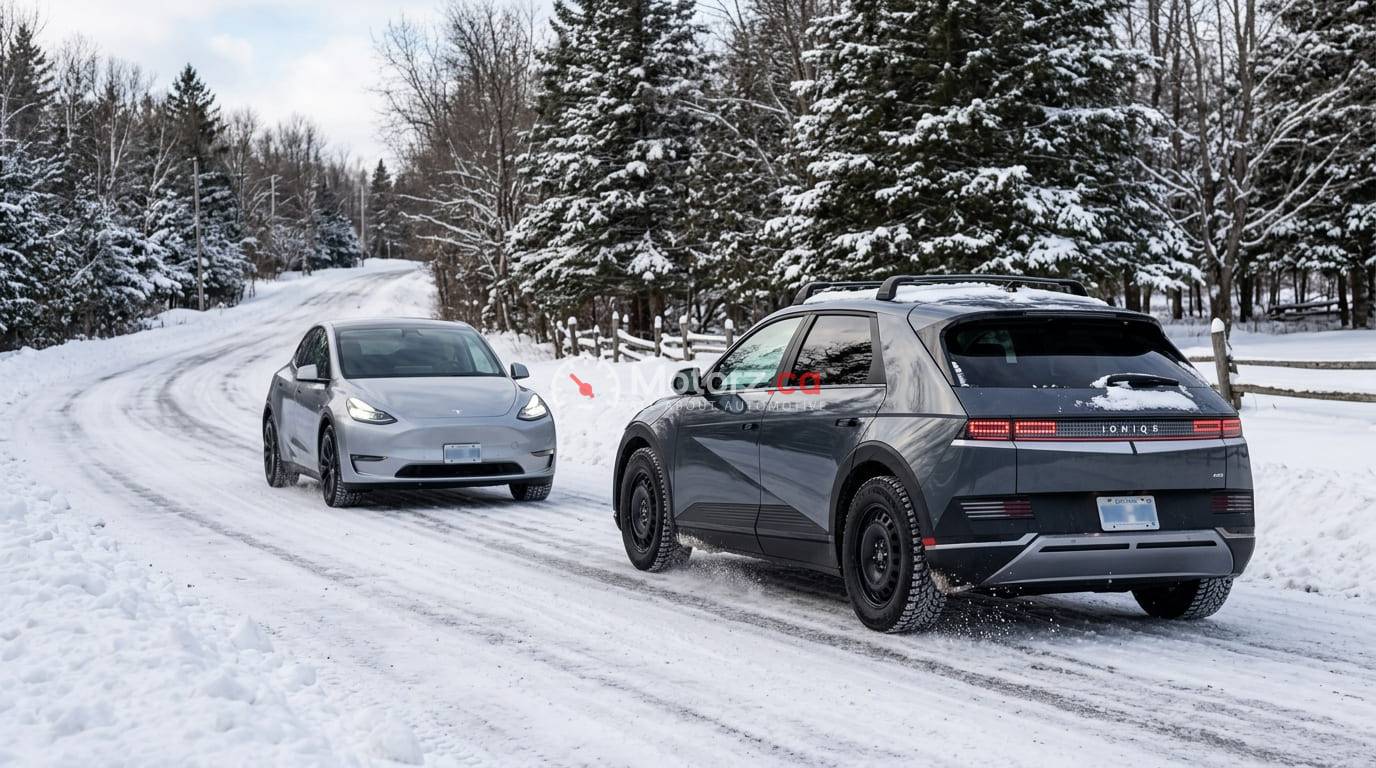
When the first major lake-effect snowstorm Electric Vehicles for Ontario Winters, up through Barrie, or down the Highway 401 corridor, Ontario driving conditions transform instantly. Freezing rain, deep slush, unplowed side streets, and black ice become daily hazards for months on end. For drivers considering the switch to electric mobility, these harsh conditions raise valid, urgent questions. Can an electric car handle a brutal Canadian sub-zero snap? Which models offer the best traction when the roads turn treacherous?
Historically, buyers defaulted to traditional combustion-engine sport utility vehicles for winter security. Today, a new generation of sophisticated All-Wheel Drive electric vehicles is rewriting the rules of winter driving. Thanks to dual-motor configurations, low centers of gravity, and ultra-fast electronic traction management, electric cars are proving to be exceptionally capable winter warriors.
However, not all all-wheel-drive electric setups are created equal. Different manufacturers implement varying thermal management strategies, cabin heating architectures, and torque-vectoring systems that dramatically impact how a vehicle performs when the temperature drops. This comprehensive guide reviews the absolute best all-wheel-drive electric vehicles for surviving and thriving during an Ontario winter, explores recent real-world Canadian cold-weather performance data, and provides expert tactics to maximize your driving confidence when the snow flies.
The Technology Shift: Why Electric Vehicles for Ontario Winters
To understand why a pre-owned or new electric vehicle feels so stable on snow and ice, it helps to look beneath the sheet metal. Traditional internal combustion engine vehicles rely on a single central motor connected to a complex network of mechanical driveshafts, transfer cases, differentials, and physical clutches to distribute power to all four wheels.
Millisecond-Level Response Times
When a mechanical all-wheel-drive system detects a slipping Electric Vehicles on a patch of black ice along the Queen Elizabeth Way, it takes time for the physical clutches to engage and mechanically redirect engine torque to the tires with grip.
In contrast, an all-wheel-drive electric vehicle typically utilizes a dual-motor setup: one dedicated electric motor mounted on the front axle and a second independent motor on the rear axle. There is no mechanical linkage connecting the two. Instead, computers manage power distribution digitally via software commands.
Because electric motors can adjust their torque output instantly, an electric all-wheel-drive system can detect wheel slippage and alter power delivery to individual wheels within milliseconds. This rapid-fire response happens before a human driver even notices a slide beginning, providing unmatched stability on patchy, uneven road surfaces.
The Physics Layout: Centered Mass
The physical architecture of an electric car provides an inherent geometric advantage in poor weather. In a standard gas vehicle, the heavy engine sits high up in the front bay, creating a top-heavy pivot point.
Electric vehicles place their heaviest component—the high-voltage lithium-ion battery pack—flat along the floorpan between the front and rear wheels. This layout creates a remarkably low center of gravity and establishes an ideal 50-50 front-to-rear weight distribution. When navigating deep snowbanks or icy ruts in rural Ontario, this uniform mass presses down evenly on all four tires, maximizing mechanical grip and preventing the vehicle from feeling tail-heavy or prone to spinning.
Real-World Canadian Data: Navigating the Winter Range Drop
Before looking at specific models, we must address the primary concern of Canadian electric car shoppers: winter range loss. It is a proven scientific fact that cold temperatures impact battery efficiency. Sub-zero weather slows the internal chemical reactions within lithium-ion cells, reducing temporary capacity. Simultaneously, running the cabin heater places a substantial accessory drain on the battery pack.
The CAA Winter Performance Study Benchmarks
To cut through marketing claims, the Canadian Automobile Association, in partnership with the Alberta Motor Association, conducted a comprehensive, real-world Winter EV Performance Study. Testing involved driving 14 popular electric models back-to-back along an actual Canadian highway route from Ottawa to Mont-Tremblant. Ambient testing temperatures fluctuated between minus 7 and minus 15, representing a standard, everyday Ontario winter climate.
The findings confirmed that range loss is highly model-dependent. Across the board, vehicles traveled between 14 percent and 39 percent less than their official Natural Resources Canada year-round ratings.
The takeaway for Ontario shoppers is clear: when calculating whether an electric vehicle can fulfill your daily winter commuting needs, never rely on the idealized summer specifications. Always apply a conservative 30 percent winter safety buffer to ensure you arrive at your destination with plenty of remaining energy, even during a severe winter storm.
The Winter Champions: Best AWD Electric Vehicles Ranked
Based on extensive regional road testing, winter efficiency metrics, ground clearance, and electronic traction profiles, these stand out as the top all-wheel-drive electric vehicles for tackling an Ontario winter.
The Winter Efficiency Leader: Polestar 2 Dual Motor
The Polestar 2 Dual Motor secured an exceptional score in independent Canadian testing, experiencing a mere 14 percent driving range reduction in sub-zero conditions. This Scandinavian-engineered liftback feels right at home in frozen climates.
Winter Traction System: The Polestar 2 uses a highly sophisticated permanent-magnet dual-motor setup that actively biases power between axles depending on your selected drive profile. Its electronic stability control integrates seamlessly with the regenerative braking curve, ensuring smooth deceleration on slippery hills without locking up tires.
Thermal Management: Much of its winter success stems from a highly efficient, standard-equipment heat pump. Instead of relying on a power-hungry resistive heater to keep passengers warm, the heat pump captures ambient thermal energy from the outside air and the electric drivetrain components, routing it directly into the cabin to save valuable battery energy.
Ontario Use Case: Ideal for long-distance highway commuters along the Highway 400 and Highway 401 corridors who require predictable range retention and precise, car-like handling on slushy roads.
The Midsize Family Benchmark: Tesla Model Y Long Range AWD
As one of the most popular electric crossover utility vehicles in Canada, the Tesla Model Y Long Range All-Wheel Drive represents a superb choice for winter-focused families.
Winter Traction System: Tesla’s Dual-Motor digital network adjusts torque independently to the front and rear wheels in a fraction of a second. The system includes a dedicated Off-Road Assist mode, which acts like a locking differential by optimizing power delivery for deep snow, mud, or unplowed driveways.
Thermal Management: The Model Y utilizes an advanced, integrated thermal management loop backed by an efficient heat pump system. It features robust battery preconditioning capabilities, allowing the vehicle to actively warm the battery pack using grid power before your morning departure. This completely restores regenerative braking capabilities and fast-charging speeds right from the start of your trip.
Ontario Use Case: Perfect for suburban families who need generous cargo capacity, excellent rear legroom, and access to the highly reliable, widespread Tesla Supercharger network for winter road trips up into cottage country.
The Cold-Weather Heavyweight: Kia EV9 Land AWD
For drivers who require authentic three-row passenger space and rugged, truck-like capability without sacrificing zero-emission efficiency, the Kia EV9 Land All-Wheel Drive is an exceptional performer.
Winter Traction System: The EV9 features a specialized Snow Mode within its central drive-select menu. When activated, Snow Mode dampens initial throttle sensitivity to prevent tires from spinning wildly from a dead stop on ice, while actively altering front-rear torque distribution to ensure predictable track-straight cornering stability.
Thermal Management: Despite its massive, boxy footprint, the EV9 performed remarkably well in the CAA winter study, dropping only 20 percent of its rated range. Its advanced battery heating system works automatically when an upcoming fast-charging station is selected as a destination in the factory navigation screen, ensuring fast charging speeds even in deep winter weather.
Ontario Use Case: The ultimate winter choice for large families living in snowbelt regions like Owen Sound, Muskoka, or Ottawa who face heavy snow accumulations and require genuine ground clearance.
The Balanced Value Proposition: Volkswagen ID.4 AWD Pro
The Volkswagen ID.4 All-Wheel Drive Pro represents a grounded, practical, and highly accessible choice for mainstream Canadian vehicle shoppers.
Winter Traction System: Unlike some sportier options, the ID.4 prioritizes smooth, progressive power delivery. Its dual-motor setup engages the front motor seamlessly whenever the rear tires lose traction, or when you switch into the dedicated Traction drive mode, which locks both motors into a continuous all-wheel configuration at lower speeds.
Thermal Management: Sitting comfortably in the middle of the winter performance pack, the ID.4 loses roughly 28 percent of its range in sub-zero weather. It provides a highly effective heated windshield feature, which melts heavy ice accumulations within minutes without scratching the glass or running loud, energy-intensive defroster fans.
Ontario Use Case: A great option for drivers shifting from popular gas crossovers like the Toyota RAV4 or Honda CR-V who want a familiar, user-friendly control layout and dependable winter manners.
Crucial Winter Features to Look for When Shopping
If you are browsing pre-owned or new electric vehicle inventory across Ontario, ensure your prospective car includes these non-negotiable winter engineering components.
The Non-Negotiable: Heat Pump Architecture
When buying an electric vehicle for a cold climate, check the technical specification sheet to confirm the vehicle is equipped with an integrated heat pump rather than a basic resistive heating system. Early electric cars and entry-level trims often rely entirely on resistive heating, which operates like a giant hair dryer beneath the dashboard. Resistive heaters consume immense amounts of electricity, causing range drops of up to 40 percent in freezing weather. An efficient heat pump cuts that energy consumption significantly, saving thousands of kilometres of driving range over a typical Ontario winter season.
Battery Preconditioning Capability
Preconditioning allows you to communicate with your vehicle via a smartphone application while it remains plugged into your home garage charging station. Before heading out to work on a freezing January morning, you can instruct the vehicle to use household electrical grid power to pre-heat the high-voltage battery pack and warm the interior cabin air.
This process preserves 100 percent of your battery charge for actual driving, ensures your cabin windows are fully defrosted before you step outside, and guarantees the car starts its journey in its peak thermodynamic operating window.
Direct Contact Heating Elements
Heating ambient cabin air requires a substantial amount of energy. To minimize this drain, smart electric vehicle drivers utilize direct contact heating options. Heated seats and a heated steering wheel transfer warmth directly to your body via conductive contact, which requires a fraction of the electrical energy consumed by the main climate control blower motor.
Look for vehicles that include these options as standard, and consider models that feature heated rear seats if you frequently transport children or passengers during the winter months.
The Real Secret to Winter Safety: Tires Matter Most
No matter how advanced your electric vehicle’s all-wheel-drive computer systems are, they are ultimately limited by the physical contact patches connecting your vehicle to the snowy road surface. Many new buyers mistakenly believe that all-wheel drive eliminates the need for dedicated winter tires. This is a dangerous misconception, especially with electric vehicles.
The Mass Factor
Electric cars are heavy. A typical midsize electric crossover weighs roughly 300 to 500 kilograms more than an equivalent gasoline SUV due to the heavy battery pack. While all-wheel drive helps an electric vehicle accelerate from a dead stop on a slippery hill, that extra mass becomes a major liability when you attempt to slow down or change directions on ice. The momentum of a heavy vehicle wants to carry it straight forward into an intersection.
Choosing EV-Rated Winter Tires
To stay safe, you must budget for a dedicated set of high-quality winter tires. When shopping at your local Ontario tire retailer, explicitly request EV-rated or EV-optimized winter tire models, such as the Michelin X-Ice Snow or Nokian Hakkapeliitta series.
Pro Tactics for Driving an EV in Ontario Winter Storms
To maximize your efficiency, safety, and comfort when driving through a winter storm, implement these professional operational strategies:
Optimize Your Regenerative Braking Settings
Regenerative braking is a fantastic feature that uses the electric motor to slow the vehicle down, converting kinetic energy back into electricity to recharge the battery. However, on pure ice or packed, unplowed snow, aggressive regenerative braking can cause unexpected handling behavior. If you suddenly lift your foot off the accelerator pedal, the intense braking force applied instantly to the drive wheels can break traction and induce a slide.
During active winter storms or on slick black ice, access your vehicle’s settings menu and adjust the regenerative braking to a lower, gentler setting. This forces the car to coast smoothly when you lift off the throttle, allowing you to use your physical foot brake to modulate stopping power with finer control.
Keep the Battery Charging Target Balanced
During the warm summer months, it is best practice to keep your daily charging target set to 80 percent to maximize the overall lifespan of the lithium-ion cells. However, when an extreme cold snap hits Ontario, feel free to raise your daily home charging limit to 90 percent or even 100 percent if you have a long highway commute ahead.
Cold weather causes batteries to drain faster at the lower end of the charge curve; starting your morning with a full capacity gives you an invaluable safety buffer if you wind up stuck in traffic behind a highway accident or snowblower convoy.
Clear Snow and Ice Thoroughly
Before shifts or morning departures, take the time to clear all snow and ice from your vehicle’s hood, roof, windows, and headlights. This is a legal requirement under Ontario law to preserve visibility and prevent dangerous ice sheets from flying off into the windshields of trailing motorists.
Furthermore, electric vehicles are highly sensitive to aerodynamic drag. Leaving a heavy block of packed snow on your roof rack increases wind resistance significantly, which can rob you of an additional 5 percent of your driving range on the highway.
Confident Winter Driving Awaits
Shifting to an all-wheel-drive electric vehicle does not mean you have to dread the arrival of winter across Ontario. By selecting a model equipped with an efficient heat pump, initializing home preconditioning routines while remaining plugged into your Level 2 station, and investing in a high-quality set of EV-rated winter tires, you can navigate severe winter weather with an unmatched level of composure, safety, and economic efficiency. Embrace the immediate cabin warmth, enjoy the instant precision of dual-motor traction management, and leave the old worries of winter starting behind for good.