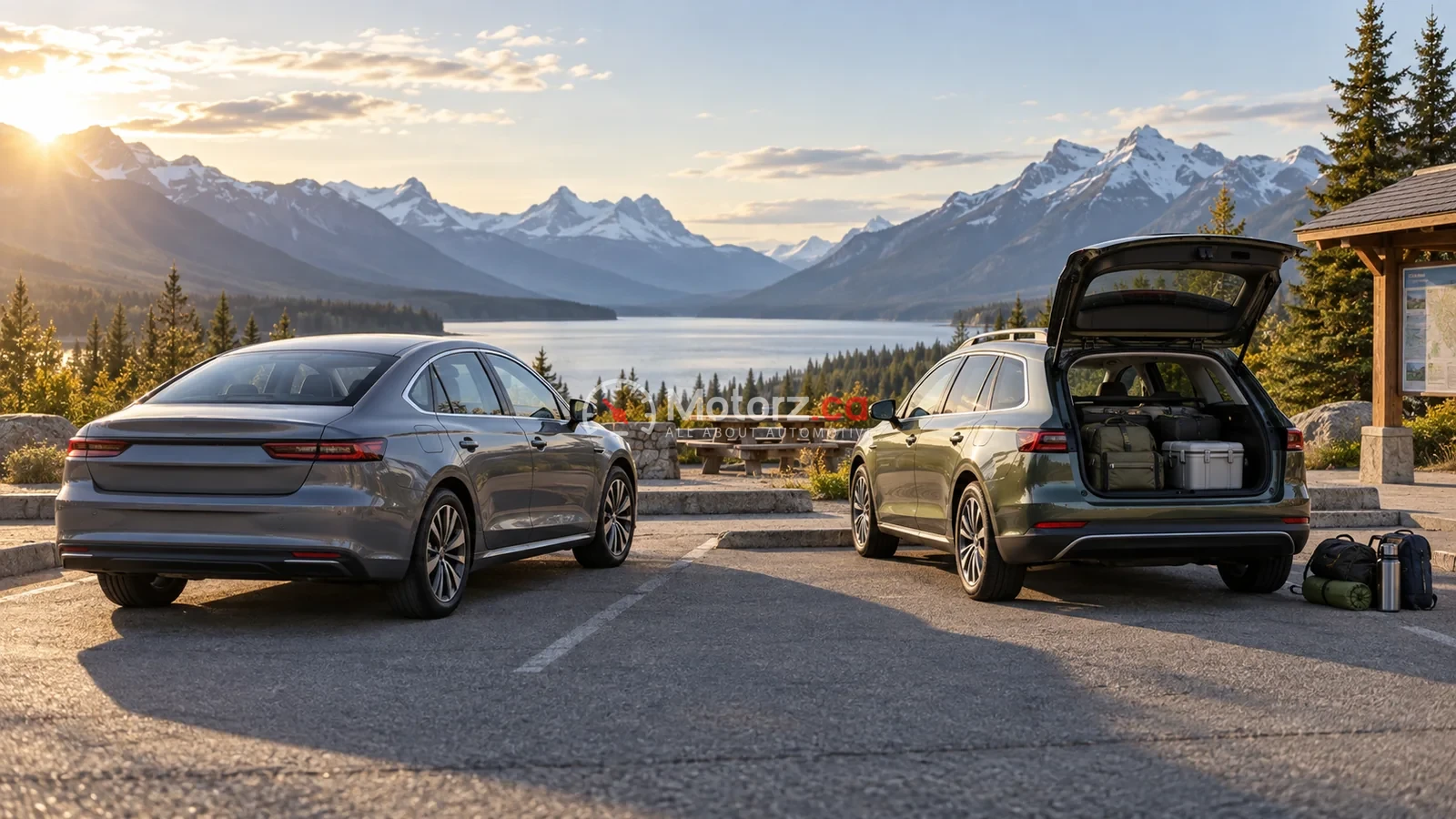
The best long-distance car is comfortable for the people travelling, efficient at highway speed, large enough for the real luggage load and easy to refuel or recharge along the planned route.
How we built this road-trip shortlist
Long-distance suitability comparison
| Vehicle | Published efficiency reference | Travel strength | Watch for |
|---|---|---|---|
| Honda Accord Hybrid | 5.7 L/100 km highway; 48.5 L tank | Large sedan packaging, 204 hp, adaptive driver-assistance suite by trim | FWD only; verify tire choice for winter route |
| Hyundai Sonata Hybrid | 4.6 L/100 km highway; 50 L tank | Manufacturer-estimated up to 1,000 km combined range; 441 L trunk | Range is calculated, not a guaranteed trip result |
| Toyota Camry Hybrid | Use current trim-specific NRCan rating | Standard hybrid powertrain and broad Canadian dealer network | AWD, wheel and trim choices change consumption and ride |
| Subaru Outback | Trim/engine-specific NRCan rating | Standard AWD, up to 2,141 L maximum cargo, driver-assistance equipment | More fuel than the hybrid sedans; crossover-like dimensions |
Comfort begins with fit, not features
Power adjustment, lumbar support, heated/ventilated seats and a quiet windshield can help, but body fit is personal. Sit for at least 20 minutes, check thigh support, steering-wheel reach, pedal alignment and rear-seat posture. A feature list cannot establish whether a seat suits a particular driver.
Efficiency and usable range
Highway L/100 km is more relevant than the combined rating for a mostly-highway itinerary. A simple planning estimate is tank capacity divided by highway consumption, multiplied by 100; then retain a conservative reserve. Wind, speed, elevation, temperature, cargo and winter tires can change the result substantially.
Cargo and passenger planning
Trunk litres do not reveal opening shape or whether tall items fit. Load the largest cases first, keep emergency supplies accessible and never exceed payload. A wagon-like body can be more useful than a larger sedan number when carrying bulky gear.
Driver assistance is support, not automation
Adaptive cruise control and lane-centering can reduce workload on long highways, but system limits vary. The driver remains responsible and must understand weather, lane-marking and sensor limitations in the owner manual.
Winter and remote-route considerations
- Use four suitable winter tires for sustained cold and snow.
- Confirm washer fluid, wipers, battery condition and emergency supplies.
- Plan fuel stops in northern or remote corridors before departure.
- For an EV, plan charging around reliable locations and cold-weather range—not the rated maximum.
- Check weather and road closures before each leg.
Use the winter-driving hub for cold-weather planning and the Canadian car-buying hub for purchase decisions.
Frequently asked questions
Is a hybrid better for long road trips?
A hybrid can reduce fuel use, but the advantage varies by vehicle and route; some hybrids gain more in city driving than at steady highway speed. Compare the Canadian highway rating, tank size, cargo and purchase price for the exact trim. A separate six-city compact-SUV ownership-cost model shows why the vehicle price alone is not the full budget. For trip budgeting, the gas-price and driving-cost data separates fuel price from the amount a vehicle uses.
Should I choose an SUV instead of a car?
Choose the body style around passengers, cargo, road conditions and entry height. A sedan can be quieter and more efficient; a wagon or crossover can offer easier loading and AWD. There is no universal long-trip winner.
Sources
- Honda Canada — 2026 Accord specifications
- Hyundai Canada — 2026 Sonata specifications
- Toyota Canada — 2026 Camry overview
- Subaru Canada — 2026 Outback
- Natural Resources Canada — fuel consumption ratings search
Editorial disclosure: Motorz.ca did not road-test the vehicles or tires in this guide. Recommendations are editorial analysis of current Canadian manufacturer, government and industry information.