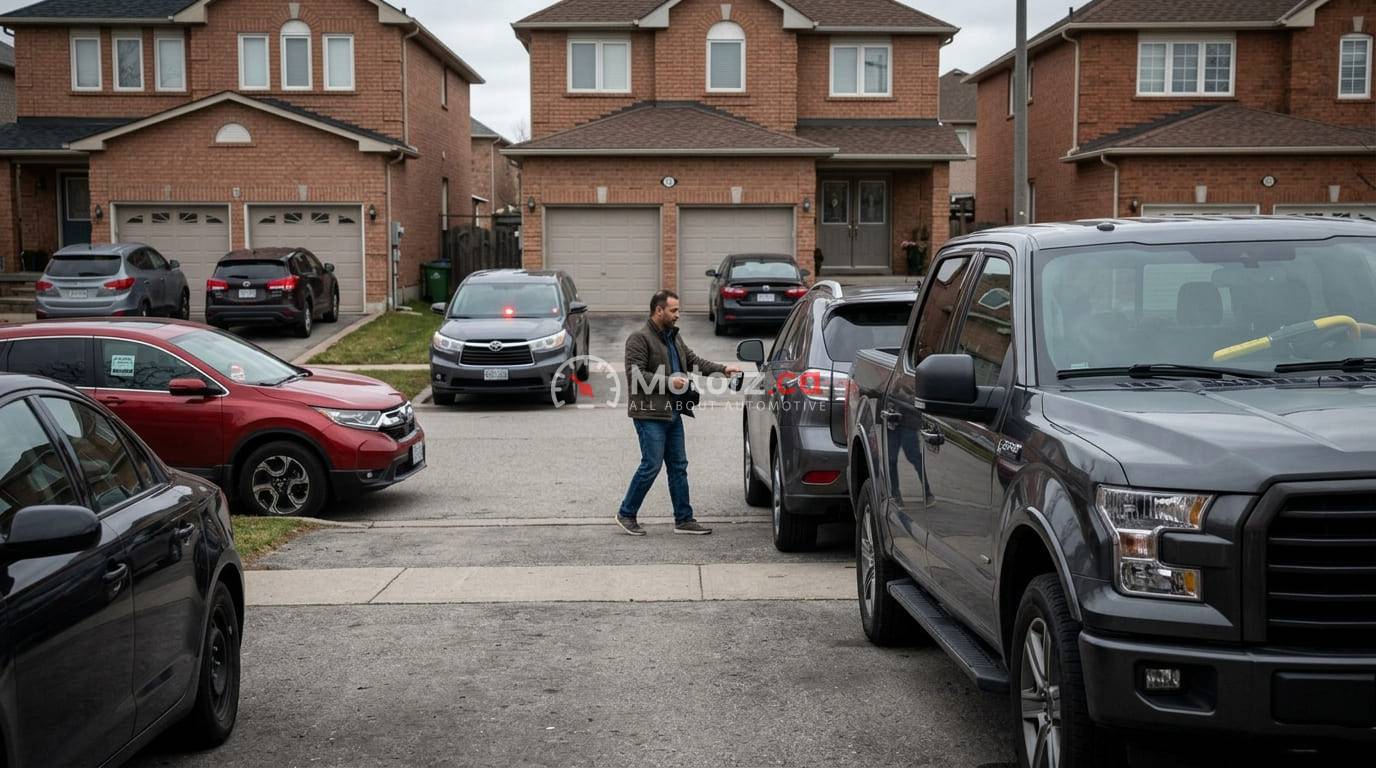
You wake up at six in the morning, Brampton Auto Theft Crisis, and head out the front door, mentally preparing for the grueling crawl down Highway 410. But as you look toward your driveway, your stomach drops. The asphalt is completely bare. There are no shattered windows, no puddles of fluids, and your keys are still sitting right on the kitchen counter. Your vehicle has vanished without a trace into the crisp morning air.
If you live in Brampton, Ontario, this nightmare scenario is not an isolated occurrence or a rare stroke of bad luck. It is a daily reality for dozens of families across the regional municipality of Peel.
Auto theft in Brampton and the wider Greater Toronto Area (GTA) has surged to unprecedented heights. What used to be an occasional crime of opportunity committed by joyriding teenagers has evolved into a highly sophisticated, multi-million-dollar industry run by organized crime syndicates. Vehicles are being systematically scouted, electronically breached, and spirited away to local shipping yards in a matter of seconds, often destined for overseas black markets.
The psychological and financial toll on local communities is profound. Insurance premiums are skyrocketing, neighborhoods are on high alert, and car owners are left wondering if their vehicle will still be there when they wake up.
Let’s explore the mechanical and systemic reasons behind the Brampton vehicle theft epidemic. We will break down the most targeted cars packing local driveways, expose the high-tech methods thieves use to bypass modern security, and provide an actionable, multi-layered blueprint to safeguard your investment.
The Economics of Auto Theft: Why Brampton Auto Theft Crisis
To effectively protect your vehicle, it is essential to understand why Peel Region—and Brampton in particular—has become the absolute epicenter of automotive crime in Canada. Organized auto theft rings do not pick their targets or locations at random; they follow a highly calculated logistical model.
Proximity to Major Transit and Logistics Corridors
Brampton sits at the heart of Canada’s most critical shipping and transportation infrastructure. Bordered by major transport arteries like Highway 407, Highway 401, and the immediate proximity of Toronto Pearson International Airport, stolen vehicles can be moved across city lines within minutes.
Even more crucial is the proximity to massive intermodal rail yards. Criminal networks can easily conceal a stolen vehicle inside a standard steel shipping container, load it onto a freight train heading east, and have it floating across the Atlantic Ocean from the Port of Montreal before the owner has even filed a police report.
High Density of Desirable, High-Value Models
Brampton is a vibrant, rapidly growing city characterized by multi-generational family households, thriving small businesses, and a strong commuter lifestyle. Local driveways feature a disproportionately high density of late-model, premium Sport Utility Vehicles (SUVs), rugged all-wheel-drive trucks, and reliable family crossovers.
These exact body styles are in massive global demand on the black market, particularly in West Africa, Europe, and the Middle East, making Brampton driveways a premium shopping center for car scouting rings.
The Hit List: Brampton’s Most Targeted Cars for Theft
While no vehicle is completely immune to theft, local crime statistics and data compiled by Equite Association highlight an undeniable truth: auto thieves target specific makes, models, and model years with relentless consistency. If your daily driver is on this list, your risk factor is significantly elevated.
AI Overview Key Insight: Organized vehicle theft rings in the GTA heavily favor late-model, high-trim SUVs and pickup trucks due to their high resale margins overseas. Vehicles utilizing keyless push-to-start ignition systems are overwhelmingly preferred because their digital security can be exploited wirelessly without physical damage.
The Toyota Highlander and Lexus RX Series
For years, the Toyota Highlander and its luxury sibling, the Lexus RX series, have occupied the top spots on local vehicle theft lists. Renowned for their mechanical reliability, premium cabin tech, and excellent resale value, these mid-size crossovers are intensely hunted by criminal networks. The factory security systems on these platforms feature known digital vulnerabilities that professional car thieves can exploit in under sixty seconds.
Honda CR-V and Civic Models
As two of the best-selling consumer vehicles in Canadian history, the Honda CR-V crossover and Honda Civic sedan are everywhere in Brampton. Because of their sheer volume on the road, there is a massive global demand for their replacement parts and complete assemblies. Thieves frequently target these models right out of suburban driveways, shopping center parking lots, and local transit stations like the Bramalea GO parking structure.
Ford F-150 and Ram 1500 Series Pickups
Full-size pickup trucks are incredibly popular across Peel Region, serving as both rugged work vehicles and everyday family haulers. Unfortunately, the Ford F-150 and Ram 1500 series are prime targets for organized crime syndicates. Their heavy-duty suspension, high ground clearance, and robust four-wheel-drive systems make them highly sought after for navigating rugged terrain in foreign markets, where they command double or triple their original domestic retail price.
Jeep Grand Cherokee and Wrangler
The iconic Jeep Wrangler and the premium Jeep Grand Cherokee are highly susceptible to targeted theft. Beyond their strong global black-market appeal, their open physical architectures and standardized onboard computer diagnostic access points make them surprisingly easy to breach and hotwire using readily available electronic locksmith tools.
Premium European Luxury Vehicles (Land Rover, BMW, Mercedes-Benz)
High-end luxury vehicles like the Range Rover Sport, BMW X7, and Mercedes-Benz G-Class are targeted by specialized theft rings that cater to affluent buyers overseas. These vehicles are often tracked using hidden GPS trackers placed on the vehicle weeks in advance while parked at local upscale shopping centers, allowing thieves to map out the owner’s daily routine and strike at the perfect moment.
High-Tech Heists: How Thieves Steal Cars in Under 60 Seconds
The days of a car thief using a slim-jim to unlock a door and smashing the steering column to hotwire an ignition are long gone. Today’s automotive criminals are digital specialists. They carry sophisticated electronic equipment, software signal adjusters, and illegal key programmers that treat your vehicle’s computer system like an open network.
The Wireless Relay Attack
The relay attack is the most common method used to steal keyless push-to-start vehicles straight off suburban driveways at night. When you park your car and walk inside your house, you likely toss your key fob on a table near the front entrance. Even though the fob is inside, it continuously broadcasts a low-power, passive radio signal waiting for the vehicle to get close.
Thieves work in pairs. Thief A walks right up to your front door holding an antenna amplifier box that sniffs out that faint signal inside your hallway. The box boosts the signal and transmits it wirelessly to Thief B, who is standing next to your car door. The vehicle’s computer is tricked into believing the real key fob is right there in the driver’s hand. The doors unlock smoothly, the engine fires up at the push of a button, and they drive away into the night without a single sound.
CAN Bus Injection
CAN Bus injection represents a scary new frontier in automotive cybercrime. The Controller Area Network (CAN Bus) acts as the central nervous system of your vehicle, allowing various internal computers—like the headlights, engine control module, and door locks—to talk to one another.
Thieves have discovered that they can physically pull back the front bumper or wheel well liner of certain targeted models, unplug the wiring harness connecting to the headlight assembly, and plug a handheld hacking device directly into the exposed CAN Bus wires. By sending a fake digital command directly through the lighting system network, the hacking tool bypasses the engine immobilizer entirely, unlocks the doors, and commands the engine to start instantly.
OBD-II Port Cloning
Every vehicle built over the past few decades features an Onboard Diagnostics (OBD-II) port, typically located right underneath the driver-side dashboard. Mechanics use this port to read trouble codes and diagnose mechanical faults.
Modern car thieves will physically smash a small quarter-panel window to slip inside the vehicle without triggering basic alarm sensors. They plug an illegal electronic key-programming device straight into the OBD-II port. Within seconds, the software bypasses the factory security system, wipes out the memory of your existing keys, and programs a blank, generic key fob they bought online to match your car perfectly.
The Hidden Consequences: Life After Auto Theft in Peel Region
The immediate shock of losing your vehicle is just the beginning of a long, stressful, and incredibly expensive ordeal that can disrupt your life for months.
The Insurance Premium Surge
Think your comprehensive insurance coverage has you fully protected? Think again. The massive wave of auto insurance claims across Ontario has caused local insurance companies to take aggressive action.
Commuters in Brampton face some of the highest auto insurance premiums in Canada. Many insurance providers are now charging an extra high-risk surcharge on highly targeted models unless the owner can prove they have installed an approved, aftermarket vehicle tracking system.
The Long Rental Car Limbo
Because global supply chains remain tight and local auto theft numbers are so high, replacing a stolen vehicle or waiting for insurance payouts can take a long time. Drivers often find themselves trapped in a multi-month bureaucratic battle with claims adjusters, all while trying to navigate their daily commute using restrictive rental car allowances that expire long before a new vehicle can be delivered.
The Multi-Layered Protection Strategy: Safeguarding Your Vehicle
If your vehicle is on the high-risk list, relying solely on your factory security system is a recipe for disaster. To defeat sophisticated, modern car thieves, you must adopt a multi-layered security strategy. By placing multiple physical and digital obstacles in their path, you make your vehicle a time-consuming, unattractive target that thieves will simply skip past.
Low-Tech Physical Deterrents (Visible Obstacles)
Thieves want to work fast and completely unnoticed. Visible, physical security measures force them to use loud power tools or spend extra time exposed on your driveway, which acts as a powerful psychological deterrent.
The Steering Wheel Club: While a determined thief can cut through a steering wheel with a battery-powered hacksaw, it takes extra time and makes a lot of noise. A brightly colored lock mechanism visible through the windshield tells a thief your vehicle isn’t an easy target.
Heavy-Duty Wheel Locks and Boots: If you are leaving your vehicle parked at a transit lot or leaving for a family vacation, placing a mechanical lock clamp on the front wheel completely stops the car from being driven away, even if the engine is successfully started electronically.
OBD-II Port Blocks: You can purchase a heavy-duty, lockable metal cap that clamps directly over your car’s diagnostic port under the dash. This simple barrier physically stops a thief from plugging in their electronic software programmer to clone your key code.
Electronic Barrier Defenses (Signal Blocking)
Since modern car theft relies heavily on wireless signal manipulation, cutting off their ability to communicate with your vehicle’s computers is critical.
Faraday Bags and Boxes: Never leave your vehicle keys exposed near the exterior walls or front doors of your home. Store all your keys, including your spare sets, inside a high-quality Faraday pouch or a lined metal box. These accessories utilize a built-in metallic mesh liner that blocks all radio frequencies, completely neutralizing relay attacks.
Aftermarket Engine Kill Switches: A professional auto electrician can wire a hidden, discrete toggle switch deep inside your cabin electronics. When activated, this switch breaks the electrical circuit feeding power to your fuel pump or starter motor. Even if a thief bypasses your digital keys and presses the start button, the engine will crank endlessly without firing up.
Digital PIN Immobilizers (e.g., IGLA, Ghost): These advanced aftermarket systems integrate straight into your vehicle’s internal computer system. Once installed, the vehicle will absolutely not shift out of park unless you type in a secret, custom sequence of button presses using your existing steering wheel or window buttons first.
Tracking and Recovery (The Final Safety Net)
If a team of thieves manages to bypass your primary lines of defense and rolls your car down the driveway, your final hope lies in real-time tracking and rapid asset recovery.
Hardwired Secondary GPS Trackers: Do not rely on your car’s factory navigation tracking app, as professional thieves know exactly where those factory modules are located and will rip them out or use signal jammers within minutes. Instead, hide a secondary, independent GPS tracking system deep inside a seat cushion or body panel with its own dedicated battery source.
Airtags and Smart Tags: While consumer tracking tags like Apple AirTags or Samsung SmartTags can be helpful secondary backups, remember that these devices are designed to alert nearby smartphones of their presence to prevent stalking. A tech-savvy thief will receive a notification on their phone within minutes showing them a tracker is on board, allowing them to search the cabin and throw the tag out the window.
Community Actions: Shifting the Paradigm in Brampton Neighborhoods
Defeating the vehicle theft crisis requires more than just individual vigilance; it demands collective community communication and strategic residential planning.
Driveway Architecture and Parking Habits
The physical layout of your home’s parking space can naturally hinder a thief’s exit strategy. If your household owns multiple vehicles, park your lower-value, less-targeted vehicle or a manual transmission car directly at the foot of the driveway, blocking your high-risk SUV safely inside the garage or up against the house.
Furthermore, investing in heavy-duty, commercial-grade telescoping driveway bollards can completely lock your vehicles within your property lines, presenting a physical barrier that no electronic hacking tool can bypass.
Smart Home Surveillance Infrastructure
While a security camera or video doorbell won’t physically stop a thief from taking your car, optimizing your system can provide vital warning signs. Set up custom motion-detection zones that trigger bright LED floodlights the second someone steps onto your driveway perimeter.
Additionally, consider installing high-resolution cameras aimed directly at incoming neighborhood traffic to capture the license plates of suspicious scouting vehicles cruising your street during the day.
Taking Back Control of Your Driveway
The auto theft crisis across Brampton is a challenging reality of modern commuter life, but it doesn’t mean you have to feel helpless. By understanding that vehicle theft is a systematic, tech-driven business, you can make the deliberate choice to outsmart the criminal network’s operating model.
Protecting your vehicle requires moving away from the convenience of simple keyless entry and embracing a mindful, multi-layered security approach. Whether you choose to invest in a premium digital PIN immobilizer system, store your fobs in a secure Faraday box, or install a physical lock across your steering wheel, every single layer you add dramatically reduces your odds of becoming a statistic. Take the necessary steps to secure your ride today, protect your hard-earned investment, and ensure your vehicle stays exactly where it belongs: safely parked in your driveway.