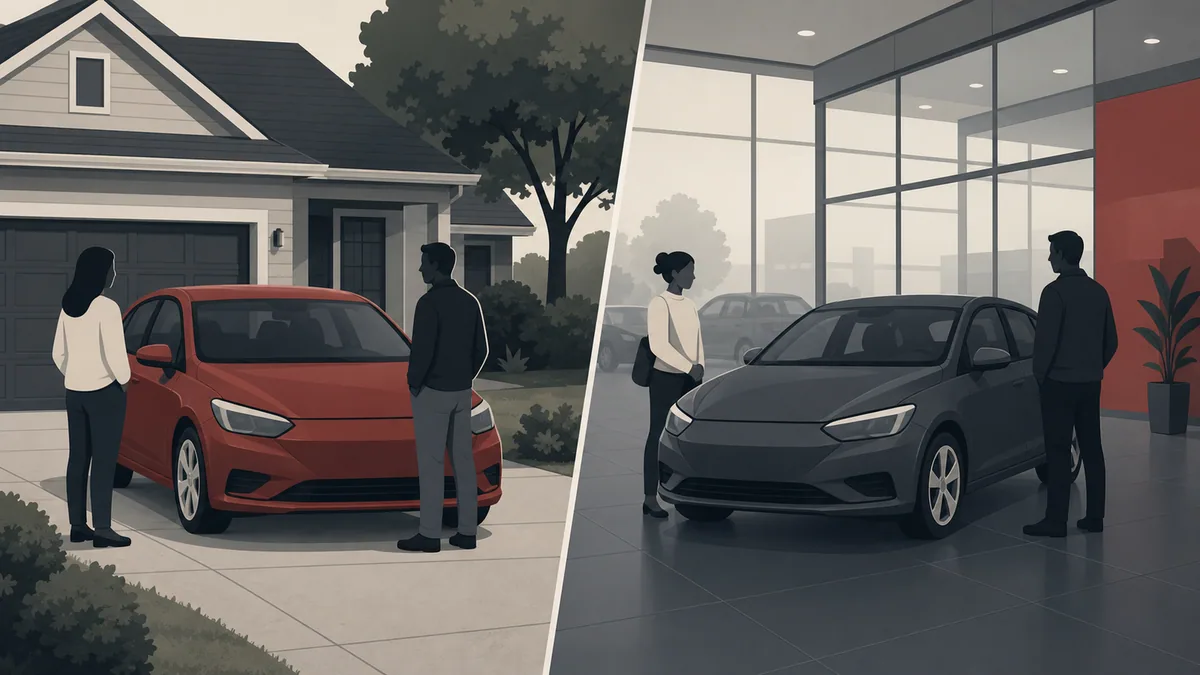
The search for a new ride in Car Buying in Ontario to a critical crossroads: should you buy from a licensed dealership or hunt for a private sale on platforms like Auto Trader and Facebook Marketplace?
While scrolling through local listings and spotting a bargain is exciting, making the wrong choice can lead to unexpected expenses, hidden liens, or intense legal headaches. Ontario has a highly specific set of consumer protection laws, tax rules, and registration requirements that vary dramatically depending on how you buy your vehicle.
This comprehensive guide breaks down the financial, legal, and practical realities of buying a car privately versus from a registered Ontario dealer, helping you choose the path that best fits your budget and lifestyle.
Understanding the Car Buying in Ontario: Two Distinct Paths
Before looking at the pros and cons, it is important to understand that the Ontario government treats private sellers and registered dealerships as entirely separate entities. This distinction dictates everything from the amount of tax you pay at registration to your legal recourse if the vehicle breaks down down the road.
Registered Ontario Dealers: These businesses are regulated by the Ontario Motor Vehicle Industry Council (OMVIC). Dealers must follow strict rules regarding vehicle history disclosure, truth in advertising, and pricing transparency.
Private Sellers: These are everyday individuals selling their personal vehicles. Private sales operate almost entirely on the principle of caveat emptor (buyer beware). Aside from basic contract law, private sellers are not regulated by OMVIC, and buyers do not enjoy provincial consumer protection protections.
Buying from an Ontario Dealer: Pros and Cons
Purchasing a vehicle from a physical car lot or a certified pre-owned (CPO) department offers an established, structured environment. However, that structured environment comes with specific costs.
The Pros of Buying From a Dealer
Robust OMVIC Consumer Protection
The single biggest advantage of buying from a registered dealer is the legal safety net. OMVIC enforces the Motor Vehicle Dealers Act (MVDA), which ensures that dealers must provide an honest, accurate representation of the vehicle. By law, a dealer must disclose:
Accurate odometer readings.
Prior use as a daily rental, police vehicle, or taxi.
Structural or fire damage, or if the car was imported from another province or country.
Any past accidents that required repairs costing more than 3,000 Canadian dollars.
If a dealer fails to disclose these critical details, you have the legal right to cancel the contract within 90 days of delivery.
Access to the Motor Vehicle Dealers Compensation Fund
If something goes terribly wrong—such as a dealership going bankrupt before delivering your car, failing to clear an existing lien, or committing outright fraud—you are not completely out of luck. Registered consumers have access to the OMVIC Compensation Fund, which can provide financial compensation for individual claims. Private sales offer no such recourse.
True All-In Pricing Transparency
Ontario enforces strict all-in pricing laws for automotive advertisements. If an Ontario dealer advertises a car for 19,500 Canadian dollars, that price must include every single fee they intend to charge, including administration fees, pre-delivery inspection (PDI) costs, detailing, and fuel surcharges. The only elements a dealer can legally add on top of the advertised price are:
The 13 percent Harmonized Sales Tax (HST).
The actual cost of licensing and vehicle registration with Service Ontario.
Consumer Warning: If a dealership attempts to force you to pay an extra 500 Canadian dollars for a “documentation fee” or “nitrogen tires” that wasn’t included in their advertised price, they are violating provincial law.
Trade-In Tax Advantages
If you already own a vehicle and plan to swap it for an upgrade, dealerships offer a major financial advantage. In Ontario, when you trade in a vehicle, its agreed-upon value is deducted directly from the purchase price of your next car. You only pay the 13 percent HST on the remaining difference.
For example, if you buy a truck for 35,000 Canadian dollars and your trade-in is valued at 15,000 Canadian dollars, you are only taxed on 20,000 Canadian dollars. This strategy yields significant tax savings that you cannot replicate when selling your car yourself and buying another privately.
Conveniences: Financing, In-House Licensing, and Warranties
Dealerships operate as a one-stop shop. They can arrange financing directly through major banks, handle the physical vehicle registration and plate transfer with Service Ontario, and offer certified pre-owned extended warranties that protect your wallet from sudden mechanical failures.
The Cons of Buying From a Dealer
Higher Initial Purchase Price
Because dealerships carry immense overhead costs—rent, staff salaries, corporate compliance, and mechanical reconditioning—their base prices are almost always higher than private market listings for identical vehicles.
Upselling and High-Pressure Sales Tactics
Step onto a dealership lot and you will likely encounter professional sales teams trained to maximize profit margins. You may face pressure to purchase add-ons like extended warranties, paint protection packages, window tinting, or rust-proofing, all of which can rapidly inflate your final total.
Buying a Car Privately in Ontario: Pros and Cons
Cutting out the middleman and buying directly from a neighbor or online seller offers a raw, direct transaction. It can yield incredible savings, but it places the entire burden of due diligence on your shoulders.
The Pros of Private Sales
Lower Overall Purchase Prices
Private sellers do not have to pay commissions, commercial rent, or corporate taxes. They are often highly motivated to sell due to lifestyle shifts, such as relocation, buying a new home, or clearing out garage space. As a result, you can often negotiate a purchase price well below the average retail value found on a dealership lot.
Direct Access to the Vehicle’s Actual History
When you buy from a private owner, you can ask direct questions about how the vehicle was driven and maintained. You can see the seller’s home, assess whether they kept up with regular oil changes, and ask if they have a folder of service receipts. Dealerships rarely possess intimate knowledge of a car’s day-to-day history.
No Hidden Corporate Fees
In a private sale, the agreed-upon price is exactly what you hand over to the owner. There are no sudden documentation, administrative, or dealership prep fees tacked onto the bill of sale at the last minute.
The Cons of Private Sales
Absolute Lack of Consumer Protection
This is the single greatest risk of the private market. Private vehicle sales do not fall under the jurisdiction of OMVIC or the Consumer Protection Act. The transaction is strictly “as-is.” If the engine fails or the transmission gives out five minutes after you drive away, the seller is under no legal obligation to help you or take the car back. Your only option would be pursuing costly civil litigation in small claims court, which requires proving the seller intentionally defrauded you.
The Service Ontario Tax Calculation Trap
Many buyers assume that if they buy a car privately, they can write a lower price on the bill of sale to save money on taxes at Service Ontario. This is a costly misconception.
When you register a privately purchased vehicle, Service Ontario charges a 13 percent Retail Sales Tax (RST) based on the higher of two values:
The actual purchase price written on your bill of sale.
The average wholesale value listed in the Canadian Black Book, which is pre-programmed into the province’s system.
If you buy a car for 6,000 Canadian dollars but the provincial system values it at 9,000 Canadian dollars, you will be forced to pay 13 percent tax on the full 9,000 Canadian dollars right there at the counter.
The Appraisal Exception: If the vehicle is in poor mechanical shape, has body damage, or has high mileage that justifies the lower price, you must obtain an official structural appraisal from a licensed mechanic or dealership before visiting Service Ontario to be taxed on the lower purchase price.
High Risk of Scams and Curbsiders
The private market is filled with “curbsiders.” These are illegal, unlicensed vehicle dealers masquerading as private citizens selling personal cars. Curbsiders often purchase salvaged, flood-damaged, or odometer-rolled vehicles from auto auctions, patch them up cosmetically, and sell them to unsuspecting private buyers.
The Administrative Burden
When buying privately, you must handle all the logistics yourself. You have to arrange your own financing, coordinate with your insurance broker to get a policy binder, and physically stand in line at Service Ontario to transfer ownership, pay taxes, and obtain new license plates.
Step-by-Step Guide: Buying Safely in the Private Market
If you decide that the savings of a private sale are worth the risks, you must follow a strict verification protocol to protect your investment.
Mandate the Used Vehicle Information Package (UVIP)
In Ontario, the seller is legally required by the Highway Traffic Act to purchase and present a Used Vehicle Information Package (UVIP) to the buyer. This document costs 20 Canadian dollars and contains crucial structural data:
The current and historical registration status in Ontario.
The official odometer history reported to Service Ontario.
The Lien Status: This section shows if a bank or finance company holds a registered financial interest in the car. If you buy a vehicle with an active lien, the lender can legally repossess the car from you to satisfy the previous owner’s unpaid debt.
Never hand over money until you have personally inspected a fresh, unaltered copy of the UVIP.
Schedule a Pre-Purchase Inspection (PPI)
Do not rely on a freshly printed Safety Standards Certificate (SSC) alone. A safety certificate merely verifies that the vehicle meets the bare minimum legal criteria to be driven on Ontario roads on the day of inspection (checking brakes, lights, and tires). It does not evaluate the long-term health of the engine, transmission, or air conditioning system.
Ask the seller if you can drive the vehicle to a trusted independent mechanic for a full pre-purchase inspection. Expect to spend 150 to 250 Canadian dollars for this checkup. It is a small price to pay to avoid buying a vehicle with terminal mechanical flaws.
Verify the Seller’s True Identity
When looking over the green vehicle ownership permit, confirm that the name listed on the document matches the name on the seller’s Ontario Driver’s License. If the names do not match, or if the seller claims they are selling the car for a cousin, uncle, or friend, you are likely dealing with an illegal curbsider. Walk away immediately.
Step-by-Step Guide: Buying Wisely From an Ontario Dealer
Buying from a dealership offers strong protections, but you still need to actively manage the negotiation and closing processes.
Cross-Reference Advertised Prices
Before signing a final bill of sale, verify the price against the digital ad you saw online. Take screenshots of the online listing. Under OMVIC rules, the dealership cannot add arbitrary fees to that advertised number except for HST and licensing. Look closely at the itemized breakdown on your contract to ensure no hidden fees have been added.
Differentiate Mandatory vs. Optional Fees
Dealers must explicitly declare which charges are legally required and which are optional add-ons.
Mandatory: Vehicle price, OMVIC transaction fee (currently 22 Canadian dollars), HST, and Service Ontario plate fees.
Optional: Extended mechanical warranties, GAP insurance, anti-theft etching, and pre-applied window tints. You have every right to decline these optional products before signing the final document.
Understand the Finality of the Deal
In Ontario, there is no cooling-off period for automotive purchases. Once you sign a dealership contract and leave a deposit, the contract is fully binding. The dealership is under no legal obligation to let you change your mind or return the vehicle because you experience buyer’s remorse. Only sign when you are completely certain about the purchase.
The Verdict: Which Path Wins for You?
The right choice ultimately depends on your risk tolerance, your mechanical experience, and your financial situation.
Choose a Registered Ontario Dealer if: You want peace of mind, strong consumer protection laws, access to financing options, and a straightforward buying process. It is also the ideal choice if you have a high-value vehicle to trade in and want to minimize your overall tax burden.
Choose a Private Sale if: You are working with a tight budget, comfortable organizing mechanical inspections, and willing to handle all registration paperwork at Service Ontario yourself to secure the absolute lowest possible purchase price.
Regardless of the option you choose, take your time, run a comprehensive vehicle history check, and prioritize your own safety throughout the transaction.


