
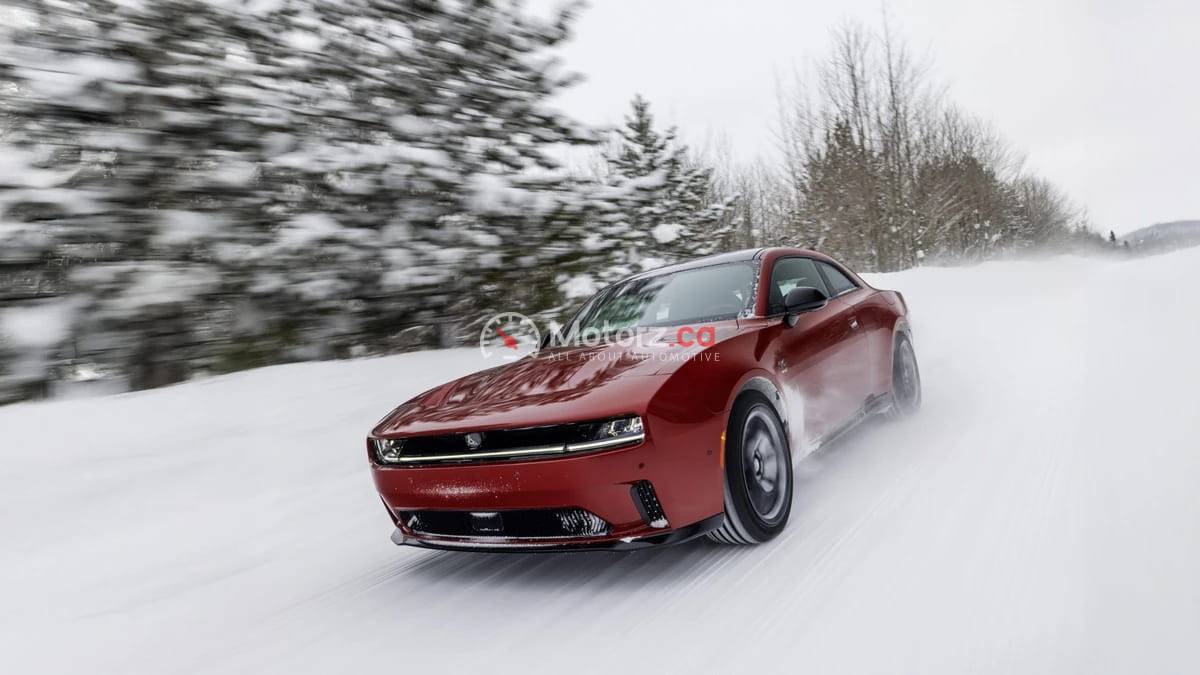

The name Winter Drift Machine has always been synonymous with two things: high-speed heritage and rear-wheel-drive muscle. The latest iteration, the Dodge Charger Daytona electric vehicle (EV), has boldly rewritten the rulebook, embracing electric power while promising to keep the raw, tire-shredding fun alive. But what happens when you combine instant, massive electric torque with the most challenging driving conditions on earth: snow and ice?
The answer, as demonstrated by the extreme vehicle modifications and specialized tuning emerging from the custom car world, is a spectacular new form of winter motorsport: Electric Winter Hooning.
This 2,000-word deep dive explores the radical transformation of the next-generation, all-wheel-drive (AWD) Charger Daytona—particularly the high-output Scat Pack and Banshee models—as it trades the dry asphalt for slick, snowy courses. We analyze the critical modifications required to turn a street-legal performance EV into a controllable, sideways snow machine, covering everything from the unique challenges of managing electric torque on ice to the specialized tire and suspension setups that make electric drifting not just possible, but exhilarating.
The EV Advantage: Instant Torque and Winter Drift Machine
Traditional winter hooning relies on high horsepower and carefully managed clutch kicks. The Charger Daytona EV brings a revolutionary new dynamic to snow drifting, centered on the unique properties of its electric powertrain.
The Challenge and Opportunity of Electric Torque
The moment you stomp the accelerator in a high-output electric vehicle, the torque is instantaneous and absolute. This creates both a challenge and an incredible opportunity on low-traction surfaces.
The Challenge: On ice, the instant surge of torque can easily overwhelm tire grip, leading to uncontrollable wheelspin and immediate loss of steering control if not managed properly. The sheer weight of the battery pack also adds momentum, making it harder to initiate and correct slides.
The Opportunity: Unlike a gasoline engine with a power curve, the EV’s torque delivery is digitally controllable. The Charger Daytona’s software can instantly meter out precisely the amount of power needed to maintain a sustained drift angle without spinning out, offering a level of precision control unheard of in traditional muscle cars. This is the foundation of turning the Daytona into a drift-ready winter machine.
Harnessing the All-Wheel-Drive System
While some performance EVs are rear-wheel drive, the Charger Daytona Scat Pack and Banshee models utilize an All-Wheel-Drive (AWD) system, using dual or triple electric motors to distribute power.
Software Tuning for Drift: To enable sustained, high-angle drifting—the very definition of winter hooning—the AWD system must be aggressively tuned. This requires specialized aftermarket software recalibration to:
Prioritize Rear Motor: Divert the vast majority of the torque (e.g., 70 to 90 percent) to the rear axle to overcome grip and initiate the slide.
Momentarily Disable Front Motor: For ultimate drift purists, the ability to completely decouple or digitally disable the front motor simulates a pure RWD experience, allowing the front wheels to focus purely on steering angle rather than pulling the car out of the slide.
The Line Lock Factor: The Charger Daytona is expected to retain performance features inspired by its gasoline predecessors. Digitally controlled Line Lock for burnouts and Drift Mode software settings will be crucial for the winter hooning setup, pre-setting the car’s electronic differential and stability control parameters for intentional oversteer.
Critical Winter Transformation: Suspension and Tire Setup
Converting a 5,000-plus-pound EV muscle car into a lightweight, controllable drift machine for snow and ice requires major mechanical surgery, focusing on reducing friction and maximizing steering input.
Tires: The Foundation of Ice Grip
Tires are the single most important modification for winter performance, especially drifting.
Narrow and Tall: The strategy for snow drifting is often counter-intuitive to dry grip. Narrower tires provide higher surface pressure, allowing them to cut through snow and slush more effectively to find a firmer layer underneath. A narrower width (e.g., dropping from a 305mm summer tire to a 245mm winter tire) is preferred.
The Studded Advantage: For driving on hard ice or frozen dirt, studded winter tires are essential. The metal studs mechanically dig into the ice, providing the necessary lateral grip to control the high-speed slides. Without studs, the instant EV torque is completely useless on solid ice.
Ice Spikes (Hooning Only): For dedicated, closed-course competition or exhibition drifting, specialized ice spike tires (often featuring long, sharp metal spikes) are installed. These provide maximum traction and control, allowing the heavy Daytona to be slid with precision at high speeds.
Suspension Upgrades and Ride Height
The sheer weight of the battery pack makes suspension tuning for drifting particularly challenging.
Coilover Conversion: The factory suspension must be swapped for adjustable performance coilovers. This allows the mechanic to fine-tune the damping and rebound rates to manage the heavy body roll induced by the high center of mass and high-angle slides.
Lift Kit (The Rally Look): For deep snow driving and drifting on unplowed roads or fields, a modest lift kit (2 to 4 inches) is installed. This increases ground clearance to prevent the massive battery and underbody from scraping on deep snowbanks and ice ruts, which could cause catastrophic battery damage.
Adjustable Control Arms: To compensate for the lift and the aggressive steering required for drifting, adjustable control arms and camber plates are installed to ensure proper wheel alignment and maximize steering angle lock-to-lock.
Drift-Focused Driveline and Weight Management
Beyond power and suspension, the physical structure and weight distribution of the electric Charger Daytona must be addressed to optimize its sideways performance.
The Digital E-Brake and Custom Handbrake
In traditional drifting, the handbrake (or e-brake) is used to momentarily lock the rear wheels, disrupting traction and initiating the slide. The Charger Daytona’s factory electronic parking brake (EPB) is inadequate for this purpose.
Hydraulic Handbrake Install: The EPB system must be bypassed or supplemented with a standalone hydraulic handbrake system. This requires installing a separate set of brake calipers on the rear wheels dedicated solely to the handbrake lever, providing the instantaneous, high-pressure rear lockup necessary for controlling drift initiation in tight corners.
Software Integration: The installation must be carefully integrated with the EV’s regenerative braking and stability control software to prevent conflicting electronic inputs when the driver pulls the hydraulic lever.
The Weight Reduction Paradox
The battery pack, a crucial structural component, makes true weight reduction nearly impossible without compromising range.
Interior Stripping: The most common weight-saving measure is stripping the interior. Removing the rear seats, unnecessary trim, carpets, and sound deadening can shave hundreds of pounds, marginally improving the power-to-weight ratio and making the car more agile.
Weight Distribution for Balance: The remaining weight must be managed. The massive battery creates a low center of gravity (good for stability), but the distribution must be balanced. Mechanics will often fine-tune the coilovers to distribute the weight across the four corners, ensuring the car pivots predictably during slides.
The Aesthetics and Safety of Winter Drift Builds
A true drift build is as much about function and safety as it is about aggressive, recognizable styling that communicates its purpose.
Widebody Kits and Aerodynamics
The drift-ready Charger Daytona typically adopts a more aggressive aesthetic designed for high-angle sliding.
Fender Flares: Aggressive fender flares or widebody kits are required to house the large, studded, or spiked tires and the necessary lift. This look also provides an aggressive stance favored in the drift community.
Skid Plates: Due to the risk of bottoming out on frozen ruts and scraping the battery housing on ice, custom-fabricated, heavy-duty aluminum or steel skid plates are a non-negotiable safety feature, protecting the vulnerable high-voltage components underneath.
Interior Safety and Control
For high-speed winter hooning and exhibition, safety is paramount, especially when navigating unpredictable ice and snow.
Roll Cage: A professional, custom-fabricated roll cage is installed to reinforce the chassis and protect the driver in the event of a high-speed spin or rollover.
Racing Seats and Harnesses: The standard seats are replaced with fixed-back racing seats and multi-point harnesses (e.g., 5-point or 6-point) to securely hold the driver in place against the extreme lateral forces of sustained drifting. This ensures the driver’s attention is focused on steering input, not bracing against the door.
The Dawn of Electric Hooning
The transformation of the Dodge Charger Daytona EV into a drift-ready winter hooning machine is a clear sign that the spirit of muscle and slide culture will not die with the internal combustion engine. Instead, it is being reborn with a new level of precision and raw, instantly delivered torque.
The successful winter transformation relies on three critical modifications: aggressive AWD software tuning to prioritize rear-axle power; specialized studded tires to find grip on ice; and the installation of a hydraulic handbrake to initiate controlled slides. The result is a heavy, powerful, and exhilarating electric vehicle capable of carving precise, massive arcs of snow and ice, proving that the future of sideways excitement is electric.