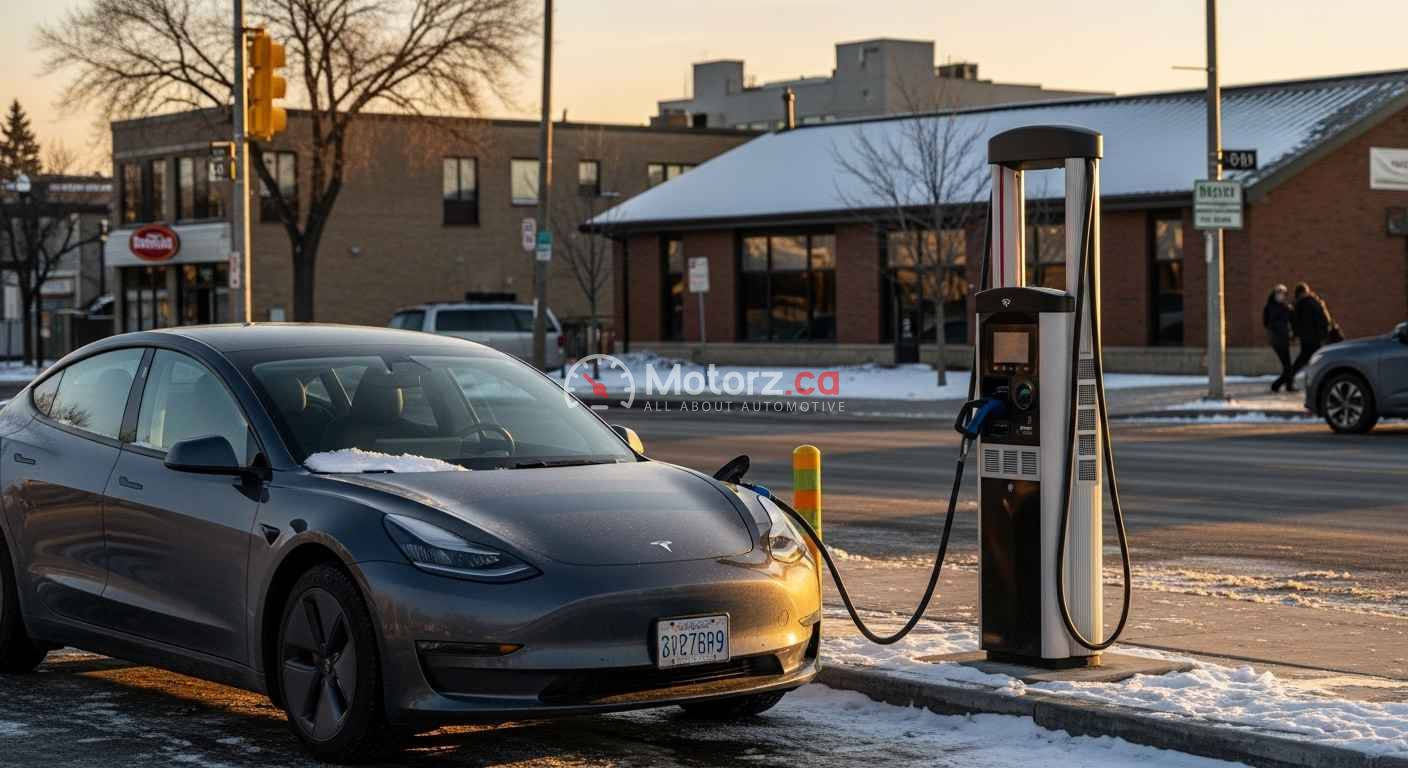
The heart of the continent. The land of friendly folks, beautiful rivers, and, let’s not forget, some truly intense winters. For years, the Electric Vehicle conversation in this city has been met with a combination of curiosity and skepticism, largely centred on three major concerns: Can I find a charging station? Will I get stranded due to range anxiety? and How in the world does an EV battery handle.
The truth is, the electric vehicle reality in Winnipeg is evolving rapidly, moving from a niche concept to a practical, and increasingly supported, mode of transportation. Electric Vehicle adoption in Manitoba, while perhaps slower than on the coasts, is gaining momentum, fueled by improved technology, growing infrastructure, and local incentives. This comprehensive guide dives deep into these pressing questions, providing an easy-to-read, engaging, and in-depth look at what it truly means to own an EV in the Manitoba capital.
The Evolving Charging Station Infrastructure: Plug and Go in Peg City
One of the most immediate concerns for any prospective Electric Vehicle owner is the public charging network. Historically, it was a legitimate worry, but Winnipeg’s infrastructure has been quietly expanding, making the prospect of owning an EV far more viable.
Current State of Charging in Winnipeg
According to recent data, Winnipeg boasts a respectable number of public EV charging stations. These are distributed across the city, concentrated heavily in urban hubs, shopping centres, key parking facilities, and auto dealerships. This network Electric Vehicle a mix of charging levels:
- Level 2 Chargers (240V): These constitute the vast majority of the public network. They are ideal for “destination charging,” where you plug in for several hours—for instance, while at work, shopping at Polo Park, or exploring The Forks. They typically add a meaningful amount of range (often 30-50 km per hour) to your battery.
- DC Fast Chargers (Level 3): These high-powered stations are the key to long-distance travel and quick top-ups. While less numerous than Level 2, their presence is critical. Networks like FLO, ChargePoint, and the proprietary Tesla Supercharger network are the main players. New provincial plans are actively working to build a high-powered corridor of Level 3 chargers connecting Winnipeg to northern and rural communities, Electric Vehicle boosting confidence for regional travel.
Many stations are accessible through various networks, often requiring an app or an RFID card, while a notable percentage even offer free charging—an excellent bonus for Winnipeg EV owners.
Charging Networks and App Ecosystem
Navigating the various charging options is simplified by smart apps. Apps like ChargeHub, PlugShare, and the specific network Electric Vehicle (FLO, ChargePoint) are indispensable tools. These apps provide real-time information on:
- Charger Locations: Pinpointing the nearest plug.
- Availability: Showing if a station is currently in use or available.
- Charging Speed & Cost: Detailing the type of plug and the session fee.
- User Reviews: Offering valuable context from other EV drivers about a station’s reliability, location quality, and winter performance.
The convenience offered by these Electric Vehicle systems means that a little planning goes a long way, especially for new EV drivers.
The Home Charging Advantage
For most electric vehicle drivers in any city, public charging is a convenience, but home charging is the lifeblood. Over 80% of charging is done at home.
- Level 1 (Standard 120V Outlet): For those with a short daily commute (under 50 km), a standard wall outlet in a garage or sheltered parkade can be sufficient, offering a slow trickle charge overnight.
- Level 2 Home Charger (240V): The optimal solution. Installed in your garage, a Level 2 charger can fully replenish most EV batteries overnight, ensuring you start every Winnipeg day with a “full tank.” Given the city’s extreme temperatures, having a warm, plugged-in garage is arguably the single greatest advantage an Electric Vehicle owner can have.
Conquering Range Anxiety: Planning and Modern Reality
Range anxiety, the fear of running out of charge before reaching a charging point, remains a psychological hurdle for many. In Winnipeg, this anxiety is amplified by the sheer vastness of the prairie and the distance between communities.
The True Meaning of Range Anxiety
It’s crucial to distinguish between actual range limitations and the anxiety around them. Modern EVs offer ranges of 300 to 500+ kilometers in ideal conditions. Considering that the vast majority of daily commutes in Winnipeg are well under round trip, the average driver has plenty of buffer.
Technology to the Rescue
Today’s EVs are equipped with sophisticated systems that actively mitigate range concerns:
- Accurate Guess-o-Meters: While still estimates, the range displays are far more accurate, often dynamically adjusting based on driving habits, terrain, and, critically, cold weather impact.
- Integrated Navigation: Vehicles now include routing that not only plots the fastest path but also identifies charging stops, pre-conditions the battery for faster charging upon arrival, and accounts for elevation changes.
For an electric car owner in Winnipeg, the key is to adopt the “always be charging” mindset—like your cellphone, plug in whenever it’s convenient, not just when you’re nearly empty.
Road Trips Beyond the Perimeter Highway
Long-distance travel in Manitoba requires planning, especially in winter. While the highway charging network is less dense than in other regions, it is continually improving. Trips to Brandon, Portage la Prairie, or even across the border are now highly feasible with a bit of foresight. Apps like PlugShare are essential for scoping out reliable DC fast chargers along your planned route before you leave the city.
The Cold Weather Challenge: EV Performance in Manitoba Winter
This is the big one. Winnipeg cold weather is legendary, with temperatures regularly plunging into the range. How does this affect an EV? The short answer: it reduces range and slows charging, but not to the point of being impractical.
Understanding Battery Performance in Extreme Cold
Cold weather impacts an EV’s performance in two main ways:
- Battery Chemistry: Lithium-ion batteries function best within a specific temperature range. When cold, the chemical reactions slow down, temporarily reducing the available energy output and capacity. This can lead to a range reduction of compared to summer driving, depending on the temperature and the vehicle model.
- Cabin Heating: Unlike gasoline cars that use “waste heat” from the engine to warm the cabin, an EV uses battery power for its powerful electric heater. Running the cabin heater on a frigid day is a significant draw on the battery, which accounts for a substantial portion of the range loss.
Practical Cold Weather Solutions and Best Practices
Winnipeg EV drivers have developed several key strategies to minimize the impact of the cold:
Preconditioning is Everything
The single most effective tip. Preconditioning means warming the cabin and the battery while the vehicle is still plugged in to an external power source (your home charger or public station).
- Saves Range: The energy used to heat the car comes from the grid, not the battery, preserving your range for the actual drive.
- Optimizes Battery: Warming the battery ensures it is at an optimal operating temperature, which improves efficiency and maximizes regenerative braking capabilities (which are often limited when the battery is too cold).
Prioritize Efficient Heating
Instead of blasting the cabin heat, which can consume several kilowatts of power, utilize more efficient methods:
- Heated Seats and Steering Wheel: These features are extremely energy-efficient, heating you directly with minimal power draw. Use them to stay warm while keeping the main cabin temperature a few degrees lower.
- Heat Pumps: Many modern EVs utilize highly efficient heat pump systems, which are significantly better at heating the cabin in the cold than traditional resistive heaters.
Parking and Plug-in Habits
Whenever possible, park your Electric Vehicle in a garage, a sheltered parkade, or, at the very least, plug it in outside. Keeping the battery warmer and connected to power means the car is ready to go more efficiently and with less range penalty. Even at a public Level 2 charger, keeping the car plugged in helps maintain the battery’s temperature.
Charging Speed in the Winter
Just as cold impacts range, it also impacts charging speed, particularly with Electric Vehicle Fast Chargers. A cold battery will accept a charge slower. Again, this is where preconditioning before arriving at a DC fast-charger is crucial, as the car will actively heat the battery to accept the fastest possible charge rate. A planned stop after a long highway drive (which warms the battery naturally) will typically result in faster charging than a quick top-up from a cold start.
Financial Incentives and the Green Future of Manitoba
The financial case for an Electric Vehicle in Winnipeg is strengthened by provincial and federal support, making the initial investment more palatable for everyday citizens.
Government Rebates and Programs
As of recent program announcements, Manitoba offers a significant Electric Vehicle rebate program. This can include up to off the purchase of a new eligible electric vehicle, and a lesser amount for pre-owned models. These provincial incentives, often stackable with federal rebates (when those programs are active), dramatically reduce the upfront cost, making an electric vehicle an increasingly competitive choice against traditional gas-powered cars.
Low Operating Costs
Manitoba’s virtually hydro-electric grid means that the “fuel” for your EV is both remarkably clean and cheap. Charging your EV overnight at home is drastically cheaper than paying for gasoline. This long-term saving on fuel, coupled with lower maintenance needs (no oil changes, fewer moving parts), makes the total cost of Electric Vehicle ownership very attractive over the vehicle’s lifespan.