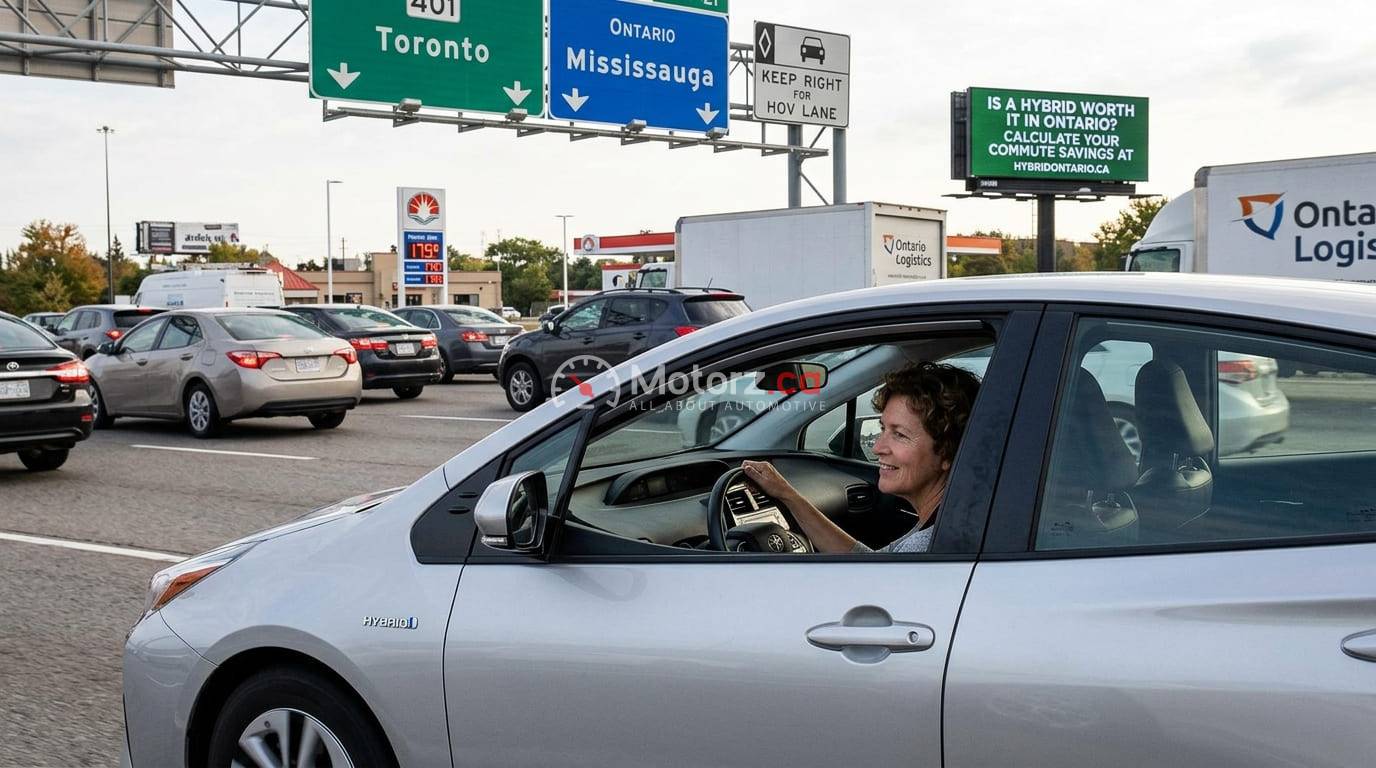
If you live and drive in the Greater Toronto Area (GTA), you do not need a statistics report to tell you that local traffic is an absolute beast. Navigating the gridlock along the Don Valley Parkway (DVP), getting caught in the continuous bottleneck of the Queen Elizabeth Way (QEW), or tackling the daily crawl across the top of the city on Highway 401 has become a mandatory endurance test for millions of local commuters.
But it is not just the lost time that hurts. With Hybrid Worth It for Ontario Commuters to uncomfortable levels, watching your vehicle’s fuel economy display tick steadily upward while you sit completely motionless in traffic is painful for your household budget.
While you cannot personally solve the region’s infrastructure challenges, you are not entirely powerless at the gas station. By implementing deliberate, strategic adjustments to your driving habits, vehicle maintenance, and route planning routines, you can dramatically improve your vehicle’s fuel efficiency.
This comprehensive guide delivers 10 practical, proven fuel-saving tips tailored specifically for the realities of driving in the GTA to help you protect your hard-earned money.
Master the Five-Second Acceleration Rule
Aggressive urban driving is the single greatest contributor to poor fuel economy. In a fast-paced environment like the GTA, it is incredibly common to see motorists accelerate aggressively away from a freshly turned green light on a major regional road, only to slam on their brakes 200 meters later at the next red signal. This habit is known as a jackrabbit start, and it drains fuel rapidly.
The True Cost of Aggressive Starts
When you stomp hard on the accelerator pedal, your engine commands its computer system to dump large quantities of fuel directly into the combustion chambers to generate instant, high-torque power. This rapid dump consumes massive amounts of fuel while achieving almost zero practical travel time benefit.
A prominent European study cited by Canadian automotive authorities revealed that while aggressive city driving and rapid acceleration save less than one minute out of every half-hour of driving, they cause an alarming 37 percent spike in total fuel consumption.
How to Accelerate Smoothly
To maximize your fuel efficiency from a complete stop, implement the five-second rule: when moving away from a traffic light or a stop sign, take a full five seconds to bring your vehicle up to a speed of 20 kilometers per hour. Imagine a cup of hot, lidless coffee sitting directly on your dashboard. Your goal is to accelerate gently enough to keep that coffee from spilling over the brim. This simple mental shift allows your transmission to shift early into higher, more efficient gears, reducing your engine’s overall workload.
Eliminate Unnecessary Hybrid Worth It for Ontario Commuters
Sitting inside a stationary vehicle with the engine running is a regular reality for anyone trying to navigate the morning rush hour around the aggregate cluster of highways linking York, Peel, Halton, Durham, and Toronto. However, understanding exactly when to shut off your engine can save you substantial money over the course of a commuting year.
The Math Behind a Stationary Vehicle
There is a widespread, lingering automotive misconception that turning a car engine off and restarting it consumes more fuel than simply leaving it running. While this was partially true decades ago during the era of mechanical carburetors, modern electronic fuel injection systems have completely eliminated this reality.
Today, restarting an engine requires only a tiny burst of fuel, equivalent to roughly ten seconds of continuous idling.
The 60-Second Rule: If your vehicle is stopped and you expect to remain entirely stationary for more than 60 seconds—whether you are waiting at a prolonged train crossing in Mississauga, sitting in a static lane stoppage on the 401, or waiting outside a local school entrance—it is mathematically more fuel-efficient to turn the engine off completely.
If your vehicle is equipped with an automatic engine stop-start feature, leave it activated. While the sensation of the engine turning off at an intersection can feel unfamiliar at first, this system is specifically designed to prevent fuel loss during the exact stop-and-go bottlenecks that define GTA travel.
Clear Out the Trunk and Ditch Seasonal Dead Weight
Your vehicle requires energy to move mass. The heavier your car is, the harder its engine must work to accelerate, climb inclines, and maintain speed, resulting in increased fuel consumption. Many drivers treat their cargo areas as mobile storage lockers, carrying unnecessary weight for weeks or months at a time.
The Impact of Added Cargo Weight
According to data verified by transport efficiency agencies, carrying an extra 45 kilograms (approximately 100 pounds) of cargo inside your vehicle can reduce your total fuel economy by roughly one percent. While a single percentage point sounds small, it compounds over thousands of kilometers of weekly commuting across regional municipalities.
Common Sources of Unnecessary Weight
Take a critical look inside your cargo area or trunk and remove items that do not serve an active safety purpose:
Large bags of ice-melting salt or play sand left over from the winter season.
Heavy recreational sporting gear, hockey bags, or golf clubs stored between weekly outings.
Bulk household cleaning supplies or hardware materials that should be unloaded immediately after purchase.
Keep your emergency safety essentials—such as jumper cables, a compact first-aid kit, and a spare tire—but clear out the non-essential clutter to lighten your vehicle’s physical load.
Remove Empty Roof Racks and External Cargo Carriers
Aerodynamics play a massive role in your vehicle’s highway fuel economy. Modern cars are carefully sculpted in wind tunnels to slide through the air with minimal wind resistance. Adding external accessories disrupts this streamlined airflow, creating severe aerodynamic drag.
Understanding Aerodynamic Drag
When you mount a roof rack, a specialized bicycle carrier, or a plastic cargo box to the top of your vehicle, you create a physical barrier that the air must actively push against. As your driving speed increases, aerodynamic drag grows exponentially. This means that driving at highway speeds with empty crossbars forces your engine to burn significantly more fuel just to maintain its forward momentum.
The Potential Efficiency Penalties
An independent real-world assessment published by automotive test authorities revealed that leaving standard factory crossbars mounted to a vehicle when they are not in use can damage overall fuel economy numbers by up to 12 percent.
If you use a rooftop box for a long-weekend getaway to a cottage area, take the extra ten minutes to unbolt the system and store it in your garage or basement as soon as you return home. Leaving it mounted for your daily trip down the highway is a guaranteed way to increase your monthly fuel expenses.
Maintain Correct Tire Inflation Pressures
Your tires represent the only physical point of contact between your vehicle and the road surface. If they are underinflated, the tire treads flatten out excessively, creating a wider footprint that dramatically increases rolling resistance.
The Hidden Penalty of Low Pressure
A significant portion of Canadian motorists fail to inspect their tire inflation levels regularly, often waiting until a dashboard warning light illuminates or a technician checks them during a seasonal oil change. However, having just one single tire running four pounds per square inch (PSI) below the manufacturer’s specification can degrade your overall fuel efficiency by approximately four percent.
Underinflated tires make your vehicle work significantly harder to maintain basic cruising speeds, mimicking the feeling of trying to ride a bicycle with soft tires.
How to Find Your Vehicle’s True Inflation Target
Adjust Your Highway Cruising Speeds
The posted speed limits on major 400-series highways across Ontario are typically 100 or 110 kilometers per hour. However, when traffic lanes finally clear up outside of peak rush hours, there is a strong cultural tendency for drivers to travel at speeds pushing 120 kilometers per hour or higher to make up for lost time. This increase in speed carries a steep financial penalty.
The Exponential Nature of Speed vs. Fuel Use
Most modern passenger vehicles are mechanically optimized to achieve their peak fuel efficiency when traveling at a steady pace between 50 and 80 kilometers per hour. Once your speed climbs past the 100 kilometer per hour threshold, your car must overcome rapidly escalating wind resistance.
The Pragmatic Choice for Commuters
If you adjust your cruise control setting down from 120 kilometers per hour to a steady 100 kilometers per hour during a 50-kilometer highway run, you will only add a handful of minutes to your total travel time. In exchange, you will instantly reduce your vehicle’s fuel consumption by approximately one-fifth. Leaving ten minutes earlier allows you to drive at a relaxed pace, lower your stress levels, and save significant cash simultaneously.
Adopt Intelligent Navigation Practices
In the GTA, the shortest route between two geographic locations on a map is rarely the fastest or the most fuel-efficient choice. Choosing a path that forces you to sit in a gridlocked highway backup is highly inefficient compared to taking a slightly longer route that keeps your vehicle moving at a constant, steady speed.
Leverage Real-Time Traffic Apps
Before you put your vehicle into drive, always consult a live navigation platform such as Waze, Google Maps, or Apple Maps, even if you have driven the exact same route to your workplace for several years.
A sudden collision on the Don Valley Parkway or an unexpected lane closure on the Burlington Skyway can instantly transform an easy drive into a two-hour idling session. These applications analyze real-time data from thousands of active cellular devices on the road, automatically rerouting you around unexpected bottlenecks before you get trapped.
The Value of Bundling Errands
Several short, disconnected trips with a cold engine will consume up to twice as much fuel as a single, coordinated journey that addresses multiple stops sequentially. This variance occurs because your vehicle’s engine is engineered to run at its highest efficiency once it reaches its optimal operating temperature.
Plan your weekly schedule to combine grocery shopping, fuel stops, and banking trips into a single, structured loop, always traveling to the furthest destination first to allow the engine to warm up quickly.
Manage Air Conditioning and Cabin Ventilation Strategically
An automobile’s air conditioning system places a significant auxiliary load on the engine. The air conditioning compressor relies on mechanical power delivered directly via an accessory belt from the engine’s crankshaft, which forces the vehicle to consume extra fuel to keep the cabin cool.
Speed Dictates the Best Cooling Method
To keep your interior comfortable without destroying your fuel efficiency, adjust your ventilation strategy based on how fast your vehicle is moving:
Low-Speed Urban Driving (Under 60 km/h): When you are crawling through downtown city streets or navigating residential suburban neighborhoods, turn off the air conditioning compressor and lower your windows to let outside air circulate. At these lower speeds, the aerodynamic penalty of open windows is minimal.
High-Speed Highway Driving (Over 80 km/h): At elevated speeds, opening your side windows creates an aerodynamic parachute effect that drastically increases vehicle drag. In this scenario, roll the windows up completely and engage your climate control system. To reduce engine load, use the cabin air recirculation mode. This forces the system to cool air that has already been chilled inside the car, rather than continuously drawing in hot outside air that requires maximum compressor output to cool down.
Stay Consistent with Fundamental Mechanical Maintenance
A vehicle that suffers from mechanical neglect will quietly waste fuel every single time it runs. Many drivers postpone routine service appointments as a perceived method to save money, but this omission usually results in higher operating costs at the fuel pump over time.
Key Maintenance Areas Affecting Fuel Economy
Ensure your vehicle is regularly inspected for these hidden efficiency drains:
Engine Air Filters: A engine air filter clogged with dirt, salt residue, and environmental debris restricts the volume of fresh air entering the intake system. This restriction forces the engine’s computer to alter the air-fuel ratio, sometimes causing it to run rich by burning excess gasoline to offset the lack of oxygen.
Spark Plug Performance: Worn, fouled, or improperly gapped spark plugs can cause subtle micro-misfires. This allows unburned fuel to escape directly into the exhaust system without being converted into mechanical power.
Wheel Alignment Integrity: Striking a deep pothole on a local street can easily knock your vehicle’s wheel alignment out of specification. If your wheels are slightly toe-in or toe-out, your tires are essentially scrubbing sideways down the road rather than rolling cleanly forward, creating constant mechanical resistance that wastes fuel.
Maximize Fuel Loyalty Programs and Rewards
While altering your driving technique directly reduces the physical volume of fuel your car consumes, utilizing regional consumer loyalty programs addresses the actual financial cost per liter when you stand at the pump.
Many Canadian retail fuel chains offer integrated rewards structures that provide immediate point-of-sale discounts or generate valuable loyalty points that can be redeemed for household essentials:
Automobile Association Discounts: Select Canadian automotive club memberships provide an immediate, automatic discount of three cents per liter at participating national fuel networks when you swipe your membership card or link it to a mobile payment application.
Grocery and Retail Partnerships: Major grocery retail chains have partnered directly with national gas station brands, allowing you to earn regular loyalty points during fuel purchases that can be used to lower your future grocery bills.
Co-Branded Financial Cards: Utilizing specific banking or credit cards tied to particular gas brands often unlocks deeper tier savings per liter, alongside structured cash-back incentives.
Take a few moments to evaluate your current wallet contents, select a primary fuel brand that aligns with your regional commute path, and consistently leverage their digital application to stack rewards on every fill-up.
Direct Comparison: How Much Cash Can These Tips Actually Save?
To see how these seemingly small lifestyle modifications accumulate over a standard year of driving within the Greater Toronto Area, analyze this projections table based on a typical compact crossover traveling 20,000 kilometers annually:
Checklist: Your Daily GTA Fuel-Saving Pre-Drive Routine
Before you turn your key or press the engine start button every morning, spend thirty seconds running through this quick mental checklist to ensure your vehicle is optimized for maximum efficiency:
The Navigation Check: Have you checked your real-time traffic app for live congestion updates on your planned route?
The Cargo Check: Are there any heavy bags, leftover seasonal items, or unnecessary items sitting in your trunk?
The Roof Check: Is your rooftop cargo box or bike rack still mounted even though it is completely empty?
The Tire Visual Check: Do your tires look properly inflated, or does one appear slightly low against the pavement?
The Climate Strategy: Is the weather pleasant enough to rely on open windows and natural ventilation instead of turning on the air conditioning compressor?
Small Adjustments Equal Significant Annual Returns
Outsmarting the gas pump does not require purchasing a brand-new hybrid or battery electric vehicle. For the average driver navigating the complex highway and municipal road networks of the Greater Toronto Area, massive savings are hidden entirely within daily behavior modifications.
By training your right foot to accelerate progressively, adjusting your highway cruising speed down to a steady pace, checking your tire pressures monthly, and using live navigation data to avoid idling in static lane blockages, you can successfully insulate your household budget from the unpredictable swings of regional fuel pricing. Commit to implementing just three or four of these strategies during your commute this week—your wallet will thank you over the long haul.