For many Car Ownership in the GTA, vehicle ownership is categorized as an absolute necessity rather than a luxury. With sprawling suburban infrastructure, interconnected employment hubs, and regional transit systems that can add hours to a daily commute, buying a vehicle feels like the ultimate ticket to personal and professional freedom.
If you live in Brampton, however, that ticket comes with a significantly higher price tag than almost anywhere else in the country.
Most car buyers sit down and calculate their monthly budget based entirely on the sticker price of the car or the bi-weekly financing payment advertised by the dealership. But the true cost of vehicle ownership in Peel Region stretches far beyond your principal auto loan payment. From regional insurance surcharges to rapid mechanical wear and tear driven by aggressive commuter patterns, the hidden costs of running a car in the Flower City can catch unexpected drivers off guard.
Let’s pull back the curtain on the actual expense sheet of driving in Brampton and look at how you can avoid the localized financial pitfalls that drain the bank accounts of GTA motorists.
The Car Ownership in the GTA: Breaking Down the Real Numbers
To understand how expenses accumulate, it helps to look at the baseline national numbers before overlaying localized GTA pressures. Financial reports indicate that the baseline cost of running a typical passenger vehicle across Canada has settled at more than thirteen hundred per month when factoring in depreciation, fuel, debt servicing, and standardized maintenance.
In Brampton, that provincial average serves as a starting point. Due to unique geographic variables, local motorists frequently pay hundreds of dollars more each month to operate the exact same vehicle models as their counterparts in other parts of Ontario.
The Brampton Insurance Premium Penalty
It is impossible to discuss vehicle expenses in Peel Region without addressing the most glaring financial hurdle: auto insurance.
Why the Postcode Lottery Penalizes Brampton Drivers
Ontario auto underwriters utilize a geographic grouping framework to establish baseline premium metrics. Because Brampton features a dense volume of high-volume commuter routes like Highway 410, Bovaird Drive, and Steeles Avenue, the city statistically logs an elevated frequency of multi-vehicle collisions.
Furthermore, high historical rates of organized insurance fraud and staged accidents mean that insurance companies payout massive sums for localized property damage and rehabilitation claims within Peel Region. To offset these regional losses, insurers raise the baseline cost for every single policy registered to a Brampton postal code, penalizing even those drivers who possess entirely spotless driving abstracts.
The Real Cost Variance
Market analytical studies demonstrate a stark contrast between Brampton and nearby municipalities. As of recent insurance pricing indices, the average annual auto insurance premium in Brampton has reached approximately thirty-eight hundred.
The Financial Impact of the GTA Auto Theft Crisis
Vehicle theft across the Greater Toronto Area has transformed from a localized nuisance into a highly sophisticated, organized crime industry. Because Brampton contains extensive suburban subdivisions featuring accessible driveways close to major exit highways, local homeowners find themselves on the front lines of this epidemic.
The Electronic Relay Attack Surcharge
Modern vehicle theft rarely involves shattered side glass or hot-wired steering columns. Instead, organized crime rings utilize specialized handheld scanning equipment to clone the radio frequency signals emitted by your keyless entry fob while it sits safely inside your home. Within seconds, thieves gain full electronic entry and drive the vehicle away without triggering an audible alarm.
In response to this surge in comprehensive insurance claims, major insurance providers have initiated an annual tracking surcharge on highly targeted vehicle models, including full-size pickup trucks and premium midsize SUVs. If you own a high-theft vehicle model and live in Brampton, your insurer may add an automatic high-theft premium penalty to your policy unless you provide physical proof that you have professionally installed an approved aftermarket tracking and recovery system.
Defensive Financial Outlays: Protecting Your Asset
To keep your car secure and retain your claims-free policy discounts, you will likely need to make upfront investments in security infrastructure that drivers in calmer markets do not have to consider:
Aftermarket Tracking Subscriptions: Upfront installation plus recurring diagnostic monitoring fees.
Physical Driveway Barriers: Heavy-duty security bollards installed directly into your concrete driveway or specialized wheel boots.
Signal Blocking Infrastructure: High-grade Faraday boxes and security pouches to shield your electronic keys from external relay devices.
Mechanical Abuse: Stop-and-Go Commuter Gridlock
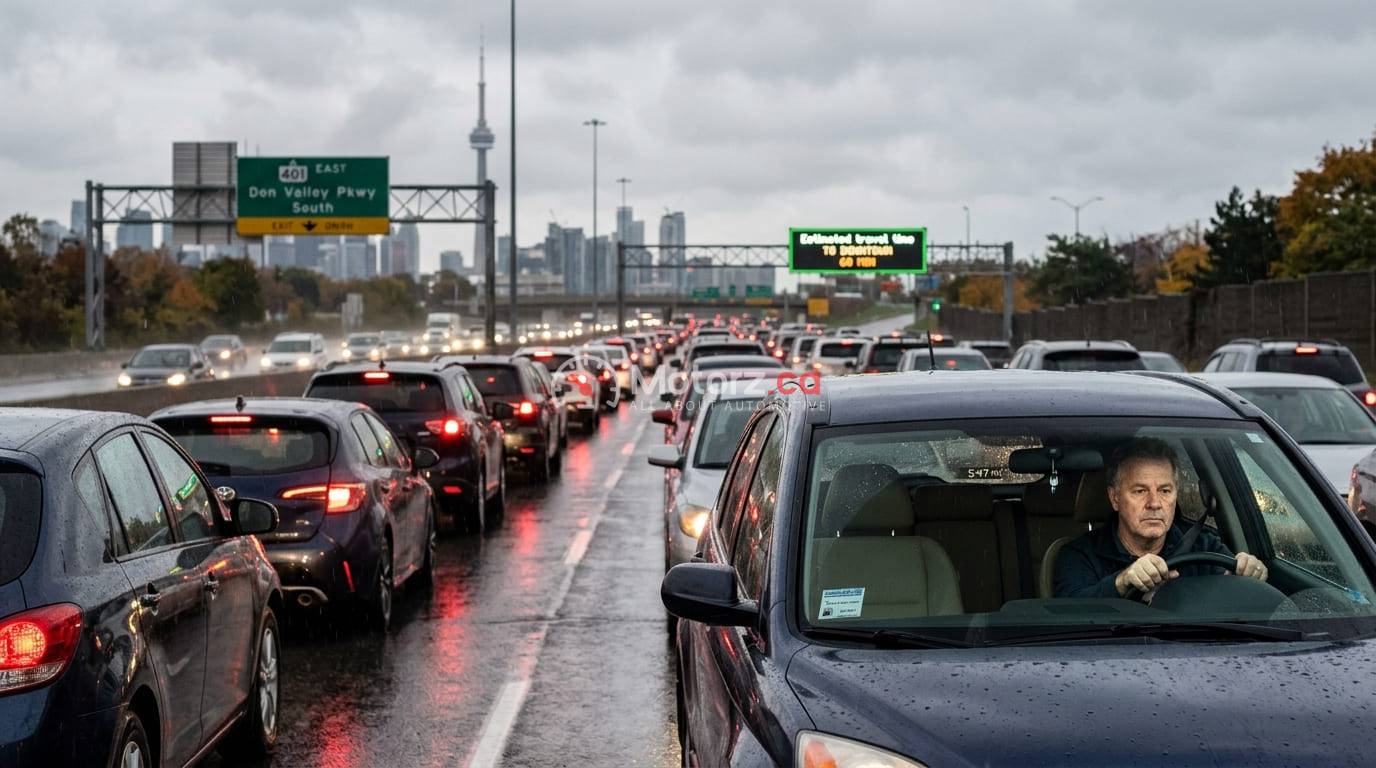
If your daily routine involves creeping along the regular morning bottleneck trying to transition from the regional roads onto the southbound Highway 410 or the westbound Highway 401, your vehicle is enduring severe mechanical stress.
Accelerated Brake and Transmission Depletion
Automotive engineers design standard factory maintenance schedules around idealized operating conditions, assuming a balanced mix of open highway transit and urban driving. Constant stop-and-go commuting flips these assumptions upside down.
Creeping forward three meters at a time causes your transmission to constantly hunt for a gear, raising internal fluid temperatures and accelerating clutch wear. Similarly, continuous low-speed braking glazes over brake pad compounds and causes rotors to warp prematurely under heat stress. Brampton commuters regularly find themselves replacing brake sets and tires twice as fast as drivers operating in light-traffic environments.
Fluid Degradation and Reduced Engine Efficiency
When a vehicle spends forty-five minutes idling in a traffic jam, the engine continues to burn fuel and log operational hours even though the odometer remains completely stationary. This behavior degrades your engine oil long before you hit the kilometer milestone indicated on your windshield service sticker. Failing to shorten your oil change intervals under heavy gridlock conditions can lead to internal sludge buildup, compromising long-term reliability and slashing your resale value.
Fuel Waste and the Cost of Idling in Traffic
The price you observe on the localized gas station signs only tells half the story. The true financial efficiency of your vehicle depends entirely on your real-world fuel consumption metrics during your active commuting windows.
The True Cost of Low Kilometer-Per-Liter Metrics
A vehicle that claims an optimistic rating of eight liters per hundred kilometers on open highways can easily drop to fourteen liters per hundred kilometers when trapped in heavy GTA construction zones and traffic queues.
If you travel thirty kilometers to work each morning, your vehicle might spend half that duration burning fuel while completely stationary. Over an entire working year, this idle consumption translates to hundreds of liters of wasted fuel that does nothing but release emissions and drain your monthly budget.
Rapid Depreciation in the GTA Market
Depreciation is universally understood as the single largest hidden cost of vehicle ownership, quietly eroding your net worth every day your car sits in the driveway. However, the local driving environment in Peel Region accelerates this downward valuation curve significantly.
The Toll of Elevated Kilometer Counts
Because commuting from Brampton to employment centers in downtown Toronto, Vaughan, or Mississauga involves traversing massive highway networks daily, local vehicles accumulate kilometers at an accelerated pace. A vehicle that logs thirty thousand kilometers annually will drop into lower valuation tiers far faster than an identical model driven under average historical parameters of fifteen thousand kilometers per year.
The Body Damage and Road Debris Discount
GTA highways are heavily salted during the winter months, and constant proximity to heavy commercial dump trucks means your vehicle’s front bumper, hood, and windshield are subjected to a non-stop barrage of stone chips and road debris.
When the time arrives to trade in your vehicle or list it on the secondary market, prospective buyers and dealership appraisers will systematically deduct value for sandblasted paintwork, minor door dings from crowded commuter parking spaces, and windshield pits, compounding your total cost of ownership.
Actionable Strategies to Reclaim Your Car Budget
While you cannot rewrite municipal infrastructure or instantly lower regional traffic density, you can adopt clear, practical measures to insulate your finances from these localized premium spikes.
Opt for an Insurance-Friendly Vehicle Profile
If you are preparing to purchase your next vehicle, look past styling and horsepower and evaluate safety metrics and theft statistics. Choosing a vehicle with low regional theft demand, such as a midsize wagon or a family-oriented compact crossover, can instantly slice your annual insurance premiums by more than a thousand dollars compared to driving a highly targeted luxury sedan or a full-size pickup truck.
Leverage Dedicated Telematics Programs
Enrolling in a Usage-Based Insurance (UBI) program allows you to share your actual driving metrics directly with your provider via a dedicated smartphone app. If you consistently maintain moderate speeds, avoid aggressive braking maneuvers during gridlock, and minimize midnight driving, you can earn substantial discounts that override your postal code’s high baseline risk profile.
Shift Maintenance Priorities to a Preventative Model
Do not wait for a component to fail before booking a garage appointment. Transition to a proactive service model:
Change your engine oil based on time and seasonal idling duration rather than strictly relying on your odometer reading.
Clean and lubricate your brake assemblies every spring to clear away corrosive road salts accumulated during winter driving.
Keep your tires inflated to precise manufacturer specifications to minimize roll resistance and maximize fuel efficiency in stop-and-go traffic.
Look Beyond the Dealer Sticker
True car ownership literacy requires looking past the monthly finance payment and acknowledging the comprehensive structural expenses of your environment. By budgeting consciously for high regional insurance premiums, shifting your maintenance schedules to protect against gridlock wear, and choosing vehicles that do not attract the attention of auto theft rings, you can successfully navigate the financial realities of driving in Brampton while keeping your personal budget firmly on track.