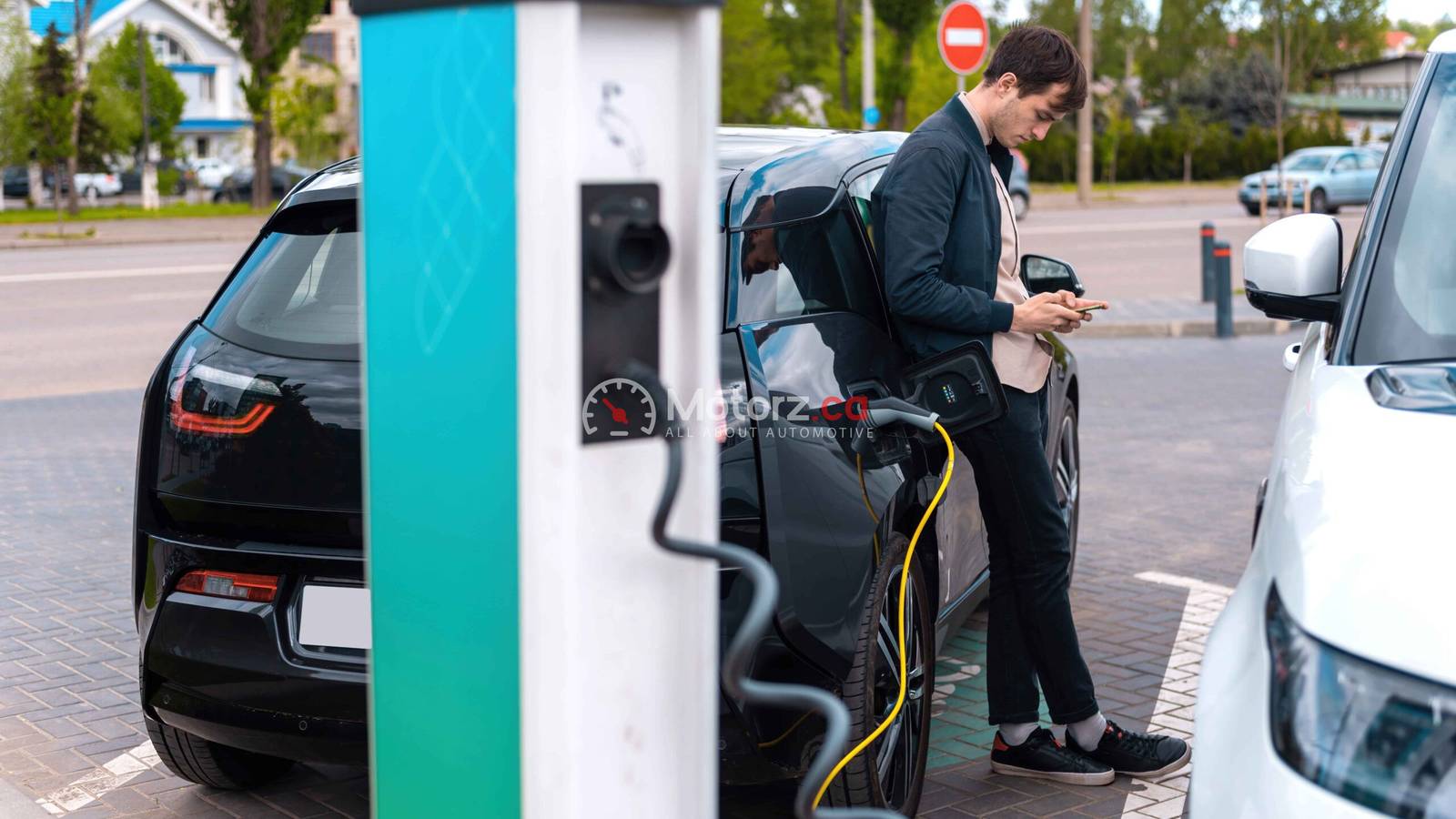
Welcome to the Charging Stations Ottawa revolution! The streets of Ottawa are seeing more and more silent, emission-free vehicles, and as a homeowner, one of the most significant advantages of driving an EV is the convenience of “fuelling up” right in your own garage. Installing a dedicated home charging station—technically known as Electric Vehicle Supply Equipment (EVSE)—is an investment that significantly enhances the EV ownership experience.
This comprehensive guide is designed specifically for Ottawa homeowners. We’ll demystify the two most crucial aspects of this project: the installation costs you can expect and the permit process required by the Electrical Safety Authority (ESA) and the City of Ottawa. We’ll focus primarily on the fast, efficient, and most popular residential option: the Level 2 Charging Stations Ottawa charger.
2. Understanding Charging Stations Ottawa Levels
Before diving into costs, it’s essential to know the difference between the two main types of residential charging:
2.1. Level 1 Charging (120 Volts)
Description: Uses a standard 120V household outlet (the same plug as a toaster or lamp).
Speed: Very slow. It typically adds only about 4 to 8 km of range per hour of charging.
Cost: Essentially free, as your Charging Stations Ottawa typically comes with the charging cord. No special installation or permit is usually required unless new wiring is needed.
Best For: Plug-in Hybrid Electric Vehicles (PHEVs) or Battery Electric Vehicle (BEV) owners with very low daily mileage.
2.2. Level 2 Charging (240 Volts)
Description: Uses a 240V circuit, similar to a clothes dryer or electric stove. This requires a dedicated circuit and wiring.
Speed: Fast. It provides about 19 to 128 km of range per hour, fully charging most Charging Stations Ottawa overnight (4-10 hours).
Cost: Requires purchasing an Charging Stations Ottawa unit and professional installation by a Licensed Electrical Contractor (LEC).
Best For: The vast majority of Ottawa EV owners looking for convenient, daily, and rapid charging at home. This is the focus of the remainder of this guide.
3. The Breakdown of Level 2 EV Charger Installation Costs in Ottawa (2025 Estimates)
The total cost of your Level 2 EV charger installation in Ottawa is highly variable and depends on a few key factors related to your home’s existing electrical infrastructure. Below is a detailed breakdown, with estimated 2025 price ranges in Charging Stations Ottawa Dollars (CAD).
3.1. Cost of the Level 2 EVSE Unit
Unit Price: $500 to $2,000+
The price depends on the charger’s brand, features (e.g., Wi-Fi connectivity, smart load management, energy monitoring), and charging capacity (Amperage). Reputable brands like Tesla, ChargePoint, Flo, and Grizzl-E fall into this range.
3.2. Standard Installation Labour and Materials
Cost Range: $1,000 to $2,500 (If your electrical panel has sufficient capacity and is near the charger location).
This is the typical cost for a straightforward installation that includes:
Running a new, dedicated 240V circuit (typically 40 or 50 Amp) from the existing electrical panel to the charger location (e.g., in an attached garage).
The necessary wiring, conduit, breaker, and installation hardware.
Labour from a Licensed Electrical Contractor in Charging Stations Ottawa (LECs typically charge $100 to $200 per hour).
Handling of the ESA permit application and inspection.
3.3. Key Variable Cost Factors (The “Ifs”)
These factors can significantly increase the total cost, pushing your budget towards the higher end of the spectrum.
3.3.1. Electrical Panel Upgrade (The Big Cost)
Cost Range: $1,800 to $3,500+
If your home has an older 100-amp electrical panel and it’s already running close to capacity (common in older Ottawa homes with electric stoves, heat pumps, or hot tubs), adding a 40-50 amp Level 2 charger can overload the system.
The Fix: You’ll need a service upgrade to a 200-amp Charging Stations Ottawa. This is a major electrical project that significantly increases the total cost.
Alternative: An EV energy management system (sometimes called a load-sharing or load-limiting device) can be installed for an additional $500 to $1,200. This device safely monitors your home’s total electrical consumption and automatically slows or pauses EV charging if the house load gets too high, potentially avoiding a costly panel Charging Stations Ottawa.
3.3.2. Distance and Location Complexity
Additional Wiring/Conduit: $300 to $1,000+
If your electrical panel is on one side of the house and your parking space is on the other, or if the wiring has to run through finished walls, difficult ceilings, or long runs of external conduit, the labour and material costs will increase substantially.
Detached Garage/Trenching: $1,000 to $5,000+
Installing a charger in a detached garage often requires digging a trench (trenching) to run the new, buried electrical line. This is the most Charging Stations Ottawa and expensive scenario.
3.3.3. Permits and Inspections
Fee Range: $50 to $500
While the cost is minor compared to the total installation, remember that an Electrical Safety Authority (ESA) permit is a non-negotiable legal requirement in Ontario. Your LEC will typically factor the permit fee into their quote and handle the application.
4. The Crucial Step: Ottawa Permit and Safety Guide
In Ottawa, any installation or modification to your home’s electrical system, including a new 240V circuit for an EV charger, is regulated by the Electrical Safety Authority (ESA), not the City of Ottawa Building Department. This is a vital Charging Stations Ottawa.
4.1. The Role of the Electrical Safety Authority (ESA)
The ESA is responsible for administering the Ontario Electrical Safety Code (OESC). Its primary role is to ensure all electrical work is safe and compliant.
4.1.1. Who Must Apply for the Permit?
Licensed Electrical Contractor (LEC): In almost all cases, your hired electrician will file a Notification of Work (the official ESA permit) before they begin the installation. This is the recommended path for Ottawa homeowners.
Homeowner (DIY): A homeowner may apply for the permit only if they own and occupy the residence, are doing the work themselves, and plan to continue living there. However, this is highly discouraged for Level 2 EV charger installations due to the high-voltage risks and complexity.
4.1.2. The ESA Inspection and Certificate
Once the installation is complete, the LEC will notify the Charging Stations Ottawa. An ESA inspector will then review the work to ensure it meets the OESC.
Certificate of Acceptance: Upon successful inspection, the ESA will issue a Certificate of Acceptance. This certificate is your proof that the installation is safe, up-to-code, and is often required for insurance purposes and is mandatory for any government rebates. Never pay your electrician in full until you have this certificate.
4.2. City of Ottawa and Zoning Considerations
For a standard charger installation inside an attached garage or mounted to the house wall, no City of Ottawa Building Permit is typically required. The process is handled solely by the ESA.
Exceptions (When you might need a City Permit):
If the installation requires structural changes (e.g., building a new structure to house the charger).
Major excavation/trenching work for a detached garage may require a Site Alteration Permit from the City, though the LEC often manages the electrical aspect through the ESA.
Condos and Townhomes: Owners in multi-unit dwellings must adhere to the building’s specific bylaws and the Ontario “Right to Charge” legislation, requiring formal approval from the condo board before an LEC can even begin work.
5. Step-by-Step Installation Process for Ottawa Homeowners
Working with a licensed Charging Stations Ottawa electrician makes the process seamless, but knowing the steps helps you manage the project effectively.
5.1. Step 1: Initial Assessment and Quote
A professional LEC will perform a load calculation to determine your home’s existing electrical consumption and whether your panel has the capacity for the new charger. This step is critical and forms the basis of the quote.
5.2. Step 2: Choosing Your Charger and Location
Select a CSA, cUL, or cETL approved charger (certified for use in Canada). The LEC will help you choose the best mounting location—ideally close to your parking spot and the electrical panel, and protected from the elements if outdoors (requiring a NEMA 3R or 4X rated unit).
5.3. Step 3: Permitting (Handled by the LEC)
The electrician files the Charging Stations Ottawa Notification of Work before they start wiring.
5.4. Step 4: Installation
The LEC installs the new dedicated 240V circuit, breaker, conduit, and mounts the charger unit (either hardwired or a NEMA 14-50 outlet). This usually takes 3 to 8 hours for a straightforward installation.
5.5. Step 5: ESA Inspection and Certificate
The LEC schedules the inspection. Once the work passes, the ESA issues the Certificate of Acceptance. You are now ready to charge!
6. Maximizing Your Savings: Rebates and Time-of-Use Charging
While the federal government’s Zero Emission Charging Stations Ottawa Infrastructure Program (ZAP) and the previous Ontario EV rebates have ended, there are still ways for Ottawa EV owners to reduce their total cost of ownership.
6.1. Potential for Future Rebates
Keep an eye on the websites of the federal government (Natural Resources Canada) and Hydro Ottawa. Rebate programs are often cyclical and can return to encourage the adoption of EV charging infrastructure. Many certified electricians can assist with future rebate applications.
6.2. Smart Charging and Time-of-Use (TOU) Rates
Ottawa residents served by Hydro Ottawa can opt into Time-of-Use (TOU) pricing or Tiered Rates.
TOU Advantage: By using a smart charger and setting it to charge only during the off-peak hours (typically overnight, 11 p.m. to 7 a.m.), you can pay the lowest electricity rate. This strategy is one of the biggest long-term cost savings of owning a home charging station.
7. Why You Need a Licensed Electrical Contractor (LEC)
The temptation to DIY or hire an uncertified handy-person might save you money upfront, but for high-voltage, high-amperage equipment like a Level 2 charger, it is not worth the risk.
Safety: A certified LEC is trained to comply with the Charging Stations Ottawa, minimizing the risk of electrical fires, shock, and system damage.
Insurance: Work not permitted and inspected by the ESA can void your home insurance policy in the event of an electrical fire.
Code Compliance: Only an LEC can guarantee the installation will pass the mandatory ESA inspection and receive the essential Certificate of Acceptance.
Warranties: Most EV and charger manufacturers will void their warranties if the installation was not performed by a licensed professional.