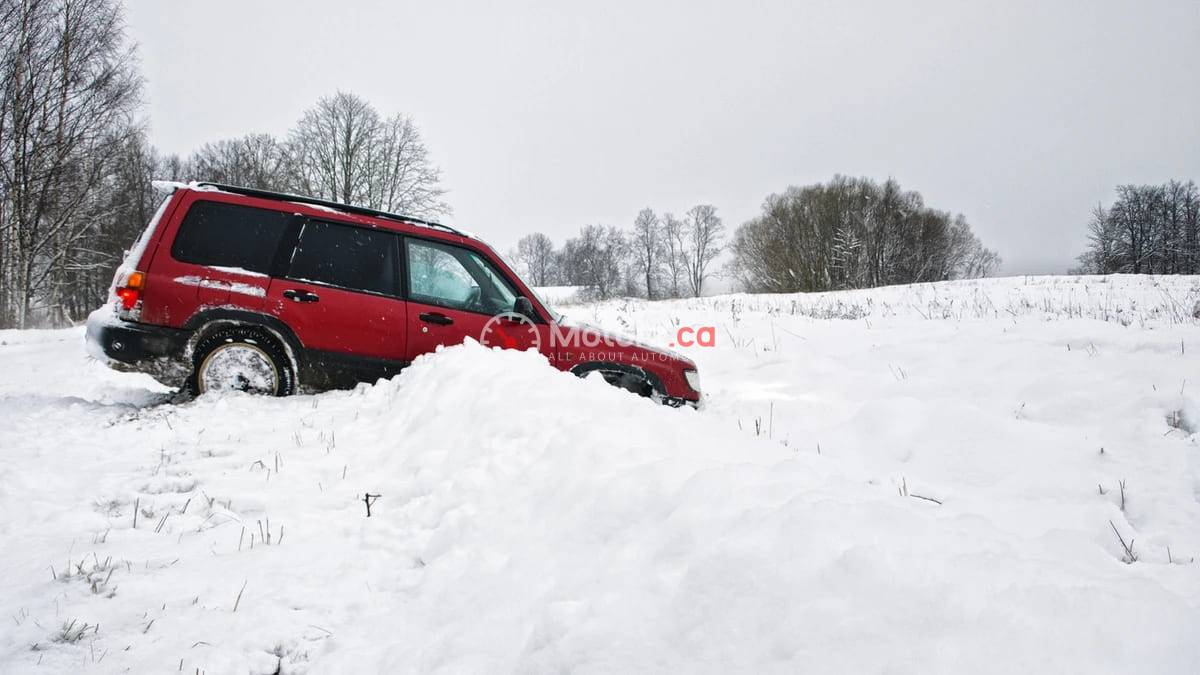
It is the moment every Winter Driving Masterclass dreads. You are navigating a snow-covered curve when you feel that sickening sensation: the steering wheel goes light, the nose of your car stops pointing where you want it to go, and a massive, white snowbank begins to loom larger in your windshield. It is an “invitation” you never wanted to accept.
Winter driving is a high-stakes game of physics. When the friction between your tires and the asphalt is replaced by a layer of slick ice or fluffy powder, your vehicle’s weight and momentum become your biggest enemies. However, sliding into a ditch is not an inevitable part of winter. Most “snowbank invitations” can be politely declined with the right combination of preparation, technique, and calm decision-making.
In this Troubleshooter guide, we will break down the mechanics of winter skids, explain the crucial difference between understeer and oversteer, and provide a step-by-step masterclass on how to maintain control when the roads turn treacherous.
The Winter Driving Masterclass: Why You Lose Traction
To avoid a snowbank, you Winter Driving have to understand why you are headed toward it. Traction is the grip your tires have on the road. In winter, this grip is compromised by two main factors: lubrication (water/slush) and temperature (which hardens the rubber).
Momentum vs. Grip
Your car wants to travel in a straight line. Turning the wheels creates a force that tries to change that direction. If the force required to turn the car exceeds the available grip of the tires, momentum wins, and the car continues straight—usually into a snowbank. This is the fundamental reason why speed is the most significant variable in winter accidents.
The “Contact Patch” Reality
At any given moment, only a few square inches of rubber from each tire are actually touching the road. When that small “contact patch” is lifted by a layer of slush—a phenomenon similar to hydroplaning—you lose the ability to steer, brake, or accelerate.
Understeer and Oversteer: Know Your Enemy
When your car starts to slide, it will typically do one of two things. Knowing which one is happening determines your survival strategy.
Understeer: The “Plowing” Effect
Understeer is when you turn the steering wheel, but the car continues to travel straight. This is common in front-wheel-drive vehicles.
The Cause: The front tires have lost grip because they are being asked to do too much (steer and brake or steer and accelerate simultaneously).
The Fix: Stop turning the wheel more. Counter-intuitively, you may need to straighten the wheels slightly to allow the tread to regain a “bite” on the snow before trying to turn again.
Oversteer: The “Fish-Tail” Effect
Oversteer is when the back of the car swings out, trying to overtake the front. This is common in rear-wheel-drive cars or when you lift your foot off the gas too quickly in a corner.
The Cause: The rear tires have lost traction, often due to a sudden shift in weight toward the front of the car.
The Fix: Look where you want to go and steer into the skid. If the back is swinging left, turn the wheel left.
How to Politely Refuse a Snowbank: Recovery Techniques
If you find yourself drifting toward the edge of the road, do not panic. Panic leads to “stomp and steer,” which almost always results in a crash. Follow these steps instead.
Look Where You Want to Go
This is the “Golden Rule” of performance driving. Your hands naturally follow your eyes. If you stare at the snowbank, you will drive into the snowbank. Instead, focus your gaze down the road on the clear path you want the car to take.
Relinquish the Pedals
If you are sliding, your tires are overwhelmed. Adding more “input” by slamming on the brakes or flooring the gas will only make the slide worse.
The Neutral Approach: Take your feet off both the gas and the brake. This allows the tires to dedicate 100 percent of their available grip to steering.
Smooth Steering Inputs
Avoid “sawing” at the wheel. Make calm, deliberate steering movements. If the car does not respond immediately, do not turn the wheel further. Wait for the weight of the car to shift and for the tires to find a patch of pavement or gravel.
The Role of Technology: ABS and ESC
Modern cars come equipped with Electronic Stability Control (ESC) and Anti-lock Braking Systems (ABS). These are your “silent co-pilots” in a winter emergency.
Don’t Pump the Brakes
In the old days, drivers were taught to pump the brakes to prevent lock-up. In a modern car, the ABS does this for you at a rate of dozens of times per second.
How to use it: If you must brake in a slide, press the pedal firmly and hold it. You will feel a pulsing sensation and hear a grinding noise—this is normal. It means the system is working to give you steering control while slowing you down.
Understanding Traction Control
Traction control prevents the wheels from spinning during acceleration. However, if you are stuck in deep snow and need to “rock” the car out, you may actually need to turn traction control off momentarily to allow the wheels to spin and dig through to the pavement.
Prevention: Preparation Before the Storm
The best way to refuse a snowbank’s invitation is to never get close enough to hear it.
The Winter Tire Advantage
All-season tires begin to turn hard and “plastic-like” when temperatures drop below 45 degrees Fahrenheit. Winter tires are made of a softer compound that stays flexible in extreme cold, featuring “sipes” (tiny slits) that “bite” into ice.
Fact: A front-wheel-drive car with winter tires will outperform an all-wheel-drive car with all-season tires in almost every braking and cornering test.
Weight Distribution
If you drive a rear-wheel-drive pickup truck, the back end is naturally light. Placing several bags of sand or tubes of salt over the rear axle can provide the necessary downward force to keep those rear tires planted on the road.
Staying in Command of the Cold
Winter driving is a test of patience and finesse. By understanding the physics of traction, mastering the difference between understeer and oversteer, and trusting your vehicle’s safety systems, you can navigate the season with confidence.
The next time the road gets slick and a snowbank offers an “invitation,” remember to stay off the pedals, steer smoothly, and keep your eyes on the path ahead. You have the tools and the knowledge to stay on the road.