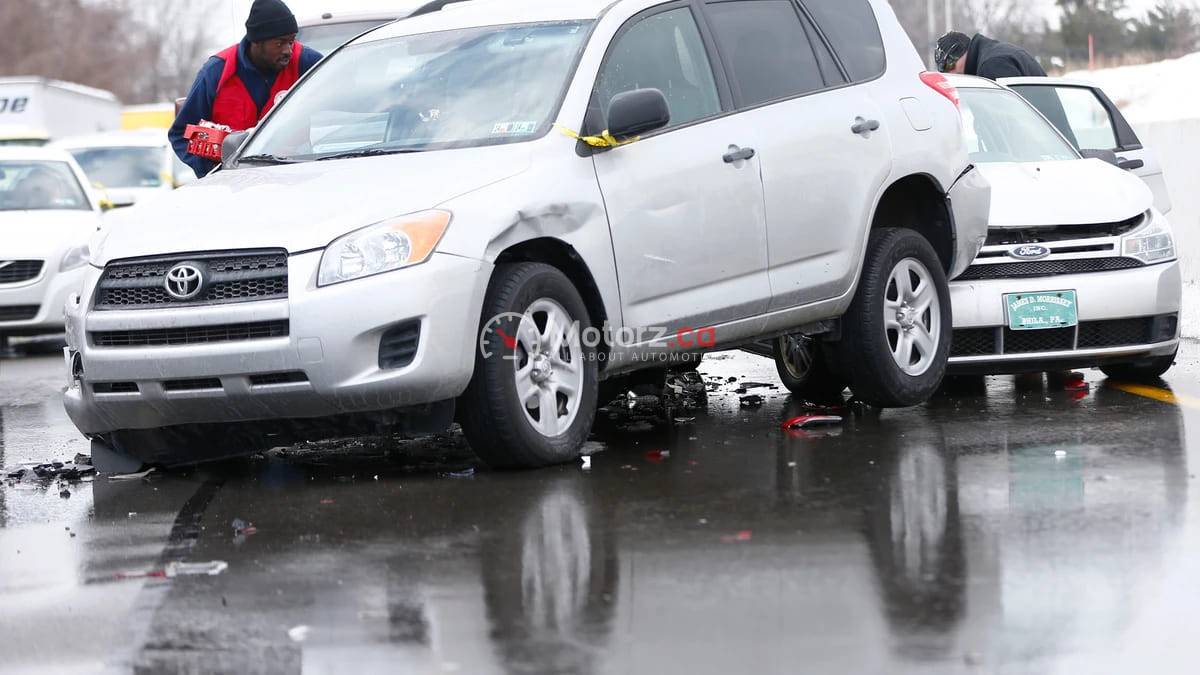
Imagine this scenario: You are driving home after a long, productive day. The radio is playing quietly, traffic is moving at a Medical and Insurance Mess Smoothly, and you are thinking about what to cook for dinner. Suddenly, you hear the terrifying screech of braking tires, followed by a violent, metal-crushing impact. Your car spins, the airbags deploy in a cloud of dust, and your world is instantly turned upside down. Within a fraction of a second, a normal afternoon transforms into a chaotic, high-stress crisis.
In the immediate aftermath of a car accident, your body is flooded with adrenaline. Your heart races, your hands shake, and your brain struggles to process what just happened. Yet, this exact moment of peak vulnerability is precisely when you are required to make critical decisions. The actions you take—or fail to take—in the minutes, hours, and days following a crash will heavily dictate your physical recovery, your legal rights, and your financial protection.
Unfortunately, many drivers inadvertently sabotage their own interests simply because they do not know how to handle the complex aftermath. They make casual statements at the scene that sound like an admission of fault, fail to document fleeting evidence, or sign premature settlement agreements with aggressive insurance adjusters. Navigating this post-accident mess requires a clear, structured blueprint. This comprehensive guide serves as your step-by-step survival manual, walking you through the legal, medical, and insurance maze so you can protect your health and your wallet.
The Medical and Insurance Mess Smoothly: Why It Feels So Overwhelming
A car collision is not just a singular physical event; it is the starting point for three completely separate, interlocking administrative processes. The moment your vehicle is struck, you are simultaneously entered into a medical evaluation system, an insurance claims matrix, and a potential legal dispute.
Each of these systems operates with its own set of strict rules, tight deadlines, and complex jargon. Medical providers focus on diagnostic codes; insurance adjusters focus on liability percentages and property valuation charts; personal injury attorneys focus on statutes of limitations and tort laws. Trying to manage all three channels while managing physical pain and a disrupted daily routine is naturally overwhelming. Understanding the timeline and expectations of each phase allows you to slow the situation down, regain control, and approach the recovery process strategically.
Immediate Actions at the Collision Scene: Securing Safety and Evidence
The first sixty minutes following a motor vehicle accident are absolutely critical. The evidence available at the scene is highly volatile—skid marks fade, debris is swept away, weather conditions change, and witnesses leave. Your primary objective during this golden hour is to stabilize the environment and collect raw data.
Prioritizing the Immediate Safety Check
Before you reach for your smartphone or step out of your vehicle, take a deep, grounding breath. Assess your own physical condition. Can you move your fingers and toes? Do you feel any sharp pain in your neck, back, or abdomen? Once you have evaluated yourself, check on the physical status of any passengers riding in your cabin.
If your vehicle is still operational and sitting in a dangerous live traffic lane, activate your hazard lights and carefully move the car to the nearest safe location, such as a highway shoulder, a median, or a nearby parking lot. Moving your vehicle to a safe spot is not an admission of fault or leaving the scene of an accident; it is a vital safety measure designed to prevent a catastrophic secondary collision. If the vehicle cannot be moved, leave it exactly where it is, exit the cabin if it is safe to do so, and move yourself entirely off the roadway.
The Critical Role of Law Enforcement
No matter how minor the collision appears, and even if the other motorist begs you not to involve authorities, you must call emergency services immediately. Request that a law enforcement officer be dispatched to the location to write an official accident report.
An official police report serves as an unbiased, third-party documentation of the event. The responding officer will interview both drivers, examine vehicle damage layouts, note weather and road conditions, and often issue citations for traffic violations. Insurance adjusters and courts give immense weight to these official reports when determining fault. If an officer cannot report to the scene due to a high volume of local emergencies, make sure you travel directly to the nearest police precinct as soon as possible to file an over-the-counter accident report manually.
Comprehensive Evidence Gathering Protocol
While waiting for law enforcement to arrive, utilize your smartphone camera to transform yourself into a meticulous field investigator. Do not rely on memory. Capture a vast array of high-resolution digital photographs and videos, ensuring you document:
Clear close-ups of the structural damage on all involved vehicles from multiple angles
Wide-angle panoramic shots displaying the entire layout of the accident scene, including lane markings, traffic lights, stop signs, and construction barriers
Skid marks on the pavement, gouges in the asphalt, or scattered car parts showing the points of impact
The current weather conditions, standing water on the road, and visibility limits
The physical appearance of the other driver, including any obvious signs of intoxication or distraction
Exchanging Crucial Information Safely
Approach the other motorist to exchange vital administrative details. Keep the conversation strictly professional, polite, and brief. You must secure the following pieces of information:
The driver’s full legal name, current phone number, residential address, and email address
The name of their auto insurance company and their specific policy identification number
The vehicle’s license plate number, make, model, year, and vehicle identification number (VIN)
The legal name and contact details of the registered owner of the car, if different from the driver
The Danger of Casual Conversations
When interacting with the other driver, passengers, or bystanders, you must carefully monitor your language. Avoid making casual, polite statements like “I am so sorry,” “I did not see you,” or “I thought I had time to make that turn.”
In the world of personal injury law, simple expressions of politeness can be twisted and presented as a formal admission of liability. Stick purely to exchanging the required data points and let the objective physical evidence speak for itself.
The Medical Evaluation Phase: Identifying Silent Injuries
Once you leave the physical collision scene, your absolute next priority must be a professional medical evaluation. Skipping this step is one of the most common and expensive mistakes an accident victim can make.
Understanding the Adrenaline Masking Effect
During a high-impact event, your body enters a classic fight-or-flight survival mode, releasing massive amounts of adrenaline and endorphins. These powerful natural hormones act as temporary painkillers, dulling your immediate perception of physical trauma.
Consequently, you might walk away from a crash feeling completely fine, only to wake up forty-eight hours later suffering from agonizing pain. Severe, life-altering medical conditions routinely exhibit delayed-onset symptoms. These hidden conditions include:
Whiplash and Soft Tissue Damage: Micro-tears in neck muscles, tendons, and ligaments that swell over time, leading to severe chronic headaches, radiating shoulder pain, and limited mobility.
Internal Bleeding and Organ Trauma: Blunt force trauma against a steering wheel or seatbelt can cause deep internal hemorrhaging that shows no external bruising initially but can become life-threatening if left untreated.
Traumatic Brain Injuries (TBIs): Concussions caused by the rapid shaking of the brain within the skull can manifest days later as subtle dizziness, cognitive fog, sudden mood swings, or light sensitivity.
Establishing the Medical Chain of Causation
From an insurance and legal perspective, seeking prompt medical attention within twenty-four to forty-eight hours of a collision is non-negotiable. It establishes an unbreakable chain of causation linking the car crash directly to your physical injuries.
If you wait several weeks to see a physician, the opposing insurance company will exploit that gap in time. They will aggressively argue that your injuries were either not severe enough to warrant immediate care, or that a completely separate, unrelated event occurred during those intervening weeks to cause your physical issues. Protect your health and your claim by visiting an emergency room, an urgent care clinic, or your primary care physician immediately.
Mastering the Insurance Claims Maze: Tactics for Success
Dealing with insurance companies can feel like trying to play a game where the rules are hidden from you. To navigate this phase successfully, you must recognize that insurance companies, including your own, operate as profit-focused corporations whose primary goal is to minimize financial payouts.
The Immediate Notification Duty
Virtually all auto insurance policies contain a cooperation clause that legally requires you to report any motor vehicle accident to your carrier within a reasonable timeframe—usually within a few days of the event. Failing to report the accident promptly can give your insurer a valid legal reason to deny your coverage entirely.
Contact your provider to open a claim file. Give them the factual specifics: the date, time, location, and the contact data of the other motorist involved. Let them know that a police report was initiated.
Your Insurance Company vs. The At-Fault Carrier
It is crucial to understand that you have vastly different rights and duties depending on which insurance company you are interacting with.
Your own insurance company owes you a contractual duty of good faith. While you must cooperate with them, you should still maintain a cautious approach and stick strictly to verifiable facts.
The other driver’s insurance company, however, owes you absolutely nothing. Their sole objective is to protect their corporate bottom line by finding a way to deny your claim or reduce its value. You are under no legal obligation to give a statement to the other driver’s insurance adjuster on the spot, and doing so without preparation is highly risky.
The Trap of the Recorded Statement
Shortly after the crash, an insurance adjuster representing the at-fault driver will likely call you. They will adopt a warm, friendly, and deeply empathetic tone, saying they want to hear your side of the story so they can process your property damage check as quickly as possible. They will ask for your permission to record the conversation.
Do not agree to a recorded statement at this stage. These professional adjusters are highly trained to ask leading, open-ended, or confusing questions designed to elicit answers that damage your claim. For example, if they open the call by asking, “How are you doing today?” and you reflexively reply, “I am doing well, thank you,” they can introduce that recording later to argue that your physical injuries are non-existent. Politely inform the adjuster that you are still undergoing medical evaluation and will provide a formal, written statement through your legal counsel when you are ready.
Property Damage and Vehicle Valuation
If your car is significantly damaged or deemed a total loss, the insurance company will assess its Actual Cash Value (ACV) immediately prior to the crash. Do not blindly accept their initial cash offer.
Conduct your own independent market research. Search local auto sales listings, vehicle valuation databases, and dealership inventories to find comparable vehicles of the exact same make, model, year, mileage, and optional packages in your regional area. Present this compiled research data to the insurance adjuster to negotiate a fair, realistic settlement that allows you to buy an equivalent vehicle.
Understanding Liability and Fault Systems
How your financial recovery is calculated depends heavily on the specific insurance laws and liability frameworks established by your home state. These systems dictate who pays for your losses and how much you can ultimately recover.
No-Fault vs. Tort States
The United States is broadly split into two distinct insurance philosophies:
No-Fault Insurance States: In states that utilize a no-fault auto insurance framework, each driver’s own insurance policy pays for their medical bills and lost wages after a crash, regardless of who actually caused the accident. This coverage is typically handled through mandatory Personal Injury Protection (PIP) insurance. In these states, you can only step outside the no-fault system and sue the at-fault driver directly if your medical expenses cross a specific financial threshold or your injuries meet a strict legal definition of severity.
Traditional Tort States: In traditional tort states, the driver who caused the collision is held fully financially responsible for all resulting damage. The injured party files a third-party claim against the at-fault driver’s bodily injury and property damage liability insurance policies to recover their medical expenses, vehicle repair costs, lost wages, and pain and suffering.
Comparative Negligence Frameworks
Rarely is an accident completely one-sided in the eyes of an insurance adjuster. Most states utilize a legal doctrine known as comparative negligence to assign fault percentages to both parties involved.
Pure Comparative Fault: Under a pure comparative fault system, you can recover financial compensation even if you were 99 percent responsible for the accident. However, your ultimate financial payout will be reduced by your exact percentage of fault. For example, if a jury determines your total damages are 10,000, but finds you were 20 percent at fault because you were traveling slightly over the speed limit when the other driver pulled out in front of you, your final recovery will be reduced to 8,000.
Modified Comparative Fault: The vast majority of states use a modified version of comparative fault. Under this system, you can only recover compensation if your percentage of liability falls below a specific cutoff point—typically 50 or 51 percent. If you are found to be 52 percent responsible for causing the crash in a modified state, you are completely barred from recovering a single penny from the other driver.
When to Hire a Personal Injury Attorney: Evaluating Your Options
Not every minor fender-bender requires a personal injury lawyer. If your vehicle suffered a small dent, you have no physical injuries, and the insurance company pays your repair shop bill promptly, you can comfortably manage the claim yourself. However, once certain complicating factors enter the equation, attempting to navigate the mess alone can leave you at a severe disadvantage.
When Legal Representation is Essential
You should consult with a qualified personal injury attorney immediately if your situation involves any of the following factors:
You or your passengers suffered severe, permanent, or long-term disabling physical injuries.
The responding law enforcement officer’s written report contains factual errors or incorrectly assigns fault to you.
The collision involved multiple vehicles, making it highly unclear who caused the chain reaction.
The at-fault motorist is completely uninsured, underinsured, or fled the scene of the accident.
The insurance carrier denies your valid claim or uses aggressive delaying tactics to pressure you into a corner.
How Contingency Fee Arrangements Work
Many people hesitate to contact an attorney because they fear high out-of-pocket legal costs. Fortunately, personal injury lawyers operate almost exclusively on a contingency fee model.
Under a standard contingency fee structure, you pay absolutely nothing out of pocket to hire the attorney or fund the ongoing investigation. The law firm covers all upfront costs, including securing medical records, hiring accident reconstruction experts, and filing court documents.
The attorney is only paid if they successfully secure a financial settlement or a winning jury verdict on your behalf. Their fee is a pre-agreed percentage—typically ranging from 33 to 40 percent—taken directly from the final payout. If they fail to win your case, you owe them nothing for their time, making high-quality legal protection accessible to everyone.
Documenting Your Financial and Emotional Damages
To secure full, fair financial compensation from an insurance company or a court of law, you must prove the exact value of your losses. You cannot rely on broad generalizations; you need a detailed, verifiable ledger of your damages.
Creating an Organized Recovery File
Dedicate a specific notebook, physical binder, or secure digital folder to collect every piece of documentation related to your accident. Your recovery file should compile:
All formal medical charts, emergency room intake sheets, diagnostic imaging reports (X-rays, MRIs), and prescription receipts
Itemized invoices from physical therapists, chiropractors, and specialized physicians
Official structural repair estimates, supplemental mechanic bills, and rental car receipts
Formal payroll printouts, tax returns, and human resources documentation verifying the exact wages you lost due to missing work during your recovery
The Value of a Daily Pain and Recovery Journal
While financial bills are easy to track, documenting non-economic damages like pain and suffering, emotional distress, and loss of enjoyment of life requires a more personal touch.
Begin writing in a daily recovery journal. Document your physical pain levels on a scale of 1 to 10. Note how the injuries disrupt your daily life—such as your inability to lift your children, sit comfortably at your work desk, sleep through the night, or participate in your favorite hobbies. This detailed, real-time narrative provides powerful evidence that helps adjusters or a jury understand the true human cost of the accident.
Post-Accident Navigation Step-by-Step Summary
To help you stay focused during a stressful post-accident period, use this simplified checklist to track your recovery milestones.