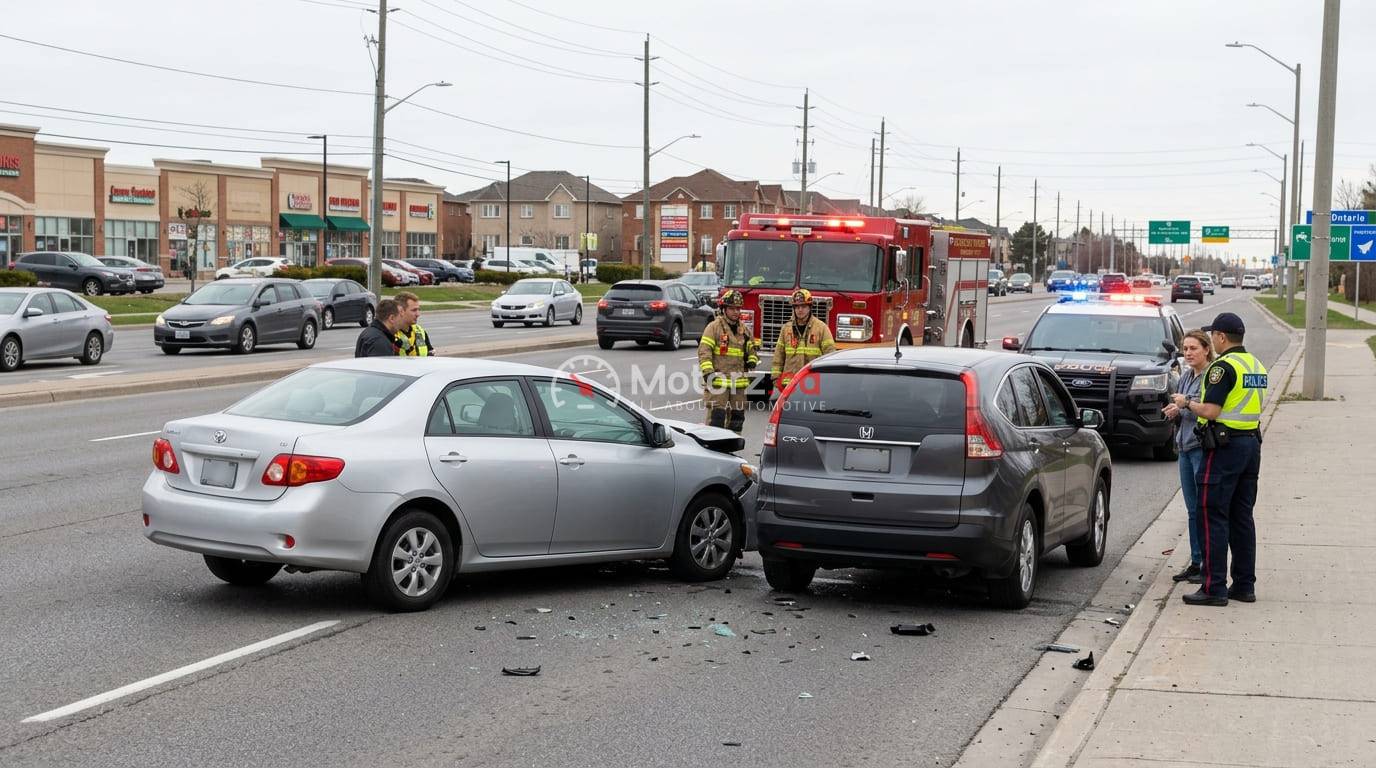
Experiencing a Car Accident in Brampton is one of the most stressful events a driver can face. In the heat of the moment, when adrenaline is running high and traffic is rushing past you on a busy thoroughfare like Highway 410 or Steeles Avenue, knowing exactly what to do can save you from legal complications, financial liability, and immense insurance headaches.
Brampton’s dense commuter traffic and distinct regional guidelines mean that navigating a collision here requires specific localized knowledge. From understanding Ontario’s updated reporting thresholds to managing encounters with tow trucks at the scene, being prepared is your best defense.
This comprehensive guide breaks down exactly what to do from the split second after impact to finalizing your official report at a local Collision Reporting Centre (CRC).
The Immediate Car Accident in Brampton: First 60 Seconds
The choices you make immediately following an accident dictate the safety of everyone involved and preserve the integrity of your future insurance claim. Prioritize safety above everything else.
Assess for Injuries and Safety Hazards
Before you step out of your Car Accident in Brampton, take a deep breath and check yourself and your passengers for any immediate injuries. Look at the surrounding traffic to ensure it is safe to open your door. Turn on your vehicle’s hazard lights immediately to warn approaching motorists, especially if the accident occurs at night or during adverse weather.
When to Call 911 Right Away
Do not assume that the police need to be called to the roadside for every minor fender bender. However, you must dial 911 immediately if your situation matches any of the following emergency criteria:
Anyone involved has sustained an injury requiring medical attention.
You suspect another driver involved may be under the influence of drugs or alcohol.
One of the vehicles is severely damaged, leaking fluids, or blocking a live lane of traffic that creates an immediate hazard.
The other driver refuses to cooperate, exhibits aggressive behavior, or attempts to flee the scene (a hit-and-run).
The collision involves a pedestrian, cyclist, or a municipal, provincial, or federal government vehicle.
Clearing the Roadway: The Drivability Rule
If there are no major injuries and your vehicle is safe to drive, move it out of the live traffic lane onto the shoulder, a nearby side street, or into a commercial parking lot.
Debunking a Common Myth: Many drivers mistakenly believe they must leave their vehicles exactly where they stopped to show the police what happened. In Ontario, leaving your car in a live lane of a busy commuter highway when it is perfectly drivable creates a severe safety hazard and can result in a traffic ticket from Peel Regional Police. Move to safety first.
Documenting the Scene: Evidence Gathering
Once you are in a safe location, it is time to collect the critical information required by your insurance provider and the reporting authorities.
Crucial Information to Exchange
You are legally obligated to exchange specific details with all other drivers involved in the collision, regardless of who appears to be at fault. Use your smartphone to take clear, legible photographs of the following items:
Driver’s License: Capture the full name, address, and license number.
Insurance Card: Take a photo of the pink slip, paying close attention to the insurance company name, policy number, and effective dates.
Vehicle Ownership: Snap a photo of the green registration permit to confirm the owner’s details match the driver.
Contact Information: Obtain a direct phone number and email address.
Capturing Photographic Evidence
Before the vehicles are modified or repaired, document the physical environment comprehensively. Capture wide shots displaying the position of the cars relative to the intersection or lane markings, weather conditions, visible skid marks, and the exact points of impact on all involved vehicles.
Gathering Witness Statements
If any bystanders or other motorists stopped to assist, ask for their names and phone numbers. Independent witness accounts are incredibly valuable in resolving liability disputes where two drivers present conflicting stories about who ran a red light or changed lanes improperly.
Understanding the New Ontario Collision Reporting Threshold
Ontario updated its provincial reporting laws to reflect inflation and modern vehicle repair costs.
The Five Thousand Point Rule
The mandatory property damage threshold for reporting a vehicle collision to the police increased from two thousand to five thousand in combined property damage.
This means that if the total, combined cost to repair all vehicles and any damaged property (such as a fence or guardrail) appears to be less than five thousand, and there are absolutely no injuries or complicating factors, you are not legally required to visit a Collision Reporting Centre or involve law enforcement. You can simply exchange details and handle the matter directly through your insurance providers.
Evaluating Damage Accurately
Modern vehicles are packed with sensitive components like parking sensors, radar units, and backup cameras embedded directly inside plastic bumpers. What looks like a simple, minor scuff on a bumper cover can easily exceed five thousand in repair costs once internal calibration and structural brackets are factored in.
If you are in doubt about whether the damage clears the five thousand mark, the safest course of action is to err on the side of caution and complete a report.
Navigating the Brampton Tow Truck Rules
Brampton’s towing ecosystem is highly regulated to protect consumers from aggressive or predatory practices at collision scenes. If your vehicle is disabled and requires a tow, you must know your rights.
Your Rights as a Consumer
No Solicitation Allowed: Tow truck operators are legally prohibited from aggressively soliciting your business or pressuring you into signing a contract at a collision scene.
The Right to Choose Your Destination: You have the absolute legal right to dictate exactly where your vehicle goes. Unless a police officer explicitly directs otherwise for safety reasons, you can demand that your car be towed directly to a local Collision Reporting Centre or an approved insurance repair facility.
Mandatory Rate Transparency: Before hooking up your car, the tow driver must present an official rate sheet and an explicit consent form outlining the exact costs involved. Never sign a blank towing authorization form.
Consult Your Insurer First: Call your insurance provider’s claims hotline directly from the roadside before agreeing to a tow. They often have preferred towing partnerships and can guide you away from inflated storage fees.
Step-by-Step Guide to the Brampton Collision Reporting Centre
If your accident requires reporting, you must finalize the process through an authorized CRC.
How Accident Reporting Impacts Your Insurance Claim
Filing a report at the Collision Reporting Centre does not automatically mean your insurance premiums will skyrocket.
Ontario utilizes a no-fault insurance system, meaning your personal insurance provider will handle your repairs and medical claims regardless of who caused the incident. Your premiums are typically only impacted if your insurer determines that you were more than fifty percent at fault for the accident based on the provincial Fault Determination Rules.
Failing to report an accident that exceeds the legal threshold can lead to severe penalties, including policy cancellation or a total denial of your property claim if your insurer discovers the unreported damage later on.
Staying Calm Under Pressure
The key to successfully navigating a car accident in Brampton is keeping a clear, level head. By focusing on immediate safety, collecting meticulous evidence, avoiding predatory towing traps, and fulfilling your legal reporting obligations promptly, you can protect both your driving record and your financial well-being. Keep a copy of this guide or an incident checklist in your glove box so you always know exactly how to protect yourself on the road.