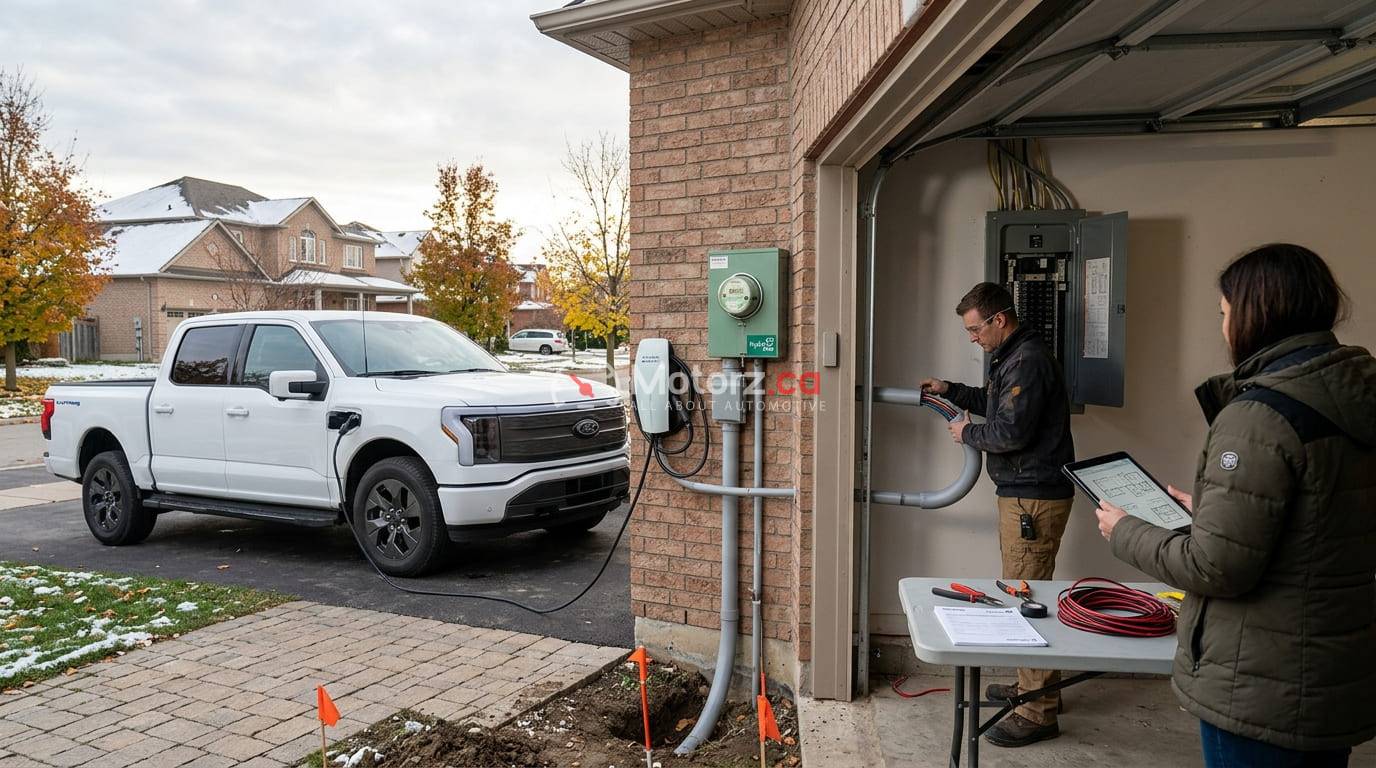
Switching to an electric vehicle is an exciting milestone for any Ontario Home EV Charging. Bypassing the fuel pumps, reducing your carbon footprint, and enjoying smooth, instant torque are clear benefits. However, the true magic of owning an electric vehicle lies in the convenience of waking up every single morning with a fully charged battery pack.
Setting up a home charging station is the single best way to maximize the economic and practical benefits of electric vehicle ownership. Instead of hunting for public charging networks or waiting at highway fast chargers, you can refuel your vehicle safely while you sleep.
Despite the long-term convenience, navigating the initial setup can feel overwhelming. Homeowners must choose between different power levels, calculate hardware and labor costs, navigate provincial safety regulations, and select the right utility rate plans.
This comprehensive guide breaks down everything you need to know about setting up an electric vehicle home charging station in Ontario. You will learn about installation costs, Electrical Safety Authority requirements, panel limitations, and how to utilize the province’s unique overnight electricity rates to drive for pennies.
The Charging Spectrum: Ontario Home EV Charging
Before diving into the hardware choices, it is vital to understand the two primary types of residential charging equipment. The main differentiator is electrical voltage, which directly determines how fast energy flows into your vehicle.
The Standard Household Plug
Every electric car comes equipped with a portable electric vehicle. This device plugs directly into a standard 120-volt residential wall outlet, the exact same receptacle you use to power a toaster, television, or table lamp.
Charging Speed: Level 1 is the slowest charging method, adding roughly 5 to 8 kilometres of driving range per hour of connectivity.
Best Suited For: Drivers with short daily commutes, or owners of plug-in hybrid electric vehicles with modest battery capacities. If you drive less than 50 kilometres per day and can leave your car plugged in for 12 hours overnight, Level 1 might satisfy your routine without requiring any electrical upgrades.
The Catch: For fully electric vehicles with large battery packs, a complete recharge from empty can take over 40 to 50 hours, making it highly impractical for busy families or long-distance commuters.
High-Speed Home Refueling
Level 2 equipment is the gold standard for dedicated home charging. These systems run on a 240-volt electrical circuit, which is the same high-voltage delivery system required by heavy-duty household appliances like electric clothes dryers, kitchen ranges, or central air conditioning units.
Charging Speed: A Level 2 station adds between 30 and 60 kilometres of range per hour, depending on the specific amperage configuration of the station and your vehicle’s onboard charger. This allows virtually any electric car on the market to achieve a 100 percent charge in 4 to 8 hours.
Best Suited For: Owners of battery electric vehicles who want complete peace of mind, predictable fast turnaround times, and the ability to precool or preheat their vehicle using grid power during harsh Ontario winters.
Breaking Down Home EV Charging Setup Costs in Ontario
The total financial investment required to install a Level 2 charging station varies based on hardware preferences, the layout of your home, and the age of your electrical infrastructure. Total costs generally fall between 1,500 and 3,000 for a straightforward project, though specific scenarios can drive prices higher.
Hardware Purchases
The charging station itself, technically known as Electric Vehicle Supply Equipment, represents your first cost component. Prices fluctuate depending on smart features, build quality, and cord lengths.
Premium smart chargers offer Wi-Fi connectivity, smartphone tracking apps, integration with smart-home systems, and automated charge-scheduling tools. Rugged, basic chargers ditch the touchscreen and internet features in favor of heavy-duty weatherproofing and simple plug-and-play operation. Many Canadian-made models focus on cold-weather cable flexibility, preventing the charging cord from becoming stiff and unmanageable when temperatures drop below freezing.
Electrical Contractor Labor and Materials
Do not cut corners on the installation labor. You must hire a Licensed Electrical Contractor to handle high-voltage adjustments. The cost of labor and materials is highly dependent on distance. If your main electrical panel sits inside a finished basement on the opposite side of the house from your garage or driveway, the electrician will need to run dozens of metres of heavy copper wiring, drill through concrete foundations, and patch drywall, increasing the final invoice. Conversely, if your electrical panel is mounted directly inside your garage, the short material run will result in a lower labor cost.
The Infrastructure Hurdle: Panel Upgrades
This is the single largest cost variable for older residential properties across Ontario. To support a Level 2 charger, your home needs enough spare electrical capacity. Modern chargers typically require a dedicated 40-amp or 50-amp circuit breaker to deliver a continuous 32-amp or 40-amp charge.
Many homes built before 1980 only possess a 100-amp main electrical service. If your home already runs an electric stove, a clothes dryer, a hot tub, and a central air conditioner, your existing 100-amp panel cannot safely handle the intense power demands of an electric vehicle charger.
If a load calculation proves your panel is maxed out, you will need to upgrade your entire residential service to 200 amps. This procedure involves replacing the outdoor electrical meter base, installing a brand-new internal breaker panel, and coordinating an outage and reconnection with your local utility company like Hydro One, Toronto Hydro, or Alectra.
Crucial Legal Requirements: Permits and the ESA
In Ontario, working with high-voltage electricity is strictly regulated to prevent residential structure fires and severe shock hazards. You cannot treat a Level 2 charger installation like a simple DIY weekend project.
The Mandatory ESA Permit
According to the Ontario Electrical Safety Code, a notification of work, commonly referred to as an electrical permit, must be filed with the Electrical Safety Authority before beginning the installation of any Level 2 charging station.
This permit opens an official file for your address. Once the installation is complete, an ESA inspector reviews the work or audits the contractor’s documentation to certify that all wiring, circuit breakers, and load calculations comply fully with provincial safety codes. A basic residential notification fee starts at 88, a minor price to pay to ensure your home remains safe.
The Dangers of Hiring Unlicensed Techs
It can be tempting to hire a general handyman or an uncertified neighborhood tradesperson to save money on labor. In Ontario, this choice carries severe long-term risks:
Insurance Invalidity: If an unlicensed individual installs a non-certified charger that suffers an electrical failure and causes a house fire, your homeowner’s insurance policy can legally deny your property damage claim. Insurance providers require proof that high-voltage electrical additions were fully permitted and inspected by the ESA.
Equipment Failure: Electric vehicle charging requires a continuous, high-current draw for hours at a time. This puts immense thermal stress on your electrical connections. Unlicensed installers often use cheap, commercial-grade receptacles or incorrect wire gauges that melt under sustained loads, destroying your charger or damaging your vehicle’s delicate onboard electronics.
Step-by-Step Installation Process for Homeowners
To ensure your installation proceeds smoothly, safely, and legally, follow this sequential structural timeline from initial planning to final inspection.
Maximizing Your Savings: Ontario’s Ultra-Low Overnight Rate
Once your home charging station is safely installed and certified, your next priority is minimizing your ongoing fueling bills. Fortunately, the Ontario Energy Board offers a specialized utility rate plan designed specifically for electric vehicle owners.
Understanding the Three Rate Architectures
Ontario residential utility customers generally choose between three distinct electricity pricing models: Time-of-Use, Tiered, and Ultra-Low Overnight.
The Power of the Ultra-Low Overnight Plan
The Ultra-Low Overnight price plan is a powerful tool for electric vehicle drivers. By shifting your vehicle charging to the dead of night, you access a rock-bottom rate of just 3.9 cents per kilowatt-hour between 11 PM and 7 AM every day of the week.
To put this into perspective, driving a standard electric sedan 100 kilometres requires roughly 20 kilowatt-hours of energy. If you charge during the ultra-low overnight window, replenishing that 100 kilometres of driving range costs less than 80 cents. Compared to a traditional gasoline vehicle that can easily consume 10 to 15 in fuel to cover the same distance, the long-term savings are profound.
The Vital ULO Trade-off
While the 3.9 cents overnight rate is incredibly enticing, you must review your overall household energy lifestyle before switching plans. To compensate for the cheap overnight power, the ULO plan implements a high on-peak rate of 39.1 cents per kilowatt-hour on weekdays between 4 PM and 9 PM.
If your household runs heavy appliances, bakes in an electric oven, runs a pool heater, or blasts the central air conditioning during those specific early evening hours, the high peak cost can quickly wipe out your vehicle charging savings. The ULO plan works best for households that can automate their energy usage, using programmable smart chargers or built-in vehicle delay timers to ensure the car never draws grid power before 11 PM.
Smart Charger Features Every Ontarian Needs
When shopping for hardware, do not just choose the cheapest model available online. Our local climate and provincial infrastructure require specific technical characteristics to ensure long-term durability and convenience.
Cold-Weather Cable Flexibility
Ontario winters are brutal. Cheap plastic insulation on charging cables becomes stiff, rigid, and completely unyielding when the temperature drops below zero. Trying to coil a frozen, unbending cable or plug it into a snow-covered vehicle charging port is an incredibly frustrating morning experience. Look for stations equipped with high-quality rubberized cords engineered specifically to remain flexible in deep-freeze Canadian climates down to minus 40.
Enclosure Protection Ratings
If you do not have a covered garage and must install your station outdoors along a driveway or parking pad, review the enclosure rating. Look for a minimum of a NEMA 3R or NEMA 4 rating. These certifications guarantee that the internal electronics are sealed against driving rain, blowing snow, sleet, and external ice formation, ensuring your investment survives variable regional weather year after year.
Thoughts on Your Home Charging Journey
Investing in a proper Level 2 home charging station is the key to unlocking the true potential of electric vehicle ownership across Ontario. By prioritizing certified electrical work, securing the mandatory Electrical Safety Authority permit, and aligning your vehicle’s charging timers with the ultra-low overnight utility rate, you build a safe, seamless, and highly economical personal fueling station right at home. Take the time to assess your panel capacity, hire a professional, and look forward to a simpler, cheaper way to keep your vehicle ready for the road ahead.