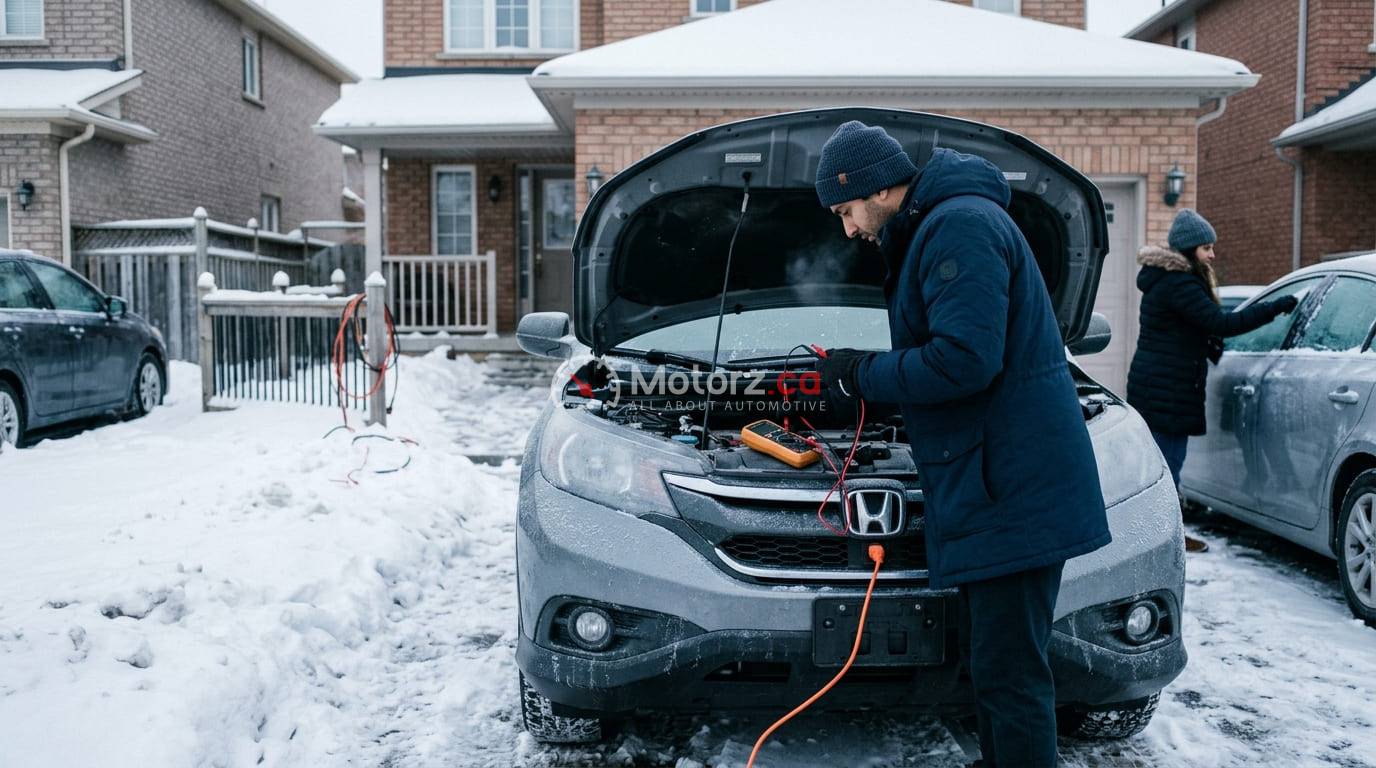
Brampton winters are notoriously brutal on vehicles. Between the heavy snowfall, the icy winds, and temperatures that routinely plunge well below freezing, your vehicle is forced to work double-time just to get you down Queen Street or over to the Highway 410. And the absolute hardest-working component under your hood during these freezing months is your car battery.
The good news? You do not have to be a victim of the winter freeze. With the right preparation, a bit of preventative maintenance, and an understanding of how extreme cold affects automotive electrical systems, you can ensure your car starts reliably every single morning.
This comprehensive, ultimate guide will walk you through everything you need to know to winter-proof your car battery, protect your vehicle, and keep your morning commute stress-free.
Why Brampton Winters Are an Absolute Nightmare for Your Car Battery
To properly protect your battery, it helps to understand exactly what happens to it when the temperature drops. Your car battery relies on internal chemical reactions to generate the electrical current needed to crank your engine. Cold weather acts as a massive brake on these chemical reactions.
The Double Whammy of Sub-Zero Weather
When temperatures fall below the freezing mark, two highly problematic things happen simultaneously:
Battery Capacity Drops Drastically: At freezing temperatures, a fully charged car battery loses about twenty percent of its starting power. If the temperature plunges to minus eighteen or lower, that same battery loses up to fifty percent of its total cranking capacity.
Engine Cranking Demands Skyrocket: While your battery is Car Battery at half-strength, your engine actually requires significantly more power to start. Cold temperatures cause your engine oil to thicken, turning it from a slick, free-flowing fluid into a viscous, molasses-like sludge. Your battery has to fight through that thick oil just to turn the engine over.
This combination of decreased battery capacity and increased engine resistance is the primary reason why weak batteries fail on the very first cold morning of the year.
How to Test Your Battery Before the First Major Freeze
The most effective way to handle a dead battery is to prevent it from dying in the first place. Waiting until a January blizzard to check your battery health is a recipe for disaster. Instead, make battery testing a mandatory part of your autumn vehicle maintenance routine.
The Visual Inspection: Spotting Red Flags Early
Before you even hook up a testing tool, pop your hood and take a close look at the battery casing. Look out for the following warning signs:
The White Crust: A powdery, white, blue, or green substance around the metal battery terminals indicates corrosion. This buildup acts as an insulator, blocking the flow of electricity from your battery to your vehicle starter.
The Bloat: If the plastic sides of your battery look swollen, bowed, or bloated, the battery has suffered physical damage, often caused by freezing or overcharging. A bloated battery is a safety hazard and must be replaced immediately.
Wetness or Film: A film of liquid on top of the casing suggests the battery is leaking acid. This can cause rapid self-discharge and damage surrounding components in the engine bay.
Testing Voltage and Cold Cranking Amps
A visual check only tells part of the story. To know if your battery will survive a Brampton cold snap, you need to test its electrical health. You can do this at home with a basic digital multimeter, or you can visit a local Brampton auto parts shop for a comprehensive load test.
When testing with a multimeter after the car has been sitting idle for a few hours, look for these key voltage readings:
12.6 Volts or Higher: Your battery is fully charged and healthy.
12.4 Volts: Your battery is at about seventy-five percent charge. It is still functional but worth keeping an eye on.
12.2 Volts or Lower: Your battery is only at fifty percent charge or less. This is a critical warning sign that your battery lacks the stamina to survive a severe winter drop.
If your battery is more than three to five years old and struggles to hold a charge above twelve point four volts during mild weather, save yourself the future headache and replace it before the snow flies.
Step-by-Step Guide to Winter-Proofing Your Battery Connections
A perfectly healthy battery cannot do its job if the electrical current gets trapped by dirty, loose, or corroded connections. Cleaning and securing your battery terminals is one of the easiest and most effective DIY tasks you can perform to guarantee winter reliability.
Step 1: Disconnect the Battery Safely
Always turn off your vehicle and remove the key from the ignition before working on the battery. Use a wrench to loosen the nut on the negative terminal (marked with a minus sign or a black cover) first, and slip the cable off. Only after the negative cable is completely removed should you disconnect the positive terminal (marked with a plus sign or a red cover). Disconnecting in this specific order prevents accidental electrical shorts.
Step 2: Scrub Away the Corrosion
Mix a tablespoon of ordinary baking soda into a cup of warm water. Dip an old toothbrush or a dedicated wire battery brush into the mixture and scrub the metal terminals and cable clamps vigorously. The baking soda will fizz as it neutralizes the acidic corrosion. Wipe everything completely dry with a clean cloth or paper towel once the crust is gone.
Step 3: Apply a Protective Barrier
To prevent moisture, road salt, and acidic vapors from causing future corrosion, apply a thin layer of petroleum jelly or a specialized battery terminal protector spray to the clean metal surfaces.
Step 4: Reconnect and Tighten Securely
Slide the positive cable back onto the positive terminal and tighten it firmly with your wrench. Next, reconnect the negative cable to the negative terminal and tighten it. Try to wiggle the cables with your hand; if they move or rotate on the post at all, they are too loose. A loose connection can prevent your alternator from charging the battery correctly while you drive.
Essential Winter Tools Every Brampton Driver Needs
If you want to survive the winter without getting stranded, relying solely on good luck is a poor strategy. Equipping your vehicle with a few key items can mean the difference between an hour-long delay in your warm driveway and waiting hours for a tow truck on the side of a dangerous highway.
High-Quality Jumper Cables
Do not buy the cheapest, thinnest jumper cables available at the department store. Thick, heavy-duty cables (ideally four-gauge or two-gauge) feature thicker copper wiring that allows electricity to flow much more efficiently in sub-zero weather. Ensure the cables are at least twelve to fifteen feet long so you can easily reach between two vehicles even in tight parking spaces or crowded driveways.
A Portable Lithium-Ion Jump Starter
While traditional jumper cables are fantastic, they require a second vehicle to provide the boost. If you live alone or park in a remote area, a portable lithium-ion jump starter pack is a total game-changer. These compact, battery-powered devices can easily slide into your glove box or trunk organizer and possess enough power to jump-start a completely dead engine multiple times on a single charge. Just remember to bring the pack indoors during extreme cold snaps, as the internal lithium battery will lose its charge if left in a freezing glove box for weeks.
A Smart Battery Tender or Trickle Charger
If you have a secondary vehicle that sits parked for days at a time, or if you work from home and only take short trips to the local grocery store, a smart trickle charger is an absolute necessity. These devices plug into a standard household wall outlet and connect directly to your car battery, delivering a slow, controlled charge that keeps the battery topped up without overcharging it.
Smart Driving Habits to Extend Battery Life in the Winter
How you drive your vehicle during the colder months plays a massive role in how long your battery survives. By making a few small adjustments to your daily routine, you can significantly reduce the strain on your vehicle’s electrical system.
Avoid the Trap of the Short Winter Trip
When you start your car, the battery expends a massive amount of energy to crank the engine. Once the engine is running, your vehicle’s alternator takes over, powering the electrical systems and slowly replenishing the energy the battery just lost.
However, rebuilding that lost power takes time—usually at least fifteen to twenty minutes of continuous driving. If your winter routine consists solely of five-minute trips down the street to the local coffee shop or train station, your battery never gets fully recharged. Day after day, the battery sinks deeper into a state of chronic undercharge until it eventually fails.
Try to consolidate your errands into longer, continuous drives. If you must make short trips, take your car out for a twenty-minute drive on the highway once a week to give the alternator ample time to restore the battery’s energy.
Turn Off Accessories Before Turning the Key
When you park your car at night, do you leave your seat heaters, heated steering wheel, radio, windshield wipers, and climate control turned on? If so, all of those accessories will immediately demand power the absolute second you turn the key the next morning.
This creates an intense, unnecessary power drain at the exact moment your freezing battery is trying to crank a stiff engine. Get into the habit of turning off all electrical accessories every single time you park your car. The next morning, let the engine start up and run smoothly for a few seconds before switching on your heaters and defrosters.
Advanced Protection: Block Heaters and Battery Blankets
For those brutal weeks where temperatures consistently hover well below freezing, standard maintenance might not be entirely enough. If you want maximum peace of mind, consider investing in dedicated cold-weather hardware.
The Power of an Engine Block Heater
An engine block heater is a small heating element installed directly into your vehicle’s engine block. It plugs into a standard exterior home extension cord and gently warms the engine block and internal coolant.
By keeping the engine warm overnight, the motor oil remains thin and slippery. When you go to start the vehicle, the engine turns over with minimal resistance, dramatically reducing the amount of cranking amps your battery has to deliver. You do not need to leave it plugged in all night; connecting it to a simple outdoor timer set to turn on three hours before you plan to leave is perfect.
Thermal Battery Blankets
A battery blanket is a specialized, insulated wrap that contains low-wattage heating elements. You wrap it around your car battery and plug it into an extension cord alongside your block heater. By keeping the battery casing warm, you prevent the internal chemistry from slowing down, allowing the battery to maintain one hundred percent of its starting capacity even during the coldest nights.
How to Safely Jump-Start a Frozen Car Battery
Despite your best efforts, mistakes happen. Maybe an interior dome light was left on overnight, or maybe an unexpected cold snap pushed an aging battery past its breaking point. If you find yourself needing to jump-start your vehicle, safety must be your top priority.
Crucial Warning: Never, under any circumstances, attempt to jump-start a battery if you suspect the fluid inside is frozen. A frozen battery can rupture, explode, or catch fire if a high current is introduced. If the sides of the battery casing are visibly bulging, or if you can see ice inside the fill caps, the battery is frozen. You must tow the vehicle to a warm garage to let it thaw completely before attempting to charge or jump-start it.
If the battery is cold but not frozen, follow this precise sequence to jump-start it safely using a donor vehicle:
Position the Vehicles: Park the healthy donor vehicle facing your car without the two vehicles actually touching. Turn off the engines, set the parking brakes, and turn off all electrical accessories on both cars.
Connect the Positive Clamp to the Dead Battery: Clamp the red positive jumper cable to the positive terminal of the dead battery.
Connect the Positive Clamp to the Donor Battery: Connect the other end of the red positive cable to the positive terminal of the healthy donor battery.
Connect the Negative Clamp to the Donor Battery: Clamp the black negative jumper cable to the negative terminal of the healthy donor battery.
Connect the Negative Clamp to a Ground Source: Do not connect the final black negative clamp to the dead battery’s negative terminal. Instead, clamp it to an unpainted metal surface on the engine block or frame of your dead car, away from the battery itself. This prevents any sparks from occurring near flammable battery gases.
Start the Donor Vehicle: Start the engine of the donor car and let it idle smoothly for a few minutes to transfer some baseline charge.
Start the Dead Vehicle: Attempt to start your vehicle. If it does not start immediately, wait a minute or two and try again.
Disconnect in Reverse Order: Once your engine is running smoothly, disconnect the jumper cables in the exact reverse order that you attached them: remove the unpainted metal ground clamp first, then the negative clamp from the donor car, then the positive clamp from the donor car, and finally the positive clamp from your own battery.
Keep your engine running for at least twenty to thirty minutes after a jump-start to allow the alternator to supply a survival charge to the battery.