The shift toward electric mobility is well underway across Canada, and Ontario is leading the charge. With a rapidly growing network of public charging stations, access to high-occupancy vehicle lanes via green licence plates, and a distinct lack of traditional oil changes, switching to a battery electric vehicle is highly appealing. However, buying a brand-new electric car can stretch the budget. That is why thousands of Ontario drivers are turning to the pre-owned market.
Sourcing a used electric vehicle is an excellent way to slash your carbon footprint and save thousands on the purchase price. But shopping for a pre-owned electric model requires a completely different mindset than shopping for a traditional combustion-engine car. You do not need to check for oil leaks, worn spark plugs, or timing belts. Instead, your primary focus shifts to a single, critical component: the high-voltage battery pack.
This comprehensive guide walks you through everything you need to know about buying a used electric vehicle in Ontario. You will learn how to accurately verify battery health, navigate harsh winter range drops, maximize local financial incentives, and protect yourself throughout the purchasing process.
Why Buying a Pre-Owned Buying a Used EV in Ontario
The pre-owned electric market in electric vehicle has matured significantly. A few years ago, used options were limited to first-generation compliance cars with minimal driving range. Today, the market features a diverse array of long-range models from top manufacturers.
The Depreciation Advantage
Like all vehicles, electric models experience depreciation. However, early technology iterations and fast-evolving range capabilities mean that second-hand buyers can secure premium vehicles at a fraction of their original retail price. A three-year-old electric car has often taken its steepest financial hit, allowing you to enjoy modern tech, active safety features, and a premium cabin without paying a premium price.
Long-Term Operating Cost Savings
In Ontario, electricity costs are significantly lower than gasoline prices, especially if you take advantage of ultra-low overnight electricity rates to charge at home. Furthermore, electric vehicles have fewer moving parts. There are no exhaust systems, transmissions, or complex fuel injection systems to maintain. Your ongoing maintenance is largely limited to cabin air filters, windshield wiper fluid, tire rotations, and occasional brake service.
The Core Priority: Understanding and Checking Battery Health
When you look at a used gas car, engine compression and transmission smoothness determine its remaining lifespan. In a pre-owned electric car, the high-voltage lithium-ion battery pack represents the single most valuable component of the vehicle. Over time, all rechargeable batteries experience a gradual, permanent loss of capacity, a process known as degradation.
What is Battery State of Health?
The state of health is a percentage metric that compares the battery’s current maximum energy storage capacity to its capacity when it rolled off the assembly line. For example, an electric car with a 90 percent state of health has lost 10 percent of its original capacity to degradation.
Natural degradation occurs slowly, typically at a rate of 1 percent to 2 percent per year under normal driving and charging conditions. Your goal as a used buyer is to find a vehicle with a state of health that matches its age and mileage, ensuring there are no signs of premature accelerated wear.
Direct Methods for Verifying Battery Health
Checking the health of a battery pack requires specialized tools. You cannot rely solely on the dashboard range estimator, often referred to by the electric vehicle community as the guess-o-meter, because that number fluctuates wildly based on recent driving styles and ambient outdoor temperatures. Instead, use these direct validation methods:
Onboard Diagnostics and Third-Party Tools
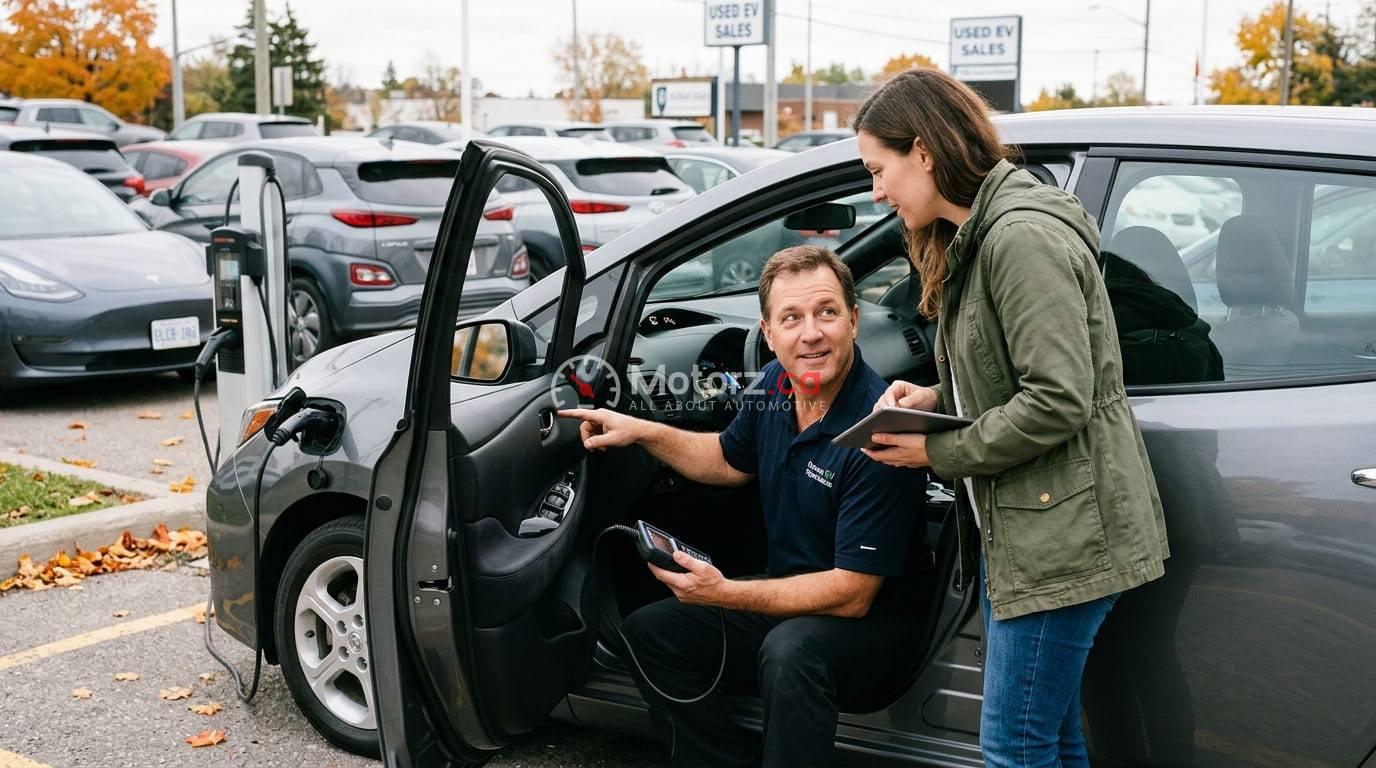
Many electric models allow you to pull exact battery metrics using a simple Bluetooth Onboard Diagnostics reader plugged into the port beneath the steering wheel. Pair this reader with specialized smartphone applications like LeafSpy for older Nissan models or Recurrent for multi-brand tracking. These apps read the vehicle battery management system directly, displaying precise metrics like maximum cell voltage, capacity loss, and total fast-charging sessions.
Specialized Independent Inspections
If you are buying from a private seller or an uncertified independent lot, invest in a third-party battery diagnostic test. Specialized companies provide independent, brand-neutral health checks. They plug a data logger into the vehicle, analyze energy throughput, and generate an independent report with a definitive percentage score out of 100. This document offers complete transparency and acts as a powerful negotiating tool.
Certified Dealership Assessment
For brands with highly locked-down, proprietary software architectures, you may need to take the vehicle to an authorized franchise dealership. Pay for a pre-purchase inspection and specifically request a formal battery health certificate. The technician will run a factory diagnostic routine to confirm cell balancing and verify the precise state of health.
Indirect Clues: How to Read the Car History
If diagnostic tools are inaccessible, you can infer a lot about a battery pack’s condition by examining the previous owner’s lifestyle and usage patterns.
Ask the seller for their service history and charging logs. Frequent reliance on high-voltage DC fast chargers forces high electrical currents and intense heat into the cells, accelerating degradation over time. Conversely, a vehicle that spent its life plugged into a modest Level 2 home charger overnight is much more likely to retain excellent long-term capacity.
Navigating the Reality of Ontario Winters
Ontario winters are notoriously tough on vehicles, and electric models face a unique set of challenges when the temperature drops below freezing. Understanding how cold weather impacts performance will prevent unexpected surprises during your January commute.
Temporary Winter Range Loss
It is vital to distinguish between permanent battery degradation and temporary winter range loss. When temperatures plummet, chemical reactions within the lithium-ion cells slow down, making the battery less efficient at releasing energy. Combined with the heavy electrical load required to run the cabin heater, a used electric vehicle will experience a temporary range reduction of 20 percent to 40 percent during peak winter months.
This reduction disappears completely as soon as spring arrives. However, when choosing a vehicle, always look at the winter range numbers rather than the idealized summer specs. If your daily round-trip commute requires 120 kilometres of driving, look for a vehicle with an official summer range of at least 200 kilometres to guarantee a comfortable safety buffer during a freezing February snowstorm.
Thermal Management Systems Matters
When browsing different pre-owned models, look into how the specific car manages battery temperature.
Passive Cooling: Early models utilize passive air cooling. This design lacks the ability to actively warm the cells during extreme winter cold or cool them during intense summer heat, leaving the pack vulnerable to faster weather-driven degradation.
Active Liquid Cooling: Most modern electric models utilize sophisticated liquid thermal management systems. These systems actively circulate coolant through the pack to maintain an optimal temperature window. In winter, an active system will pre-heat the battery pack to restore charging efficiency and protect internal chemistry, making liquid-cooled models much better suited to the variable Ontario climate.
Crucial Financial Incentives and Ontario Legal Requirements
Buying a pre-owned vehicle involves navigating specific provincial rules and financial program qualifications. Making the right moves before signing the final bill of sale can save you significant money.
Maximizing the Used EV Incentive
While federal programs focus heavily on brand-new vehicle transactions, pre-owned buyers in Ontario can access specialized support. Non-profit organizations like Plug’n Drive offer targeted incentives for used electric vehicle purchases.
To qualify for these cash incentives, buyers typically must attend an educational seminar or an EV 101 webinar to understand electric car ownership basics. Additionally, you must ensure the vehicle is purchased from a registered Ontario dealership rather than a private private sale. If you have an old, high-emission gasoline vehicle to trade in, look for scrap-it incentives that can be stacked with pre-owned buyer programs to double your overall financial savings.
Reviewing the Used Vehicle Information Package
In Ontario, every private seller is legally required to purchase and present a Used Vehicle Information Package to potential buyers. Do not skip reading this document.
Examine the history section carefully to verify that the car has a clean title, free of outstanding liens or structural branding like salvage or rebuilt statuses. Electric vehicle components are carefully integrated into the structural frame of the car; a vehicle that has suffered severe structural damage in a previous crash may have compromised battery enclosures or compromised high-voltage wiring harnesses that are incredibly expensive to rectify.
Step-by-Step Inspection Checklist for Used EV Shoppers
When you arrive to view a prospective vehicle, use this structured checklist to ensure you evaluate both the traditional mechanical elements and the specialized electric components properly.
The Pre-Arrival Setup
Request that the seller leaves the vehicle cold before you arrive. You want to see how the car boots up from a completely cold state, as pre-heating can sometimes mask minor electrical glitches or slow cabin heater engagement. Also, confirm the car is charged to at least 50 percent so you can complete a proper, high-speed test drive.
Physical Battery and Exterior Inspection
Get down low and inspect the underside of the car. The battery pack sits flat along the floorpan between the wheels. Look closely for deep scratches, heavy dents, or structural gouges in the protective shielding plates. Damage to the outer casing can compromise the internal cells, leading to moisture ingress or safety faults. Check the alignment of the exterior body panels; uneven panel gaps frequently point to hidden accident repairs.
Charging Port Functional Check
Open the charging port door and look inside with a flashlight. Check for cracked plastic housing, bent metal pins, or corrosion within the receptacles. Ensure that both the standard Level 2 port and the high-speed DC fast-charging pins are clean and clear. If possible, arrange your test drive to stop at a local public charging station to verify that the vehicle successfully locks onto the charger, communicates with the network, and accepts an electrical current without throwing dashboard error codes.
Suspension, Tires, and Brakes
Electric cars are heavy due to the weight of the battery pack. This added mass puts extra strain on suspension bushings, ball joints, and tires. Check the tires for uneven tread wear, which signals alignment problems.
During the test drive, turn off the stereo and listen closely for clunking or groaning noises when driving over bumps. Test the different regenerative braking modes. Regenerative braking uses the electric motor to slow down the vehicle, recovering kinetic energy to charge the battery. Because the motor handles most of the stopping duties, the physical brake pads and discs are rarely used, leaving them highly prone to rust in salt-heavy Ontario winters. Ensure the physical brakes engage smoothly without squealing, grabbing, or pulsation.
Cabin Electronics and HVAC Performance
Because heating the cabin drains substantial battery energy, electric cars rely heavily on efficient secondary heating systems. Turn the air conditioning to max cold and then to max heat to verify rapid temperature changes. Check the heated seats and heated steering wheel functionality; using these direct-contact elements to stay warm consumes significantly less battery power than running the main cabin blower, making them essential tools for maximizing winter range.
Understanding the Manufacturer Battery Warranty
Most manufacturers protect electric vehicle buyers with a dedicated warranty that is separate from, and lasts longer than, the standard bumper-to-bumper vehicle coverage. This battery warranty is fully transferable to subsequent owners, making it a critical safety net for pre-owned shoppers.
Warranty Lifespan and Capacity Guarantees
The industry standard for electric car battery warranties is typically eight years or 160,000 kilometres, whichever comes first. However, you must look closely at the fine print of the specific manufacturer policy. A good warranty does not just cover complete component failure; it explicitly guarantees a specific retention capacity.
Most major brands guarantee that the pack will retain at least 70 percent of its original capacity during the warranty window. If your diagnostic check reveals a state of health below that threshold, and the vehicle is still within its age and mileage limits, you may qualify for a complete, factory-funded replacement battery pack, turning a potential risk into a major asset.
Verifying Warranty Status
Before finalizing your purchase, copy down the unique 17-digit Vehicle Identification Number from the base of the windshield. Call the customer service hotline for the vehicle manufacturer and ask them to verify the exact in-service date for that specific chassis. This date is when the warranty coverage officially started, allowing you to calculate exactly how many years and months of factory protection remain.
Key Models to Consider in the Ontario Used Market
The right electric vehicle depends on your budget, daily driving habits, and regional location. Here are some of the most common options available on Ontario pre-owned lots today:
Budget-Focused Commuters: Nissan Leaf
The Nissan Leaf is plentiful and highly affordable on the second-hand market. It is an excellent choice for city drivers with predictable short-range routines.
Watchpoint: Older Nissan models utilize passive air cooling for the battery pack. Because they cannot actively cool themselves, they are more susceptible to degradation if driven long distances with frequent fast-charging stops during hot southern Ontario summers. Look for models that have lived quiet lives as secondary suburban commuter cars.
The Balanced All-Rounder: Chevrolet Bolt EV
The Chevrolet Bolt EV represents one of the best value propositions for Canadian drivers. It offers an impressive range, a compact footprint perfect for city parking, and an active liquid cooling system that handles cold winters beautifully.
Watchpoint: Many older Bolt models received brand-new factory battery replacements due to historical recall campaigns. This means you can find a pre-owned chassis where the high-voltage battery is much newer than the rest of the car, giving you excellent long-term reliability at a bargain price.
Premium Range and Technology: Tesla Model 3
The Tesla Model 3 dominates the pre-owned space for buyers wanting long-range capability, advanced software, and access to a reliable, widespread charging network. Its sophisticated thermal management handles Ontario weather easily.
Watchpoint: Tesla models are heavily dependent on digital screens and software ecosystems. Check the infotainment screen for yellowing borders or lag, and use the central screen menu to access the native battery health readout to confirm current capacity retention before buying.
Finalizing the Purchase with Complete Confidence
Sourcing a used electric vehicle is an empowering choice that rewards preparation and careful observation. By treating the battery pack as the heart of the transaction, verifying its state of health via direct diagnostics, and understanding the nuances of winter driving, you can secure a highly efficient vehicle that will deliver low-cost driving for years to come.
Take your time, demand to see the paperwork, run a dedicated battery diagnostic, and look forward to bypassing the gas pumps across Ontario for good.