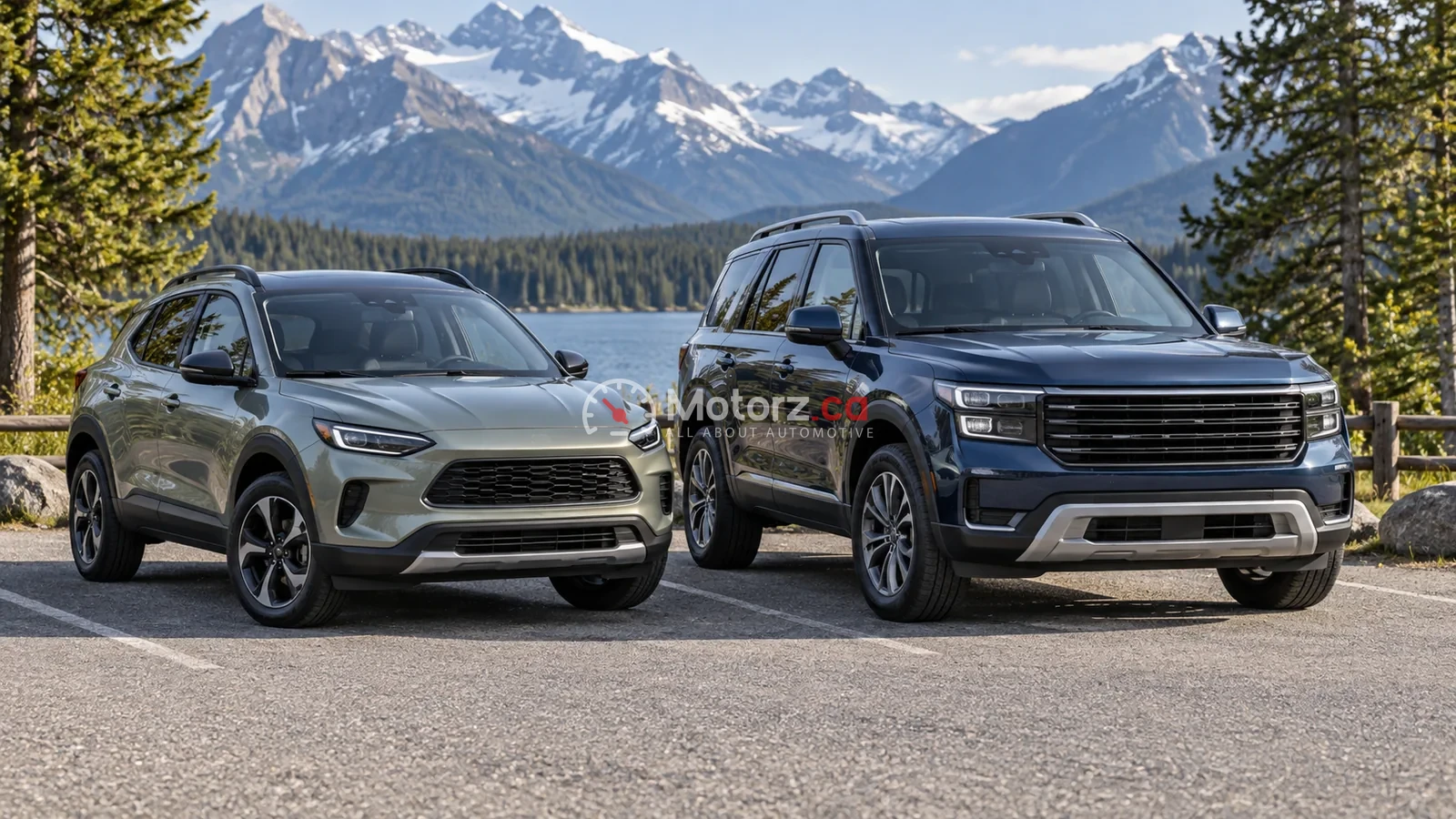
Hero: AI-assisted conceptual illustration, not a photograph of a specific vehicle, test, facility or historical event.
A crossover generally uses unibody construction, while a traditional truck-based SUV uses a separate frame. But “SUV” is also a broad marketing label that includes many crossovers. Do not infer a vehicle’s construction, towing rating or winter capability from the badge alone.
What is the structural difference?
Toyota Canada’s explanation distinguishes an integrated body structure from a body mounted on a separate frame. That is a useful starting point, not a universal ranking of strength or comfort. The manufacturer’s technical description of the specific model is more reliable than a listing category.
For example, Toyota describes the 2025 4Runner as body-on-frame. Its SUV marketing also covers unibody vehicles. The word alone therefore does not resolve the engineering question.
Compare the job the vehicle must do
| Your need | Check on the exact vehicle |
|---|---|
| Everyday passengers | Seat comfort, entry height and usable rear space |
| Parking | Length, mirror width, turning space and door clearance |
| Luggage | Your actual bags with the required seats occupied |
| Towing | Manufacturer ratings, payload and required equipment |
| Unpaved-road use | Manufacturer limitations, clearance and suitable equipment |
| Running costs | Exact powertrain, fuel grade, tires and service schedule |
A taller vehicle is not necessarily roomier. Published cargo litres can also use different measuring methods. Bring the items you actually carry and check whether they fit without obstructing occupants or visibility.
Towing: the label is not the rating
Some traditional SUVs are designed for substantial towing, but not every SUV has the same capacity. Some unibody models can also tow within their specified limits. Use the owner manual and the vehicle’s ratings; do not substitute the maximum advertised rating of another engine, trim or package.
This is a purchase-screening guide, not a loading or hitch-installation procedure. If towing is central to your purchase, have the proposed vehicle-and-trailer combination checked by a qualified provider before committing.
Canadian winter use is a separate question
AWD or four-wheel drive does not turn either body style into an all-conditions vehicle. Check the fitted tires, the manufacturer’s system instructions and the conditions on your route. Ground clearance alone cannot establish stopping performance or safe speed.
The winter-driving hub covers seasonal planning. Keep those considerations separate from whether the vehicle is marketed as a crossover or SUV.
Fuel and ownership costs need model-level numbers
Use Natural Resources Canada’s fuel-rating guidance to compare the exact powertrain. A broad category cannot tell you whether a hybrid crossover, gasoline SUV or another configuration costs less for your travel pattern. Ratings are comparison tools, not a guarantee of your fuel use.
Our small-SUV resource helps with a model shortlist; the car-buying hub covers the transaction. This page owns the terminology and fit question rather than duplicating a vehicle ranking.
Bottom line: identify the actual construction, then compare the vehicle against your workload. Neither “SUV” nor “crossover” is a quality score, and neither automatically makes the better Canadian daily driver.