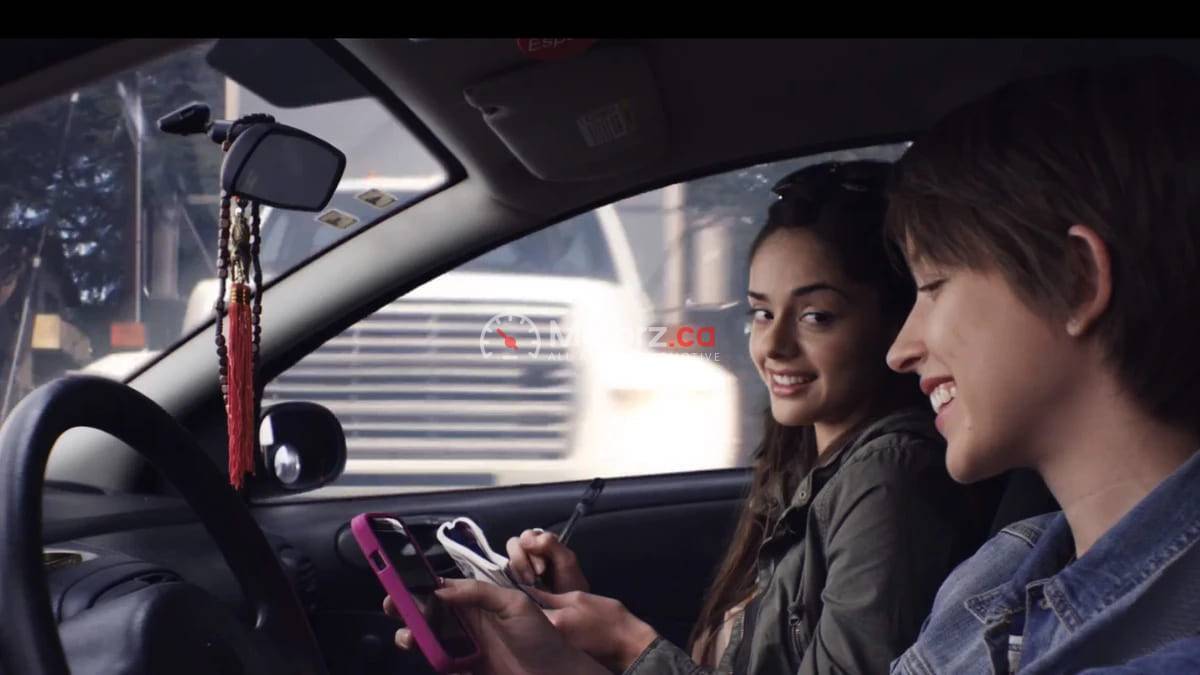
You are Texting and Driving on a familiar road. Your phone buzzed in the center console. You look down for a quick second just to see who it is. You tell yourself it will only take a moment. You know the risks, you have seen the statistics, and you consider yourself a safe driver.
In that single, fleeting moment of distraction, the vehicle ahead of you brakes hard. Your brain registers the brake lights a fraction of a second too late. The sound of tearing metal and shattering glass echoes through the cabin.
This nightmare scenario is precisely what public service announcements (PSAs) try to prevent. For over a decade, road safety organizations worldwide have traded gentle warnings for visceral, bone-chilling shock tactics.
From the famous, bone-shattering 2014 “Manifesto” commercial by the National Highway Traffic Safety Administration (NHTSA) to intense, raw international campaigns, these advertisements are designed to do more than inform. They are built to terrify you into putting your phone down.
But why do these graphic videos resonate so deeply, and do they actually change human behavior on the asphalt? Let’s analyze the psychological mechanics behind the world’s most shocking anti-texting commercials, how smartphone addiction compromises our biology, and the concrete habits you can build to protect yourself behind the wheel.
Anatomy of a Shock Commercial: Why Terror Sells Safety
When it comes to distracted driving, standard informational campaigns often fall flat. Almost every licensed driver understands that looking at a smartphone while operating a car is dangerous. The challenge isn’t a lack of knowledge; it is a psychological disconnect known as optimism bias.
Optimism bias is the systemic human belief that bad things only happen to other people. A driver might think, “Texting while driving is dangerous for teenagers, but I am an experienced driver who can multitask.”
To shatter this illusion of invulnerability, road safety groups rely on intense fear appeals.
The Breakdown of the Classic “Crash” Sequence
The most effective anti-distracted driving commercials follow a highly specific, emotionally manipulative narrative arc.
The Sensation of Normalcy: The video opens with something deeply relatable. A group of friends laughing, a mother chatting with her child in the backseat, or a teenager singing along to the radio. The lighting is warm, and the mood is light.
The Interruption: A phone screen lights up or chimes. The driver takes their eyes off the road for what feels like a split second.
The Visceral Strike: Without warning, another vehicle broadsides the car. Directors often use hyper-realistic audio—the screeching of tires, the explosive pop of deploying airbags, the sickening crunch of steel frames collapsing, and the sound of breaking glass.
The Sobering Aftermath: The music cuts out entirely. The commercial forces the viewer to sit in total, heavy silence, staring at the physical devastation, the ringing smartphone on the floorboards, or the arrival of emergency first responders.
International Shock Strategies
Different cultures deploy varying levels of intensity to tackle smartphone distractions:
The United States (NHTSA): Focuses heavily on the structural and legal consequences. Their “U Drive. U Text. U Pay.” campaign emphasizes how a single text can lead to immediate law enforcement intervention, heavy financial fines, or a sudden, life-ending crash.
The United Kingdom and Europe: Often utilize deeply graphic imagery. Early Welsh and English police department videos depicted the literal physical trauma of a crash inside the cabin, showing unbelted passengers colliding and the raw emotional ruin of surviving family members.
Canada (SAAQ): The Quebec auto insurance board made waves with campaigns tackling smartphone addiction directly. One notable ad featured a driver explaining they couldn’t stop themselves from texting, cut against a wounded child on the road saying she couldn’t stop herself from dying.
The Three Forms of Distraction: What Happens When You Look Down
To understand why a five-second glance at a screen is so hazardous, we must look at how the human brain processes tasks. Traffic safety experts categorize distracted driving into three distinct domains. Texting behind the wheel is uniquely dangerous because it triggers all three simultaneously.
Visual Distraction
Visual distraction involves taking your eyes away from the path ahead. According to the clearinghouse data hosted by driving safety campaigns, reading or sending a text takes a driver’s eyes off the road for an average of five seconds.
At a standard highway speed of 55 miles per hour, your vehicle travels the entire length of a football field while you are looking down. Traveling that distance with your eyes closed is something no rational person would attempt, yet looking at a text message is functionally identical.
Manual Distraction
Manual distraction occurs when you remove your hands from the steering mechanism to hold a phone, type a message, scroll through a playlist, or adjust a navigation app. When your hands are off the wheel, your physical ability to execute an emergency swerve or react to a sudden hazard is cut in half.
Cognitive Distraction
Cognitive distraction is the most insidious form. Even if you use a hands-free voice-to-text setup, your brain is still mentally processing the language, the emotional context of the message, and what you want to say next.
This mental processing creates inattentional blindness. Your eyes may technically be looking straight through the windshield, but your brain is so focused on the text conversation that it fails to register objects right in front of you—such as a changing traffic light, a pedestrian stepping off a curb, or a slowing vehicle.
The Neurological Trap: Why We Can’t Keep Our Hands Off Our Phones
If everyone knows that distracted driving can be fatal, why do so many people continue to do it? The answer lies in the deep neurological architecture of our brains. Smartphone apps are explicitly engineered to exploit human biology.
The Dopamine Slot Machine
Every time your phone chimes, buzzes, or lights up with a notification, your brain experiences a micro-surge of dopamine. Dopamine is the neurotransmitter associated with reward, pleasure, and anticipation.
Because that text message could be something exciting—a message from a loved one, a work update, or social media engagement—your brain views the notification as an un-opened reward capsule. This creates an intense, compulsive urge to check the device immediately. Resisting this urge while driving requires a massive amount of conscious willpower, which is already depleted by the stress of navigating traffic.
The Myth of the Master Multitasker
Many drivers believe they are skilled at multitasking. However, cognitive neuroscience has proven that the human brain cannot focus on two complex cognitive tasks simultaneously.
Instead of multitasking, your brain performs task-switching. It rapidly bounces back and forth between focusing on the road and focusing on the phone screen. Every time your brain switches focus, there is a measurable cognitive cost. Your reaction times slow down dramatically, your lateral lane control degrades, and your ability to maintain a consistent speed drops.
The Real Cost of Distracted Driving: Beyond the Crash
While viral commercials focus on the ultimate tragedy of fatal accidents, the day-to-day consequences of getting caught texting and driving can disrupt your life in numerous ways.
Strict Laws and “Hands-Free” Mandates
Across the country and worldwide, legislation has caught up with technology. Many jurisdictions have passed strict “Hands-Free” laws. Under these regulations, it is illegal to simply hold a mobile device in your hand while operating a vehicle, even if you are stopped at a red light.
Getting caught can result in:
Substantial financial citations that increase with subsequent offenses.
Demerit points assessed directly to your driver’s license.
Potential license suspension for novice drivers or repeat offenders.
The Insurance Premium Explosion
Traffic citations for distracted driving are categorized as moving violations. When an insurance provider sees a texting-while-driving conviction on your motor vehicle record, they view you as a high-risk client.
A single distracted driving ticket can cause your automotive insurance premiums to skyrocket by a significant percentage for consecutive years. Over time, that one quick text message can cost you thousands in additional insurance expenses.
Practical Strategies: How to Break the Phone Habit Safely
Knowing the dangers and feeling the fear from a commercial is a great starting point, but permanent safety requires building systemic structural habits that remove temptation from your environment. Here is how you can disconnect safely before putting your vehicle in drive.
Leverage “Do Not Disturb While Driving” Modes
Modern smartphone operating systems feature built-in automated tools designed to save lives. Both Apple iOS and Android offer dedicated driving modes.
Outsource Tasks to Your Co-Pilot
If you are traveling with passengers, pass the phone off to someone else. Designate your front-seat passenger as the “Official Chief of Communications.” Let them handle the navigation adjustments, reply to text messages on your behalf, and manage the music playlists so your hands stay on the wheel and your eyes remain fixed on the highway.
Put the Device Completely Out of Reach
If you lack the self-control to keep from reaching for your phone when it vibrates, remove the option entirely. Before starting your trip, place your phone inside your zipped backpack, put it in the glove compartment, or lock it inside the trunk of your car. By creating a physical barrier between yourself and the screen, you break the subconscious habit of reaching for the device at stoplights.
Pull Over to a Safe Location for Urgent Tasks
If a situation arises where you absolutely must send a message, review a map, or look up an address, do not attempt to do it while rolling. Take a moment to pull off the road safely into a designated parking lot, rest stop, or gas station. Once the vehicle is securely parked and out of moving traffic, you can handle your digital business with zero risk.
Distracted Driving Versus Other Road Impairments
To put the hazard into perspective, researchers regularly compare distracted driving metrics against other dangerous driving behaviors. The data reveals that a distracted driver is often just as impaired as someone operating a vehicle under the influence of substances.
The Takeaway: Texting while driving isn’t just a minor bad habit; it is a profound form of cognitive impairment that puts everyone on the asphalt at risk.
The Text Can Always Wait
The viral, terrifying commercials produced by road safety organizations aren’t meant to simply shock you for entertainment value. They are an urgent attempt to break through our digital dependency and remind us of the fragile reality of operating a motor vehicle.
No text message, notification, email, or social media update is worth a human life. The next time you feel the urge to look down at your phone while driving, remember the imagery from those powerful public service announcements. Keep your eyes forward, your hands on the wheel, and ensure that everyone on the road gets home safely.