A transmission warning calls for the instructions in your vehicle’s own manual, not a diagnosis based on the icon alone. If the display tells you to stop, or the vehicle loses drive, behaves unpredictably, smokes or cannot maintain safe progress, move out of traffic when safe and arrange assistance. Do not keep testing it with repeated acceleration.
This guide helps Canadian drivers record symptoms and decide whom to contact. It cannot identify a failed component, authorize continued driving or prescribe a repair. Warning symbols, cooling procedures and towing requirements differ by vehicle.
Read the complete message, not just the symbol
Some vehicles display a transmission-temperature or limited-function message; others use a general powertrain or check-engine indicator. A lamp that resembles a gear is not a universal low-fluid diagnosis. Record the exact wording, colour and whether the lamp is steady or flashing once you are safely stopped.
Ford’s manufacturer message reference, for example, distinguishes overheating from limited functionality. This is an example of why the wording matters, not an instruction to apply that Ford procedure to another model. Use the manual supplied for your year and market.
When to stop and request help
As a Canadian-market example, the 2024 Mazda3 manual tells owners not to drive with its automatic-transmission warning illuminated and to contact an authorized dealer. That warning must not be treated as permission to limp to a distant workshop.
Follow an explicit stop instruction promptly and safely. Loss of drive, severe slipping, smoke, a burning smell or an inability to move predictably is a reason to stop using the vehicle and request professional help. Choose a safe place away from moving traffic if you can reach one without creating another hazard. Call emergency services where there is immediate danger.
Do not crawl underneath the vehicle on a roadside shoulder or open hot fluid systems. Tell the recovery provider the vehicle model, transmission and drivetrain so it can select an appropriate recovery method. A tow procedure suitable for one vehicle can damage another.
What drivers mean by slipping, delayed engagement and limp mode
- Slipping: a description drivers use when engine speed rises without the expected acceleration. It is a symptom to report, not proof of a particular internal failure.
- Delayed engagement: an unexpected pause after selecting a drive position. Record the circumstances; do not rev the engine to force engagement.
- Reduced or limited operation: sometimes called limp mode. The car may restrict its operation after detecting a fault. The permitted response comes from the displayed instructions and professional assessment.
- Overheating: a temperature-related warning, which may have a specific stopping or cooling instruction. Do not improvise a universal engine-on or engine-off routine.
Normal transmission behaviour also varies. Our CVT driving explainer provides context, but a new warning or a sudden change should not be dismissed as normal CVT behaviour.
A check-engine light or code is a starting point
The US Environmental Protection Agency’s OBD fact sheet explains the underlying principle: the computer stores diagnostic trouble codes for a technician to retrieve. This older technical background is not Canadian warranty advice or a vehicle-specific driving instruction.
A general check-engine warning does not establish that the transmission is the cause. A diagnostic trouble code can identify a system or condition that needs investigation; it is not a shopping list of parts to replace. Record any code already obtained and the scanner used, and give that information to the workshop.
Ask for diagnosis before approving a repair: what was observed, what was tested, which findings support the recommendation, and whether further testing is needed. Avoid clearing warnings merely to see whether they return; it can remove useful information without resolving the cause. This article does not provide a scanner-based repair procedure.
Fluid checks are not the same on every transmission
Check the owner’s manual before attempting any owner-level fluid check. Some units have no conventional user-accessible dipstick, and fluid type, level procedure and temperature conditions can be specific. Do not add an unspecified fluid or additive because a warning appeared.
Report visible leaks and recent service to the technician without assuming which fluid is on the ground. Preserve the service invoice if the symptom started after work. Follow the car’s own scheduled maintenance rather than a universal flush interval; the maintenance hub is a starting point for organizing records.
What to tell the workshop
- Exact year, model, VIN, odometer and transmission if known.
- A photo of the message taken only when safely stopped.
- Whether it happened from cold, in traffic, on a hill, while towing or after service.
- What changed: engagement, acceleration, shifting, sounds or visible leakage.
- Any other warnings and diagnostic codes already recorded.
- Whether the car is safely parked and needs recovery.
Check for a vehicle-specific recall through the manufacturer and our recall-checking hub. A similar symptom in an online story is not evidence that your VIN is covered or that the repair will be free.
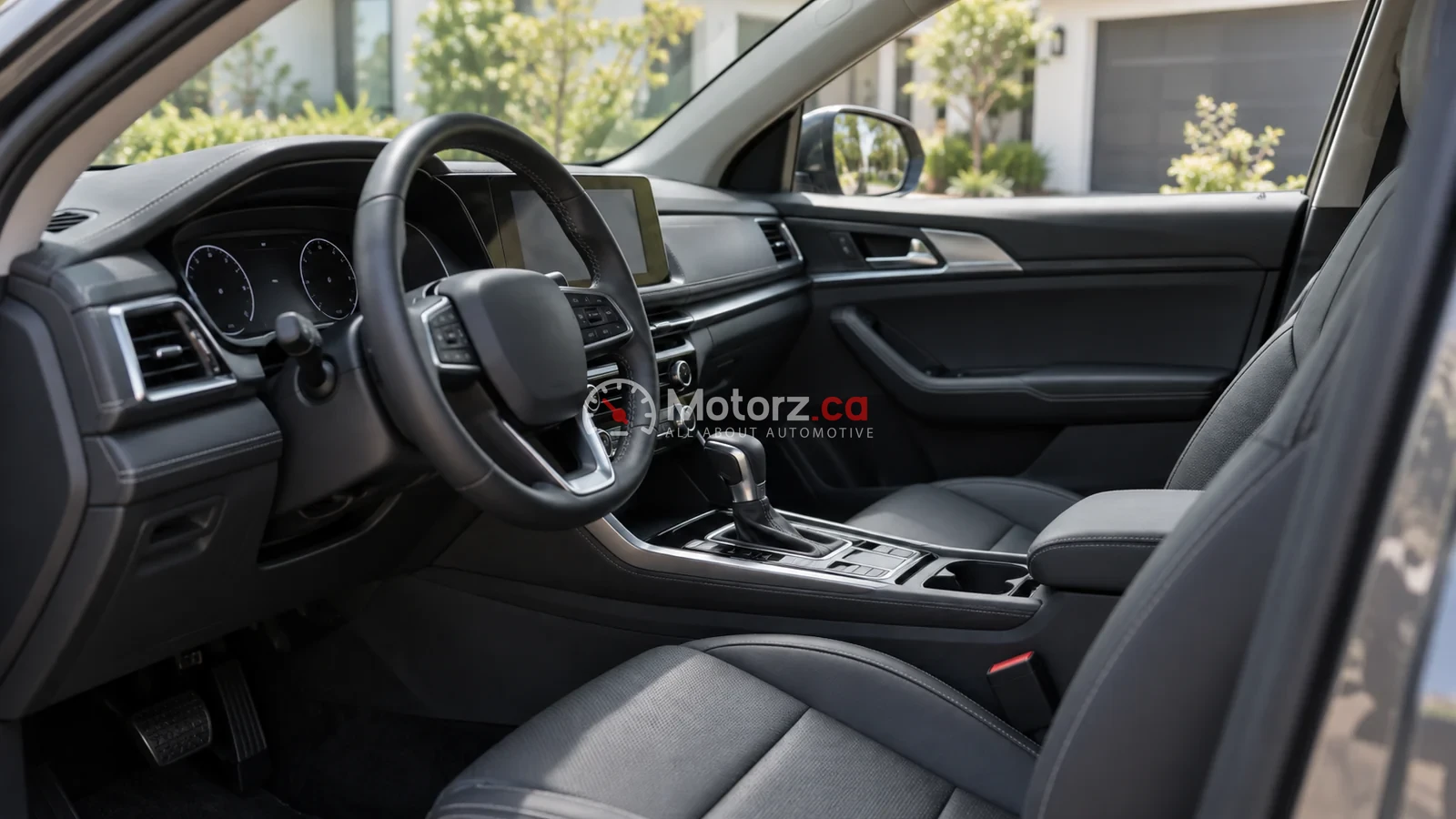
Source review: September 19, 2026. Rebuilt as diagnostic awareness, with the exact vehicle manual taking priority. No remote diagnosis, hands-on testing or qualified technician review is claimed. Hero: AI-assisted conceptual image of a parked-car interior, not a documented fault.