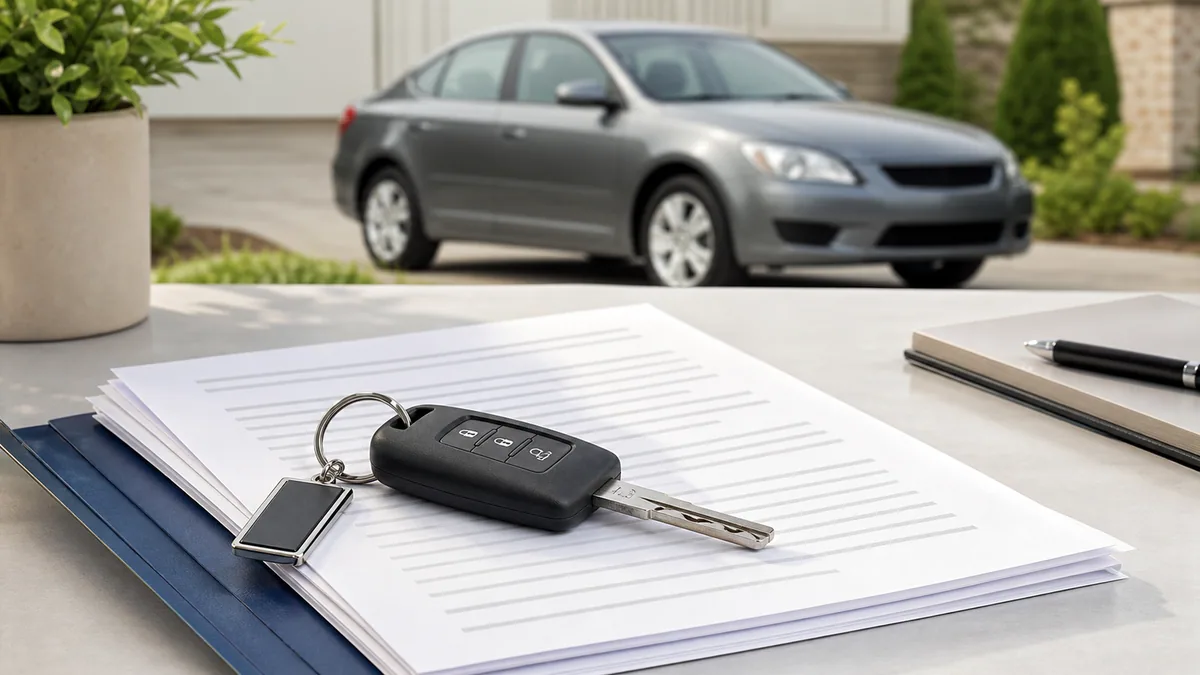
The Definitive Guide to the Used Vehicle Information Package (UVIP) in Ontario

The Definitive Guide to the Used Vehicle Information Package (UVIP) in Ontario

Comments
14 min read

Selling a pre-owned car privately in Ontario can be an excellent way to maximize your financial return compared to taking a lowball dealer trade-in allowance. However, stepping into the open marketplace means assuming the legal responsibilities of a professional vehicle vendor. In Ontario, you cannot simply exchange a signed bill of sale for a stack of cash and part ways.

The regulatory framework managed by the Ministry of Transportation dictates that private vehicle transactions require a transparent, government-issued document trail. At the absolute center of this legal matrix sits the Used Vehicle Information Package, universally abbreviated as the UVIP.

Whether you are offloading a reliable commuter sedan, selling a family sport utility vehicle, or liquidating a classic project car, navigating the UVIP process accurately is completely non-negotiable. Failing to understand the rules surrounding this document can stall your transaction, leave you exposed to unexpected legal liabilities, or result in surprise provincial regulatory fines.

This comprehensive, step-by-step master guide breaks down exactly what a UVIP is, uncovers the critical visual data layers contained inside it, explains why you are legally obligated to buy one as a private seller, and provides an actionable blueprint to help you seamlessly close your next private vehicle sale.

Demystifying the UVIP: What Exactly is a Used Vehicle Information Package?

A Used Vehicle Information Package (UVIP) is an official, document booklet compiled and issued directly by Service Ontario on behalf of the Ontario Ministry of Transportation. It acts as an official, high-integrity background dossier for any passenger vehicle, light-duty commercial truck, self-propelled motor home, or motorcycle currently or previously registered within the borders of Ontario.

Think of the UVIP as a government-backed vehicle history abstract that blends structural registration facts, financial lien tracking data, macro-level ownership paths, and specific regional taxation metrics into a single package.

The Core Difference: UVIP vs. CARFAX

Many private sellers confuse the UVIP with a standard CARFAX vehicle history report. While both documents provide crucial operational context for a pre-owned vehicle, they serve completely different purposes, originate from different sources, and contain completely separate data streams.

While a CARFAX report is an excellent marketing tool to prove to a buyer that your vehicle was maintained well and kept out of major structural accidents, it holds zero legal standing at a Service Ontario licensing counter. You cannot use a CARFAX report to bypass your legal obligation to present a fresh UVIP packet when transferring a vehicle registration title.

 Under the Hood: The Four Crucial Sections inside a UVIP Booklet

A standard UVIP document packet is separated into distinct, structured sections designed to give both the prospective buyer and the Service Ontario counter agent absolute clarity regarding the vehicle’s past. Understanding what is written in each section allows you to review your package for historical administrative errors before presenting it to an active buyer.

Section 1: Detailed Vehicle Specifications and Registration Text

The front section establishes the base identity of the physical asset being sold. The software system pulls structural records from the provincial vehicle registry to print the following details:

  • The exact, 17-character Vehicle Identification Number (VIN)

  • The model year, vehicle make, body layout style, and paint color

  • The engine cylinder configuration and fuel/power source profile (such as gasoline, diesel, or electric)

  • The current operational assembly status or branding (e.g., Normal, Fit, Unfit, Salvage, or Rebuilt)

Critical Safety Step: As a seller, your very first action step upon receiving a UVIP must be to visually match the 17-character VIN printed on page one against the stamped metal plate riveted to your vehicle’s dashboard, as well as the VIN printed on your green vehicle ownership permit. If even one alphanumeric digit does not match due to an old typing error at a licensing office, Service Ontario will freeze the transfer until the error is corrected.

Section 2: Complete Ontario Ownership and Odometer Mileage History

This section functions as a chronological timeline of the vehicle’s footprint in Ontario, tracking every change of ownership back to the moment the car originally entered the provincial database.

For every past registered owner, the package details the city of residence, the chronological dates the vehicle registration title was active, and the odometer mileage reading that was formally typed into the system at each transfer point. This section is a highly effective way to spot odometer tampering or rolling-back scams. If a buyer notices that the mileage was recorded as 180,000 kilometers in 2024, but your dashboard current reading shows 140,000 kilometers in 2026, the transaction will stop immediately due to systemic mileage fraud indicators.

Section 3: Active Financial Lien and Security Interest Tracking

A lien is a legal financial claim or security interest registered against a physical vehicle by a lender or financial institution, typically because the owner used an auto loan or line of credit to purchase the car.

The UVIP queries the province’s Personal Property Security Act (PPSA) registry database in real time. This live search will explicitly state either that there are no active liens registered against the vehicle, or it will display the specific name and contact details of the bank or financing house holding an outstanding security claim.

Section 4: The Official Bill of Sale Document Sheet

The final section of the booklet is a physical, clean template containing the Official Ontario Bill of Sale. This portion features dedicated entry fields where the seller and buyer must fill out their legal names, matching physical street addresses, the final mutually agreed purchase price, and the exact calendar date of the transaction.

Both parties must sign this section. The buyer will later tear this page out and hand it over to Service Ontario to establish the formal tax assessment base for the transfer.

The Law: Why the Seller is Legally Obligated to Provide the UVIP

In many private sales markets across North America, the general rule is “buyer beware,” meaning the responsibility for checking history reports falls entirely on the person buying the car. Ontario completely flips this responsibility on its head.

Understanding Section 57.1 of the Highway Traffic Act

Under the strict provisions laid out in Ontario’s Highway Traffic Act, the legal onus rests entirely on the vehicle seller to purchase a fresh Used Vehicle Information Package and present it openly to potential buyers during the viewing process.

Refusing to buy a UVIP, forcing a buyer to purchase it themselves, or providing an altered, outdated photocopied document is a clear provincial offense. If you proceed with a sale without providing one, you can face provincial compliance fines under the Highway Traffic Act, and Service Ontario counter agents will refuse to process the buyer’s registration application.

Why Does the Government Enforce This Rule?

The province enforces this mandatory system to protect everyday consumers from the major risks of the private used car market:

  • Lien Transference Protection: In Ontario, financial liens are tied directly to the vehicle’s asset chassis, not to the driver’s personal credit profile. If you buy a car with an active lien on it, that bank debt transfers directly to you. The lender retains the absolute legal right to send a repossession truck to your driveway and seize your new car to settle the previous owner’s unpaid loan balance. The mandatory UVIP makes it impossible for a dishonest seller to secretly pass their debt along to an unsuspecting buyer.

  • Curbsider Prevention: “Curbsiders” are unlicensed, shady vehicle dealers who pretend to be private citizens selling their personal cars on driveways or in parking lots. They frequently flip unsafe, poorly repaired vehicles that have been structurally written off. Because the UVIP displays a complete historical list of every registered owner’s name and address, it instantly exposes curbsiders whose names do not match the green vehicle registration ownership permit.

When Is a UVIP Not Required? Understanding Legal Exemptions

While a UVIP is standard protocol for the vast majority of private vehicle sales, Ontario law does outline a few specific scenarios where you can completely bypass this documentation requirement:

1. Purchasing Directly From a Licensed Commercial Auto Dealer

If you purchase a pre-owned car from an OMVIC-registered commercial dealership, a UVIP is not required. Registered dealerships are governed by separate, strict consumer protection laws and are required by OMVIC to perform their own verified lien checks and guarantee clean titles on every vehicle they sell.

2. Vehicle Title Transfers Between Direct Family Members

If you are transferring a vehicle’s ownership title as a direct gift or nominal sale to an eligible family member, you are legally exempt from the UVIP requirement.

To take advantage of this exemption, you and your family member must instead complete a specialized document titled the Sworn Statement for a Family Gift of a Used Motor Vehicle. This form must be signed and witnessed before a licensed Commissioner of Oaths or Notary Public at a Service Ontario branch.

3. Specialty Vehicle and Institutional Exemptions

A UVIP is also not required for several unique asset classes and specific structural scenarios:

  • Trailers, pull-behind campers, and off-road snowmobiles

  • Donating a vehicle directly to an officially registered Canadian charitable organization or religious foundation

  • Vehicles that were previously registered, purchased, and driven completely outside the borders of Ontario

  • Transferring vehicle assets directly between licensed municipal taxi plate owners

5. Step-by-Step: How to Get an Official UVIP via Service Ontario

Acquiring your official UVIP document pack is a straightforward process. Service Ontario provides two main access channels to help you get the document based on your personal timeline:

Method A: Immediate In-Person Acquisition

If you have an active buyer standing on your driveway with cash in hand, or if you need to complete your sale immediately, visiting a branch in person is your best option.

1.Locate a Service Ontario Center: Requires physical travel.

Find a nearby brick-and-mortar Service Ontario branch. While some locations allow you to book an appointment online to skip the line, walk-ins are welcome for vehicle documentation services.

2.Provide Vehicle Identification Data: Have your paperwork ready.

Walk up to the counter agent and provide either the complete 17-character VIN of your car or your current Ontario license plate number. You do not need to show proof of ownership just to buy a package.

3.Pay the Service Fee:20 flat rate.

Pay the standard processing fee using cash, debit card, or any major credit card. The price includes all applicable taxes.

4.Walk Out With the Document Booklet: Immediate printout.

The counter agent will run a real-time database query, print the document package directly from their terminal, staple it together, and hand it to you across the counter immediately.


Method B: Online Application and Home Mail Delivery

If you are planning ahead and preparing your car for sale a few weeks before listing it online, ordering your UVIP from home is highly convenient.

1.Access the Official Ontario Government Portal: Requires internet access.

Navigate directly to the official Service Ontario “Used Vehicle Information Package” service page. Avoid third-party history sites that charge extra processing markups.

2.Input Your Identification and Vehicle Numbers: Double-check characters.

Type in your personal driver’s license number or your Registrant Identification Number (RIN), along with your full mailing address and the vehicle’s 17-character VIN.

3.Process Electronic Payment: Digital credit checkout.

Complete the secure online checkout process by paying the flat fee using a valid Visa, Mastercard, or electronic credit option.

4.Wait for Canada Post Delivery: Takes 5 to 10 business days.

Service Ontario processes your digital application within 5 business days and hands it off to Canada Post. Your physical booklet will arrive in your home mailbox within 10 business days.

The Red Book Tax Reality: How the UVIP Impacts the Final Sale Price

One of the most valuable aspects of the UVIP for both buyers and sellers is how it impacts the provincial sales tax calculation.

The Average Wholesale Value Rule

In Ontario, private vehicle transactions do not escape sales tax. While the seller does not collect tax at the time of the sale, the buyer is legally required to pay 13 percent Retail Sales Tax (RST) directly to the agent at the Service Ontario counter when they transfer ownership.

Many buyers and sellers assume they can write a low, artificial purchase price on the bill of sale (for example, writing 1000 for a car worth 8000) to help the buyer save money on taxes. The UVIP completely blocks this tactic.

The UVIP explicitly prints the vehicle’s official Canadian Red Book Wholesale Value right inside the booklet. Service Ontario calculates the 13 percent RST based on whichever number is greater:

  1. The actual purchase price typed onto the signed UVIP Bill of Sale.

  2. The Canadian Red Book wholesale baseline value printed in the database.

Challenging the Red Book Value: The Appraisal Loophole

If your car has severe mechanical issues, high mileage, a blown engine, or structural body damage, its true market value might be significantly lower than the standard Red Book wholesale value printed in the UVIP.

If a buyer feels the printed Red Book valuation is unfair due to the car’s poor physical condition, they can challenge it. They must take the vehicle to a licensed, professional automotive appraiser and pay for an official Motor Vehicle Appraisal Record form. If the appraiser certifies that the vehicle is worth less due to its degraded condition, Service Ontario will calculate the 13 percent tax based on that lower appraised value.

Troubleshooting Common UVIP Issues and Roadblocks

Even straightforward vehicle sales can run into issues if the information inside the UVIP database contradicts reality. Here is how to handle the most common roadblocks private sellers face:

Issue A: “An Active Lien is Listed, but I Paid Off the Loan”

This is a very common issue. You finished paying off your auto loan years ago, but when you pull your fresh UVIP, the finance company or bank is still listed as holding an active financial lien against your VIN.

This happens because bank administrative teams often forget to send a formal release document to the provincial PPSA registry when a loan is cleared.

  • The Fix: You must contact your financial institution’s lending department immediately and request an official, signed Lien Clearance Letter or a formal PPSA release statement. You must give this physical document to your buyer along with the UVIP so they can prove to Service Ontario that the debt has been fully cleared.

Issue B: “The Odometer History Prints an Error or Out-of-Order Reading”

If a previous buyer or Service Ontario desk agent accidentally added an extra zero or mixed up miles and kilometers during a historical title transfer, your UVIP mileage history might look suspicious or out of order.

  • The Fix: You cannot change historical data on your own. You must call the Service Ontario specialized infrastructure helpdesk directly at 1-800-387-3445 or visit a central main branch office. You will need to provide supporting physical evidence—such as old oil change receipts, mechanical invoices, or historical service garage printouts—to prove the true mileage progression of the car and get the record updated.

Issue C: “The Buyer Wants to Keep My Physical License Plates”

Sometimes a friendly buyer asks to use your existing license plates to drive the car home after the sale.

  • The Fix: Never allow a buyer to drive away with your physical license plates. In Ontario, license plates operate under a strict plate-to-owner registration protocol. Your plates belong strictly to you as an individual, not to the car itself. When you finalize a sale, you must unscrew your plates and keep them. If the buyer drives away with your plates attached and gets into a major accident or passes through an automated photo-radar toll zone, you can be held legally liable for those damages because the plates are still registered under your personal profile.

The Safe and Legal Way to Sell a Car Privately

To ensure you stay fully protected throughout your private sale, use this step-by-step master checklist from the moment you decide to sell until the car leaves your driveway:

Share this article

About Author

motorz.ca

Leave a Reply

Your email address will not be published. Required fields are marked *

Most Relevent