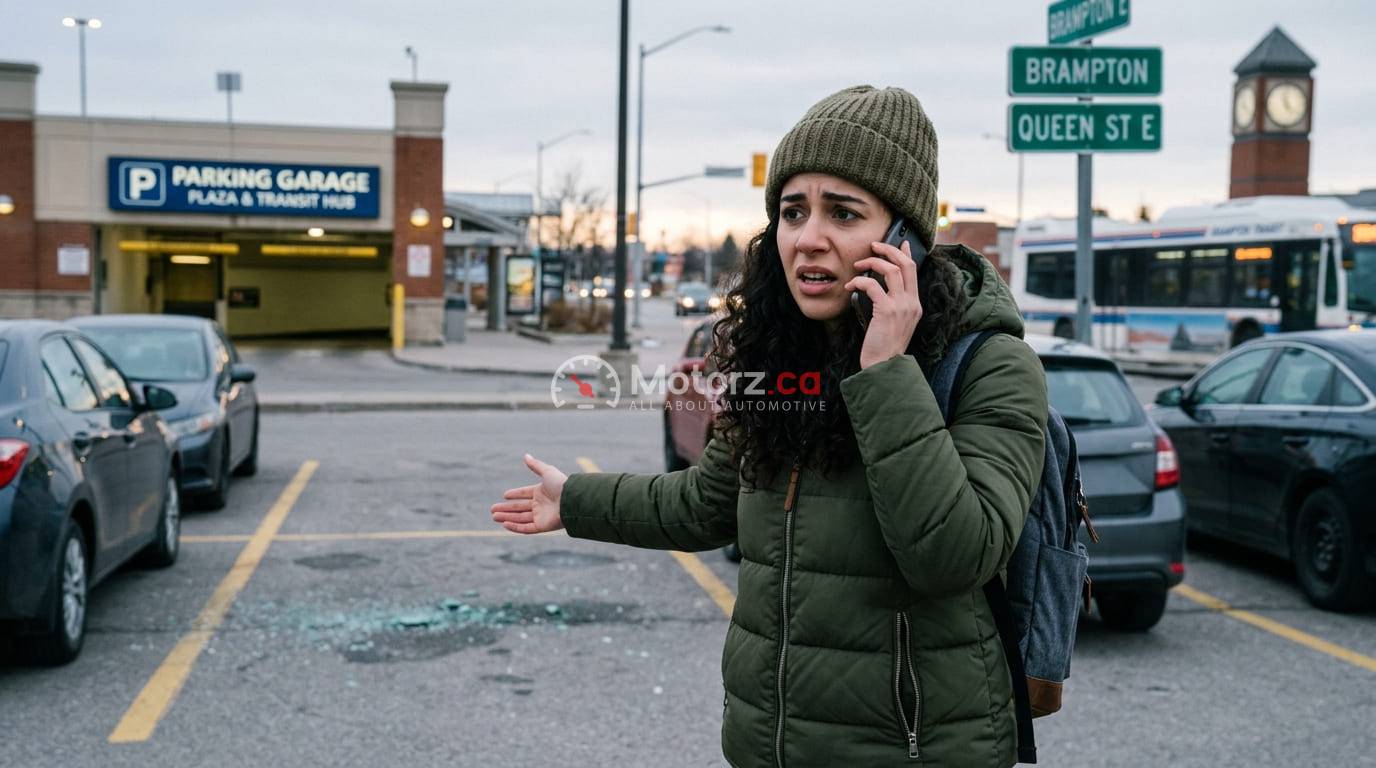
Walking out to your driveway or a parking lot only to find an Car Is Stolen in Brampton where your vehicle should be is a gut-wrenching experience. In a split second, shock turns into panic, confusion, and anger.
If this happens to you in Brampton, you are facing a scenario that has unfortunately become familiar to thousands of local drivers. While auto theft across Ontario dropped by 22% between 2024 and 2025 due to aggressive law enforcement and border security measures, the region remains a prime target for organized auto theft rings.
When a vehicle is taken by sophisticated criminal networks, time is your most critical asset. Modern thieves move fast; within hours, a car stolen from a Brampton driveway can be parked in a shipping container at a local rail yard, dismantled in a domestic chop shop, or driven straight toward the Port of Montreal for international export.
If your car is missing, you cannot afford to waste time wondering what to do next. You must act decisively to protect your property, shield yourself from legal liability, and kickstart your insurance claim.
This step-by-step guide walks you through exactly what to do immediately if your car is stolen in Brampton.
Verify the Car Is Stolen in Brampton
Before calling emergency services, take 60 seconds to rule out non-criminal explanations for your missing vehicle. Panicking can cause you to overlook simple baseline possibilities.
Check for Private or Municipal Towing
Did you park in a restricted commercial zone, block a fire hydrant, or violate a City of Brampton overnight parking by-law? If you parked on a city street during winter maintenance months or stayed past regional time limits, your car might have been towed rather than stolen.
Check the immediate area for parking enforcement signs. If you suspect your vehicle was towed for a municipal infraction, contact the Peel Regional Police non-emergency line or check with local private towing pounds operating in the Region of Peel.
Confirm with Family Members
If multiple people in your household have access to the vehicle keys or use a shared smart-key profile on their smartphones, verify that a spouse, teenager, or roommate did not take the car for an unannounced errand. A quick text or phone call can save you from filing a false police report.
Contact Peel Regional Police
Once you are certain the vehicle has been taken, your immediate next step is to get law enforcement involved. How you contact them depends entirely on the current status of the crime.
Why You Cannot Use the Online Reporting Tool for Car Theft
Peel Regional Police offer a convenient online reporting portal for minor property damage, digital scams, and thefts under 10,000. However, you cannot use the online system to report a stolen motor vehicle.
Because cars are high-value assets and their theft carries significant public safety implications, you must speak directly to an officer over the phone or file the report in person at a local operational division, such as 21 Division on Bovaird Drive or 22 Division on Hurontario Street.
Information to Have Ready for the Police Report
To speed up the intake process and get your car’s description broadcasted to regional patrol units, have the following details written down or pulled up on your phone:
Year, Make, Model, and Trim Level:
Exterior Color: Note any distinctive features like aftermarket rims, roof racks, window tints, or bumper stickers.
License Plate Number: Crucial for automated license plate recognition (ALPR) scanners mounted on police cruisers.
Vehicle Identification Number (VIN): A 17-character alphanumeric code found on your vehicle registration permit or your original sales/insurance documents.
Last Known Location and Time Window: Exactly when and where you last saw the vehicle secured.
Tracking Software Credentials: If your vehicle features active telematics or an aftermarket system, inform the officer immediately.
Activate GPS, Telematics, or Aftermarket Tracking Systems
If your vehicle is equipped with electronic location tracking tools, you need to engage them immediately after alerting the police.
Digital Connected Services
Many modern vehicles include factory-installed telematics packages managed through smartphone applications, such as Toyota App, HondaLink, FordPass, or LexusEnform.
Open the corresponding application on your phone and check for the “Locate Vehicle” feature. If the app displays a live, active location pin, do not go to that location yourself.
Take a screenshot of the map coordinates and immediately relay this data to the Peel Regional Police officer handling your file. Let law enforcement handle the recovery to avoid putting your personal safety at risk.
Premium Aftermarket Tracking Protocols
If you paid out-of-pocket to install a specialized asset recovery platform like the Tag tracking system, contact their dedicated 24/7 emergency dispatch center immediately.
Systems like Tag deploy distinct wireless transponders hidden across various physical panels of your vehicle that operate on secure radio frequencies. Once you provide them with your police report file number, they will dispatch their own regional recovery teams to work directly with local police to pinpoint and secure the vehicle, even if it is locked inside an industrial garage or a metal shipping container.
Consumer Tracking Tags
Did you hide a consumer tracking device like an Apple Air Tag or Samsung Galaxy SmartTag inside your glovebox or spare tire well? Open your tracking app to see if it has pinged a nearby device.
Be aware that professional thieves carry wireless signal sweepers to locate and throw out consumer tags within minutes of stealing a car. However, if the tag is well-hidden and still broadcasting an active signal, pass that information straight to the police.
Secure Neighborhood Surveillance and Video Evidence
Modern investigations rely heavily on digital footprints left behind on residential security networks. You can speed up the police investigation by gathering visual evidence right away.
Review Your Personal Security Cameras
If your vehicle was taken from your driveway, check your smart home cameras, doorbell cameras, or floodlight units immediately.
Look for the exact timestamp the thieves entered your property boundary, how they gained access to the cabin (e.g., holding up a relay antenna or jimmying the door), and whether they arrived in a secondary getaway car. Download the raw video file directly to your smartphone or computer in the highest available resolution so it is ready for the police.
Connect with Your Neighbors
Auto theft scouts and extraction teams often check multiple houses on a street before picking a target. If your immediate neighbors have exterior security cameras or driveway-facing doorbell units, knock on their doors or message them through neighborhood community forums.
Ask them to review their footage from the timeframe of your theft. A neighbor’s camera might capture a clear look at a thief’s face, a license plate on a scout vehicle, or additional clues that your own cameras missed.
Notify Your Auto Insurance Provider
Do not wait for the police to find your car before contacting your insurance company. You need to log the theft with your insurance provider as soon as you have a police report number.
Establishing a Legal Timeline
Reporting the theft immediately creates an official legal paper trail. If the thieves drive your car recklessly and cause a severe multi-vehicle collision on Queen Street, or use your truck to commit a commercial break-and-enter in another part of the GTA, you need proof that the vehicle was out of your possession.
Notifying your insurer protects you from being held personally liable for third-party property damage, personal injury claims, or criminal acts committed with your car.
Determining Your Policy Coverage
Your insurance company will review your policy details to confirm if you carry the proper coverage to handle a theft claim.
Navigating the Claims Payout and Waiting Periods
If your vehicle features comprehensive coverage but cannot be recovered by Peel Regional Police, your insurer will initiate a total loss claim settlement.
Be prepared for a standard mandatory waiting period, usually spanning 30 to 45 days from the initial date of the theft report. Insurance companies enforce this window to see if law enforcement can recover the vehicle in salvageable condition.
If the waiting period wraps up and your vehicle remains missing or is recovered completely written off, your claims adjuster will calculate a payout based on the vehicle’s depreciated actual cash value (ACV), minus your deductible amount.
File a Separate Homeowners or Renters Insurance Claim
A common point of confusion for auto theft victims is figuring out how to handle personal items that were sitting inside the cabin when the car was taken.
The Division of Coverage Boundaries
Your automobile insurance policy is designed to cover the physical car itself and components permanently bolted to the chassis (like the factory stereo system or integrated navigation screens). It does not cover loose personal belongings left inside the cabin.
Where to Claim Belongings: Items like laptops, work tools, gym bags, designer sunglasses, golf clubs, and loose electronics are covered exclusively under your homeowners, condo, or tenants insurance policy.
Documenting Your Lost Cabin Content
Make a detailed, comprehensive list of every item stored inside the vehicle when it vanished. Hunt down your original store purchase receipts, credit card statements, or online order confirmations to prove ownership and establish the replacement values for those items.
Keep in mind that you will have to pay a separate deductible for your property insurance policy, so calculate the total value of your lost personal items first to ensure it makes financial sense to file a second claim.
Protect Yourself Against Identity Theft
Modern vehicle thieves do not just look at your car as physical metal and parts; they also search the glovebox and center console for sensitive personal documents that can be sold or exploited for financial fraud.
The Danger of Left-Behind Documents
If you keep your physical vehicle ownership permit (Portion 2 of the green Ontario permit), pink liability slips, or old utility bills inside your vehicle, the thieves now hold your full legal name, home address, and vehicle registration data.
This gives them everything they need to create cloned vehicle permits or engage in synthetic identity theft—such as applying for high-interest loans or credit cards under your name.
Immediate Fraud Prevention Measures
If sensitive personal paperwork was inside the vehicle, take these security steps immediately:
Alert Your Banking Institutions: Contact your credit card issuers and banks to place an absolute fraud watch on your personal accounts.
Notify Credit Bureaus: Contact Equifax and TransUnion Canada to place a protective “Fraud Alert” on your credit profiles. This forces lenders to manually call and verify your identity before approving any new lines of credit.
Report Stolen Identity Documents: If your passport, driver’s license, or health card was inside the car, file a report in person at a Service Ontario center or passport office to cancel the compromised documents and request secure replacements.
AI Overview
Immediate Call Priority: If you witness your car being stolen in Brampton, call 9-1-1 immediately. If you discover the car missing after the fact, call the Peel Regional Police non-emergency line at 905-453-3311. Vehicle thefts cannot be reported using the online tool.
Tracking Activation: Open your vehicle’s factory telematics app or call your aftermarket tracker dispatch (like Tag) to locate the vehicle. Share location data with the police; do not attempt to recover the vehicle yourself.
Insurance Timeline: Notify your auto insurance provider right away to protect yourself from legal liability if the thieves cause a collision or commit further crimes with your car.
Understanding Policies: Physical vehicle damage or total loss is covered under your auto policy’s comprehensive tier. Stolen personal belongings inside the cabin must be claimed separately through your homeowners or renters insurance.
Identity Security: If your ownership pink slips or personal papers were in the car, contact Equifax and TransUnion Canada to place a fraud alert on your credit file to prevent identity theft.