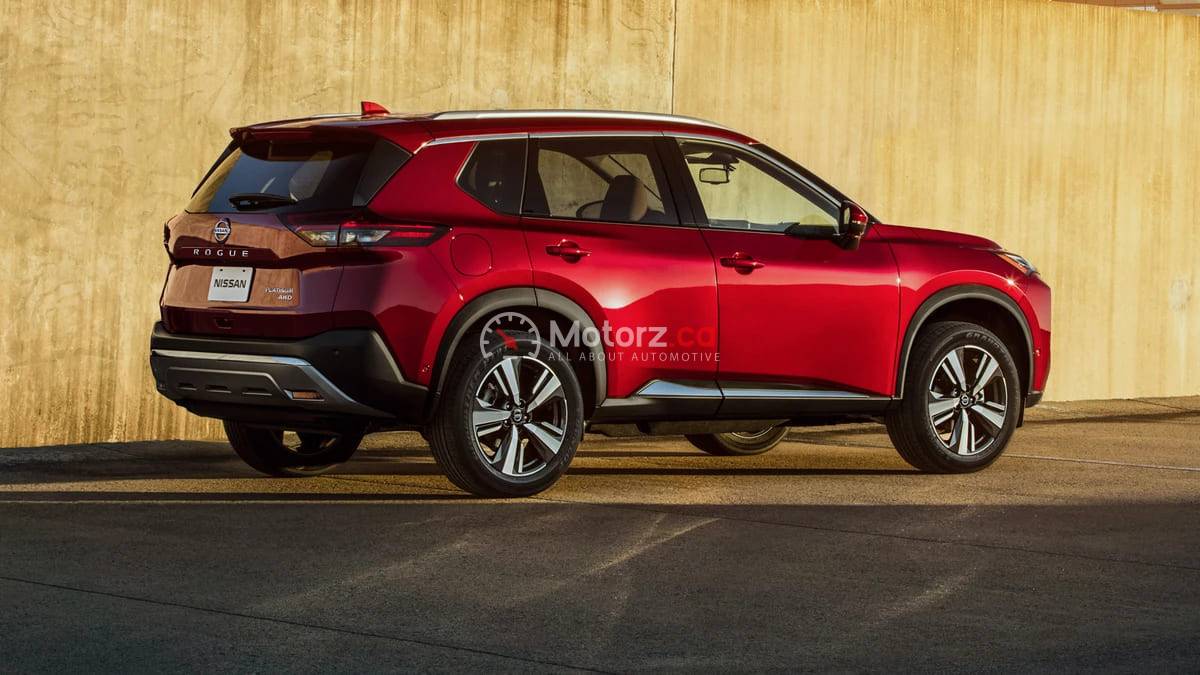
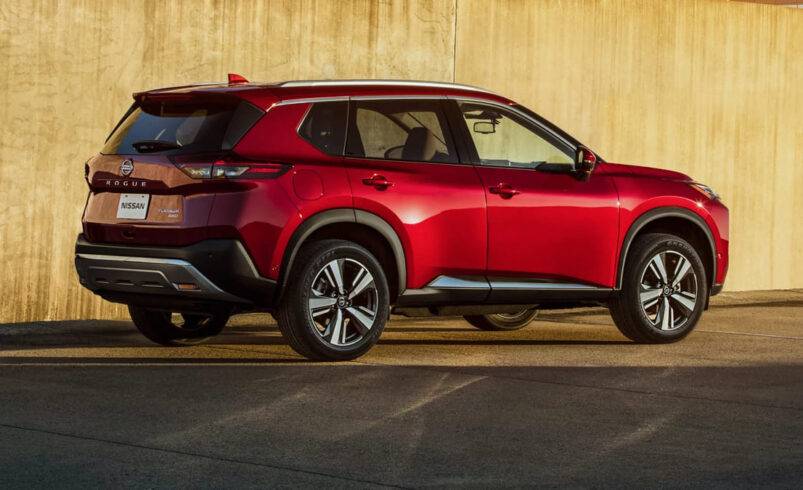

When you buy a Two-Star Passenger Crash Rating, you expect it to be a fortress. You look at the sleek design, the high-tech sensors, and the glossy brochures promising “advanced safety.” But in early 2021, a shocking report from the National Highway Traffic Safety Administration (NHTSA) sent a ripple of concern through the automotive world: the completely redesigned 2021 Nissan Rogue earned a rare and disappointing two-star rating for front-passenger protection.
In an era where four and five stars are the industry standard, a two-star result is almost unheard of for a modern vehicle. It raised immediate questions for thousands of owners: Is my family safe? Why did this happen? And most importantly, what has Nissan done to fix it?
In this deep dive, we are looking into the specifics of the NHTSA testing, the disparity between different safety organizations, and the “Voluntary Service Campaign” that every 2021 Rogue owner needs to know about in 2026.
Two-Star Passenger Crash Rating: Two Stars in a Five-Star World
The NHTSA’s New Car Assessment Program (NCAP) is the gold standard for government safety testing. Their frontal crash test simulates a head-on collision between two similar vehicles at 35 miles per hour.
What Went Wrong for the Passenger?
While the 2021 Rogue earned a respectable four stars for the driver and four stars overall, the front-passenger seat told a different story. The two-star rating indicated a significantly higher risk of injury to a passenger in a head-on collision compared to its competitors.
The Culprit: The issue wasn’t the “bones” or the metal structure of the car. Instead, it was the restraint system—specifically how the airbag and seatbelt worked together to protect a smaller occupant during the violent forces of an impact.
The “Japan-Built” Factor: The initial two-star rating specifically applied to Rogue models built at Nissan’s Kyushu plant in Japan before January 28, 2021.
The Great Disparity: NHTSA vs. IIHS
One of the most confusing aspects of this story is that while the government gave the Rogue a “Poor” mark for passengers, the Insurance Institute for Highway Safety (IIHS)—a private group funded by insurers—awarded the exact same vehicle its highest honor: Top Safety Pick Plus (+).
Why the Different Scores?
How can one car be a “two-star” failure and a “Top Safety Pick Plus” at the same time? It comes down to the physics of the test:
NHTSA Test: A full-width frontal crash. The entire front of the car hits a wall. This tests how the seatbelts and airbags manage the sudden stop of the occupant’s chest and head.
IIHS Test: A “Small Overlap” test. Only 25 percent of the front of the car hits a barrier. This tests how well the car’s frame prevents the engine and wheel from crushing into the passenger cabin.
The Rogue’s frame (its “cage”) is incredibly strong, which is why it aced the IIHS tests. However, the initial software and hardware tuning of the passenger-side airbag were not optimized for the specific forces used in the NHTSA’s full-frontal test.
Nissan’s Rapid Response: The “P2A08” Campaign
Nissan did not ignore the two-star headline. Almost immediately after the results were published, the company implemented a production change on the assembly line. Every Rogue built after late January 2021 (in Japan) and all those built in Tennessee were equipped with an updated passenger restraint system.
The Voluntary Service Campaign
For the owners of the “early” 2021 Rogues—the ones actually sitting in driveways with a two-star rating—Nissan launched a service campaign (ID: P2A08).
The Fix: Dealers were instructed to replace the front passenger airbag, the seat belt retractor, and reprogram the Airbag Control Unit (ACU).
The Result: Following these updates, the Nissan Rogue was retested by the NHTSA and successfully raised its passenger-side score to four stars.
Advice for Used Car Buyers in 2026
If you are currently looking at a used 2021 Nissan Rogue, you need to verify that this safety “gap” has been closed.
Check the VIN and Build Date
Look at the Door Jamb: Check the manufacturing date. If the car was built in February 2021 or later, it already has the updated safety equipment.
Verify Campaign Completion: If the car was built in late 2020 or January 2021, ask the dealer to run the VIN through their system. You want to see that Campaign P2A08 has been completed.
The “J” vs “1” VIN: Rogues starting with a “J” were built in Japan; those starting with a “1”, “4”, or “5” were built in North America. The Tennessee-built models were updated earlier in the production cycle, but it is always worth double-checking.
Lessons Learned: Why We Can’t Ignore Safety Data
The 2021 Nissan Rogue incident is a perfect example of why automotive safety is a moving target. A car that is “safe” by one metric might have a specific vulnerability in another.
Tips for the Safety-Conscious Driver
Never assume “All New” means “Perfect”: Often, the first six months of a totally new vehicle design (like the 2021 Rogue) are when these “edge case” safety issues are discovered.
Cross-Reference Ratings: Always check both NHTSA.gov and IIHS.org. If there is a massive gap between their scores, there is usually a story worth investigating.
Respond to Service Campaigns: Unlike a “Recall,” a “Service Campaign” is often voluntary and doesn’t always trigger a “Stop Sale.” However, when it involves airbags and seatbelts, treat it with the same urgency as a mandatory recall.
A Tale of Two Stars and a Quick Recovery
The “two-star” headline was a black eye for the 2021 Nissan Rogue launch, but it also proved that the system works. Testing caught a deficiency, the manufacturer engineered a fix, and today, the Rogue remains one of the more robust SUVs on the market.
If you own an early 2021 model, the fix is 100 percent free and significantly improves the safety of your front-seat passenger. Don’t let those two stars be the end of the story—get the update and drive with the confidence that your SUV is truly “cracked up” to be the safety leader it was meant to be.