
When you climb into a full-size pickup truck, there is an inherent sense of Safety Setback. You are sitting high above the pavement, surrounded by thousands of pounds of reinforced steel. For years, the Nissan Titan has leaned into this “tough” image, positioning itself as a rugged alternative to the domestic Big Three. however, as automotive safety standards evolve, even the biggest trucks on the road can find themselves falling behind the curve.
In a surprising turn of events, the 2021 Nissan Titan—a truck that many expected to coast through safety evaluations—faced a significant downgrade in its ratings from the Insurance Institute for Highway Safety (IIHS). Specifically, the truck saw a “step backward” in critical areas like passenger-side protection and headlight performance.
In this deep dive, we are analyzing the specific data behind the crash test results, explaining why “Acceptable” is the new “Poor” in the eyes of safety experts, and what this means for truck owners who prioritize occupant protection in 2026.
The Small Safety Setback: Why the Passenger Side Matters
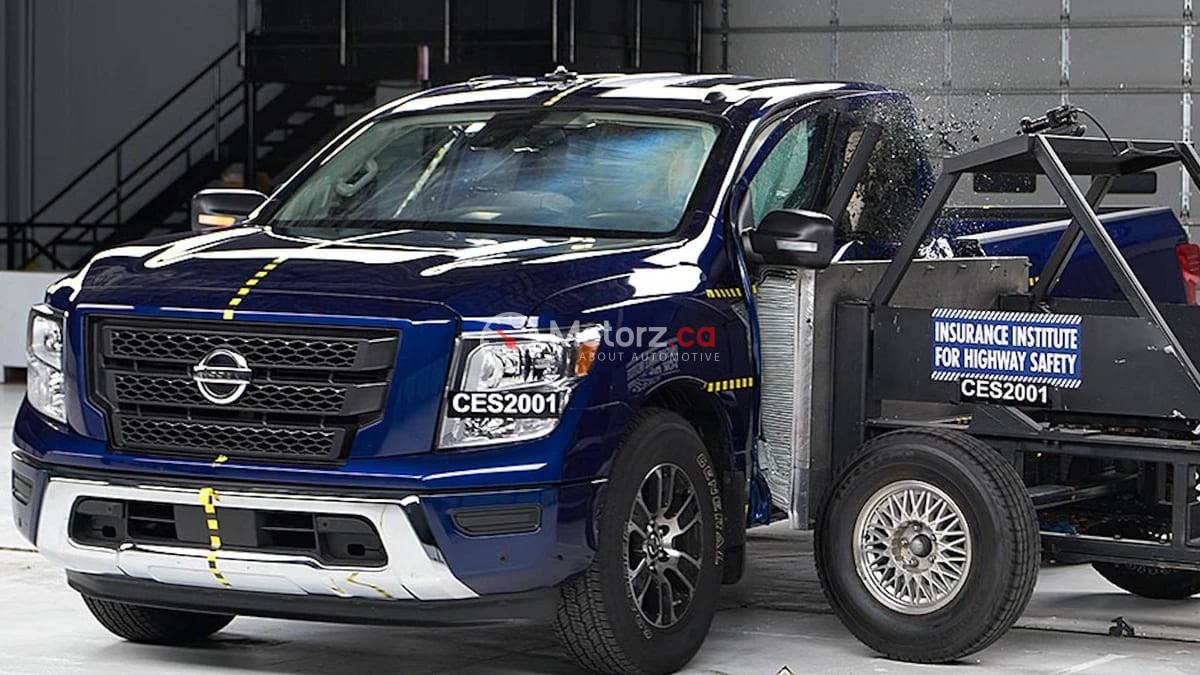
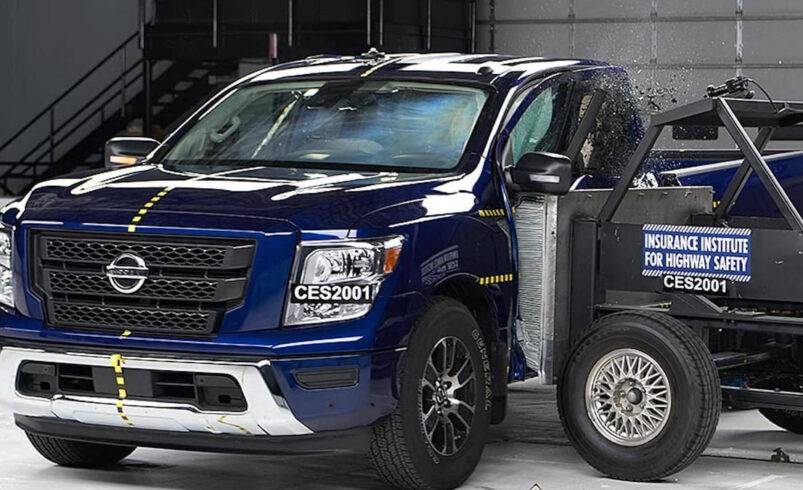
The IIHS is famous for its “small overlap” front crash test. This test simulates what happens when the front corner of a vehicle hits another vehicle or a fixed object like a tree or utility pole. It is one of the most difficult tests for any vehicle to pass because it bypasses the main “crush zones” of the frame.
The Rating Downgrade
In previous years, the Titan held a “Good” rating (the highest possible) in several categories. However, for the 2021 model year, the IIHS noted a shift in performance for the passenger-side small overlap test.
The Result: The 2021 Titan earned an Acceptable rating rather than a “Good” rating.
The Physics: During the test, the passenger-side cabin “intruded” into the occupant space more than in previous evaluations. This means that in a real-world corner impact, the dashboard and footwell could push back toward the passenger, increasing the risk of lower-leg and hip injuries.
Why “Acceptable” Isn’t Quite Good Enough
In the competitive world of modern trucks, “Acceptable” is often seen as a failure by safety-conscious buyers. When rivals like the Ford F-150 and RAM 1500 are securing “Good” ratings across the board, a mid-tier result highlights a lack of structural evolution in the Titan’s aging platform.
Headlight Performance: The Visibility Gap
One of the most frequent reasons a vehicle fails to secure a “Top Safety Pick” award is its headlights. The IIHS places a massive emphasis on how well a driver can see a pedestrian or an obstacle while traveling at highway speeds in the dark.
Poor and Marginal Ratings
The 2021 Nissan Titan’s base headlights were rated as Marginal, while even the upgraded LED projectors in higher trims struggled to provide consistent illumination on curves.
The Glare Factor: In some tests, the Titan’s headlights were found to create excessive glare for oncoming drivers, which actually lowers the safety score.
The Visibility Distance: On straightaways, the low beams often fell short of the recommended 100-meter visibility threshold. For a truck that weighs over 5,000 pounds, every extra meter of visibility is critical for stopping distance.
Standard Safety Tech: The “Nissan Safety Shield 360”
While the structural scores took a hit, it wasn’t all bad news for the Titan. Nissan made a strategic move to include their Safety Shield 360 suite as standard equipment on all trims.
Automatic Emergency Braking (AEB)
The Titan’s front crash prevention system performed exceptionally well. In vehicle-to-vehicle tests, the truck was able to avoid a collision entirely at speeds of 20 and 40 kilometers per hour.
Pedestrian Detection: The system also earned high marks for its ability to detect pedestrians crossing the street, which is a vital feature for large trucks with significant “blind spots” directly in front of the hood.
Rear Automatic Braking
The Titan remains one of the few trucks in its class to offer Rear Automatic Braking as a standard feature. This helps prevent low-speed “back-over” accidents in parking lots, which are common given the truck’s massive dimensions and limited rear-view visibility.
Comparing the Titan to the Competition
To truly understand why the 2021 Titan’s “step backward” is significant, we have to look at the rest of the full-size truck market. Safety is a “relative” metric—you are only as safe as the other vehicles on the road.
The Ford and RAM Standard
Both the Ford F-150 and the RAM 1500 have undergone significant redesigns that specifically addressed the small-overlap crash tests. By using high-strength aluminum alloys and ultra-high-strength steel in the A-pillars, these trucks have maintained “Good” ratings even as the tests have become more rigorous.
The Value Proposition
If you are buying a 2021 Titan in the used market in 2026, you are likely doing so because it offers a powerful V8 engine and a great warranty for a lower price than a Toyota or a Ford. However, you must decide if that “value” is worth the slight compromise in passenger-side structural protection.
Tips for Owners and Buyers in 2026
If you already own a 2021 Nissan Titan, or you are considering one, here is how you can mitigate the safety concerns raised by the IIHS report:
Check for Recalls: Nissan has issued various software updates for their safety sensors since 2021. Ensure your local dealer has performed all “Campaign” updates to your Safety Shield 360 system.
Upgrade the Bulbs: While you cannot change the “rating” of your headlights, you can ensure your lenses are crystal clear. If you have the base halogen bulbs, consider a high-quality (and street-legal) LED conversion to improve night-time visibility.
Adjust the Passenger Seat: Encourage front-seat passengers to slide the seat back as far as comfortable. Increasing the distance between the passenger and the dashboard can reduce the risk of injury if the cabin structure “intrudes” during a collision.
A Wake-Up Call for Truck Safety
The 2021 Nissan Titan is a capable, comfortable, and powerful machine. However, the IIHS crash test results serve as a reminder that “bigger” does not always mean “safer.” As testing standards become more stringent, manufacturers must constantly innovate to protect occupants from every angle.
The “step backward” for the Titan is a call to action for Nissan and a warning for consumers to look past the rugged exterior and into the raw data of crashworthiness. Safety is not a static feature; it is an ongoing race, and in 2021, the Titan found itself needing to pick up the pace.