



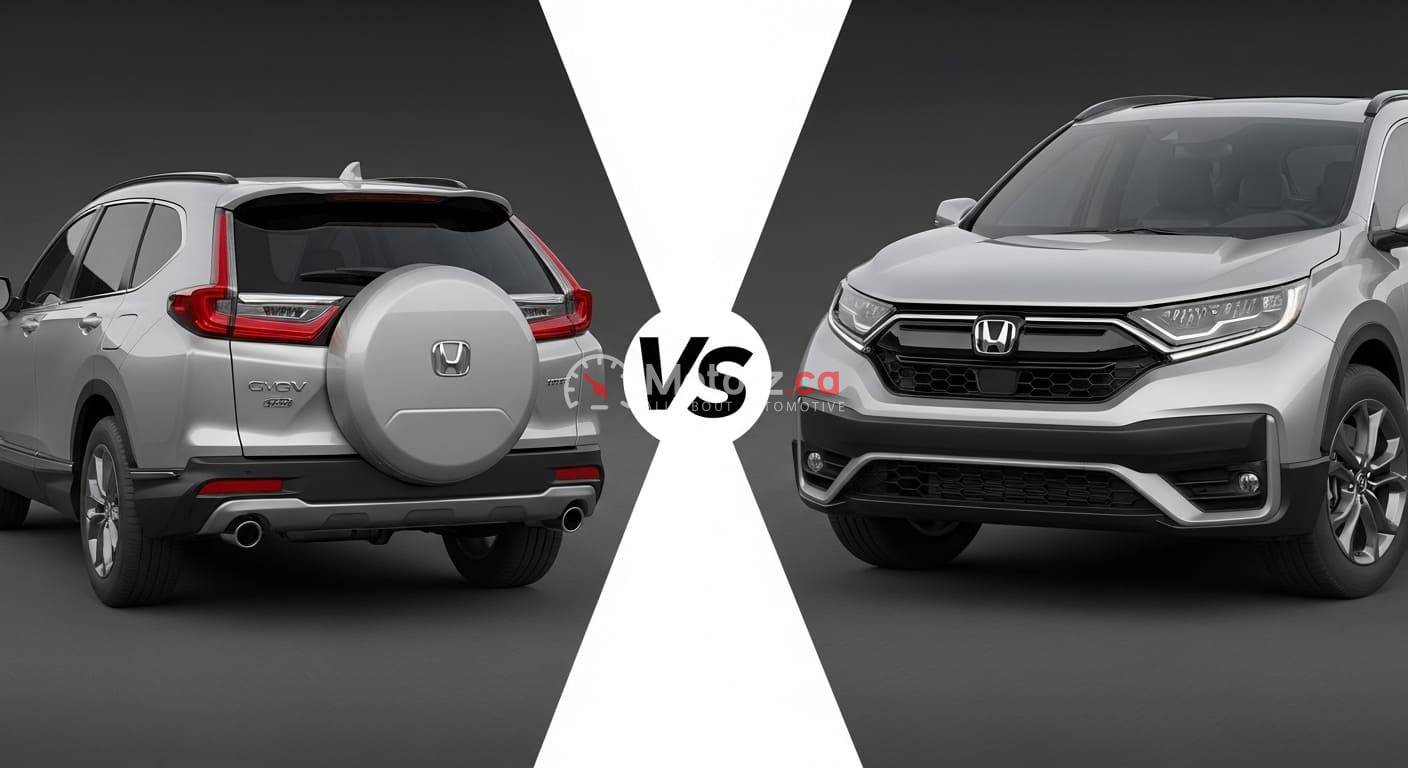

The Honda CR-V vs. Toyota RAV4 is arguably the most competitive in the automotive world, and for good reason. These versatile crossovers perfectly balance practicality, efficiency, and comfort, making them the go-to choice for families, commuters, and adventurers alike. At the top of this fierce segment stand two undisputed giants: the Honda CR-V and the Toyota RAV4.
For the 2025 model year, this rivalry remains as intense as ever. Both vehicles bring a legacy of reliability and strong resale value, but they appeal to slightly different drivers. The CR-V shines with its refined interior and comfortable ride, while the RAV4 Honda CR-V vs. Toyota RAV4 rugged styling and a broad range of unique trims, including the popular adventure-focused options.
Choosing between these two automotive titans is no easy feat. It’s a decision that often comes down to splitting hairs, balancing marginal differences in specs against personal preferences for driving dynamics and interior design. We’ve put both the 2025 Honda CR-V and the 2025 Toyota RAV4 under the microscope to determine which compact SUV is the ultimate winner for you. Read on for our comprehensive, 2000-word deep-dive comparison.
Design and Styling: Honda CR-V vs. Toyota RAV4
The first impression a vehicle makes is often Honda CR-V vs. Toyota RAV4 its exterior, and here, the CR-V and RAV4 take distinctly different approaches.
Honda CR-V: Sleek and Mature
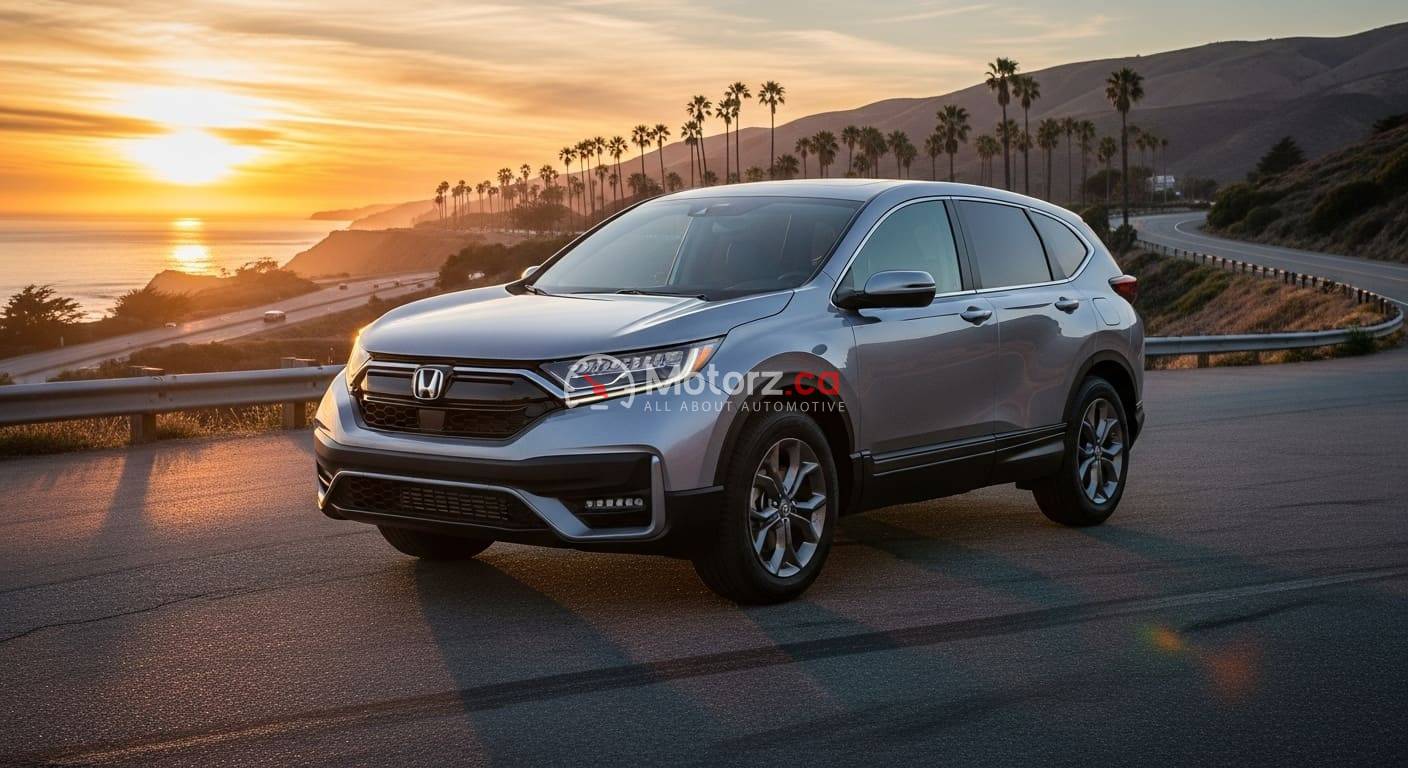
The 2025 Honda CR-V, following its recent full redesign, continues to embody a more mature, refined aesthetic. Its design is clean, upscale, and slightly European in flavor. It features a large, angular grille, long hood, and thin LED headlights, giving it an understated Honda CR-V vs. Toyota RAV4. The overall look is modern and less polarizing than its rival, appealing to drivers who prefer a vehicle that blends seamlessly into the urban and suburban landscape. Its design emphasizes interior space and excellent outward visibility with its practical, upright greenhouse.
Toyota RAV4: Bold and Adventurous
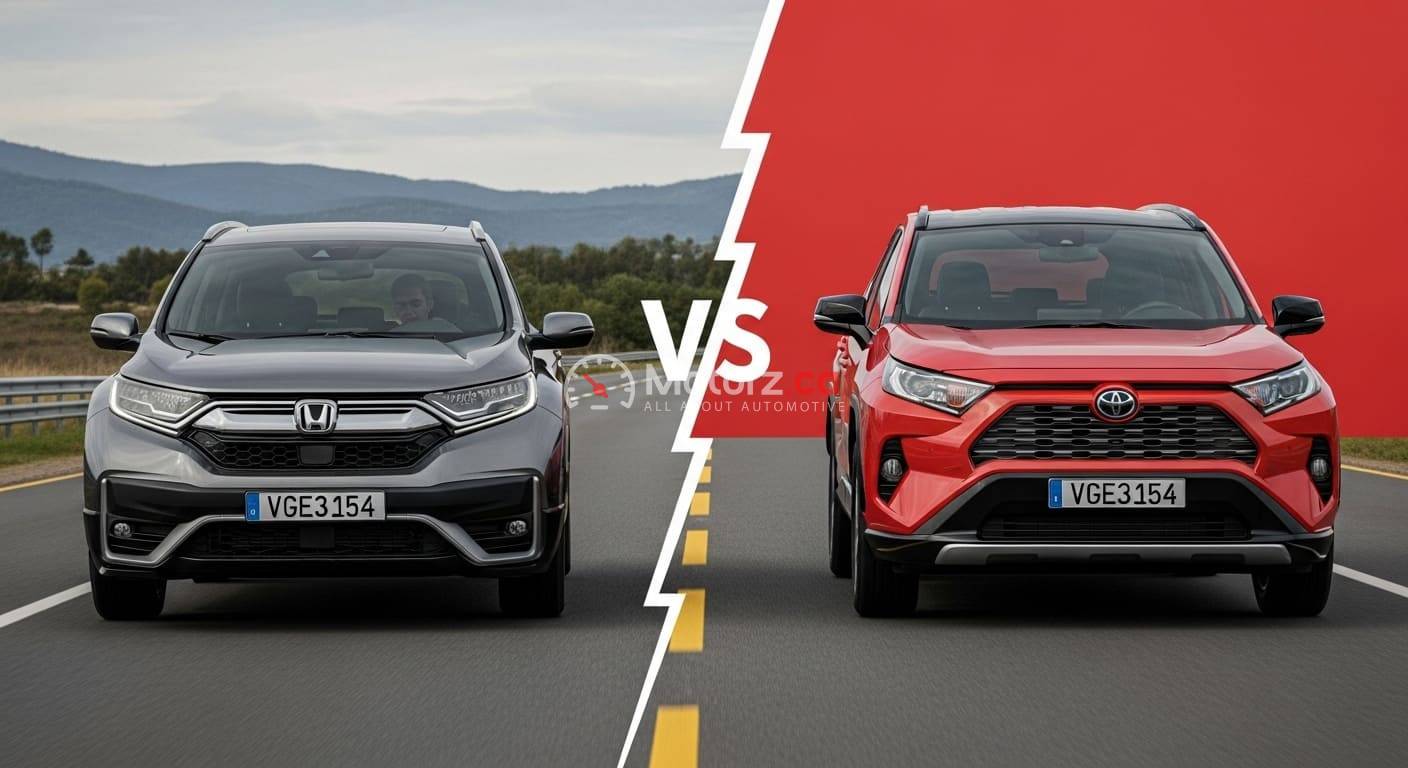
In contrast, the 2025 Toyota RAV4 doubles down on its rugged, off-road-inspired look. With its chiseled lines, prominent fender flares, and aggressive front fascia, the RAV4 looks ready for a trail. Toyota offers a wider variety of specialized trims like the TRD Off-Road and the Woodland Edition, each emphasizing its adventurous spirit with unique wheels, accents, and features. If you are looking for a compact SUV that projects a bolder, more rugged image, the Honda CR-V vs. Toyota RAV4 has the clear edge.
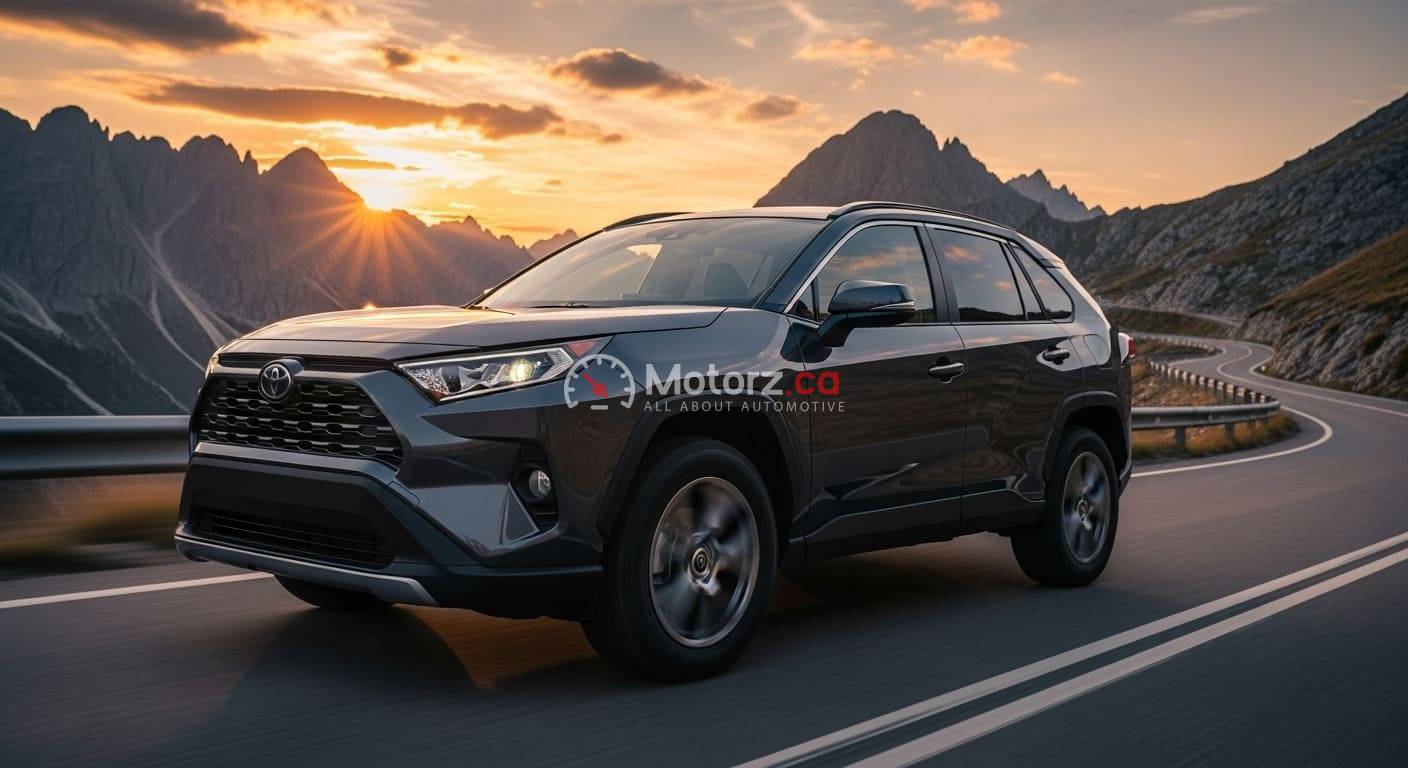
Initial Winner: This section is a tie based on preference. The CR-V offers a sophisticated, mainstream appeal, while the RAV4 captures the imagination with its tough, adventure-ready stance.
Performance and Powertrains: Turbo vs. Natural Aspiration
Both compact Honda CR-V vs. Toyota RAV4 offer efficient gasoline and hybrid powertrains, but their core engineering philosophies are quite different, significantly affecting the driving experience.
Standard Gasoline Engines
The base engine in the 2025 Honda CR-V is a 1.5-liter turbocharged four-cylinder, producing 190 horsepower and 179 pound-feet of torque. It is paired exclusively with a continuously variable transmission (CVT). The turbocharging gives the Honda CR-V vs. Toyota RAV4 low-end acceleration, making it feel zippy during city driving and highway merging, but the Honda CR-V vs. Toyota RAV4 can cause the engine to drone under heavy acceleration.
The 2025 Toyota RAV4 uses a naturally aspirated 2.5-liter four-cylinder engine, generating a more potent 203 horsepower and 184 pound-feet of torque. This engine is mated to an 8-speed automatic transmission. The RAV4’s larger, non-turbo engine delivers power in a more traditional, linear fashion. While it’s slightly slower off the line than the Honda CR-V vs. Toyota RAV4, the conventional automatic transmission is smoother and quieter during hard acceleration, avoiding the ‘rubber-band’ feeling often associated with CVTs.
Hybrid Efficiency and Power
The hybrid versions of these two SUVs are where the efficiency competition truly heats up.
RAV4 Hybrid: The 2025 Honda CR-V vs. Toyota RAV4 combines the 2.5-liter engine with two electric motors for a combined net output of 219 horsepower. It’s a quick, punchy setup that excels in fuel economy, with an EPA-estimated combined rating of approximately 40 miles per gallon. Importantly, all RAV4 Hybrids come standard with electronic All-Wheel Drive (AWD).
CR-V Hybrid: The 2025 Honda CR-V Hybrid utilizes a 2.0-liter four-cylinder engine paired with two electric motors, achieving a net 204 horsepower. While the horsepower is slightly lower than the RAV4, the CR-V Hybrid offers a smoother, more refined driving experience with better power delivery and a quieter cabin under load. Its combined fuel economy is also very competitive, typically around 38 miles per gallon combined. The CR-V Hybrid offers the choice of both Front-Wheel Drive (FWD) or AWD, providing a slight fuel economy boost for FWD buyers.
Ride and Handling
The CR-V traditionally wins the ride comfort battle. It offers a more composed and comfortable ride, soaking up bumps and imperfections with greater ease. Its steering is light and precise, making it feel nimble and easy to maneuver in tight Honda CR-V vs. Toyota RAV4.
The RAV4, particularly in its gas form, tends to have a firmer, sometimes bumpier ride, which contributes to its “sportier” or more rugged feel. Its handling is competent, but it doesn’t quite match the CR-V’s refinement.
Winner: Toyota RAV4 for base engine power and its traditional 8-speed automatic transmission. Honda CR-V for the best overall ride comfort and refinement in its hybrid setup.
Interior Comfort and Technology: Space vs. Features
The cabin is where drivers spend the Honda CR-V vs. Toyota RAV4 of their time, making interior design, space, and technology crucial deciding factors.
Interior Design and Quality
The Honda CR-V cabin sets a high standard for the compact class. The design is modern, functional, and utilizes high-quality materials, particularly on higher trims. Its standout feature is the full-width honeycomb mesh trim that subtly conceals the air vents, adding a sophisticated touch. The CR-V is notably quieter inside than the RAV4, with better sound insulation reducing road and wind noise, contributing to a more premium feel.
The Toyota RAV4 interior is practical and durable, featuring a more utilitarian design. The controls are chunky and easy to use, a clear nod to its rugged Honda CR-V vs. Toyota RAV4. While its latest models have improved material quality, it still features more hard plastics compared to the CR-V, and the cabin noise level is generally higher.
Passenger and Cargo Space
The CR-V offers significantly more rear legroom, making it the superior choice for regularly transporting adult passengers or older children. Furthermore, the CR-V boasts best-in-class cargo capacity, providing a noticeable advantage for luggage, Honda CR-V vs. Toyota RAV4, or family errands, especially with the rear seats folded down.
Infotainment and Connectivity
Both SUVs offer the essential technology expected in a modern vehicle:
CR-V: Base models start with a 7-inch touchscreen, with a larger 9-inch screen available on higher trims. Apple CarPlay and Android Auto are standard. The 9-inch screen includes wireless smartphone integration. The interface is intuitive and simple to use.
RAV4: The RAV4 generally offers more available tech across its trims. Most models feature an 8-inch touchscreen, with an optional 10.5-inch display and a large 12.3-inch digital gauge cluster on higher trims. The RAV4 comes standard with wireless Apple Honda CR-V vs. Toyota RAV4 and Android Auto, giving it a slight convenience edge from the base level.
Winner: Honda CR-V for interior refinement, quietness, and superior passenger and cargo space. Toyota RAV4 for offering slightly more sophisticated infotainment screens on top trims and standard wireless phone integration.
Safety and Reliability: The Ultimate Tiebreaker
When buying a family vehicle, safety and long-term dependability are often the most crucial factors. This is where both Honda and Toyota excel, though some key distinctions exist.
Standard Safety Features
Both models are leaders in safety, equipping all trims with their comprehensive suites of driver-assistance features:
Honda Sensing (CR-V): Standard features include Honda CR-V vs. Toyota RAV4 Mitigation Braking System, Road Departure Mitigation System, Lane Keeping Assist System, and Adaptive Cruise Control.
Toyota Safety Sense 2.5 (RAV4): Standard features include Pre-Collision System with Pedestrian Detection, Lane Departure Alert with Steering Assist, Full-Speed Range Dynamic Radar Cruise Control, and Road Sign Assist.
While both systems are excellent, the RAV4 Honda CR-V vs. Toyota RAV4 offers a greater number of advanced features, such as a standard comprehensive navigation system on higher trims, and a unique post-collision braking system not offered on the CR-V. However, the CR-V does offer the added safety of driver and front passenger side knee airbags.
Crash Test Ratings
Historically, both vehicles consistently earn top safety picks from organizations like the Insurance Institute for Highway Safety (IIHS) and five-star overall ratings from the National Highway Traffic Safety Administration (NHTSA).
Recent, more rigorous testing has sometimes seen the CR-V pull ahead in specific categories, particularly the updated side-impact test where it has often received a “Good” rating compared to the RAV4’s “Acceptable” rating. When it comes to protecting occupants in a crash, both are among the best, but the CR-V shows a slight statistical edge in some of the most modern tests.
Long-Term Reliability and Ownership
Both brands are synonymous with reliability. J.D. Power and Consumer Reports consistently rank both the CR-V and RAV4 near the top of their classes for long-term dependability.
Toyota often holds a marginal historical advantage in long-term dependability surveys. Its use of the naturally aspirated engine and traditional automatic transmission in the base model is sometimes seen as a simpler, more durable design compared to Honda’s turbocharged engine and CVT.
Honda owners, however, often report fewer initial quality issues and a slightly lower cost of ownership over a five-year period.
The difference in resale value is negligible, as both command some of the best prices in the industry when sold used.
Winner: Honda CR-V for slightly better crash test results in the latest side-impact tests and an arguably quieter, more refined ride. Toyota RAV4 for its traditional engine/transmission setup, which some consider a better bet for ultimate long-term reliability and lower maintenance costs over decades.
Pricing, Trims, and Value Proposition
The starting prices for the 2025 CR-V and RAV4 are incredibly close, making the value found within each trim level the real differentiator.
Starting Price (Base Models)
The 2025 Toyota RAV4 typically starts a few hundred dollars lower than the 2025 Honda CR-V at the base trim level, which might appeal to budget-conscious buyers. However, both vehicles are priced squarely in the compact SUV range, generally starting around the thirty thousand mark.
Trim Variety
The RAV4 offers a much broader array of trim levels, catering to specific needs:
RAV4: Offers trims from the basic LE to the luxurious Limited, the rugged TRD Off-Road, and multiple Hybrid variants including the efficient LE Hybrid and the adventure-focused Woodland Edition. This variety allows buyers to find a model tailored precisely to their needs, whether it’s off-road capability or ultimate efficiency.
CR-V: Features a more simplified lineup, generally moving from the base LX, up to the EX, EX-L, and then the Hybrid trims like the Sport Hybrid and Sport Touring Hybrid. This simpler structure means fewer decisions but less specialization in areas like off-roading.
Value for Money
The RAV4 may offer a slightly lower entry price and a greater number of standard features on some base trims, such as wireless phone integration and a broader range of available advanced safety sensors. However, the CR-V tends to pack more substance into its price, offering a quieter cabin, more passenger space, and better interior refinement that often feels worth the slight price premium.
Winner: Toyota RAV4 for its lower starting price and a wider, more specialized selection of trims, offering more choices for the buyer.
The Ultimate Winner: A Final Verdict
So, which compact SUV is the ultimate winner for 2025? The truth is, there is no single answer—the winner is entirely dependent on your priorities.
Choose the 2025 Honda CR-V If:
You prioritize comfort and refinement. The Honda CR-V vs. Toyota RAV4 a notably smoother, quieter, and more comfortable ride.
You need the most interior and cargo space. The CR-V’s massive cargo hold and superior rear legroom make it the best choice for families or drivers who regularly haul bulky items.
You prefer an upscale, modern interior design. The Honda CR-V vs. Toyota RAV4 cabin feels more premium and less cluttered than the RAV4’s.
The 2025 Honda CR-V vs. Toyota RAV4 is the compact SUV for the driver who values comfort, spaciousness, and a refined daily driving experience. It feels like a more mature, slightly more luxurious vehicle.
Choose the 2025 Toyota RAV4 If:
You want a more rugged, aggressive exterior aesthetic. The RAV4’s bold design and specialized off-road trims are highly appealing.
You prefer traditional engine/transmission mechanics. The 2.5L engine and 8-speed automatic offer a more conventional driving feel, which some experts believe bodes better for decades of reliability.
You seek a wider variety of specialized trims. The option of a Honda CR-V vs. Toyota RAV4 Off-Road or the highly efficient, AWD-only RAV4 Hybrid provides excellent choice.
The 2025 Honda CR-V vs. Toyota RAV4 is the compact SUV for the driver who wants a rugged, proven, and highly customizable vehicle with a reputation for bulletproof reliability.