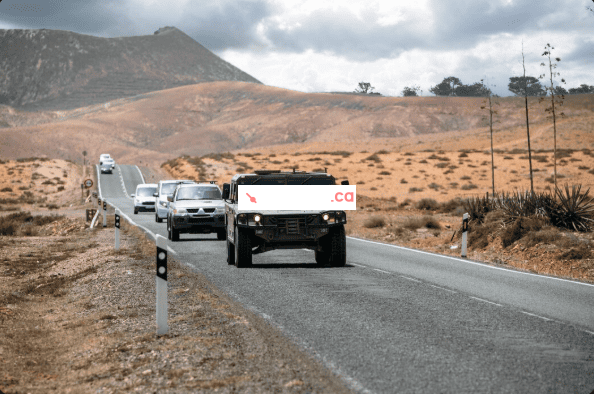
For drivers who call Ontario Backroads, the paved grid of suburban subdivisions and major multi-lane highway systems tells only a small fraction of the geographic story. The true heart of the province lies well beyond the limits of city streetlights. It is found along the thousands of kilometers of unpaved secondary routes, loose gravel paths, and rutted access lanes that slice through the dense forests of Muskoka, wind alongside the rocky shores of the Bruce Peninsula, and stretch deep into the rugged wilderness of Northern Ontario.
Navigating these rural routes requires a vehicle built with an entirely different mechanical philosophy. A standard commuter sedan risks bottoming out its fragile front bumper on loose rocks, while a massive, heavy truck-based sport utility vehicle can feel clumsy, inefficient, and difficult to manage along tight, tree-lined logging trails.
For over three decades, a unique automotive icon has bridged this gap perfectly, carving out an incredibly loyal following among Canadian outdoor enthusiasts: the Subaru Outback.
The latest model year brings a highly anticipated, ground-up generation redesign to this legendary lifted wagon. It introduces sophisticated new cabin refinement, structural frame advancements, and cutting-edge software engineering.
Yet, it refuses to lose an ounce of the raw mechanical grit that made it a legend. Let’s dissect the engineering underneath the bodywork and explore why the redesigned Subaru Outback comfortably retains its crown as the absolute king of Ontario backroads.
The Ontario Backroads: Symmetrical All-Wheel Drive Explained
To truly understand why this vehicle dominates unpaved terrain, you have to look past the exterior body cladding and focus entirely on its physical drivetrain architecture. Most modern compact and mid-size crossovers on the market today utilize reactive all-wheel-drive setups. These systems operate primarily in front-wheel-drive mode to save fuel, only routing mechanical power to the rear axle after the front tires have already lost traction and started spinning on ice or mud.
The Power of Continuous Mechanical Drive
Subaru’s legendary Symmetrical All-Wheel Drive system operates on a completely different mechanical wavelength. The entire powertrain—including the engine block, the transmission housing, and the center differential unit—is mounted in a perfectly straight, longitudinally symmetrical line down the center axis of the vehicle chassis.
Power is distributed continuously to all four wheels at one hundred percent of the time. Because power is already actively flowing to every tire before your vehicle encounters a muddy rut or a slick patch of wet gravel, the tires can proactively maintain forward momentum without the jarring, delayed engagement characteristic of rival part-time setups.
Eliminating Torque Steer with Equal-Length Axles
Because the drivetrain components are perfectly centered, the physical driveshafts extending outward to the left and right wheels are exactly equal in length. On asymmetric front-wheel-drive platforms, unequal axle lengths cause the vehicle to pull sharply to one side under heavy throttle, a phenomenon known as torque steer.
On a loose, unpaved backroad, torque steer can cause your tires to dig rapidly into soft shoulders or break traction unpredictably. The Symmetrical layout ensures perfectly balanced power delivery, allowing you to accelerate out of corners with total predictability, even on highly unstable surfaces like loose shale or deep river silt.
The Low-Slung Powerplant: The Boxer Engine Advantage
Working hand-in-hand with the symmetrical drivetrain is the unique configuration of the engine. While almost every other vehicle in this segment utilizes an upright, vertical inline four-cylinder engine block, Subaru remains fiercely committed to the horizontal BOXER engine design.
Understanding Horizontal Piston Geometry
In a BOXER engine, the cylinders are laid completely flat on their sides, arranged in two opposing pairs that punch toward each other horizontally, much like a prize fighter pumping their gloves together before a match. This unique flat geometry creates two massive physical benefits for rural driving dynamics:
An Exceptionally Low Center of Gravity: Because the entire engine block sits low and flat under the hood rather than standing tall and upright, the vehicle’s center of mass is dropped significantly closer to the road surface.
Inherent Vibrational Balance: The natural horizontal movement of opposing pistons forces the mechanical vibrations to cancel each other out naturally, eliminating the need for heavy, power-sapping internal balance shafts and resulting in an exceptionally smooth power delivery across the entire rev range.
Cornering Stability on Uneven Topography
When you are driving a tall crossover or a traditional body-on-frame sport utility vehicle down a winding gravel road filled with off-camber turns and sudden elevation drops, the top-heavy nature of the vehicle can cause massive body roll. This makes the vehicle feel unstable, forcing you to slow down to a crawl to maintain control.
The low center of gravity provided by the flat engine layout allows the vehicle to cut through sharp backroad curves with the flat, predictable poise of a standard passenger wagon, all while maintaining a massive ground clearance height that rivals large off-road pickup trucks.
Ground Clearance and Suspension Geometry: Defying the Ditches
An essential metric for any vehicle venturing off the paved grid is ground clearance. A vehicle can have the most advanced all-wheel-drive programming in the world, but if its underbelly sits too close to the earth, a single raised rock or packed snow ridge can beach the vehicle instantly, leaving it stranded with its wheels spinning in mid-air.
Navigating Debris with 220 Millimeters of Clearance
Standard trim levels of the redesigned wagon boast an impressive baseline ground clearance of 220 millimeters. To put that into perspective, this elevated ride height allows the vehicle to step cleanly over deep washboard ruts, fallen tree branches, and heavy winter slush banks that would easily tear off the front plastic air dams or damage the exhaust components of a standard family crossover.
The Ultimate Wilderness Treatment
For drivers who routinely tackle un-maintained Crown land access roads or rocky fire trails, the specialized Wilderness Edition pushes those clearance capabilities to the absolute limit. This factory-modified variant raises the suspension further, delivering a class-leading 241 millimeters of ground clearance.
Crucially, this extra height is accompanied by redesigned front and rear bumper covers that significantly steepen the vehicle’s approach and departure angles. This allows you to climb up steep gravel banks or descend into deep, muddy ditches without scraping the bodywork.
Advanced Electronic Terrain Control: Dual-Function X-MODE
While the mechanical core of the vehicle provides a flawless baseline of traction, modern backroad driving often introduces extreme scenarios—such as deep, thick mud, wet river clay, or steep fields of loose, dry sand—where standard traction control programming becomes a hindrance. That is where Subaru’s proprietary X-MODE system steps in to rewrite the vehicle’s operational logic.
Bypassing Standard Wheel Spin Limits
On a standard paved highway, if your car’s computer senses a tire spinning freely on a patch of ice, it will instantly reduce engine throttle and apply braking force to that wheel to prevent a skid. However, if you are attempting to plow through a deep patch of sticky mud on a remote Northern Ontario logging trail, you actually need your tires to spin rapidly to fling the packed mud out of the tire treads and claw down to solid ground.
Activating X-MODE overrides the standard safety programming. It alters the electronic throttle map to deliver smoother low-end torque, forces the continuously variable transmission to remain in its lowest possible gear ratio, and increases the hydraulic clamping pressure of the all-wheel-drive clutch pack to lock the front and rear axles tightly together.
Conquering Gumbo Clay with Deep Snow/Mud Settings
High-tier models feature a Dual-Function X-MODE dial that adds a specialized Deep Snow / Mud setting. When this mode is engaged, the computer completely disables the engine torque reduction system.
This allows the engine to rev freely, letting the tire treads spin aggressively to clear debris. This system acts as an electronic differential lock, ensuring continuous momentum through the absolute worst terrain conditions Ontario can throw your way.
Long-Distance Cabin Ergonomics: The Refined Highway Cruiser
Getting to Ontario’s best backroads almost always requires a multi-hour drive down a high-speed highway corridor like the 401 or Highway 11. A vehicle that is highly capable on a muddy trail but loud, stiff, and uncomfortable on the highway will quickly leave you exhausted before your weekend adventure even begins.
The Structural Magic of the Global Platform
The latest generation model is built upon an optimized iteration of the Subaru Global Platform. This structural frame architecture utilizes extensive amounts of ultra-high-tensile steel hot-stamped together into a fully unified cage structure.
By increasing the rigidity of the frame joints, engineers can soften the individual suspension bushings and springs without making the car feel sloppy in corners. The result is a ride quality that glides over cracked pavement, potholes, and rough expansion joints with absolute silkiness, isolating the passenger cabin from harsh vibrations and road noise.
An Oasis of Acoustic Silence
To ensure long-distance travel remains deeply relaxing, engineers packed the cabin with extensive acoustic insulation upgrades. The front windshield utilizes specialized acoustic laminate sheets, while the front and rear side windows feature thicker glass density.
This creates a serene cabin environment, allowing passengers to hold a normal conversation at quiet speaking volumes or enjoy the optional premium audio system without being forced to shout over the roar of highway wind or tire hum.
Advanced Safety Intelligence: Next-Generation EyeSight Technology
Whether you are navigating a bustling urban core or a pitch-black rural highway at midnight, safety remains paramount. The vehicle features the latest iteration of Subaru’s award-winning EyeSight Driver Assist Technology, operating with an updated hardware array to deliver unmatched peace of mind.
The Power of the Tri-Camera Array
Older versions of the system relied on a dual-camera setup mounted behind the rearview mirror. The latest generation adds a third, wide-angle mono camera positioned directly in the center of the upper windshield console.
This third camera significantly expands the system’s total field of view, allowing the onboard computer to detect pedestrians, low-profile obstacles, and wild animals entering the road from the shoulders much earlier than before.
Navigating Wildlife Hazards on Rural Corridors
For anyone who has driven through cottage country or Northern Ontario at twilight, the threat of a sudden deer or moose crossing is a constant source of anxiety. The expanded field of view provided by the tri-camera array allows the Pre-Collision Braking system to track lateral movement along the dark brush lines of the road shoulder.
If an animal steps out suddenly into your path, the system can flash a vivid heads-up display warning on the windshield and instantly prime the hydraulic brakes for maximum stopping power, significantly reducing the risk of a catastrophic wildlife collision.
Cargo Utility and Roof Rack Architecture: Packing for the Expedition
An outdoor-focused vehicle is only as good as its ability to transport gear. Whether you are hauling a pair of heavy fiberglass kayaks to a remote launch site on Algonquin Park’s edge, packing a week’s worth of camping supplies, or transporting mountain bikes to a trailhead, this wagon offers unmatched utility.
Cavernous Rear Cargo Logistics
Pop open the hands-free power rear tailgate, and you are greeted by a wide, flat cargo floor that offers up to 32.6 cubic feet of storage space with the rear seats raised upright. Flip the quick-release levers located in the side walls of the trunk, and the 60/40 split rear seats fold completely flat into the floor boards.
This instantly expands your total cargo capacity to an incredible 75.6 cubic feet, creating a long, uninterrupted storage cavern that is spacious enough to double as a fully flat, weather-protected sleeping platform for car-camping excursions.
The Genius of Integrated Swing-Bar Roof Rails
One of the most practical engineering touches found on standard trims is the integrated roof rail system equipped with stowable crossbars. When you are not hauling cargo, the crossbars can be unlocked and swung ninety degrees sideways, parking cleanly inside the aerodynamic longitudinal side rails. This simple trick eliminates the loud, irritating wind whistling noises common with fixed aftermarket roof racks and improves your overall highway fuel economy.
For extreme packing needs, the Wilderness trim features heavy-duty, fixed ladder-style roof rails painted in high-visibility copper accents. This reinforced rail setup can support a massive static weight rating of 318 kilograms (approximately 700 pounds). This commercial-grade structural strength makes it perfectly suited to support a heavy, multi-person hardshell rooftop tent setup, allowing you to establish a secure, elevated campsite anywhere your vehicle can park.
Long-Term Structural Reliability and Resale Dominance
Buying a new vehicle is a significant long-term financial commitment. Beyond the upfront purchase considerations, savvy consumers want to know that their vehicle is engineered to survive the brutal, salt-laden winter road conditions of Ontario while preserving its financial value over time.
Built to Endure Severe Thermal Swings
Subaru vehicles are engineered with a focus on structural longevity. The extensive use of high-density galvanized steel panels, combined with robust anti-corrosion inner body waxes applied at the factory, ensures that the vehicle’s frame can withstand years of exposure to highly corrosive liquid road brine and winter road salt mixtures.
It is a well-documented statistic that over ninety-five percent of all Subaru vehicles sold in Canada over the past ten years are still actively driving on the road today.
The King of the Resale Market
This hard-earned reputation for durability translates directly into unmatched financial performance on the secondary automotive market. The vehicle routinely captures the prestigious Automotive Lease Guide (ALG) Residual Value Award for the best mid-size utility vehicle segment in Canada.
When you purchase this lifted wagon, you are not just buying a highly capable backroad explorer; you are making a smart financial investment that will hold a massive percentage of its initial value when the time eventually comes to trade it in down the road.