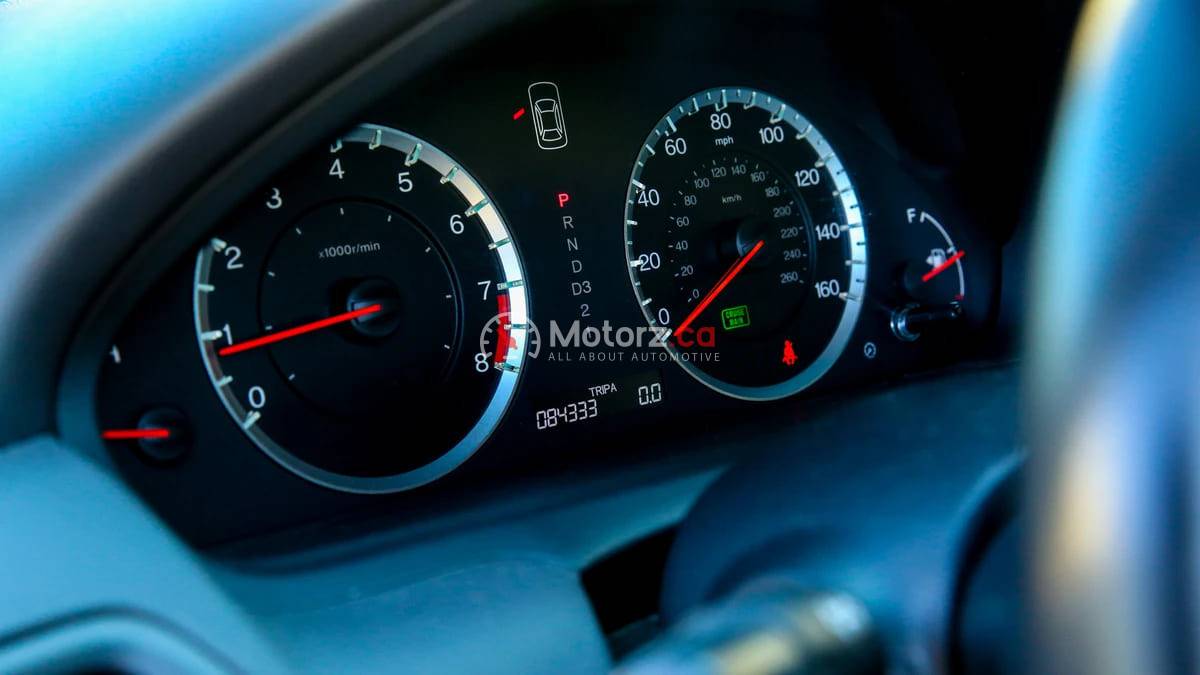



You climb into your Real Gauges or Just Idiot Lights, twist the key or push the start button, and watch as the needles on your instrument cluster sweep across the dials. It is a satisfying ritual that suggests your vehicle is performing a complex self-diagnostic. You see a needle for engine temperature, perhaps one for oil pressure, and of course, the fuel gauge. You feel informed. You feel in control.
But here is a secret from the world of automotive engineering: those needles might be lying to you. In many modern cars, the gauges on your dash aren’t actually reporting real-time, raw data. Instead, they are “buffered” or “normalized” displays designed to keep you calm rather than keep you informed. In the industry, we sometimes call these “idiot lights with needles.”
In this edition of Your Corner Wrench, we are pulling back the glass on your instrument cluster. We will explore why manufacturers “fake” their gauge readings, how to tell if your car is telling the truth, and why understanding the difference could save your engine from a catastrophic meltdown.
The Rise of the Real Gauges or Just Idiot Lights Temperature Gauge
The temperature gauge is arguably the most important dial on your dash besides the speedometer. It is supposed to tell you exactly how hot your engine coolant is. In an older vehicle, you could watch that needle move slightly as you climbed a steep hill or sat in heavy traffic.
The “Dead Spot” Strategy
In a modern car, manufacturers have programmed the temperature gauge to have a massive “dead spot” in the middle. Once the engine reaches a safe operating range—usually between 85 and 105 units of temperature—the needle stays perfectly centered. It will not budge, even if the actual temperature rises by 10 or 15 points.
Why they do it: Drivers used to bring their cars into the dealership complaining that the needle moved when they turned on the air conditioning or drove up a mountain. To reduce these “no fault found” service visits, engineers programmed the needle to stay rock-steady unless the engine is literally about to melt down.
The Risk: By the time that “buffered” needle finally starts to move toward the red zone, your engine is already overheating. The gauge isn’t a warning; it is a late-stage notification of a disaster that has already started.2. Oil Pressure Gauges: The Great Illusion
If you drive a modern truck or a sports car, you might have a dedicated oil pressure gauge. In the past, this was a direct mechanical or electrical link to the oil pump. As engine RPM went up, the needle went up. At an idle, the needle dropped.
The “On-Off” Pressure Switch
Today, many manufacturers have replaced the expensive oil pressure sender with a simple “on-off” switch.
How it works: If the engine has at least 5 to 7 units of pressure, the switch closes. The computer then tells the needle on your dash to move to a “normal” middle position.
The Deception: The needle doesn’t actually move based on pressure; it moves based on a command from the computer. Whether you have 10 units of pressure or 60, the needle sits in the exact same spot. It is essentially a fancy light bulb shaped like a needle. If your oil pressure drops to a dangerous level, the needle simply drops to zero, usually accompanied by a warning chime. At that point, the damage may already be done.
Fuel Gauges and the “Empty” Buffer
We have all experienced the phenomenon where the first half of a tank of gas seems to last forever, while the second half disappears in an afternoon. This isn’t just your imagination; it is a result of how fuel gauges are calibrated.
Why the First Half Lasts Longer
Manufacturers calibrate fuel gauges to stay on “Full” for a long time. This gives the driver a psychological sense of “good fuel economy.” Additionally, when the needle hits “Empty,” there is almost always a “reserve” of several liters left in the tank.
The Safety Margin: This is a built-in safety buffer to prevent you from being stranded. However, relying on this buffer is dangerous for the car. Modern fuel pumps are located inside the tank and use the fuel itself as a coolant. Running the tank down until the “Low Fuel” light comes on regularly can lead to an overheated and failed fuel pump.
How to Get Real-Time Data from Your Car
If you are a performance driver, someone who tows heavy trailers, or just someone who likes the truth, you don’t have to rely on the “fake” gauges on your dash.
The OBDII Solution
Every car built since 1996 has an On-Board Diagnostics (OBDII) port. While the dashboard gauge might be buffered, the engine computer (ECU) is seeing the raw, unedited data from the sensors.
Bluetooth Dongles: You can buy a small Bluetooth OBDII adapter that plugs into the port under your steering wheel.
Smartphone Apps: Apps like Torque or OBD Fusion allow you to see the actual, numerical temperature and pressure data on your phone or tablet. You will be amazed to see your phone reporting a temperature climb of 12 points while your dashboard needle stays perfectly still.
What Your Dash is Actually Trying to Tell You
While the needles might be stabilized for your comfort, the dashboard icons—the “warning lights”—are extremely accurate. When a light comes on, the computer has moved past the “buffering” stage and is reporting a genuine fault.
Flashing Lights: A flashing “Check Engine” light usually indicates a severe engine misfire that can destroy your catalytic converter in minutes. Pull over immediately.
Red vs. Amber: A red light (like the oil can or the thermometer) means “Stop the engine now.” An amber or yellow light means “Service soon,” but you can usually drive to your destination.
Trust, but Verify
The gauges on your dash are designed to be a “peace of mind” interface for the average consumer. They prioritize a clean, steady look over technical precision. However, as an informed owner, you should treat those needles as general indicators rather than scientific instruments.
If you notice your “steady” temperature needle move even a tiny bit higher than its usual spot, take it seriously. Your car’s computer has decided the situation is serious enough to break the “calm” facade and tell you the truth.