
There is a Safety Net or Safety Hazard of frustration that only a modern car owner understands. You are driving down a clear road, staying perfectly within your lane, when suddenly your steering wheel “tugs” back at you because the car thought you were drifting. Or perhaps you are backing out of your driveway, and the car slams on the brakes with a bone-jarring thud because it detected a tall blade of grass.
In her latest series of observations, Lorraine has been vocal about a growing trend: the transformation of the driver’s seat into a cockpit of constant, nagging interruptions. Automakers market these Advanced Driver Assistance Systems (ADAS) as life-saving innovations. But as we move further into 2026, a difficult question is emerging: Are these systems actually making us safer, or are they turning skilled drivers into complacent passengers?
From “Lane Keep Assist” that feels like a wrestling match to “Driver Monitoring” sensors that beep if you dare to check your blind spot for too long, the line between “assistance” and “interference” is blurring. Today, we are looking at the psychology of behavioral adaptation and whether the “safety net” is actually encouraging the very bad habits it was designed to prevent.
The Safety Net or Safety Hazard: Why We Are Losing Our Edge
In a famous column, Lorraine once asked, “Can you really call yourself a bowler if you bowl with the bumper guards up?” This is the perfect metaphor for modern vehicle safety. When a car handles the “hard parts” of driving—maintaining distance, staying centered, and emergency braking—the human brain naturally seeks a lower level of engagement.
The Degradation of Manual Skills
Research from 2025 and early 2026 suggests a measurable decline in manual driving proficiency. Drivers who rely heavily on Parking Sensors and 360-degree Cameras, for instance, often report a significant drop in confidence when forced to drive an older vehicle without those aids. We are trading our spatial awareness for high-definition pixels.
The “Novelty vs. Experience” Phase
Studies by organizations like the AAA Foundation show a dangerous pattern in how we use ADAS:
The Novelty Phase: When you first get a new car, you don’t trust the tech. you stay alert, watching the system to see if it makes a mistake.
The Experience Phase: After a few months, you “trust” the system. This is where complacency sets in. Experienced ADAS users are nearly twice as likely to engage in distracted driving (like checking a phone or eating) because they believe the car has their back.
Behavioral Adaptation: The High Cost of “Safety”
Automakers have spent billions of units developing technology that can “save” a bad driver. But in doing so, they have accidentally created a feedback loop that encourages risky behavior. This is known in the scientific community as Behavioral Adaptation.
Using Tech as a “License” to be Distracted
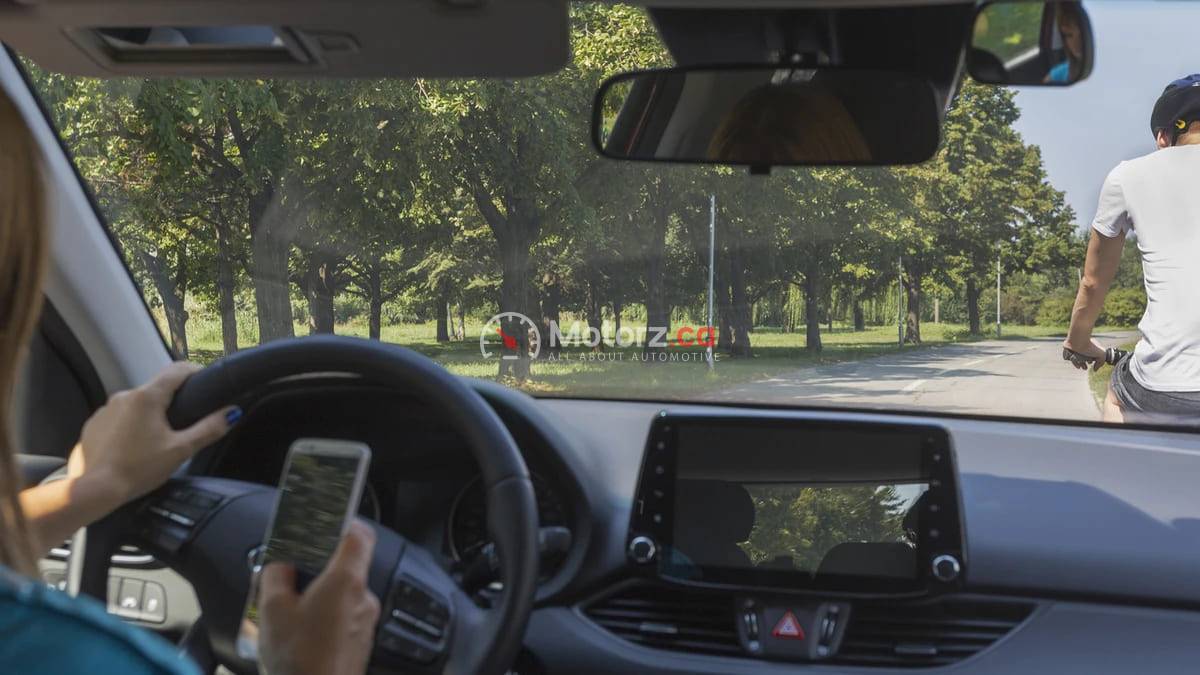
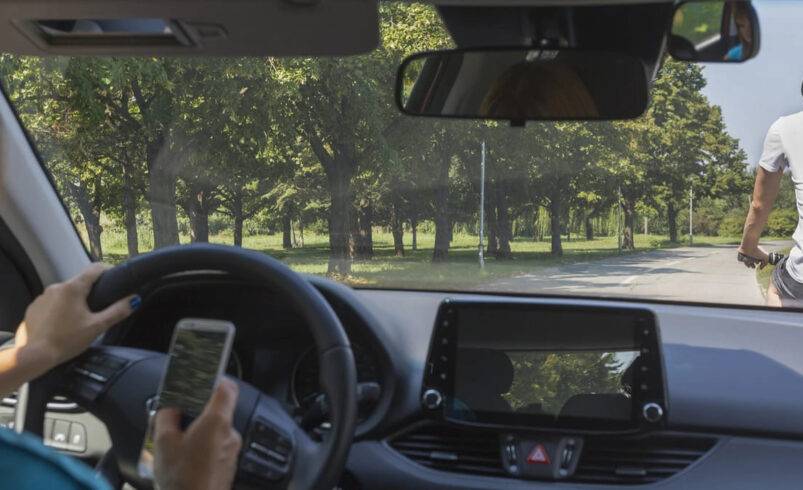
When Lane Departure Warning first arrived, it was intended to save drowsy drivers. Instead, it became “Text Assist.” People realized they could look down at a screen for five seconds because the car would vibrate or beep if they drifted. Instead of the technology being a last-resort safety net, it became a primary tool that allowed drivers to justify being less attentive.
The Aggression Offset
If a car has Automatic Emergency Braking (AEB) and Forward Collision Warning, some drivers feel emboldened to follow more closely or drive faster in heavy traffic. They subconsciously believe the car’s sensors can react faster than a human ever could, leading them to “outdrive” their own abilities under the assumption that the machine will bail them out.
The Beeping Paradox: When Safety Becomes a Distraction
One of the most common complaints in Lorraine’s recent columns is the sheer volume of “nanny” alerts in 2026 models.
The Distraction Loop
Imagine this: You are driving, and your car beeps to tell you that you are “Mildly Distracted.” You instinctively look down at the dashboard to see what the warning icon means. The car then beeps again to tell you that you are now “Moderately Distracted” because you looked away from the road to read the first warning.
This isn’t just annoying; it’s dangerous. Poorly calibrated ADAS can create a high-stress environment that pulls the driver’s focus away from the actual road. When a system is too sensitive, drivers often find the “off” switch, meaning they are driving a car with zero safety features because the “assistance” was too irritating to leave on.
Helpful Insights: How to Use Tech Without Losing Your Skills
So, how do we balance the benefits of 2026 safety tech with the need to remain a sharp, capable driver? It comes down to Active Engagement.
The “Invisible” Mindset: Drive as if the safety systems don’t exist. Use your mirrors before the blind-spot monitor beeps. Brake for the car ahead before the adaptive cruise control does it for you.
Regular “Manual” Practice: If you have multiple cars, make sure you spend time driving the one with the least technology. It keeps your spatial awareness and “muscle memory” fresh.
Know the Limits: Read your manual (or our guides!). Understand that Blind Spot Monitoring can miss motorcycles and that AEB can be blinded by heavy rain or direct sunlight.
You Are Still the Captain of the Ship
Automakers aren’t trying to make us worse drivers, but the unintended consequence of a “safe” car is often a lazy driver. Technology should be a silent partner—there to catch you if you trip, but not there to carry you the entire way.
As the 2026 models continue to roll out with even more automation, the most important safety feature remains the same as it was in 1926: a focused, alert, and skilled human being behind the wheel. Don’t let the “bumper guards” make you forget how to bowl.