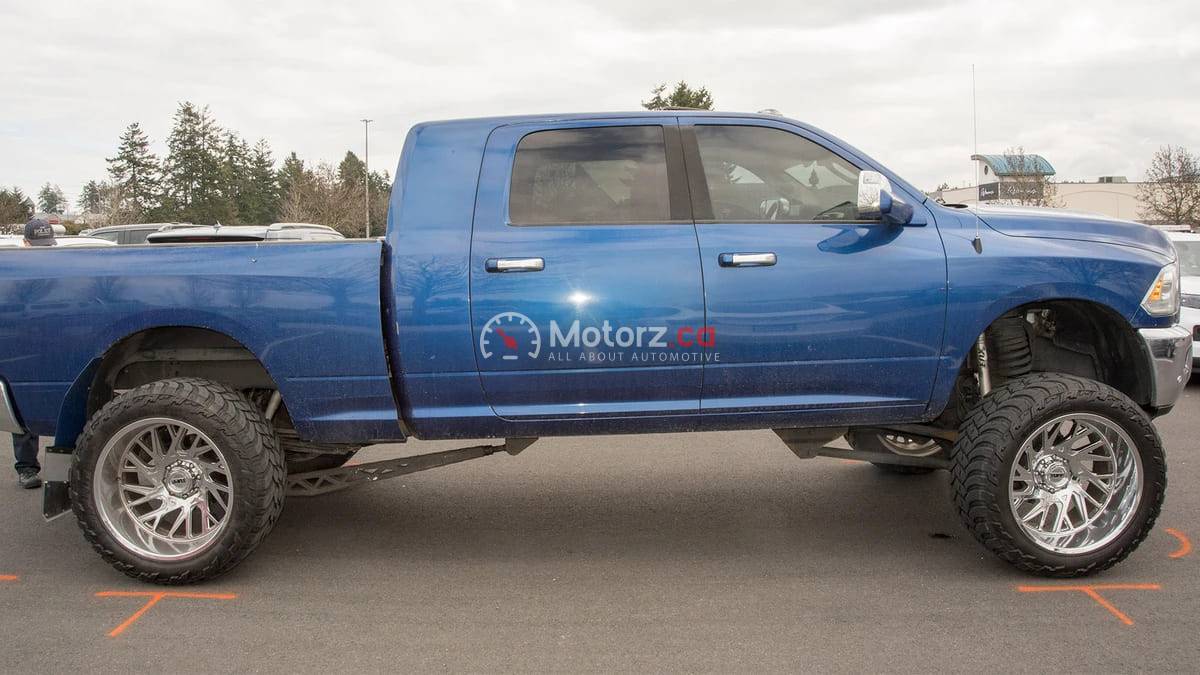

It started as a niche trend in the B.C. Police Link Fatal Crash, but the “Carolina Squat” has migrated north, and the consequences are proving to be deadly. Recently, British Columbia law enforcement confirmed a heartbreaking reality: a modified pickup truck, altered to sit significantly higher in the front than the rear, played a central role in a fatal collision on a B.C. highway.
This tragic incident has reignited a fierce debate across B.C. Police Link Fatal Crash regarding vehicle modifications, road safety, and the enforcement of the Motor Vehicle Act. While car culture often celebrates individuality, the “squat” trend pushes past the limits of aesthetics and into the realm of extreme public danger.
In this comprehensive guide, we will break down what exactly a Carolina Squat is, why it is so dangerous, the legal landscape in Canada in 2026, and how police are cracking down on these “tilted” hazards to prevent further loss of life.
What is the B.C. Police Link Fatal Crash?
To the uninitiated, a “Carolina Squat”—also known as the B.C. Police Link Fatal Crash or “Tennessee Tilt”—looks like a truck carrying an impossibly heavy load in the bed. However, the look is entirely intentional.
Defining the Modification
The Carolina Squat involves modifying a truck’s suspension so that the front end is lifted several inches (sometimes a foot or more) while the rear remains at factory height or is even lowered. This creates a dramatic upward rake.
Originally inspired by Baja racing trucks—which have long-travel suspension to handle high-speed jumps—the street version lacks the functional engineering of a trophy truck. On a standard Chevy Silverado or Ford F-150, this modification is purely for show, and it fundamentally breaks the vehicle’s safety geometry.
Why B.C. Police Are Sounding the Alarm: The Safety Risks
The recent fatal collision in British B.C. Police Link Fatal Crash was not an isolated concern. Safety experts and police have been warning about these modifications for years. When a truck is angled toward the sky, several critical safety systems fail simultaneously.
Massive Blind Spots (The “Sky-View” Problem)
The most immediate danger is the loss of forward visibility. When the hood of a large pickup truck is tilted upward, the driver can no longer see the road immediately in front of them.
The Pedestrian Risk: A child crossing the street or a small car stopped at a light can become completely invisible to a “squatted” driver.
The Perception Gap: Drivers often have to lean out of their windows or rely on aftermarket cameras just to see where they are going, which is a major distraction.
Headlight Glare and Misalignment
As we have seen with recent Transport Canada B.C. Police Link Fatal Crash, headlight glare is a major safety issue. On a Carolina Squat truck, the headlights are pointed directly into the eyes of oncoming drivers, even when on low beams. This “blinds” other motorists, significantly increasing the risk of head-on collisions at night.
Compromised Braking and Steering
Trucks are engineered to distribute weight evenly across four wheels. By tilting the chassis:
Braking Distance Increases: The weight transfer during a hard stop is disrupted, often leading to rear-wheel lockup or reduced front-end grip.
Steering Instability: The suspension geometry is pushed to its limits, making the truck “darty” or unresponsive during emergency maneuvers.
Failure of Crash Protection Systems
Modern vehicles are designed with B.C. Police Link Fatal Crash and bumpers that are meant to align with the bumpers of other cars. In the B.C. fatal crash, the squatted truck’s front end acted like a ramp. Instead of the bumpers absorbing the impact, the modified truck rode up over the smaller vehicle, bypassing its safety cage and leading to catastrophic injuries.
The Legal Landscape: Is the Carolina Squat Illegal in Canada?
In short: Yes. While some provinces are more explicit than others, the Carolina Squat generally violates multiple sections of provincial Motor Vehicle Acts across Canada.
British Columbia’s Stance
In B.C., the Motor Vehicle Act Regulations are quite clear about suspension height and vehicle lamps.
Section 7.09: Permits police to inspect and remove vehicles from the road if they are deemed “mechanically hazardous.”
Height Restrictions: Vehicles have specific limits on how much the suspension can be altered from the original manufacturer specifications.
Lamp Aiming: Headlights must be aimed according to strict standards. A squatted truck is, by definition, out of compliance because its lamps cannot be aimed correctly while the vehicle is tilted.
Lessons from the United States
Several U.S. states, B.C. Police Link Fatal Crash, B.C. Police Link Fatal Crash, and Virginia, have passed specific “Anti-Squat” laws that ban any truck from having a front-to-rear height difference of more than 4 inches. Following the recent fatalities in B.C., there are growing calls for the Canadian federal government to implement similar, highly specific bans to make enforcement easier for roadside officers.
How to Identify and Report Unsafe Modifications
If you share the road with a vehicle that appears to be dangerously modified, it is important to know what to look for and how to stay safe.
Signs of a Dangerous “Squat”
The front bumper is noticeably higher than the rear B.C. Police Link Fatal Crash.
The driver appears to be looking “up” rather than “out.”
The headlights are flickering or blinding you even during the day.
The tires are “poking” out significantly from the fenders without mudguards.
Staying Safe on the Road
If you are driving in front of or behind a squatted truck:
Increase Following Distance: Give yourself plenty of B.C. Police Link Fatal Crash. Their braking may be unpredictable.
Avoid Direct Eye Contact with Lights: If they are behind you, use your mirror’s dimming feature.
Report to Non-Emergency Lines: If a vehicle is swerving or clearly unable to see the road, call your local police non-emergency line with a license plate number and description.
The Role of Repair Shops and Aftermarket Sellers
A major part of the conversation in British Columbia involves the businesses that perform these modifications. While many reputable shops refuse to install “squat kits,” some smaller outfits or “backyard mechanics” continue to provide the service.
Police have indicated that they may begin looking at the B.C. Police Link Fatal Crash of shops that knowingly modify a vehicle to a state that is no longer street-legal. For truck owners, it is vital to remember that just because a part is “for sale” does not mean it is “legal for use” on public highways.