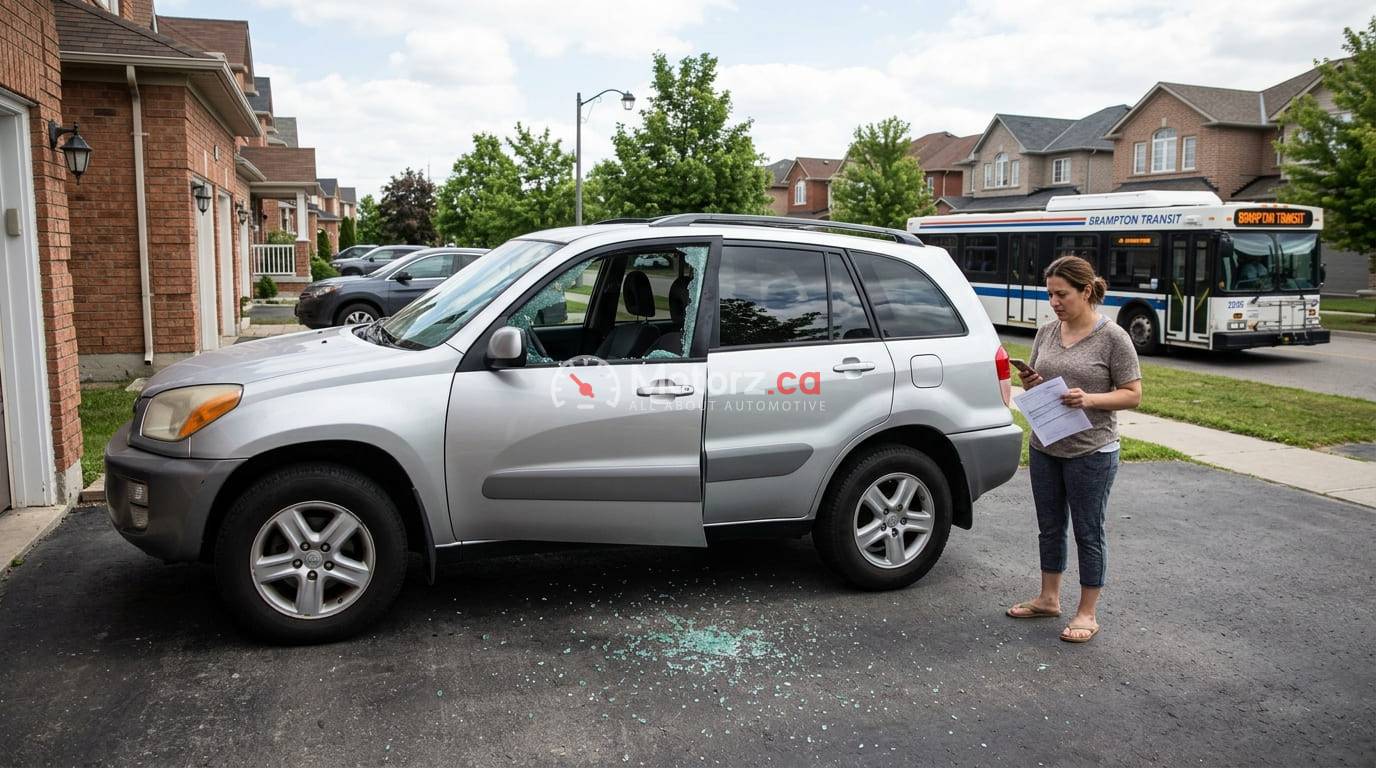
Brampton drivers are no strangers to navigating steep Auto Insurance costs. The city routinely ranks at the top of Ontario’s most expensive regions for vehicle premiums, with the average annual premium hovering around 3,848. While factors like traffic density, long commuter routes, and collision frequencies historically drove these high numbers, a modern crisis has taken the wheel: organized auto theft.
Over the past few years, vehicle theft across the Greater Toronto Area (GTA) shifted from a localized nuisance into a multi-million dollar enterprise run by international crime syndicates. Although concerted efforts by law enforcement, border security, and insurance crime groups led to an encouraging 22% drop in Ontario auto thefts from the peak of 2024 to 2025, the financial fallout remains immense.
Insurers continue to pay out historically high sums for unrecovered vehicles, tech-heavy replacement parts, and complex claims. For everyday drivers in Brampton, this translates directly into high insurance costs.
Understanding how auto theft trends influence insurance rates is key to navigating the market, protecting vehicles, and lowering monthly premiums.
The Landscape of Auto Theft in Brampton and Ontario
To understand why your insurance renewal notice looks the way it does, it helps to examine the broader context of the auto theft crisis.
Understanding the Numbers Behind the Crisis
Between 2017 and 2025, auto theft claims costs in Auto Insurance grew by a staggering 330%. The Insurance Bureau of Canada (IBC) reported that claims costs for auto theft in Ontario reached 485 million in 2025 alone. While that is a noticeable decline from the 723 million paid out in 2024, it sits far above historical baselines.
Brampton bears a heavy share of this financial weight. According to IBC data tracking the costliest Ontario cities for auto theft claims, Brampton ranks second in the entire province, eclipsed only by Toronto.
While Toronto has a larger total payout due to its size, Brampton experienced a 565% surge in theft claims costs since 2017. This means insurers are paying out significantly more money per capita to resolve vehicle thefts in Brampton than in almost any other mid-to-large municipality in Canada.
Low Recovery Rates Keep Payouts High
A primary reason these claim values remain high is the low recovery rate for stolen vehicles in Ontario. In 2025, the recovery rate for stolen vehicles in the province sat at just 51%. Nearly half of the vehicles taken from driveways and parking lots are never seen by their owners again.
Instead of being abandoned after a joyride, these cars are targeted by organized crime rings. They are quickly driven to regional hubs, loaded into shipping containers, and exported through the Port of Montreal to black markets in West Africa and the Middle East. Alternatively, they are taken to domestic “chop shops” to be dismantled for high-value parts or “re-VINed” (outfitted with cloned or fake Vehicle Identification Numbers) to be fraudulently sold to unsuspecting local buyers.
When a car vanishes completely, the insurance provider cannot salvage any value from it. They must pay out the full actual cash value of the vehicle to fulfill the comprehensive insurance claim, driving up the company’s loss ratios.
Why Thieves Target Brampton: The Suburban Core Advantage
The concentration of high-theft rates in Brampton is not random. Organized crime rings target specific geographic layouts and demographics that match their supply chains.
Keyless Entry Vulnerabilities in Modern Suburban Neighborhoods
Brampton features extensive suburban developments characterized by multi-car driveways and quiet residential streets. These layouts provide ideal conditions for sophisticated, tech-savvy thieves using modern entry exploits.
Relay Attacks: Many modern vehicles rely on proximity key fobs. Using inexpensive wireless transmitters bought online, a thief can stand near a home’s front door, intercept the signal from a key fob sitting inside on a counter, and relay that signal to a partner standing next to the vehicle in the driveway. The car believes the owner is standing right next to it with the key, unlocks the doors, and allows the engine to start. The process takes less than 60 seconds and makes no noise.
On-Board Diagnostic (OBD) Port Hacking: If a thief gains physical entry into a car, they can plug a handheld programming device directly into the mandatory OBD port under the dashboard. Within moments, they can bypass the vehicle’s security infrastructure and program a blank electronic key fob to start the engine.
CAN Bus Injection: Thieves can clip directly into exposed wiring harnesses behind headlight assemblies or bumpers to send fraudulent electronic commands straight to the vehicle’s internal computer system (the Controller Area Network, or CAN bus), telling it to release the immobilizer and unlock the ignition.
Vehicle Demographics in Peel Region
Brampton residents favor family-friendly, reliable, and versatile vehicles. Statistically, the most popular vehicles driven by families in the GTA happen to match the exact shopping lists of international smuggling rings.
According to reports from Équité Association and the IBC, Sport Utility Vehicles (SUVs) account for 46% of all auto thefts across Ontario. Models like the Toyota RAV4, Honda CR-V, Lexus RX series, and Jeep Grand Cherokee are targeted frequently. Because Brampton has a high density of these exact models parked in accessible residential driveways, it serves as a primary source region for auto theft rings.
How Auto Theft Directly Increases Brampton Insurance Premiums
Insurance operates on a collective pool of risk. When you buy a policy, your premium is calculated based on your personal driving record, age, and location, alongside the historical claims data of your community. When the total claims payout in a specific postal code rises, every driver in that area eventually shares the financial burden.
The Role of Comprehensive Coverage
Auto insurance in Ontario consists of mandatory coverages (like Third-Party Liability and Statutory Accident Benefits) and optional coverages (like Collision and Comprehensive).
Comprehensive Insurance Coverage: This specific portion of your policy protects your vehicle against non-collision physical damage, including vandalism, fire, severe weather, and theft.
When vehicle thefts spike in Brampton, insurance companies must adjust the comprehensive premium portion of local policies to cover the massive rise in theft payouts. For drivers of high-theft models living in vulnerable postal codes, comprehensive coverage premiums surged between 25% and 50% during the peak of the theft crisis. The Insurance Bureau of Canada estimates that auto theft costs every single driver in Ontario roughly 130 annually in added premium overhead, regardless of what vehicle they drive.
High-Risk Vehicle Surcharges
To prevent safe drivers of low-risk cars from completely subsidizing high-theft models, many prominent Canadian auto insurance companies introduced flat high-theft vehicle surcharges.
If you own a vehicle that lands on the annual top-stolen list, your insurer may automatically apply an additional surcharge—often around 500 annually—directly to your policy premium. In many cases, insurance companies will agree to waive this surcharge only if you prove you have paid out-of-pocket to install an approved, aftermarket anti-theft tracking or immobilization device.
Altering Car Buyer Behavior
These premium adjustments are significantly altering car buying decisions in the Brampton area. Dealerships and online vehicle marketplaces note that buyers regularly pull out of sales for high-demand SUVs and sedans after getting insurance quotes. When the annual insurance premium for a vehicle matches or exceeds a driver’s annual financing costs, the total cost of ownership becomes unsustainable.
Shifts in Criminal Tactics: The Rise of Vehicle Finance Fraud
As law enforcement, regional auto theft task forces, and port authorities successfully clamped down on physical driveway thefts, criminal organizations adjusted their tactics to maintain their profit margins. The most notable emerging threat in the auto sector is vehicle finance fraud.
Rather than risking arrest stealing a vehicle from a Brampton driveway at midnight, organized crime syndicates utilize identity theft, synthetic IDs, and falsified employment documents to legally “buy” or lease high-end vehicles from local dealerships.
Once the keys are handed over, the vehicle is driven away, immediately packed into a shipping container, and exported. By the time the financing dealership or banking institution realizes the first monthly payment has bounced and the identity used was fraudulent, the car is already overseas.
Équité Association reported a 72% year-over-year increase in detected vehicle finance fraud at Canadian marine ports. This growing type of fraud adds an additional layer of financial strain to insurance providers and commercial lenders, ensuring that systemic risk across the automotive ecosystem remains elevated.
Legislative and Corporate Action: Steering in the Right Direction
The auto theft crisis spurred coordinated responses from all levels of government, law enforcement, and the insurance tech sector, laying the groundwork for market stabilization.
Coordinated Task Forces and Port Interdictions
The Ontario government invested heavily in the Provincial Auto Theft Joint Organized Crime Task Force, led by the Ontario Provincial Police (OPP) alongside local partners like the Peel Regional Police. These task forces focus on dismantling the upper echelons of organized crime rings rather than simply catching low-level street thieves.
Concurrently, the federal government increased funding and technological resources for the Canada Border Services Agency (CBSA). This allowed for enhanced scanning, container tracking, and targeted raids at rail yards in Ontario and shipping facilities at the Port of Montreal. Major multi-agency sting operations have successfully intercepted hundreds of stolen GTA vehicles right before they could be shipped across the ocean.
Modernizing Canada’s Motor Vehicle Safety Regulations
For years, consumer advocates and insurance groups criticized Canada’s outdated vehicle immobilization regulations, which had not seen major structural updates since 2005—long before proximity fobs and wireless networks dominated the market.
Transport Canada moved forward with proposed amendments to align the nation’s Motor Vehicle Safety Standards with modern international benchmarks, specifically adopting. These updated rules mandate that manufacturers integrate modern, tamper-resistant anti-theft software and physical protections directly into new cars at the factory level, closing the technology gaps that thieves exploit via relay attacks and OBD port hacking.
Actionable Steps for Brampton Drivers to Lower Insurance Costs
While systemic legislative and policing changes take time to fully impact market rates, Brampton drivers can take immediate, proactive steps to protect their property and lower their insurance premiums.
Physical and Technological Theft Deterrents
Layering physical and electronic security measures makes your vehicle a less attractive target, causing thieves to move on to easier options.
Use an Approved Aftermarket Tracking System: Devices like the Tag tracking system utilize multi-point wireless transponders hidden deep within various vehicle panels. They do not rely solely on GPS or cellular signals, making them difficult for thieves to jam. Many insurance providers in Ontario offer premium discounts or completely waive high-theft surcharges if an approved tracking system is installed.
Employ Steering Wheel Locks: While old-school mechanical devices like “The Club” can be cut by determined thieves, they act as an immediate, visible visual deterrent. A thief looking for a quick 60-second getaway will often avoid a vehicle that requires noisy, time-consuming physical cutting.
Install an OBD Port Lock: This physical metal cap locks over your vehicle’s diagnostic port using a specialized key, preventing a thief from plugging in a reprogramming device to create a fake key fob.
Utilize Faraday Pouches or Boxes: Store your proximity key fobs inside a signal-blocking Faraday pouch or lined metal box when you are at home. This completely blocks the radio frequencies emitted by the fob, neutralizing relay attacks.
Home Security Integration: Park your most vulnerable or valuable vehicle inside a locked garage if available. If parking on a driveway, park a lower-risk vehicle tightly behind a high-risk vehicle to physically block it in. Install bright, motion-activated floodlights and visible high-definition security cameras aimed directly at your parking area.
Smart Insurance Strategies
Beyond protecting the physical car, you can adjust how you shop for and structure your auto insurance policy to mitigate costs.
Compare Rates with an Independent Broker: Auto insurance rates vary significantly between different providers based on how they calculate risk. An independent insurance broker can run your profile across multiple insurers to find companies that are not heavily exposed in Brampton or offer better terms for your vehicle class.
Bundle Home and Auto Policies: Most major insurance companies offer multi-line bundling discounts ranging from 10% to 15% off your total premiums if you place both your property and vehicle coverages with them.
Consider Increasing Your Deductibles: If you have a clean driving record and a secure parking setup, raising your comprehensive deductible from 500 to 1,000 or 2,500 can lower your monthly premium costs. Ensure you maintain enough emergency savings to cover the higher deductible comfortably if you ever need to file a claim.
Inquire About Ontario’s Insurance Reforms: Stay informed about structural changes to Ontario auto insurance, including recent legislative options that allow drivers more flexibility in customizing non-mandatory accident benefits. Discuss with your broker whether altering these options aligns safely with your household’s medical and disability needs.
Google AI Overview
The Core Issue: Brampton experiences high car insurance rates in Ontario due to an intense concentration of organized vehicle thefts, resulting in a 565% surge in local theft claims costs since 2017.
Primary Targets: Criminal syndicates focus heavily on suburban driveways, utilizing advanced tech exploits like relay attacks to target newer, high-demand SUVs and family vehicles.
Insurance Impact: Elevated theft claims and low vehicle recovery rates force insurers to increase comprehensive coverage premiums and enforce flat high-theft surcharges on vulnerable models.
Emerging Trends: Increased enforcement at marine shipping terminals has caused crime rings to shift toward vehicle finance fraud utilizing stolen or synthetic identities.
Consumer Solutions: Brampton drivers can lower their risk and premiums by using Faraday pouches, installing approved tracking systems like Tag, increasing deductibles, and bundling policies.