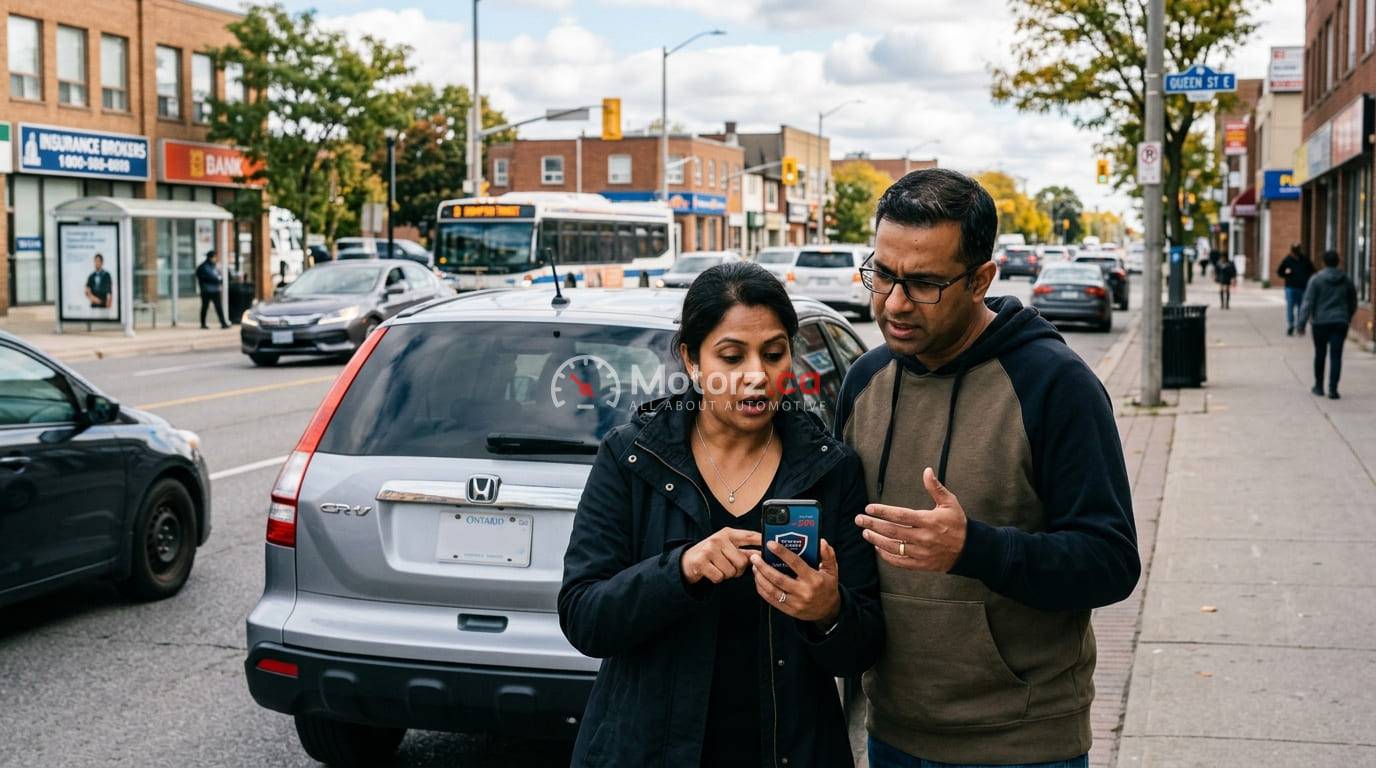
You packed up the final moving box, taped it shut, and successfully navigated your transition to a brand-new home. Whether you upgraded to a spacious detached home in Mount Pleasant, downsized to a modern condominium near the downtown core, or found a beautiful multi-generational layout in Bramalea, you managed to stay within the borders of Brampton. Because your city, your driving record, and your choice of vehicle have not changed, you might assume your monthly expenses will stay entirely identical.
However, when you call your auto insurance broker to update your residential address, you are hit with a major surprise. Your monthly statement has shifted—sometimes dropping slightly, but frequently spiking by an extra thirty or forty units every month.
How is it possible that a short move across town can trigger a significant fluctuation in your car insurance costs?
In Ontario, auto insurance companies do not view cities as single, uniform risk zones. Instead, they evaluate risk micro-geographically, using the first three digits of your postal code—known as the Forward Sortation Area (FSA). In a high-volume insurance market like Brampton, crossing a single regional thoroughfare can alter your insurance risk profile overnight.
Let’s break down the underlying mechanics of how moving within Brampton modifies your car insurance premium, analyze the hidden risk variables between neighborhoods, and look at actionable strategies to insulate your budget from localized rate adjustments.
The Micro-Geography of Auto Insurance: The Power of Your Postal Code
To understand why a change of address within the exact same city limits impacts your premium, you have to peel back the layer on how underwriting mathematics function in Ontario.
What is a Forward Sortation Area (FSA)?
When an insurance underwriter looks at your profile, your address is instantly distilled down to your three-digit FSA. Every single FSA operates as an independent statistical pool. The insurance provider aggregates all historical data generated within those specific boundaries over a multi-year period. If the aggregate claims costs within your new FSA are higher than your old neighborhood, your baseline cost goes up automatically, even if your personal driving record is pristine.
The Ongoing Regulatory Landscape in Ontario
The practice of using postal codes to determine premium values remains a major topic of discussion across the Greater Toronto Area (GTA). Over the years, multiple legislative attempts, such as Bill 103 (Ending Automobile Insurance Discrimination in the GTA Act), have been introduced to eliminate geographic rating differences entirely and treat the entire GTA as a single unified zone.
Additionally, the Financial Services Regulatory Authority of Ontario (FSRA) has launched specialized “test and learn” pilot programs with select major carriers to modernize territory rating models. These pilots aim to replace abrupt postal code boundaries with smoother, more accurate risk distributions.
However, until these systemic structural models become standard across all insurance companies, your exact three-digit postal code remains one of the primary components governing your monthly out-of-pocket expenses.
Brampton’s Insurance Map: High-Cost vs. Low-Cost Neighborhoods
Data from major insurance comparison indices demonstrates that the price variance between different pockets of Brampton can stretch across hundreds of units annually.
The Most Expensive Postal Codes in the City
Neighborhoods situated in the north, northwest, and northeast fringes of the city consistently experience some of the steepest premium metrics in Ontario.
L6Z and L7A (Snelgrove / Mount Pleasant): These outer suburbs have experienced rapid residential development. Because many residents here must commute long distances to employment centers across the GTA, average annual premiums routinely hover near thirty-nine hundred.
L6R (Springdale): Characterized by wide, high-volume multi-lane streets and large residential properties, this zone historically features heavy traffic density, pushing its localized risk profile to the top tiers of the citywide scale.
The Most Affordable Postal Codes in the City
Conversely, established neighborhoods toward the interior or older sectors of the city feature statistically lower premium metrics.
L6S (Bramalea): This mature neighborhood consistently ranks as one of the most cost-effective zones for car insurance inside Brampton. With mature street designs, established traffic habits, and slightly lower car theft metrics, drivers here can observe baseline premiums that are hundreds of units less per year than those in the newer northwest sectors.
L6V and L6W (Downtown Core / Madoc): The localized proximity to regional transit centers like the Brampton GO Station reduces overall personal vehicle reliance and localized highway commuter volume, allowing these postal codes to maintain a flatter risk profile.
Localized Risk Variables That Change When You Relocate
When you shift your vehicle’s primary parking location to a new street, your insurance underwriter alters your profile based on four core environmental factors.
1. Proximity to Major High-Volume Commuter Arteries
If your old property required you to drive through quiet residential streets to access local stores, but your new neighborhood sits directly adjacent to major highway access ramps, your calculated baseline risk increases.
Postal codes that flank high-velocity commuter bottlenecks—such as the intersection of Highway 410 and Queen Street, or Bovaird Drive—statistically record higher frequencies of high-impact, multi-vehicle collisions. Insurers know that even a simple trip to the local grocery store increases your statistical probability of interacting with dangerous cross-traffic when you live near these core commuter corridors.
2. Localized Auto Theft Hotspots
Organized vehicle theft networks do not distribute their criminal activities evenly across Peel Region. Theft syndicates frequently target specific newer subdivisions where high-end, keyless-entry SUVs and pickup trucks park consistently in open, visible driveways.
If your new postal code experiences a high frequency of electronic relay attacks or vehicle tracking incidents, your comprehensive coverage premium will adjust upward to absorb the localized volume of total loss vehicle payouts.
3. Change in Vehicle Storage Infrastructure
Where will your car rest when it is not on the road? Moving from a residential property that featured a secure, indoor double-car garage to a townhouse property where you must park on an open driveway or an outdoor parking pad impacts your underlying safety metrics.
Vehicles kept in secure, enclosed structures face significantly lower exposure to weather hazards, hit-and-run side-swipes, and opportunistic vandalism. If your new residential layout forces your vehicle out into the open elements, your underwriter adjusts for that added exposure.
4. Modified Daily Commuting Distances
While you might still work for the exact same employer in Mississauga, Vaughan, or downtown Toronto, moving within Brampton can naturally alter the exact length of your daily commute. Shifting your home base ten kilometers further north means you accumulate thousands of extra kilometers across an average working year.
Because extended highway exposure increases your mathematical exposure to potential road incidents, your insurer will adjust your premium to match your updated daily distance declaration.
Critical Ontario Auto Insurance Changes to Keep in Mind
As you coordinate your move, it is vital to contextualize your insurance updates within the broader landscape of provincial regulatory updates.
The Transition to Choice-Based Benefits
Ontario has officially introduced comprehensive updates to the standard auto insurance framework. The province has shifted away from a rigid, fully standardized mandatory benefits package to a flexible, choice-driven structure.
While essential medical, rehabilitation, and attendant care coverages remain strictly mandatory, other traditional elements—such as income replacement benefits, caregiver protection, and non-earner compensation—have transitioned into completely optional add-ons.
The Danger of Under-Insuring for Minor Savings
When your address update triggers an unexpected premium increase, you might feel tempted to counter the price spike by opting out of these newly optional coverages. However, insurance authorities strongly caution against stripping away these safety nets.
Opting out of income replacement benefits might shave a nominal percentage off your monthly statement, but it leaves you facing immense out-of-pocket financial strain if an accident leaves you temporarily unable to work. Rather than compromising your physical and financial protection, balance your neighborhood rate adjustments using practical, defensive cost-cutting strategies.
Actionable Strategies to Manage Your Insurance Costs After a Move
If your new Brampton address has pushed your insurance costs upward, you can leverage several proven methods to lower your rates without reducing your core coverage.
1. Update Your Commute Details Instantly
If your structural relocation places you closer to a regional transit hub like the Bramalea GO Station or your primary office, you might find yourself driving significantly fewer kilometers each week.
Make sure you calculate your new door-to-door transit metrics accurately and update those figures with your underwriter. Dropping your annual driving profile into a lower distance bracket can help offset a localized postal code rate increase.
2. Embrace Telematics (Usage-Based Insurance)
Usage-Based Insurance (UBI) is an excellent tool for proving to your insurance provider that you are a careful driver, regardless of the claims history of your surrounding neighbors.
By running an approved smartphone tracking application or plug-in diagnostic module, you share real-time data regarding your smooth acceleration, gradual braking habits, and safe driving hours. Safely navigating local traffic can help you unlock renewal discounts of up to thirty percent, effectively bypassing your neighborhood’s baseline risk metrics.
3. Secure a Multi-Line Policy Bundle
Moving to a new residence often means updating your home, condominium, or tenant insurance policy simultaneously.
If you place both your residential property protection and your active automobile coverage under the umbrella of a single insurance company, you trigger substantial multi-line discount structures. This bundling strategy can save you ten to fifteen percent across both policies, softening any localized postal code adjustments.
4. Work Closely With an Independent Broker
Every auto insurance company operates with proprietary risk equations. One insurance provider might look at a recent spike in thefts within a specific postal code and respond by hiking their comprehensive rates significantly. At the exact same time, a competing insurance provider might have experienced low local claims costs and keep their rates highly stable.
An independent insurance broker does not work for a single corporate carrier; they work directly for you. They can run your updated profile and new three-digit postal code across dozens of competing regional providers to find the specific company currently offering the most favorable underwriting terms for your new neighborhood.
Add Insurance to Your Moving Checklist
Moving within Brampton is an exciting milestone, but keeping your household budget intact requires accounting for the hidden financial variables tied to your new location. Because Ontario utilizes a highly sensitive, data-driven postal code rating framework, where you park your car at night directly shapes your baseline expenses.
By coordinating with your broker before your official move-in date, reviewing your policy coverage options carefully under the updated provincial choice-based system, and utilizing tracking tools like telematics, you can comfortably settle into your new neighborhood while keeping your auto insurance premiums predictable and manageable.