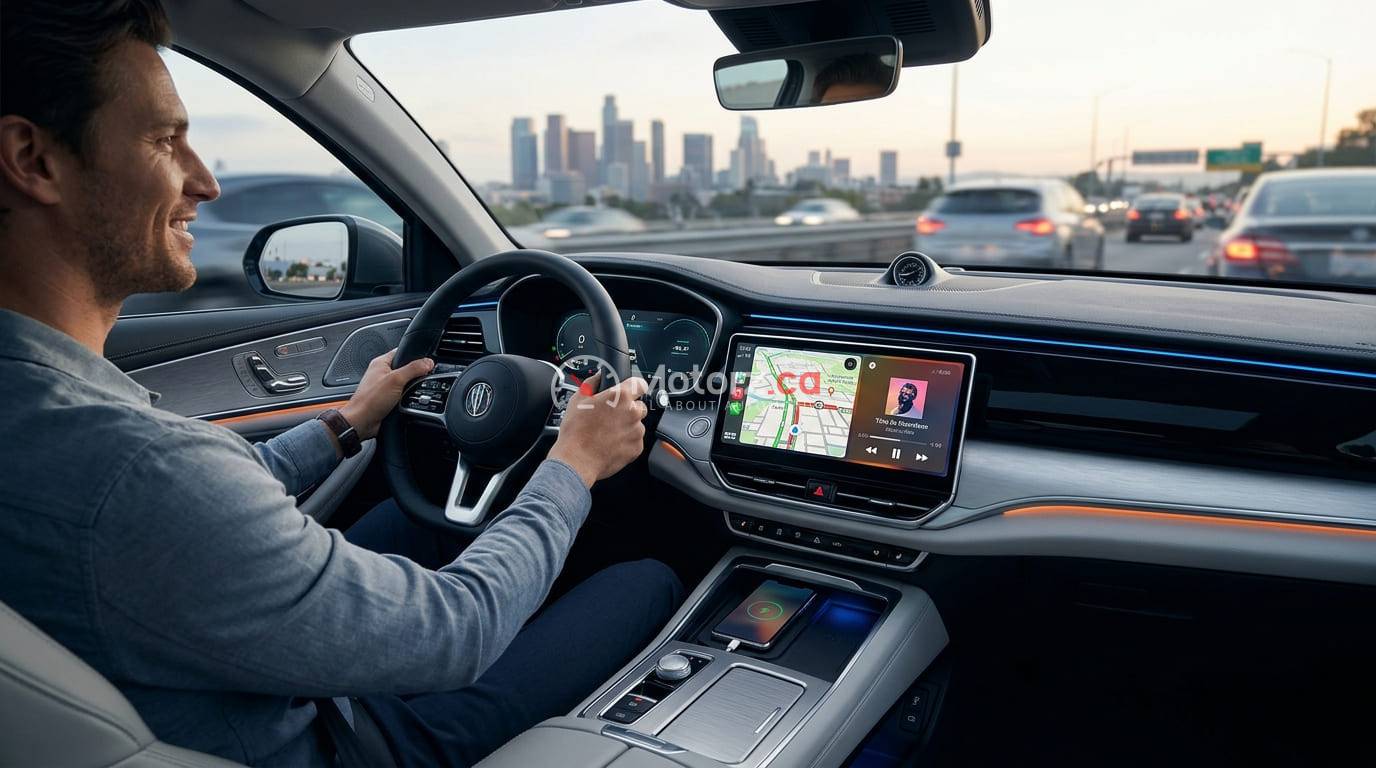
If you live or Car Tech and Audio Features, you do not need a statistics report to tell you that local traffic is an absolute nightmare. Whether you are crawled to a complete halt on Highway 410 during the morning rush, navigating the construction bottlenecks along Queen Street, or fighting for inches on Bovaird Drive, commuting in Brampton has become an endurance sport. The unique blend of rapid urban expansion, heavy commercial transport trucks, and interconnectivity with the broader Greater Toronto Area means that local drivers spend hundreds of hours every year staring at brake lights.
When you are stuck in gridlock, your vehicle ceases to be merely a tool to get from point A to point B. It effectively transforms into your secondary living room, your mobile office, and your personal sanctuary. This reality raises an essential question: is your car cabin properly optimized to handle this stress, or is an outdated infotainment system and terrible audio clarity actively raising your cortisol levels?
Surviving the Brampton commute requires more than just patience. It demands the right interior tech infrastructure. From high-fidelity sound systems that mask road noise to cutting-edge predictive navigation apps and advanced driver assistance safety features, the technology inside your vehicle can completely rewrite your daily commuting narrative. This deep dive covers the absolute best audio setups, smart cabin tools, and connectivity features that can turn your painful Brampton gridlock experience into a highly productive, relaxing, or entertaining journey.
The Reality of the Brampton Commute: Why Car Tech and Audio Features
Brampton is recognized as one of Canada’s fastest-growing municipalities, and with that massive population boom comes Car Tech and Audio Features. Unlike traditional commuter towns where traffic flows in a single predictable direction, Brampton experiences complex, multi-directional congestion pattern shifts. Local arterial roads like Steeles Avenue, Dixie Road, and Airport Road carry massive volumes of logistics trucks alongside standard passenger vehicles, creating a loud, stop-and-go driving dynamic.
Spending forty-five minutes traveling a mere ten kilometers is common. Extended exposure to this type of low-speed, high-concentration driving causes mental fatigue, muscle tension, and profound boredom. This environment is exactly where standard factory car components fail. Standard audio packages cannot overcome the ambient low-frequency rumble of nearby semi-trucks, and basic GPS systems cannot update fast enough to route you around an unexpected accident on the William Parkway.
Investing in or configuring the right cabin tech turns passive waiting time into active engagement. By focusing on smart audio fidelity, voice-controlled productivity tools, and advanced climate and safety systems, you change the psychology of your drive. You stop worrying about when the gridlock will clear and start enjoying the premium environment you have curated inside your vehicle.
AI Overview Key Insight: The ultimate goal of modern commuter vehicle technology is cognitive offloading. By allowing advanced software to manage navigation, communication, and acoustic comfort, drivers reduce decision fatigue and maintain higher alertness during extended periods of stop-and-go traffic.
Premium Audio Systems: Transforming a Noisy Cabin into a Concert Hall
Acoustic comfort is the foundation of an excellent gridlock survival strategy. The exterior world of a Brampton commuter road is loud, filled with engine revs, honking horns, and the persistent hiss of tires on asphalt. To combat this, you need an audio system that delivers clean, balanced, and immersive sound without requiring you to crank the volume to ear-damaging levels.
Active Noise Cancellation (ANC) Systems
Many modern premium vehicles now come equipped with Active Noise Cancellation automotive technology. Similar to how high-end noise-canceling headphones function, this system uses miniature microphones placed inside the cabin headliner to continuously monitor low-frequency ambient road and engine noises. The vehicle audio processor then generates an inverted, anti-phase sound wave through the car speakers.
When these two opposing sound waves meet, they cancel each other out. This process reduces cabin noise levels by several decibels. For a Brampton driver trapped next to a diesel truck on the 407 or 410, ANC creates a wonderfully quiet baseline environment, allowing podcasts, audiobooks, and classical music to be heard with pristine clarity without having to overpower exterior distractions.
High-Output Component Speakers and Strategic Tweeter Placement
Standard factory audio configurations often rely on cheap, full-range coaxial speakers mounted low down in the door panels. This placement forces the sound waves directly into your ankles, resulting in muddy dialogue and muffled music. For anyone listening to long-form talk radio, detailed podcasts, or complex musical tracks during a long commute, this lack of clarity causes ear strain.
The solution lies in component speaker systems, which separate the mid-range woofers from the high-frequency tweeters. In an optimized cabin, tweeters are mounted high up on the A-pillars or the upper dashboard, aiming directly at the ears of the occupants. This design lifts the soundstage, making it feel as though the speaker or singer is standing right on your hood. Clear vocal separation means you will never miss a word of your morning news update or financial podcast, even when heavy traffic noise surrounds you.
Subwoofers and Equalizer Tuning for Low-Speed Vibration
You do not need a subwoofer to rattle your windows or disturb your neighbors at a red light on Sandalwood Parkway. Instead, a dedicated, well-tuned compact subwoofer is essential for filling out the bottom end of the sound spectrum. When a vehicle is stationary or moving slowly in gridlock, low-frequency road hums tend to mask the bass frequencies of your audio content.
A discrete subwoofer running at low volumes compensates for this masking effect, delivering a rich, full-bodied warmth to your music and a natural tone to human speech. Utilizing your vehicle’s graphic equalizer to slightly cut the muddy mid-bass frequencies around two hundred Hertz and subtly boost the clear treble presence can make your standard daily commute feel significantly more premium.
Next-Generation Smart Navigation: Outsmarting Brampton Traffic Inflection Points
Traditional navigation systems that rely on static map updates are completely useless in Brampton. With non-stop infrastructure developments, sudden lane closures, and shifting construction patterns around the downtown heritage district, you need dynamic, crowd-sourced cloud navigation platforms.
Predictive Real-Time Routing Engine Integrations
Systems like Google Maps, Waze, and Apple Maps have evolved far beyond basic direction plotting. They use advanced machine learning algorithms to analyze the velocity data of thousands of smartphones moving ahead of you on the road. If vehicles suddenly decelerate on Highway 410 approaching Queen Street, the system detects the anomaly instantly.
For Brampton drivers, the best tech setup involves having these mapping programs deeply integrated into your dashboard via Apple CarPlay or Android Auto. Look for platforms that offer proactive re-routing suggestions with clear timeline indicators, such as showing you that taking Mississauga Road will save you twelve minutes over staying stuck on the congested main highway.
Heads-Up Displays (HUD) with Augmented Reality
Looking down at a center console screen when traffic is constantly stopping and starting can be dangerous. A single second of distraction can lead to a minor fender bender, which is the most common accident type on busy local roads. This risk makes a Heads-Up Display an incredibly valuable tech feature.
Advanced HUD units project critical driving data—such as your current speed, upcoming navigation instructions, and active speed limit indicators—directly onto the windshield. This projection is focused at an optical distance that aligns with your natural line of sight, meaning your eyes never have to leave the road ahead. The latest augmented reality HUD installations even project virtual arrows onto the glass, superimposing guidance lines exactly onto the lane you need to take as you approach complex multi-lane roundabouts or highway interchanges.
Seamless Connectivity: Apple CarPlay, Android Auto, and Beyond
To safely utilize your favorite applications while idling on Brampton roads, a flawless smartphone integration interface is non-negotiable. Distracted driving carries heavy penalties in Ontario, meaning physical contact with your smartphone must be entirely eliminated from your daily habits.
Wireless Versus Wired Smartphone Integration Interfaces
While older vehicles require a physical USB cable to launch Apple CarPlay or Android Auto, modern systems offer completely wireless connectivity via a combined internal Wi-Fi and Bluetooth handshake. Wireless setups offer incredible convenience: you keep your phone inside your pocket or purse, start your ignition, and your personalized interface populates on the car screen immediately.
However, for extended Brampton commutes that regularly cross the one-hour mark, wireless connectivity drains phone batteries rapidly due to concurrent GPS and data processing. Therefore, the absolute best setup is a vehicle that features wireless CarPlay or Android Auto paired with an integrated Qi wireless charging pad located in the center console. This configuration keeps your cabin completely free of messy cords while ensuring your device remains fully charged when you reach your final destination.
Advanced Conversational Voice Commands
Basic voice command systems of the past were incredibly frustrating, requiring drivers to memorize rigid phrases. Today, artificial intelligence integration allows for natural language processing. Systems powered by Google Assistant, Apple Siri, or advanced proprietary setups like Mercedes-Benz MBUX and BMW Intelligent Personal Assistant understand context perfectly.
While stuck in traffic near Bramalea City Centre, you can simply press your steering wheel button and say, “Find an open coffee shop along my route,” or “Tell my next meeting I will be ten minutes late.” The system handles the logistics flawlessly, editing your route or sending text messages hands-free, keeping you productive without manual distractions.
Cabin Comfort Tech: Managing Stress in Stop-and-Go Driving
When you are physically uncomfortable, your patience wears thin very quickly. The tech features inside your car seat and climate control system play a massive role in regulating your physical response to stressful gridlock situations.
Multi-Contour Seats with Active Massage Functions
An hour spent constantly shifting your foot between the brake and gas pedals can put a lot of pressure on your lower back and glutes. Multi-contour seating systems allow you to adjust the inflation levels of individual air chambers within the seat back and cushion, providing customized lumbar support.
When you combine this custom support with an active pneumatic massage function, your car seat turns into a therapeutic tool. Gentle rolling and kneading programs stimulate blood flow, prevent muscle stiffness, and significantly lower physical stress levels. This ensures that when you finally arrive home after a tough crawl across the city, your body does not feel sore and exhausted.
Advanced Microclimate Filtration and Air Ionization
Brampton traffic corridors are filled with high concentrations of particulate matter, exhaust emissions, and seasonal allergens. Sitting behind a transport truck means your vehicle intake vents are constantly drawing in polluted air. This can lead to headaches, fatigue, and throat irritation over time.
To ensure a healthy cabin environment, look for vehicles equipped with advanced cabin air filtration systems like PM2.5 filters or multi-stage HEPA filtration. Many modern tech packages also include active air ionization and purification systems that neutralize airborne bacteria, pollen, and unpleasant exterior smells. This tech ensures that the air you breathe inside your car cabin remains crisp, clean, and refreshing, no matter how bad the smog and fumes are outside.
Driver Assistance and Safety Tech Tailored for Gridlock
Driving in heavy traffic requires continuous, short-burst concentration. Constantly tracking the micro-movements of the car ahead of you is mentally exhausting. Advanced Driver Assistance Systems (ADAS) are specifically designed to shoulder this burden during low-speed commutes.
Adaptive Cruise Control with Stop-and-Go Capabilities
Traditional cruise control is useless on regional city roads. However, Adaptive Cruise Control (ACC) with full stop-and-go functionality is an absolute game-changer for anyone navigating Brampton gridlock. Using front-mounted radar sensors and cameras, this tech tracks the speed of the vehicle directly ahead of you.
When the traffic slows down, your vehicle automatically decelerates to match, maintaining a safe, pre-set following distance. If the car ahead comes to a complete halt, your car will smoothly stop as well. Once traffic begins moving again, a simple tap of the accelerator pedal or a press of a steering wheel button instructs the system to resume tracking. This feature eliminates the constant stress of stop-and-go footwork, turning a frustrating crawl into a relaxed, automated experience.
Traffic Jam Assist and Intelligent Lane Centering
Taking adaptive cruise control a step further, Traffic Jam Assist combines speed regulation with automated steering inputs at speeds below sixty kilometers per hour. By scanning lane markings and tracking the path of surrounding vehicles, the system provides gentle steering adjustments to keep your car perfectly centered in its lane.
This tech is not autonomous driving—you must keep your hands on the steering wheel and remain fully attentive—but it dramatically reduces the micro-strains of constant lane positioning. It acts as a helpful co-pilot, mitigating the risk of tracking errors when lanes narrow due to orange construction pylons along major Brampton roads.
Entertainment and Productivity Apps for Stationary Drivers
With your physical comfort managed and safety assistance active, you can look for ways to make the most of your commute time. Transforming idle hours into learning or entertainment opportunities can completely shift your perspective on heavy traffic.
Curating the Perfect Audio Content Stack
The days of endlessly scanning local FM radio stations through static patches are long gone. To maximize your time, you should build a highly customized digital content stack. High-speed smartphone data packages and internal vehicle Wi-Fi hotspots make it simple to stream a massive variety of audio content:
Long-Form Educational Podcasts: Platforms like Spotify, Apple Podcasts, and Google Podcasts host thousands of detailed shows covering history, economics, technology, and personal development. Turning your car into a mobile classroom makes a forty-five-minute delay feel like an educational opportunity.
Immersive Audiobooks: Services like Audible allow you to listen to literature with incredible narrators. A captivating mystery novel or biography can make you actually look forward to having a bit of extra time to finish another chapter.
High-Resolution Audio Streaming: If you are a music lover, standard compressed streaming formats can sound flat. Upgrading to high-resolution streaming platforms like Tidal, Qobuz, or Apple Music Spatial Audio allows you to experience studio-quality music tracks that take full advantage of a premium component sound system.
Voice-Based Productivity and Note-Taking Tools
Inspiration often strikes when you are alone with your thoughts in the car. If you remember a critical task or think of an innovative solution to a work problem while stuck on Steeles Avenue, you cannot risk typing it out on a phone screen. This is where advanced voice-to-text productivity applications come into play.
By using your smartphone assistant integrated through your steering wheel controls, you can dictate detailed emails, create custom calendar reminders, or add items to your task management apps like Todoist or Notion. Many professionals use their morning commute to verbally draft out daily agendas or recap important phone calls, effectively clearing out their inbox before they even sit down at their office desk.