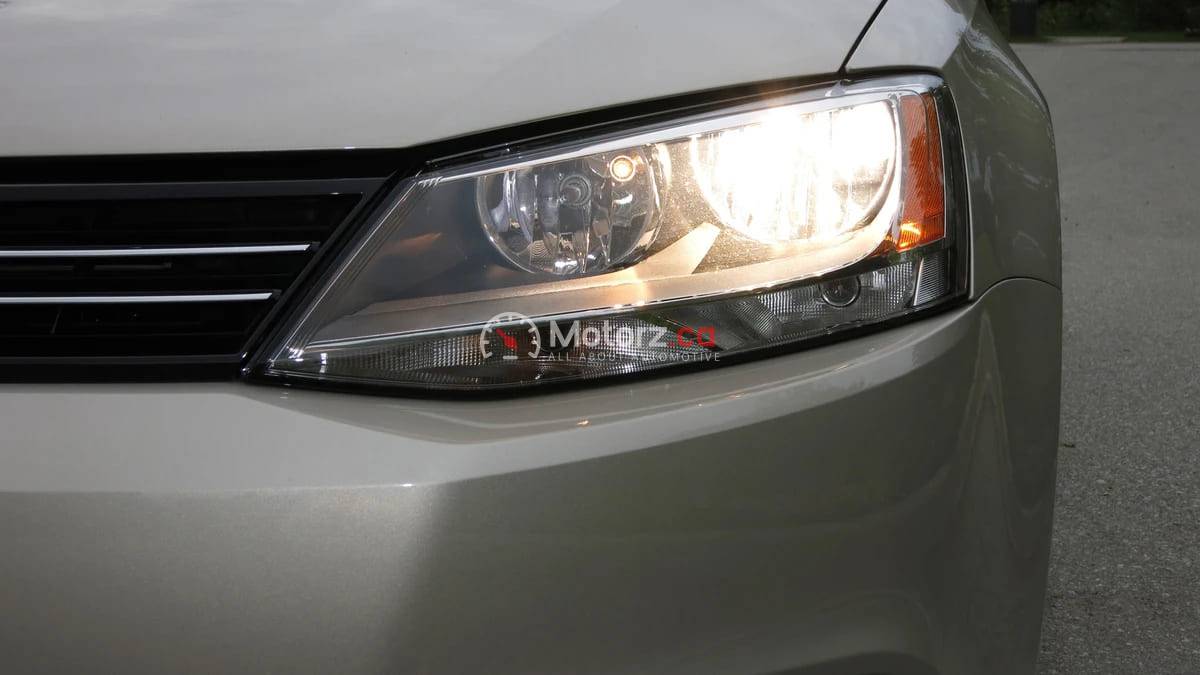
We’ve all been there. You’re Blinded by the Light two-lane highway at night, minding your own business, when suddenly a vehicle appears from the opposite direction. Instead of the standard, warm glow of traditional headlights, you are hit with a piercing, bluish-white wall of light that feels like a laser beam hitting your retinas. For the next three seconds, you are driving completely blind, praying you don’t drift off the road or hit a pedestrian.
If you are the driver behind those blinding lights, you might feel incredibly safe. After all, you can see half a mile down the road, and everything looks as bright as noon. But that extra visibility comes with a steep price.
While upgrading to ultra-bright headlights seems like an easy way to boost nighttime driving safety, it could actually land you in deep legal, financial, and physical trouble. From illegal aftermarket modifications to the hidden dangers of retinal glare and pedestrian accidents, those super-powered bulbs might be a massive liability.
Let’s dive into the dark side of high-lumen lighting and explore why brighter headlamps could get you into serious trouble.
The Modern Blinded by the Light: From Halogen to High-Intensity
To understand why modern headlights are causing so much friction on the road, we have to look at how automotive lighting technology has evolved over the last few decades.
The Yellow Glow of Yesteryear: Halogen Bulbs
For generations, halogen bulbs were the industry standard. They work similarly to traditional incandescent household bulbs, using a tungsten filament heated by an electric current inside a capsule filled with halogen gas. They emit a warm, yellowish light that is relatively soft on the eyes. While reliable and cheap to replace, halogens are not terribly efficient and have a shorter lifespan compared to newer tech.
Enter the Blinding Blues: HID and Xenon Lights
In the late 1990s and early 2000s, High-Intensity Discharge (HID) lamps, often called Xenon lights, started appearing on luxury vehicles. Instead of a filament, HIDs produce light by creating an electrical arc between two electrodes housed inside a micro-environment of xenon gas. HIDs are significantly brighter than halogens and emit a distinct crisp blue or white light.
The Current King: Light-Emitting Diodes (LEDs)
Today, LEDs have taken over the automotive world. LEDs are incredibly energy-efficient, last the lifetime of the vehicle, and allow manufacturers to design sleek, razor-thin headlight housings. Because they can throw massive amounts of light while consuming minimal power, they have become the default choice for almost every new car rolling off the assembly line.
The Illusion of Safety: Why More Lumens Don’t Equal More Security
It is a basic human instinct to believe that more light equals more safety. If you can see further, you can react faster, right? While this is true up to a point, excessive brightness creates a psychological phenomenon known as the illusion of safety.
The Problem with Foreground Flood
When you install ultra-bright bulbs, they throw an immense amount of light onto the pavement directly in front of your bumper. This is known as foreground light. Because the ground right in front of you is incredibly bright, your pupils naturally constrict to limit the amount of light entering your eyes.
The unintended consequence? Your long-distance night vision is drastically reduced. Your eyes adjust to the blinding light five feet ahead of you, making it much harder to spot a deer, a pothole, or a broken-down car idling in the shadows 200 feet down the road.
Overdriving Your Headlights
Many drivers with ultra-bright lights suffer from overconfidence. They assume that because the road looks bright, they can drive at higher speeds. However, even the brightest headlights have a limited throw distance. If you are traveling at high speeds on a highway, your stopping distance may still exceed the distance illuminated by your headlights. When you combine this with constricted pupils from excessive foreground glare, you are actually putting yourself at a distinct disadvantage.
The Dark Side of Glare: What You Are Doing to Other Drivers
Driving is a cooperative activity. Your safety on the road depends entirely on the ability of the drivers around you to see what they are doing. When you equip your vehicle with blindingly bright headlights, you disrupt this cooperation.
Disability Glare vs. Discomfort Glare
Traffic safety researchers divide headlight glare into two categories:
Discomfort Glare: This is the annoying, frustrating feeling you get when looking at a bright light. It causes you to blink, look away, or complain, but it doesn’t physically stop you from seeing objects.
Disability Glare: This is a much more dangerous phenomenon. Disability glare occurs when stray light enters the eye and scatters across the retina, erasing the contrast of the visual scene. It literally blinds the driver, making it impossible to see objects, lane markings, or pedestrians.
Flash Blindness and Recovery Time
When a driver is hit with disability glare from an oncoming vehicle, they experience “flash blindness.” Even after the offending vehicle passes, a ghost image remains on the driver’s retina.
For a young driver with healthy eyes, it can take up to several seconds for their vision to fully recover. For older drivers, whose eyes naturally take longer to adjust to shifting light levels, recovery time can stretch to 10 seconds or more. If a car is traveling at 60 miles per hour, it covers 88 feet per second. A five-second window of flash blindness means driving completely blind for nearly a tenth of a mile.
The Mirror Menace: Glare from Behind
It isn’t just oncoming traffic that suffers. If you drive a lifted truck or an SUV equipped with ultra-bright LEDs, your headlights sit at the exact height of a standard sedan’s rearview and side mirrors.
When you tail or follow another car, your high-intensity beams bounce off their mirrors and blast directly into the driver’s eyes. This creates massive distractions and forces the driver ahead of you to adjust their mirrors, take their eyes off the road, or slow down abruptly out of sheer frustration.
The Legal Minefield: Are Your Aftermarket Bulbs Actually Illegal?
Many drivers get into trouble because they purchase cheap LED or HID conversion kits online, assuming that if a product is for sale, it must be legal. This is a massive misconception.
The Housing Mismatch Disaster
The single biggest mistake car owners make is buying a plug-and-play LED or HID bulb and stuffing it into a headlight housing designed for an old-school halogen bulb.
Halogen housings rely on a reflector dish or a specific lens to shape the light into a controlled beam that points down toward the road. Halogen filaments emit light in a 360-degree pattern from a highly specific, microscopic point.
LED chips, on the other hand, are flat and emit light in specific directions. When you put an LED bulb into a halogen reflector housing, the light bounces off the mirrors incorrectly. Instead of a focused beam on the asphalt, the housing scatters the light wildly in every direction, shooting high-intensity beams directly into the eyes of oncoming drivers.
Department of Transportation (DOT) Regulations
In many jurisdictions, aftermarket LED and HID conversion kits are flat-out illegal for street use. Regulatory bodies like the Department of Transportation (DOT) have strict rules regarding the luminous intensity, color, and beam pattern of automotive lighting.
Most aftermarket LED upgrade bulbs found on popular e-commerce websites carry a tiny, hidden disclaimer in the fine print: “For off-road use only.” If you install these on your daily driver and use them on public roads, you are violating transportation laws.
Failed Vehicle Inspections and Fix-It Tickets
If you live in an area with mandatory annual vehicle safety inspections, a mismatched headlight setup can cause you to fail immediately. Furthermore, law enforcement officers are becoming increasingly trained to spot illegal headlight modifications. If an officer pulls you over because your lights are blinding them, you could face hefty fines, points on your license, and a “fix-it ticket” forcing you to revert your vehicle back to factory specifications within a matter of days.
Liability and Financial Ruin: The Cost of a Headlight-Induced Crash
Getting a traffic ticket is a minor inconvenience compared to the civil and criminal liabilities you could face if your ultra-bright headlights cause a motor vehicle accident.
Criminal Negligence and Fault Assignment
If you are involved in a nighttime collision, and the other driver claims they were completely blinded by your headlights, police investigators will examine your vehicle. If they discover you installed unapproved, non-compliant aftermarket LED or HID bulbs into standard halogen housings, the tide of the investigation can turn rapidly against you.
Modifying your vehicle with illegal equipment that directly impairs the vision of other drivers can be viewed as an act of negligence. Instead of a standard insurance claim, you could find yourself facing criminal charges for reckless driving or vehicular assault.
Insurance Companies Will Walk Away
Insurance policies are built on the assumption that your vehicle is maintained in a safe, road-worthy condition compliant with local laws. If an insurance adjuster determines that your illegal headlight modifications were a contributing factor to an accident, your insurance company may deny your claim entirely.
This leaves you personally responsible for:
Medical bills for yourself and the injured parties
Property damage to all vehicles involved
Legal fees to defend yourself in a civil lawsuit
When a simple set of bulbs can lead to hundreds of thousands of dollars in personal liability, the risk far outweighs the reward.
Blue Light Hazards: The Health and Environmental Impact
The issues with modern high-intensity headlights extend beyond the roadway; they also disrupt human biology and the natural environment.
The High-CRI and Blue Light Dilemma
Most modern LED headlights emit light with a high color temperature, often ranging from 5,000K to over 6,500K. This light looks pure white or light blue. While it makes road signs pop, it contains a massive amount of high-energy visible (HEV) blue light.
Blue light scatter is a significant issue. Because blue light has shorter wavelengths, it scatters much more easily when it hits particles in the atmosphere, such as moisture, dust, or fog. This causes a phenomenon known as backscatter, where your own headlights create a blinding veil of white mist directly in front of your windshield during heavy rain or fog, completely destroying your visibility.
Circadian Rhythm Disruption
Exposure to intense blue light at night suppresses the production of melatonin, the hormone responsible for regulating sleep cycles. While a few minutes of driving past bright lights won’t completely ruin your night, truck drivers, delivery workers, and commuters who spend hours on roads filled with high-intensity glare can experience severe eye strain, headaches, and disrupted sleep patterns, leading to chronic daytime fatigue.
How to Get Better Visibility Safely and Legally
You do not have to drive in the dark to avoid getting into trouble. There are plenty of ways to maximize your nighttime visibility without putting a target on your back or blinding your fellow drivers.
Restore Your Headlight Lenses
Over time, the plastic lenses covering your headlights degrade due to UV rays, road debris, and harsh weather. They turn yellow, cloudy, and hazy. This oxidation blocks up to 80 percent of the light output, turning even the best bulbs into dim, useless glows.
Before upgrading your bulbs, buy a high-quality headlight restoration kit. Polishing away the oxidation and applying a UV-resistant clear coat can instantly bring your factory lights back to their original brightness without changing the beam pattern.
Aim Your Headlights Correctly
Many complaints about blinding headlights are simply caused by poorly aimed housings. Over time, hitting potholes, driving over speed bumps, or front-end work can knock your headlight housings out of alignment. If your headlights are pointed too high, they will blast into the eyes of oncoming drivers; if they are pointed too low, your stopping distance is compromised.
You can align your headlights at home with a tape measure, a screwdriver, and a flat wall, or you can have a certified mechanic align them using professional targeting equipment.
Upgrade to Premium Halogen Bulbs
If your car uses halogen housings and you want better performance, skip the LED kits and buy premium, high-performance halogen bulbs from reputable manufacturers. These bulbs use advanced filament designs and specialized gas mixtures to produce a whiter, brighter light that is completely street-legal and perfectly matched to your vehicle’s reflector dishes.
Keep in mind that high-performance halogens burn hotter, meaning they typically have a shorter lifespan than standard bulbs, but they offer a safe, legal performance bump.
Buy Factory-Style Assemblies
If you are dead-set on having true LED or HID performance, you need to replace the entire headlight assembly, not just the bulb. Look for complete aftermarket headlight assemblies that are DOT-compliant and feature built-in projector lenses designed specifically for LEDs or HIDs. These projector units use a sharp internal cutoff shield to ensure that the light is focused entirely on the ground and cut off sharply before it reaches the windshields of oncoming traffic.
The Future of Car Lighting: Adaptive Driving Beams (ADB)
The conflict between drivers who want to see and drivers who want to avoid being blinded has led to incredible innovations in automotive engineering. The most promising solution is Adaptive Driving Beams (ADB), often referred to as smart or matrix headlights.
How Matrix LED Technology Works
Instead of a single bulb, an ADB system uses an array of dozens of individual, high-power LEDs controlled by a forward-facing camera and a computer chip. When the camera detects the headlights of an oncoming car or the taillights of a vehicle ahead, the computer instantly turns off or dims the specific LEDs that would shine directly on that vehicle.
The rest of the LED array remains at full brightness. This creates a moving “shadow box” around other cars on the road, allowing you to drive with your high beams permanently engaged without blinding a single soul.
While this technology has been common in Europe and Asia for years, regulatory updates around the globe are finally clearing the way for smart headlights to become standard on mainstream vehicles worldwide.
Keep the Road Safe for Everyone
When it comes to automotive upgrades, it is vital to balance your personal desires with community safety. Ultra-bright headlights might make you feel like you own the night, but if they cause another driver to lose control and drift into your lane, your high-lumen bulbs have done you no favors.
Clean your lenses, align your beams, choose compliant bulbs, and respect the vision of the people sharing the asphalt with you. True safety on the road isn’t about blinding everyone else to see clearly—it’s about making sure everyone can get home in one piece.