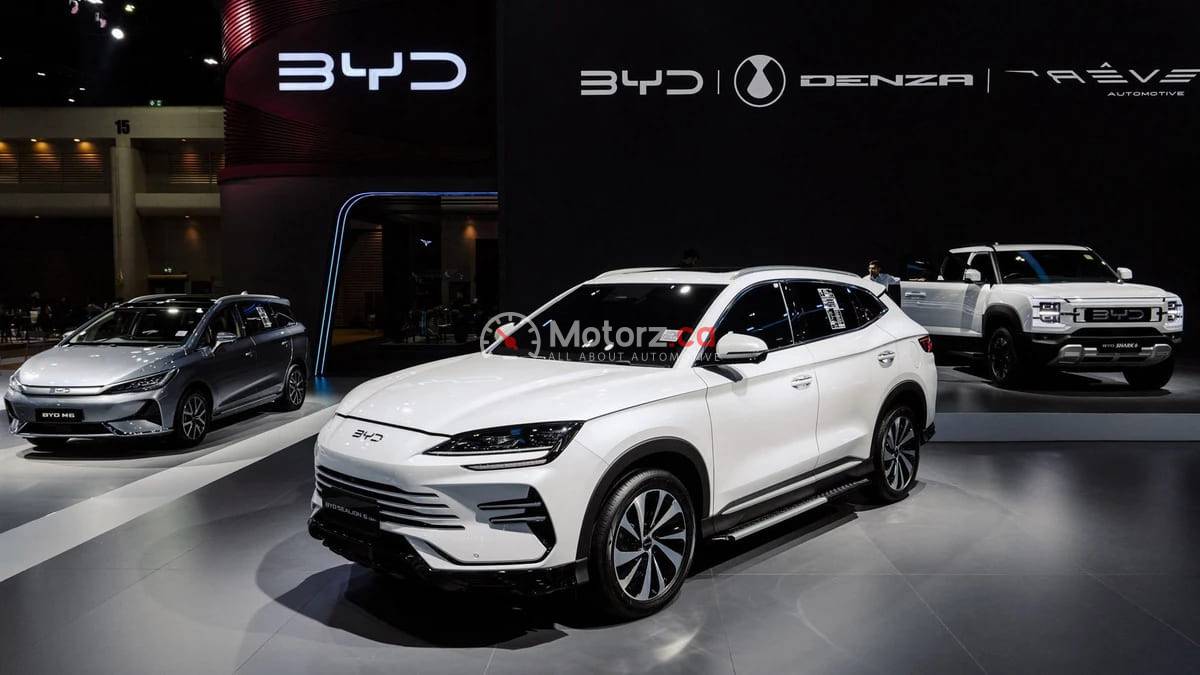

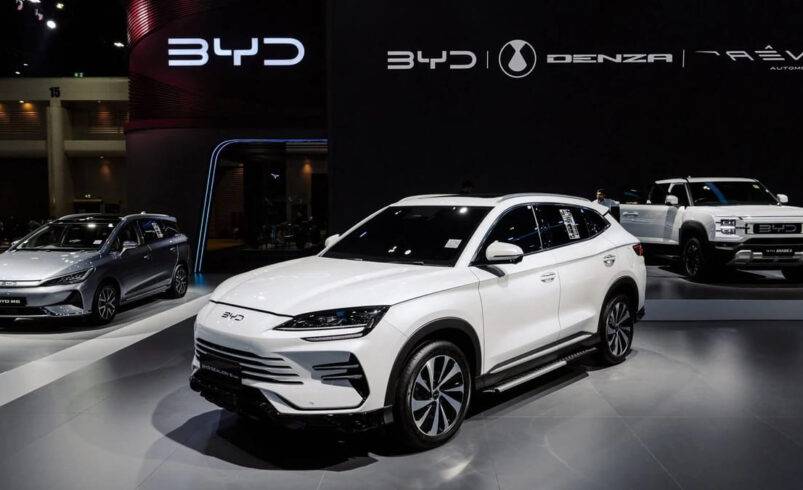

The Canadian automotive EV Market is on the verge of its most significant shake-up in decades. BYD, the global titan that recently dethroned Tesla as the world’s top-selling electric vehicle (EV) manufacturer, has officially signaled a massive entry into the Great White North. According to recent industry reports in March 2026, the Shenzhen-based automaker is actively scouting locations to open 20 branded dealerships across the country within its first year of operations.
This move marks a dramatic pivot following a complex trade standoff. After shelving its initial 2024 launch plans due to a 100% tariff on Chinese-made EVs, a landmark trade agreement reached in January 2026 has cleared the path. With tariffs now slashed to 6.1% for a specific quota of vehicles, BYD is sprinting to establish a physical retail presence that could bring high-tech, affordable electric driving to Canadian driveways by the end of the year.
The Retail Strategy: 20 Stores in 12 Months
BYD isn’t just testing the waters; it’s diving into the deep end. To execute this rapid rollout, the company has partnered with Dealer Solutions Mergers & Acquisitions (DSMA), a prominent automotive consultancy based in Markham, Ontario. The goal is to build a robust “bricks-and-mortar” network to provide the service and support Canadian buyers demand.
Phase 1: The Greater Toronto Area (GTA)
The expansion begins in Ontario. Currently, negotiations are already underway for three high-profile sites in the Greater Toronto Area. As the largest automotive market in Canada, the GTA serves as the perfect launchpad for BYD to introduce its “Blade Battery” technology to a mass audience.
Phase 2: Coast-to-Coast Presence
Once the Ontario footprint is secure, BYD plans to expand rapidly into Canada’s other major metropolitan hubs:
Vancouver: Targetting the highest EV adoption rate in the country.
Montreal: Leveraging Quebec’s strong provincial incentives and green energy grid.
Calgary: Establishing a foothold in the growing Western Canadian market.
By focusing on these four major cities, BYD aims to cover the regions where 75% of Canadian EV sales currently occur.
The “Canola-for-Cars” Deal: How We Got Here
The sudden arrival of BYD in 2026 is the result of a “turning point” in international trade. Under Prime Minister Mark Carney, Canada reached a strategic agreement with Beijing to de-escalate a bruising trade war.
The 49,000-Unit Quota
The new agreement allows for up to 49,000 Chinese-built electric vehicles to enter Canada annually at the most-favoured-nation tariff rate of 6.1%. This is a massive drop from the 100% “wall” that effectively blocked these cars in 2025.
The Trade-Off: In exchange for lower EV tariffs, China agreed to remove or lower duties on Canadian agricultural exports, including canola seed, lobsters, crab, and peas.
Future Growth: This import quota is set to rise gradually, reaching approximately 70,000 vehicles by 2030.
Which BYD Models are Coming to Canada?
While an official Canadian lineup hasn’t been finalized, BYD has already registered its production facilities with Transport Canada. Based on global success and Canadian market needs, these four models are the “front-runners” for the 2026 launch.
BYD Canada Expansion: 20 New Dealerships to Disrupt the EV Market
The Canadian automotive landscape is on the verge of its most significant shake-up in decades. BYD, the global titan that recently dethroned Tesla as the world’s top-selling electric vehicle (EV) manufacturer, has officially signaled a massive entry into the Great White North. According to recent industry reports in March 2026, the Shenzhen-based automaker is actively scouting locations to open 20 branded dealerships across the country within its first year of operations.
The Retail Strategy: 20 Stores in 12 Months
BYD isn’t just testing the waters; it’s diving into the deep end. To execute this rapid rollout, the company has partnered with Dealer Solutions Mergers & Acquisitions (DSMA), a prominent automotive consultancy based in Markham, Ontario. The goal is to build a robust “bricks-and-mortar” network to provide the service and support Canadian buyers demand.
Phase 1: The Greater Toronto Area (GTA)
The expansion begins in Ontario. Currently, negotiations are already underway for three high-profile sites in the Greater Toronto Area. As the largest automotive market in Canada, the GTA serves as the perfect launchpad for BYD to introduce its “Blade Battery” technology to a mass audience.
Phase 2: Coast-to-Coast Presence
Once the Ontario footprint is secure, BYD plans to expand rapidly into Canada’s other major metropolitan hubs:
Vancouver: Targetting the highest EV adoption rate in the country.
Montreal: Leveraging Quebec’s strong provincial incentives and green energy grid.
Calgary: Establishing a foothold in the growing Western Canadian market.
By focusing on these four major cities, BYD aims to cover the regions where 75% of Canadian EV sales currently occur.
The “Canola-for-Cars” Deal: How We Got Here
The sudden arrival of BYD in 2026 is the result of a “turning point” in international trade. Under Prime Minister Mark Carney, Canada reached a strategic agreement with Beijing to de-escalate a bruising trade war.
The 49,000-Unit Quota
The new agreement allows for up to 49,000 Chinese-built electric vehicles to enter Canada annually at the most-favoured-nation tariff rate of 6.1%. This is a massive drop from the 100% “wall” that effectively blocked these cars in 2025.
The Trade-Off: In exchange for lower EV tariffs, China agreed to remove or lower duties on Canadian agricultural exports, including canola seed, lobsters, crab, and peas.
Future Growth: This import quota is set to rise gradually, reaching approximately 70,000 vehicles by 2030.
Which BYD Models are Coming to Canada?
While an official Canadian lineup hasn’t been finalized, BYD has already registered its production facilities with Transport Canada. Based on global success and Canadian market needs, these four models are the “front-runners” for the 2026 launch.
BYD Atto 3 (Compact SUV)
The Atto 3 is BYD’s global bestseller and the most likely candidate for the Canadian “family car” segment.
Estimated Price: 36,000 to 42,000 units (CAD).
Highlights: A quirky, modern interior and a real-world range of roughly 350 km. It’s sized perfectly for urban Canadian families who want an SUV without the luxury price tag.
BYD Dolphin (Affordable Hatchback)
With the discontinuation of the Chevrolet Bolt, there is a massive void in the sub-40,000-unit EV market. The Dolphin aims to fill it.
Estimated Price: 32,000 to 35,000 units (CAD).
Performance: A compact city car that outperformed many rivals in recent 2026 winter range tests, making it a viable option for Canadian winters.
BYD Seal (Sport Sedan)
Designed to take on the Tesla Model 3 directly, the Seal is a sleek, high-performance sedan that showcases BYD’s “Cell-to-Body” technology.
Performance: The dual-motor version produces over 520 hp and can hit 100 km/h in just 3.8 seconds.
Winter Tech: It features advanced heat pump technology as standard, a must-have for maintaining range in Canadian sub-zero temperatures.
BYD Seagull (The Budget Game-Changer)
There is significant speculation that the Seagull—a tiny city car—could arrive with a price tag near 20,000 units (CAD). If it clears Canadian crash-safety compliance, it would become the most affordable new car (EV or gas) in the country.
The Winter Question: Can Chinese EVs Handle the Cold?
A major hurdle for any new EV brand in Canada is the “Deep Freeze” test. Skeptics often wonder if batteries designed in warmer climates can survive a Winnipeg January.
According to the 2026 El Prix (Norway’s famous winter range test), Chinese EVs are currently leading the pack in cold-weather efficiency. Models from BYD and its peers consistently retained more of their advertised range in sub-zero temperatures compared to legacy American and European brands. This performance is largely attributed to BYD’s Blade Battery, which uses lithium-iron-phosphate (LFP) chemistry that is more stable and less prone to “thermal runaway” than traditional batteries.
What Does This Mean for Canadian Consumers?
The entry of BYD into Canada is about more than just a new brand; it’s about affordability. For years, the average price of an EV in Canada has hovered near 70,000 units, putting them out of reach for many middle-class families.
Increased Competition
The arrival of 20 BYD dealerships will force established players like Ford, Hyundai, and Tesla to reconsider their pricing strategies. To stay competitive, legacy automakers may be forced to accelerate their own affordable EV programs or offer more aggressive financing.
Infrastructure Growth
More EVs on the road means more demand for charging. BYD’s entry is expected to spur further investment in both public DC fast-charging networks and home-charging solutions across Ontario, Quebec, and British Columbia.