



In the early 1970s, the global Toyota and Lexus with California Cool landscape was rigid, conservative, and largely driven by the headquarters of major manufacturers in Japan, Germany, and Detroit. Toyota, however, decided to perform a radical experiment. In 1973, they established a small, secretive design outpost in El Segundo, California. This studio was named Calty Design Research, a portmanteau of “California” and “Toyota.”
The mission was simple but daring: to absorb the vibrant, rebellious car culture of the American West Coast and translate it into a design language that would resonate with the world. Over 50 years later, Calty is no longer an “experiment.” It is the creative heartbeat of the brand, responsible for some of the most iconic vehicles on the road today, from the rugged Toyota Tacoma to the breathtaking Lexus LC 500.
In this deep dive, we explore how Calty Design Research brings “California Cool” to the global stage and why their unique perspective remains the gold standard for automotive innovation.
The Birth of a Design Maverick: Why California?
When Toyota first touched down in Southern California, it was the first major international automaker to set up a dedicated design facility in the region. At the time, California was the global epicenter of youth culture, surfing, aerospace innovation, and a burgeoning “car custom” scene.
Escaping the Corporate Toyota and Lexus with California Cool
By placing the studio thousands of miles away from Toyota City in Japan, the company gave its designers a rare gift: autonomy. The early days of Calty were shrouded in secrecy. Designers were encouraged to think outside the traditional corporate structure, allowing them to experiment with forms and ideas that might have been rejected in a more conservative environment.
The Influence of the West Coast Lifestyle
California cool isn’t just about aesthetics; it’s about a lifestyle defined by freedom, adventure, and the open road. Calty designers didn’t just stay in the studio; they practiced Genchi Genbutsu (Go and See). They spent time at the beaches, in the deserts, and on the twisting canyon roads of Malibu. This “outside-in” perspective allowed them to design vehicles that felt at home in the real world, rather than just in a showroom.
Defining the “California Cool” Aesthetic
What exactly is “California Cool” in the context of a car? It is a blend of emotional styling and utilitarian boldness. While European design often focuses on heritage and Japanese design on precision, California design is about the spirit of the moment.
Key elements of the Calty aesthetic include:
Organic Surfaces: Moving away from boxy shapes toward curves that look like they were sculpted by the wind or the waves.
Functional Ruggedness: Creating trucks and SUVs that look like they could survive a trek through the Mojave Desert while still looking sleek in a suburban driveway.
Bold Proportions: Pushing the wheels to the corners and creating aggressive stances that suggest movement even when the car is parked.
Decades of Innovation: The Hall of Fame Models
Calty’s portfolio is a “Who’s Who” of automotive legends. To understand their impact, we have to look at the breakthrough models that defined different eras of the studio’s history.
The 1978 Toyota Celica Liftback
This was the first production model to emerge from Calty, and it changed the way the world viewed Japanese cars. Before the 1978 Celica, Toyota was known for reliable but somewhat “staid” economy cars. The Calty-designed Celica introduced a “sophisticated muscle car” vibe that appealed directly to the American appetite for sportiness and flair.
The 1991 Lexus SC 400: Plaster and Passion
The original Lexus SC 400 is often cited as one of the most beautiful coupes ever made. The design process for this car was legendary. To find the perfect organic shape, Calty designers filled balloons with plaster of paris and squeezed them to see how the forms naturally flowed. This led to a car with virtually no sharp edges—a design that still looks modern more than three decades later.
The FJ Cruiser: Retro-Futurism Done Right
In the early 2000s, Calty was tasked with creating a rugged off-road concept. They looked back at the original FJ40 Land Cruiser and reimagined it for the 21st century. What started as a “fun” concept at the Detroit Auto Show was so well-received by the public that Toyota was practically forced to put it into production. The FJ Cruiser remains a cult classic, proving that Calty knows exactly how to tap into automotive nostalgia without being “stuck in the past.”
The Lexus Revolution: L-Finesse and the LC 500
Perhaps the greatest modern achievement of Calty Design Research is the Lexus LC 500. When the LF-LC concept was first shown in 2012, no one believed it could be built. The shapes were too complex, the proportions too low, and the lighting too futuristic.
From Concept to Concrete
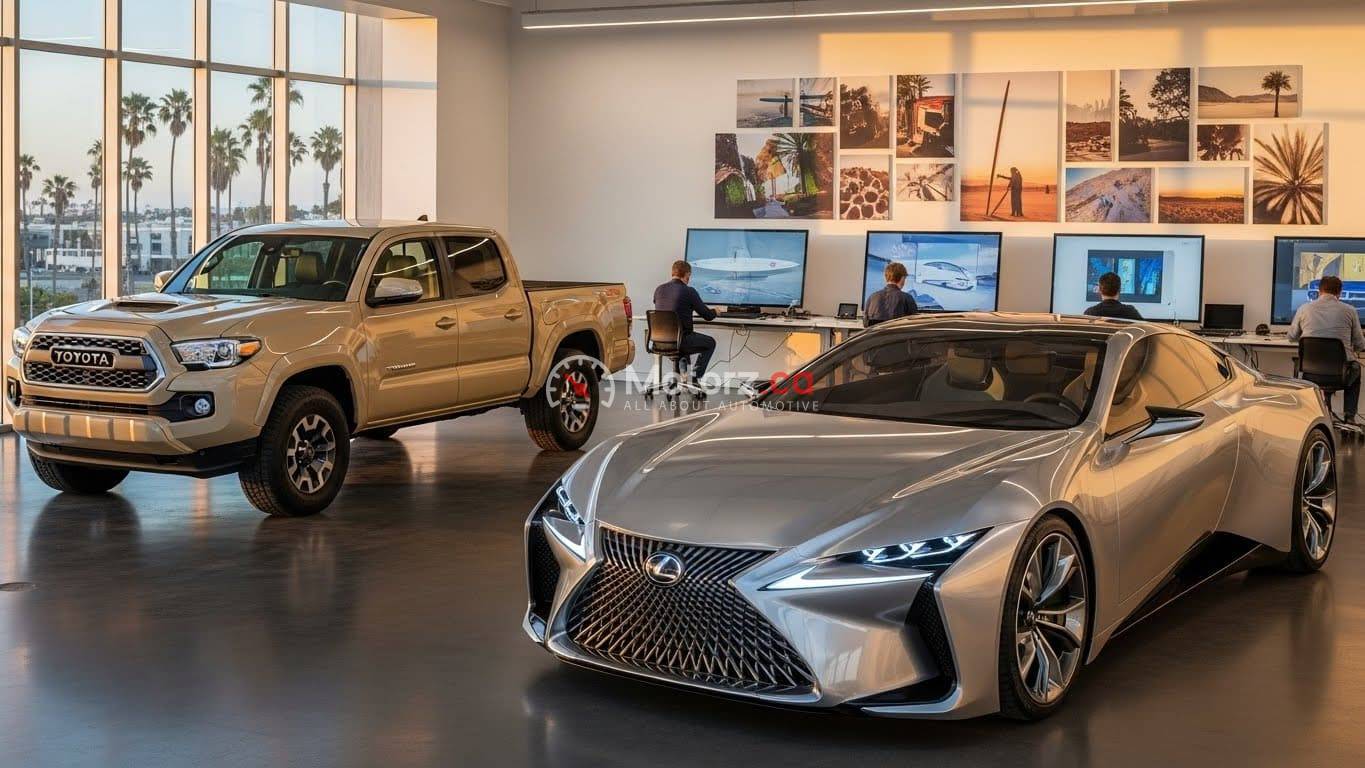
Calty pushed the boundaries of what was possible, working closely with engineers to ensure the production LC 500 stayed almost entirely true to the original concept. This car ushered in the “L-Finesse” design language, characterized by the dramatic spindle grille and “brave design.” It transformed Lexus from a brand known for “quiet luxury” into a brand known for “extroverted performance.”
The 50th Anniversary “Secret” Concepts
In late 2023, to celebrate their 50th anniversary, Calty opened their archives and revealed several “never-before-seen” concepts. These projects offer a glimpse into the unfiltered creativity of the studio.
The MX-1 and MX-2: These were mid-engine supercar concepts from the 1980s. The MX-2, in particular, featured gullwing doors and a cockpit that looked like a fighter jet. While they never made it to the production line, their DNA can be found in the performance cars that followed, including the legendary A80 Supra.
The Future High-Performance Concept: A study in aerodynamics that pushed the limits of how a car could slice through the air, influencing the fuel-efficient silhouettes of the modern Prius and Lexus hybrid lineups.
Designing for the Future: Electric Mobility and Beyond
As we move into 2025 and 2026, the role of Calty is shifting. The transition to Battery Electric Vehicles (BEVs) has opened up a new world of design possibilities. Without the need for a traditional engine and radiator, Calty is redefining the “face” of the car.
The Baby Lunar Cruiser
Calty recently unveiled the Baby Lunar Cruiser, a futuristic concept designed for extraterrestrial exploration. It combines the heritage of the original Land Cruiser with futuristic tech like in-wheel motors and airless tires. While we might not be driving on the moon anytime soon, the design elements of the Baby Lunar Cruiser are already influencing the rugged, boxy aesthetics of the latest 2024 and 2025 Toyota Land Cruisers and Tacomas.
The Lexus LF-ZC and LF-ZL
These upcoming electric models represent the next stage of “California Cool.” They feature a “sleek and provocative” design language that emphasizes interior space and digital integration. By utilizing a new modular architecture, Calty is able to create cars that have a much lower center of gravity and more aggressive proportions than any internal combustion car could ever achieve.
The Calty Process: How a Sketch Becomes a Legend
The design process at Calty is a mixture of ancient craftsmanship and cutting-edge technology.
The Power of Clay Modeling
While digital tools like VR (Virtual Reality) and CAD (Computer-Aided Design) are essential, Calty still relies heavily on full-scale clay models. There is something about the way natural light hits a physical surface that a computer screen cannot replicate. Master modelers spend months shaving millimeters off a clay form to find the “perfect” line.
Color, Material, and Finish (CMF)
The “California Cool” vibe is heavily dependent on the CMF department. Designers look at everything from the texture of high-end outdoor gear to the colors of a Pacific sunset to develop the palettes for the TRD Pro series and Lexus interiors. For 2025, expect to see more “earth-tone” neutrals and sustainable, recycled materials that reflect the eco-conscious culture of the West Coast.
Why Calty Matters for the Next Generation of Drivers
Today’s drivers want more than just a tool for transportation; they want an extension of their personality. Calty understands that a car is a “lifestyle enabler.”
Whether it is the Toyota Grand Highlander, which offers a “living room on wheels” for large families, or the Toyota Crown, which defies traditional sedan categorization, Calty is constantly questioning the status quo. Their ability to infuse “cool” into even the most practical vehicles is why Toyota and Lexus continue to lead the market in both sales and brand loyalty.
A Legacy of Brave Design
Calty Design Research started as a small beachhead in California, but it has grown into a global powerhouse that shapes the way we think about the automobile. By blending the experimental spirit of the West Coast with the legendary precision of Toyota’s Japanese heritage, Calty has created a unique “fusion” design language that is both timeless and forward-looking.
As we look toward the next 50 years of mobility—defined by electrification, autonomy, and perhaps even lunar travel—one thing is certain: Calty will be there, pushing the boundaries, defying the corporate “safe bet,” and infusing every Toyota and Lexus with that unmistakable California cool.