

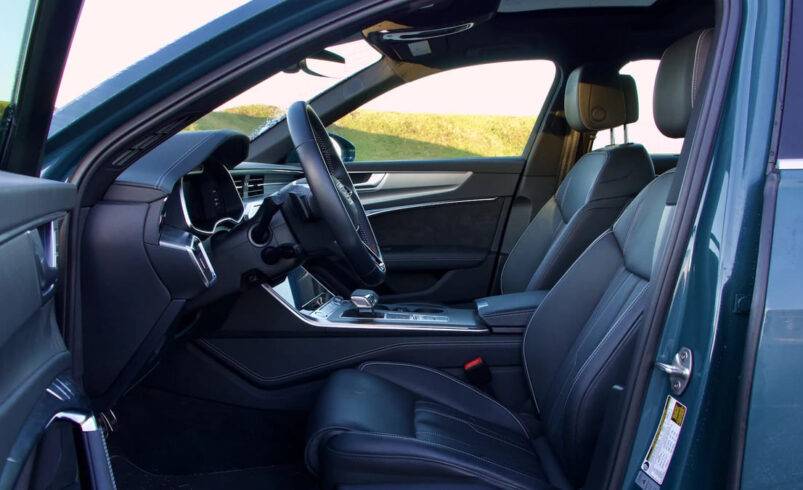

When we talk about vehicle maintenance and Car Seat is a Critical Safety, we usually focus on the “big ticket” items: the engine, the brakes, or the tires. We rarely give a second thought to the place where we spend 100 percent of our driving time—the car seat. It is easy to view your seat as a piece of furniture, a cushioned throne wrapped in leather or cloth designed for comfort. However, in the eyes of an automotive engineer, your seat is one of the most complex and vital safety systems in the entire vehicle.
In this edition of Your Corner Wrench, we are looking at the often-overlooked world of automotive seating. Your seat does more than just keep you comfortable on a long commute; it is the primary interface between you and the vehicle’s safety cage. It manages crash forces, houses side-impact airbags, and prevents life-altering spinal injuries.
From proper positioning to the hidden electronics beneath the upholstery, here is everything you need to know about taking a seat for both comfort and safety.
The Engineering Behind the Cushion: It’s Not Just Foam
Modern car seats are marvels of vehicle maintenance engineering. Underneath that fabric or leather lies a high-strength steel frame designed to withstand thousands of pounds of force.
Energy Absorption and Crashworthiness
During a collision, the seat acts as a shock absorber. It is designed to “deform” or move in specific ways to soak up the kinetic energy of an impact. If a seat is too rigid, that energy is transferred directly to your spine. If it is too soft, you risk “submarining”—sliding under the seatbelt during a crash.
The Frame: The internal structure is made of high-tensile steel or magnesium to prevent the seat from collapsing backward in a rear-end collision.
The Tracks: Even the rails the seat slides on are engineered to lock into place with incredible strength, ensuring the seat doesn’t become a projectile.
The Rise of Active Head Restraints
One of the most important safety innovations in recent years is the active head restraint. In a rear-end collision, these headrests move forward and upward automatically to cradle your head. This significantly reduces the risk of whiplash, which occurs when the head is jerked violently backward relative to the torso.
Proper Seating Position: The Car Seat is a Critical Safety
You can have the safest seat in the world, but if you are sitting incorrectly, you are bypassing its protection. Many drivers sit too close to the steering wheel or recline too far, both of which can lead to severe injuries during an airbag deployment.
The Steering Wheel Gap
The “10-inch rule” is a standard safety guideline. You should have at least 25 centimeters of space between the center of your chest and the hub of the steering wheel.
Why it matters: Airbags deploy with explosive force. If you are too close, the airbag is still expanding when it hits you, which can cause rib fractures or internal injuries. At 25 centimeters, the airbag has fully inflated and is beginning to deflate, providing a soft cushion rather than a punch.
The “Dead Pedal” and Knee Angle
Your legs should never be perfectly straight when you are pressing the pedals. There should be a slight bend in the knee.
The Physics: If your legs are locked straight during a head-on collision, the force of the impact travels directly through your leg bones and into your hip socket, often causing a shattered pelvis. A slight bend allows your joints to act as natural shock absorbers.
The Hidden Electronics: Airbags and Sensors
If you look under your seat, you will see a maze of yellow and orange wires. These are the “nervous system” of your vehicle’s supplemental restraint system (SRS).
Side-Impact Airbags (SABs)
Most modern vehicles have airbags built directly into the outboard side of the seat backrest. These deploy in milliseconds to provide a cushion between your ribcage and the door panel.
Important Note: This is why you must be extremely careful with aftermarket seat covers. If a cover is not specifically designed with “tear-away” seams for side airbags, it can trap the airbag during a crash, rendering it useless or even dangerous.
Occupant Classification Sensors (OCS)
Have you ever noticed a light on your dash that says “Passenger Airbag Off” when a heavy bag of groceries is on the seat? That is the OCS at work. These pressure-sensitive mats or weight sensors tell the car’s computer how much the occupant weighs.
The Safety Benefit: If a small child or a lightweight adult is in the seat, the computer can choose to deploy the airbag with less force (dual-stage deployment) or not at all, preventing injury from the airbag itself.
Maintenance and Wear: When Seats Fail
Like any other part of the car, seats wear out. Because the wear is gradual, many drivers don’t notice that their seat is no longer providing adequate support.
Broken Seat Frames and “The Lean”
If your seat feels “wobbly” or seems to lean toward the center console, you likely have a cracked frame or a broken weld. This is a major safety hazard. In a crash, a compromised frame can snap entirely, causing the driver to lose control of the vehicle or be thrown from the optimal position for airbag protection.
Compressed Seat Foam and Ergonomics
Over time, the high-density foam in your seat compresses. If you find yourself reaching for a pillow or experiencing lower back pain after just 30 minutes of driving, the seat’s lumbar support has likely failed.
The “Corner Wrench” Tip: If your car has manual lumbar support (usually a plastic lever on the side), check it for cracks. These plastic gears often snap over time, leaving the internal support plate flopping loosely inside the seat.
Cleaning and Care: Protecting the Materials
Whether you have leather, “leatherette,” or fabric, keeping your seats clean is about more than just aesthetics—it’s about preventing the material from becoming brittle and tearing.
Leather: Use a dedicated leather conditioner every six months. UV rays from the sun can dry out the hide, causing it to crack. Once leather cracks, the structural integrity of the upholstery is gone.
Fabric: Avoid using excessive water when cleaning. If the moisture soaks through the fabric into the foam, it can cause mold growth or interfere with the sensitive electronic sensors mentioned earlier. Use a “dry foam” cleaner for best results.
Respect the Seat
The next time you climb into your car, take a moment to appreciate the engineering beneath you. Your seat is your partner in safety. By adjusting it correctly, ensuring the sensors are functioning, and treating the materials with care, you are making an investment in your own physical well-being.
Comfort is great for the long haul, but in the split second that counts, the safety of your seat is what truly matters. Take a seat, get positioned correctly, and drive with the peace of mind that you are protected by one of the most advanced systems in your vehicle.