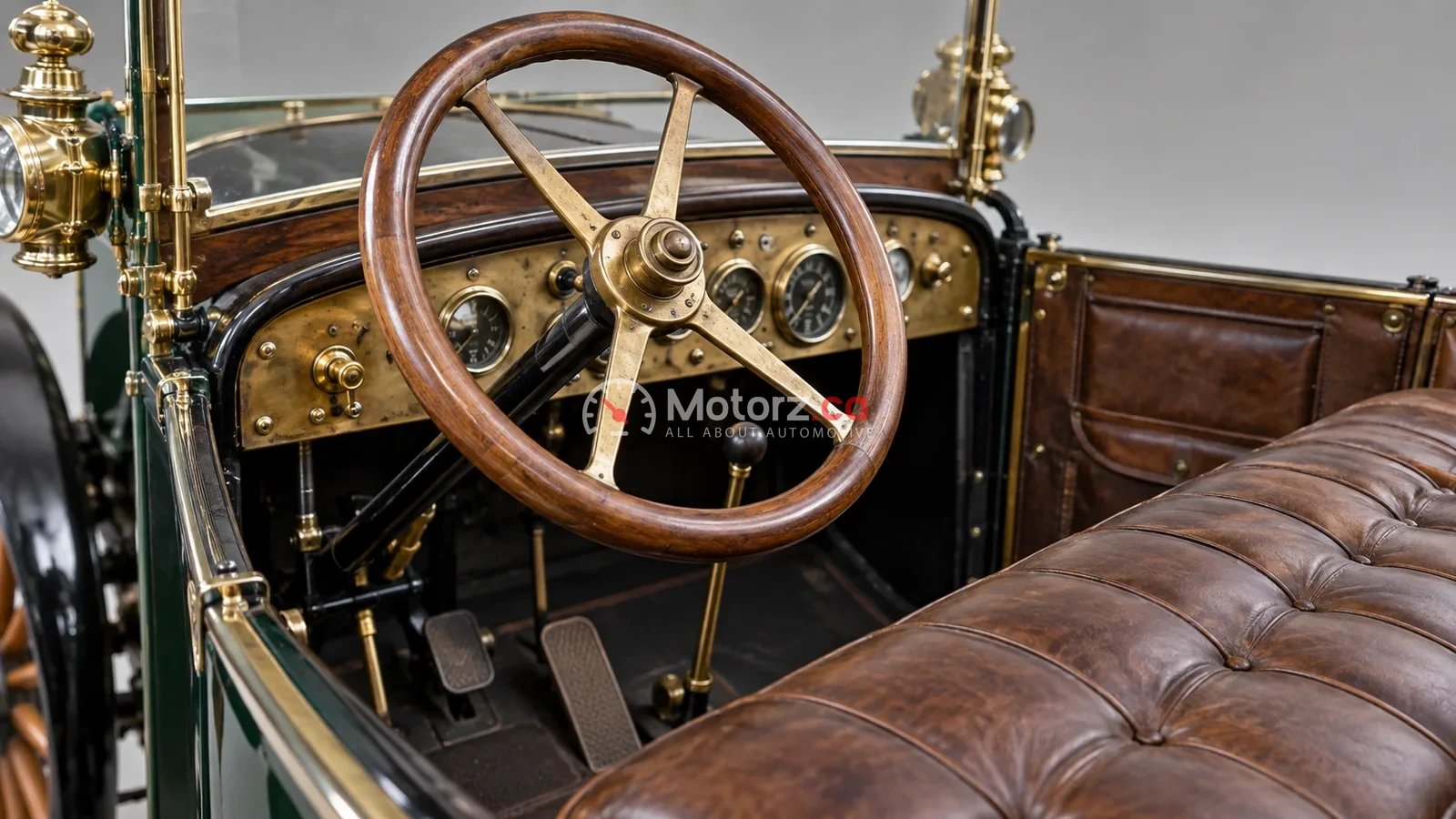
Hero: AI-assisted conceptual illustration, not a photograph of a specific vehicle, test, facility or historical event.
Chatham’s automotive history has a documented connection to carriage making and Gray-Dort automobile production. That history is more useful when specific records replace a sweeping claim that the city led every stage from horse-drawn transport to hybrid vehicles.
Key takeaway: Gray-Dort is the central local manufacturing story covered here. Present-day supplier activity belongs in a separate discussion; it is not proof of an uninterrupted local vehicle brand or a locally developed hybrid programme. The hero is a conceptual illustration, not a Gray-Dort archive photograph.
From carriage making to Gray-Dort
Chatham-Kent’s municipal Gray-Dort history traces the business to William Gray, a Scottish blacksmith who immigrated in 1853, and William Gray & Sons’ carriage operations. It describes the later connection with J. Dallas Dort of Flint, Michigan, in automobile production.
The same account reports approximately 26,000 Gray-Dort cars built from 1915 to 1925 and peak employment of about 800 in the early 1920s. These are historical figures attributed to the municipality, not present-day production or employment counts. The dates help define the period without attributing undocumented inventions or milestones to the company.
What that transition helps explain
A useful way to read the carriage-to-car story is through changing products, business partnerships and the people making them. “Automotive history” can include assembly, components, sales and preservation; those activities should not be collapsed into a single claim that every business built complete cars.
For anyone researching a family connection or an old photograph, record the date, business name and location separately. A building pictured after production ended may still be associated with the company, but that does not establish what was being manufactured when the photograph was taken. This is a research method, not a claim about an unidentified Chatham site.
Museum objects are evidence, not a complete history
The municipal account identifies a 1919 Gray-Dort touring car in the Chatham-Kent Museum collection and notes that it is in storage. Do not assume it is currently on public display. Contact the museum before planning a visit around a particular vehicle.
A surviving car can show materials, controls and design details, but its restoration history matters. Ask whether a component is original, reproduced or replaced. A modern conceptual image—including this article’s hero—cannot answer those questions. For a broader discussion of changing an older vehicle, our EV restomod explainer separates preservation choices from new engineering.
Keep current industry context separate
Chatham-Kent’s economic-development automotive profile describes a regional supplier ecosystem. It is a starting point for researching businesses, not a dated census of all operating facilities in 2026. An employer list alone cannot establish a site’s current headcount, output or expansion plans.
Likewise, a regional industry story is not interchangeable with a particular factory’s history. Our Burlington and Halton industry profile uses that distinction in another Ontario community. Keeping municipal boundaries and reporting dates visible makes local comparisons more meaningful.
How to follow the evidence
For a local-history project, start with the municipal account, then ask the museum or archive for records relevant to the exact question. A useful evidence note contains the object or document title, its date, its custodian and what it actually establishes. Avoid using a promotional phrase as evidence of an invention, first-ever achievement or employment total.
For today’s vehicle market rather than historical production, use the car-buying hub. For Chatham’s past, the stronger conclusion is narrower: Gray-Dort provides a verifiable local automobile-manufacturing chapter, while later supplier activity deserves its own dated sources. Motorz has not conducted an archive interview or inspected the museum vehicle for this article.