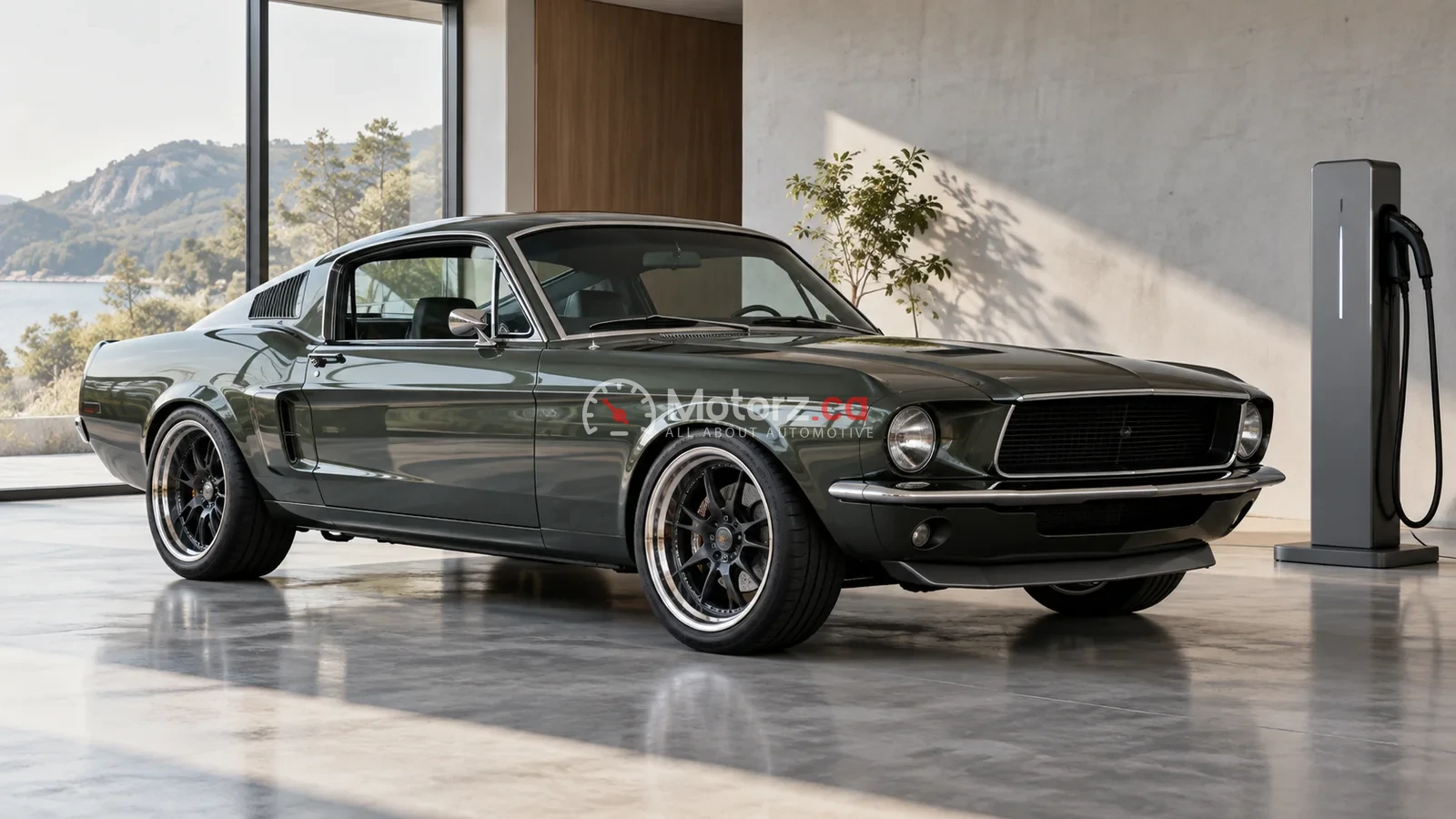
Hero: AI-assisted conceptual illustration, not a photograph of a specific vehicle, test, facility or historical event.
An EV restomod combines an older vehicle with an electric powertrain as part of a modified build. It is not simply a promise of classic styling with all the advantages of a factory EV. The condition of the original vehicle, the engineering work, documentation and intended registration all matter.
Key takeaway: treat a conversion as a vehicle-specific professional project. This article explains the questions, not how to install high-voltage equipment. Motorz has not built, inspected or road-tested the projects discussed, and the hero does not document a real conversion.
A documented North American example
Ford’s 2021 F-100 Eluminator announcement described an electric demonstration based on a 1978 F-100. It showed one way a heritage body and electric propulsion could be combined. The announcement is historical evidence, not a current availability or pricing source for conversion parts.
Ford also identified the vehicle as a concept and included limitations concerning modified vehicles and public-road use. A demonstration build does not establish that a similar private project is approved in Canada. Nor does one prominent example provide a measured market size for EV restomods.
Different projects have different goals
A display vehicle, an occasional leisure car and a vehicle intended for routine travel need different briefs. Start by writing down the intended use rather than choosing a motor on the basis of a headline power figure. Ask the professional builder what can be documented and what remains an estimate.
For comparison, our electric-vehicle hub covers factory-vehicle ownership topics. Factory range ratings and warranty arrangements should not be transferred to a one-off conversion without evidence.
Packaging is a question for qualified specialists
At a high level, a build must account for the battery, motor, controls, charging equipment and the vehicle around them. Ask how the proposed work will be evaluated and documented, rather than assuming that unused space makes a suitable installation location.
This article does not specify battery mounting, wiring, protective devices, cooling design or changes to braking and steering systems. Those are not safe generic instructions. Ask the builder to identify the qualified people responsible for the project and the review appropriate to the vehicle and jurisdiction.
Preservation is not only about exterior appearance
Some owners value originality; others value a changed driving experience. Neither preference establishes that a particular conversion will raise resale value. Before altering a rare or historically significant vehicle, ask what will be removed, what can be retained and whether claims of reversibility are actually documented.
Our automotive-history explainer distinguishes surviving historical evidence from modern interpretation. Keeping original components is not the same as proving that a modified vehicle can be returned to its earlier condition without further work.
Registration and inspection need local answers
ICBC’s modified-vehicle guidance is one Canadian example: it identifies changes including powertrain or fuel type and describes a registration process involving documentation and inspection. This is British Columbia guidance, not a North America-wide approval rule.
Before committing to a build, contact the relevant provincial authority and qualified professionals about the exact proposal. Ask the insurer separately about the described vehicle; this article does not determine eligibility or coverage. Do not assume collector status, a donor vehicle’s registration or a US parts claim settles the Canadian result.
Questions for a project proposal
- What intended use is the design being built around?
- Which condition and compatibility questions remain unresolved?
- Who is responsible for engineering, documentation and inspection?
- Which estimates cover the complete project rather than a single component?
- What ongoing support and parts documentation will be supplied?
- Which originality or reversibility claims can be demonstrated?
Our repair-timeline guide explains why stages and dependencies are more useful than unsupported completion promises. For a restomod, avoid guarantees of maintenance-free ownership, automatic environmental benefit or future value. A documented brief and qualified assessment should come before a commitment.