

There is a unique sense of pride that comes from popping the hood and fixing your own Car Repairs. With a few hand tools and a high-quality video tutorial, the average car owner can save hundreds of units on simple maintenance like changing a cabin air filter or swapping out windshield wipers. However, there is a fine line between being a savvy “DIYer” and accidentally turning your driveway into a hazardous waste site or a mechanical graveyard.
In this edition of Your Corner Wrench, we are looking at the dark side of home repairs. While modern cars are more accessible in some ways, they are also more complex, pressurized, and electrically volatile than ever before. If you value your safety, your warranty, and your car’s resale value, there are certain jobs you should never attempt in your garage.
Here is our list of the most dangerous and difficult DIY car repairs that are better left to a certified technician.
Anything Car Repairs High-Voltage Hybrid or EV Systems
In 2026, electric vehicles (EVs) and hybrids are everywhere. While they have fewer moving parts than a gasoline engine, the parts they do have are incredibly powerful.
The Danger of Lethal Voltage
Most modern EVs operate on systems ranging from 400 to 800 volts. To put that in perspective, a standard wall outlet is usually 110 to 120 volts. A mistake with a high-voltage cable isn’t just a “spark”—it can be instantly fatal.
Specialized Tools are Required
Professional technicians use “Class 0” insulated rubber gloves and specialized fiberglass “rescue hooks” when working on these systems. Unless you have been specifically trained in high-voltage safety and have the proper insulated tools, do not touch any orange-colored cables under your hood.
Replacing Coil Springs and Strut Assemblies
If your car feels bouncy or is sagging on one side, you likely have a suspension issue. While replacing a “quick-strut” (a pre-assembled unit) is manageable for some, attempting to replace just the coil spring is a different story.
The “Loaded Gun” Effect
A car’s coil spring is held under thousands of pounds of pressure. To remove it, you must use a spring compressor. If that tool slips or the cheap metal of a rented compressor snaps, the spring will release its energy instantly. People have lost fingers, limbs, and even their lives to a runaway coil spring.
Alignment Requirements
Even if you successfully swap the parts, your car will immediately need a professional laser alignment. Driving on new suspension components without an alignment will ruin your tires within a few hundred miles.
Airbag and Supplemental Restraint System (SRS) Repairs
Airbags are literal explosive devices. They use a chemical propellant to inflate a nylon bag in milliseconds.
Accidental Deployment
If you are poking around your steering wheel or dashboard with a screwdriver or a multimeter and accidentally complete a circuit, the airbag can fire directly into your face. This can cause severe burns, broken bones, or permanent hearing loss.
The Complexity of Calibration
Modern SRS systems use “occupant classification sensors” in the seats to determine the weight of the person sitting there. If you replace an airbag component, the system often requires a proprietary software “relearn” or calibration that a standard home scanner cannot perform.
Automatic Transmission Overhauls
If your transmission is slipping or grinding, the temptation to “pull it apart and see what’s wrong” is strong. Resist it.
Thousands of Tiny Parts
An automatic transmission is a hydraulic maze of check-balls, tiny springs, clutch packs, and planetary gears. If you lose one 2mm steel ball or put a seal in backward, the entire unit will fail.
Cleanliness is Critical
A single grain of sand or a piece of lint can clog a valve body and ruin a transmission. Professional “rebuild rooms” are kept as clean as surgical suites. Your dusty garage floor is the enemy of a healthy gearbox.
Brake Line Replacement and ABS Service
You might feel comfortable changing brake pads, but the hydraulic system itself is a different beast.
The Risks of “Spongy” Brakes
If you replace a hard brake line and fail to “bleed” the air out of the system perfectly, your brake pedal will go straight to the floor when you need it most.
Anti-Lock Brake System (ABS) Complications
Many modern cars require a specialized “bi-directional” scan tool to cycle the ABS pump during the bleeding process. Without this tool, air remains trapped in the ABS module, meaning your emergency braking system won’t function correctly in a slide.
Timing Belt Replacements on “Interference” Engines
A timing belt is the “heartbeat” of your engine, synchronizing the pistons and the valves.
Zero Margin for Error
If you are off by just one “tooth” on the gear during installation, the engine might start, but the pistons will eventually smash into the valves. This results in a “totaled” engine that costs thousands of units to replace.
The Complexity of the Job
Replacing a timing belt often involves removing motor mounts, cooling fans, and several other accessories. It is a 6 to 10-hour job for a professional; for a DIYer, it can easily turn into a week-long nightmare where you end up with “extra bolts” you can’t identify.
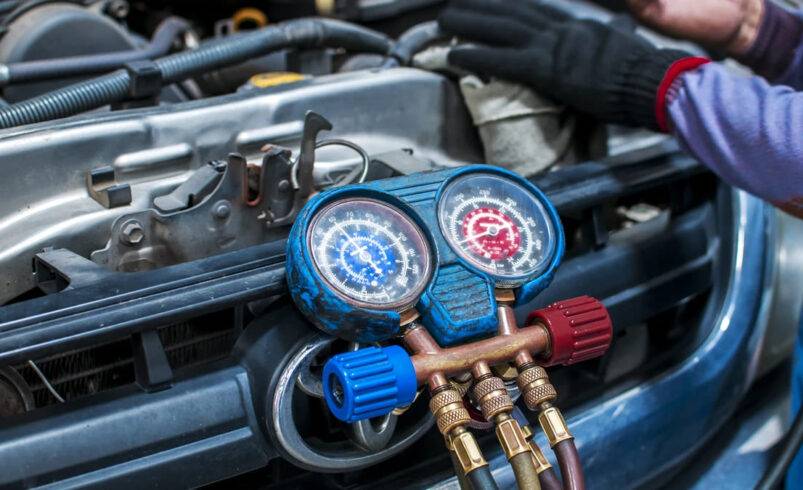
Air Conditioning (AC) Refrigerant Repairs
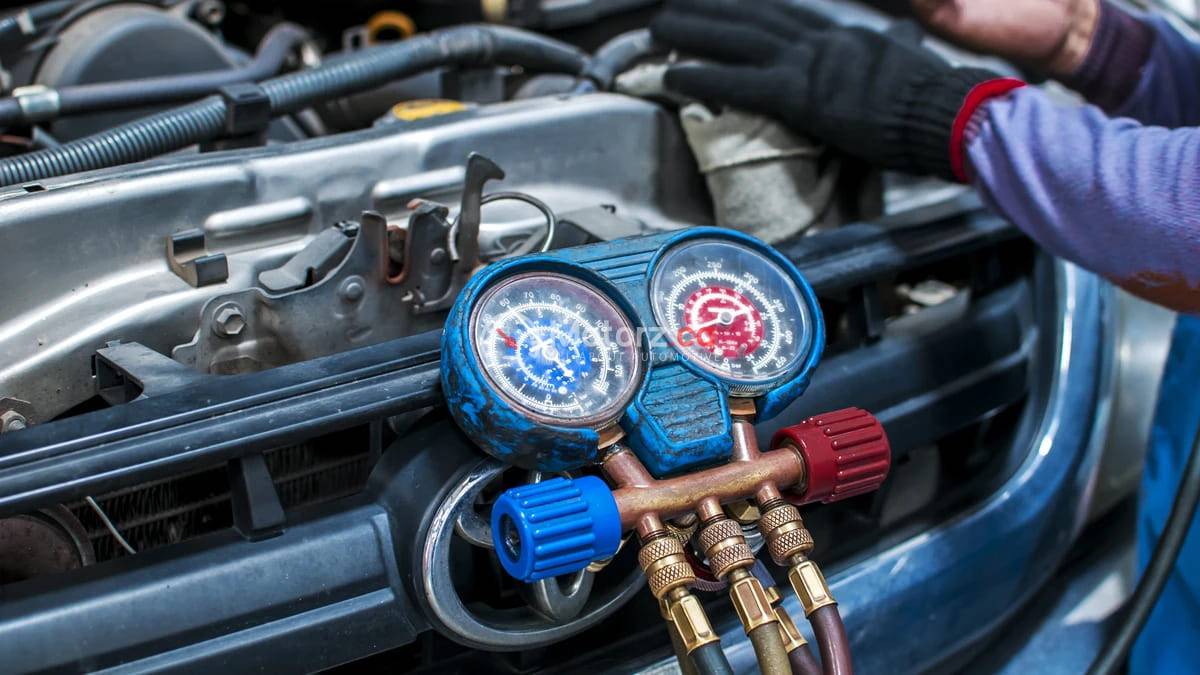
If your AC is blowing warm air, don’t just buy a “recharge kit” from the local parts store.
It is Illegal to Vent Refrigerant
In most regions, it is a violation of environmental laws to allow AC refrigerant (like R134a or the newer 1234yf) to escape into the atmosphere. Professionals use “recovery machines” to vacuum the gas out safely.
The Problem with “Stop-Leak”
Most DIY cans contain a “stop-leak” chemical that swells rubber seals. While this might fix a tiny leak for a week, it eventually gums up the expensive AC compressor and the expansion valve. What could have been a 200 unit seal repair becomes a 1,500 unit total system replacement.
When SHOULD You Call the Professional?
Knowing your limits is the hallmark of a great mechanic. You should put the wrench down and call your local shop if:
The repair involves a Safety System (Brakes, Steering, Airbags).
The job requires a Specialized Computer or proprietary software.
You are working with Highly Pressurized systems (AC, Fuel Rails, Springs).
Failure of the repair results in a Destroyed Engine (Timing Belts).