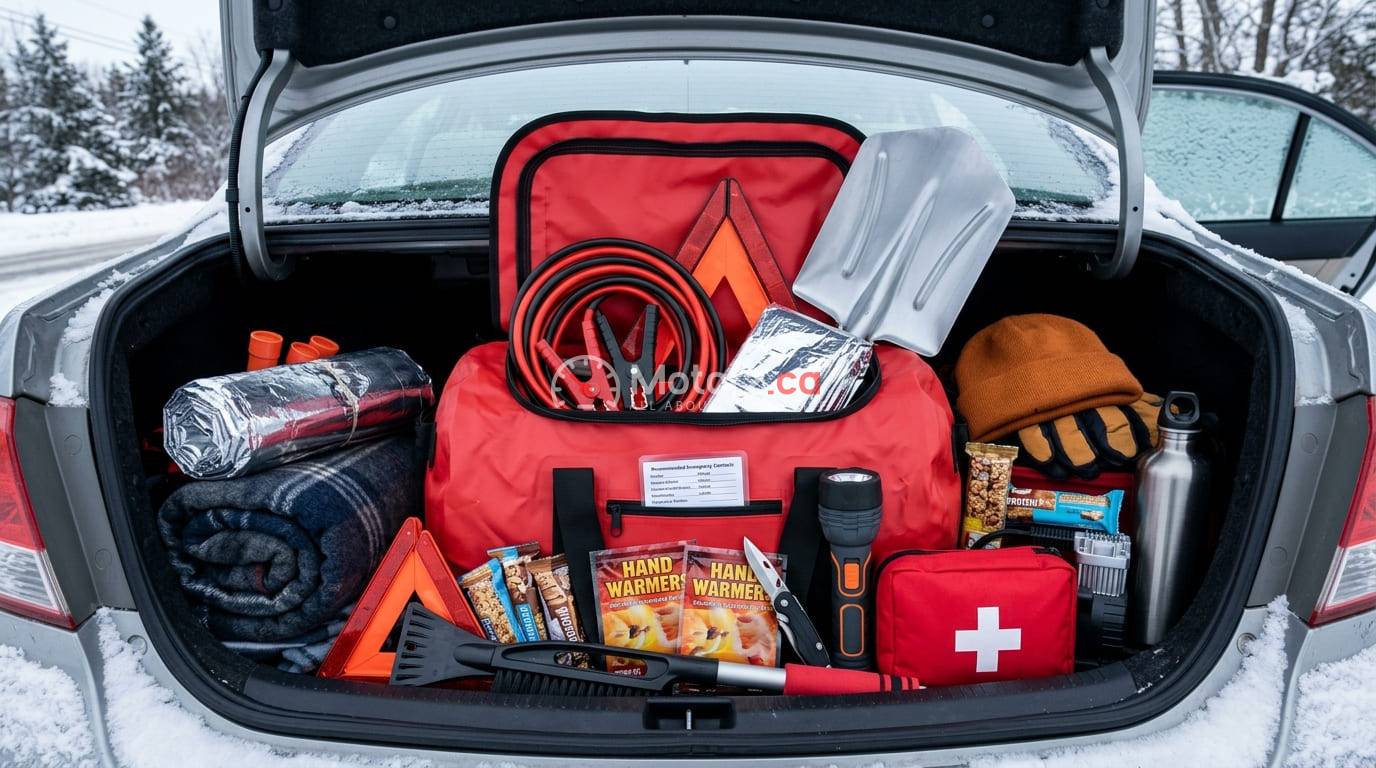
Ontario Car Emergency Kit are legendary for their beautiful but volatile nature. In a matter of minutes, a clear afternoon drive down the Queen Elizabeth Way (QEW) or Highway 401 can transform into a harrowing experience dominated by blinding lake-effect snowstorms, black ice, and plummeting temperatures.
If your vehicle slides into a ditch on a rural regional road or breaks down during a major winter storm, help may not arrive immediately. In severe weather, local emergency responders and roadside assistance fleets experience extreme backlogs, leaving stranded motorists to wait for hours.
When the ambient temperature drops well below freezing, an isolated vehicle quickly turns into a dangerous, freezing environment. Having a meticulously assembled winter car emergency kit in your trunk is not just about convenience—it is a critical safety strategy that can save your life.
This comprehensive guide covers the exact items you must pack to stay warm, remain visible, maintain communications, and successfully regain traction on freezing Ontario roadways.
Core Survival Gear: Ontario Car Emergency Kit
The single greatest threat to a stranded motorist in Ontario is exposure to extreme cold. When your engine stalls or you must shut it down to conserve fuel, the interior cabin temperature can drop to match the freezing external air within fifteen to thirty minutes. Your primary line of defense is a collection of high-quality thermal insulation supplies.
Heavy-Duty Blankets and Thermal Layers
Do not rely on thin, decorative throw blankets. Your trunk Ontario Car Emergency Kit should contain heavy wool blankets or dense fleece alternatives for every frequent passenger in your vehicle. Wool is highly recommended because it retains its insulating properties even if it accidentally becomes damp from snow.
Additionally, pack space-saving emergency mylar blankets. These lightweight, foil-like sheets reflect up to ninety percent of your emitted body heat back toward you, providing a critical secondary layer of thermal protection when wrapped over your clothing.
Supplementary Winter Clothing
Keep a dedicated duffel bag in your trunk filled with extra winter clothing items that you do not normally wear during a quick drive. If you have to step outside to dig your tires out of a snowbank, your primary clothing will quickly get wet, putting you at risk for hypothermia once you step back inside the vehicle.
Chemical Hand and Foot Warmers
Pack a dozen air-activated chemical heat packs. These inexpensive packets provide localized, concentrated warmth for up to ten hours once exposed to the air. Slipping them into your gloves or boots can prevent frostbite in your extremities if you are forced to spend extended periods working on your vehicle or waiting for a tow truck in deep snow.
Tools for Visibility, Signaling, and Active Communication
During a heavy Ontario snowfall, visibility drops to near zero. If your car is stranded on the shoulder of a highway, passing drivers and snowplow operators cannot see you until they are dangerously close. You must have the tools required to broadcast your position and call for help.
High-Visibility Signaling Equipment
To prevent secondary collisions, you must establish a clear warning perimeter around your stranded vehicle.
LED Road Flares or Warning Triangles: Traditional chemical strike-anywhere flares work well, but modern electronic LED emergency beacons are safer, reusable, and flash intensely for dozens of hours. Place them at intervals behind your vehicle to give approaching traffic ample warning.
Highly Visible Clothing: Keep a fluorescent safety vest with reflective strips at the top of your emergency kit. Put it on before stepping out of your vehicle onto a live roadway.
Bright Fabric or Scarf: Tying a brightly colored cloth or scarf to your driver’s side door handle or radio antenna is a universal distress signal that alerts patrolling Ontario Provincial Police (OPP) officers that your vehicle requires urgent assistance.
Reliable Lighting Sources
Never rely on your smartphone’s built-in flashlight widget; it drains your phone’s battery far too quickly and lacks the beam distance required for emergency operations.
Instead, invest in a dedicated, high-lumen LED flashlight or an adjustable headlamp. A headlamp is particularly valuable because it keeps both of your hands completely free to hold a shovel or attach jumper cables.
Battery Storage Secret: Extreme cold temperatures rapidly drain the electrical capacity of standard alkaline batteries. Store your emergency flashlights with lithium batteries installed, as lithium chemistry performs exceptionally well in freezing conditions. As an alternative, pack a reliable wind-up or mechanical crank flashlight that generates light without relying on chemical cells.
Power Management and Communication Backups
Your mobile phone is your lifeline to contact emergency services or roadside dispatch. Keep a heavy-duty portable power bank inside your glove compartment.
To maximize your phone’s battery life during an emergency, keep the device tucked inside an interior jacket pocket close to your chest body heat. If your car battery is dead, a cold phone left in a cup holder can drop from a fifty percent charge to dead in a matter of minutes.
Traction, Digging, and Vehicle Recovery Tools
Getting physically stuck in a snowdrift or losing traction on a patch of sheet ice is the most common winter driving mishap in Ontario. Having the correct mechanical tools in your trunk allows you to perform basic self-recovery without waiting hours for a professional winch service.
Compact Excavation Shovels
Carry a durable, metal or high-impact composite snow shovel in your trunk. Many auto supply stores sell collapsible or folding emergency utility shovels that occupy minimal space. Avoid cheap plastic versions, as they easily snap when striking dense, packed highway snowbanks or chunks of heavy frozen road slush.
Traction Enhancements and Abrasives
If your vehicle’s winter tires are spinning uselessly in a icy rut, you need to create immediate friction between the rubber tread and the frozen surface.
Avoid carrying heavy bags of traditional rock salt in your trunk for traction purposes. Road salt liquefies inside a warm trunk over time, creating a corrosive brine that can rust out your vehicle’s metal spare tire well.
Heavy-Duty Booster Cables
Cold weather forces your engine’s oil to thicken, requiring your battery to deliver substantially more electrical cranking amps to turn over the engine block. At the same time, freezing temperatures reduce your battery’s available power capacity by up to fifty percent.
Pack a high-quality set of booster cables that are at least three to four meters in length. Ensure the cables use thick, heavy-gauge copper wiring (four-gauge or two-gauge is ideal). Cheap, thin ten-gauge cables cannot transfer enough electrical current to jump-start a completely dead SUV or pickup truck battery on a freezing morning.
Sustenance and Nutrition: Hydration and Caloric Intake
Waiting out a severe winter storm on an unplowed highway requires nutritional energy. When your body is subjected to cold stress, it burns calories at an accelerated rate to maintain its core operational temperature.
Non-Perishable Food Choices
Pack high-calorie, shelf-stable snacks that do not require cooking or preparation. Excellent options include:
Nutrient-dense protein and granola bars
Assorted nuts and dried fruit mixes
Beef jerky or vacuum-sealed meat snacks
Whole-grain crackers
Avoid snack items that contain high levels of moisture or caramel; these items freeze into solid blocks that are virtually impossible to chew without risking dental damage.
Smart Hydration Management
Hydration is absolutely vital, but storing water in a freezing vehicle presents a distinct physical challenge. Water expands as it freezes, which can shatter standard glass bottles or thin, rigid plastic containers, leaving you with a trunk full of ice and broken shards.
To prevent freezing entirely, consider bringing a freshly filled, insulated thermal flask of hot water with you whenever you embark on a long winter road trip through rural Ontario.
First Aid, Sanitation, and Daily Essentials
A comprehensive winter emergency kit must address basic medical needs, hygiene challenges, and simple mechanical failures that can pop up while waiting for roadside assistance.
Medical and First Aid Supplies
Keep a standard, waterproof first aid kit within arms’ reach inside your cabin or at the top of your trunk. Ensure your kit is stocked with essential items:
Assorted sterile adhesive bandages and gauze pads
Antiseptic wipes and alcohol prep swabs
Burn care ointments and medical tape
Essential personal prescription medications (a three-day emergency supply)
A seatbelt cutter and window breaker tool kept in the driver’s door pocket
Practical Clean-Up Items
Do not forget to pack a roll of heavy-duty paper towels or a package of wet wipes. If you have to check your engine oil, clear snow out of your wheel wells, or top up your vehicle’s fluids, you will need a quick way to clean your hands before returning to hold your steering wheel. Pack a handful of durable, small plastic garbage bags to manage your interior waste during an extended roadside stay.
Seasonal Fluid Top-Ups and Winter Maintenance Supplies
Your vehicle consumes maintenance fluids rapidly during winter operations. Running out of critical operational fluids mid-trip can reduce your visibility and leave you completely stranded.
Extra Winter Windshield Washer Fluid
Ontario highways are frequently coated with a wet mixture of liquid de-icer, mud, and road salt. When passing semi-trucks spray this dirty film onto your windshield, your vision is instantly obscured. You can easily empty a full windshield washer reservoir during a single long commute.
Always carry a full four-liter jug of premium winter-grade windshield washer fluid in your trunk. Verify that the label explicitly states it is rated to function down to temperatures of minus forty degrees Celsius. Summer formulas will freeze instantly upon hitting your windshield, coating your glass in an opaque layer of dangerous ice.
Additional Mechanical Fluids
Gas-Line Antifreeze: Keep two small bottles of gas-line antifreeze in your kit. This additive absorbs any condensation moisture floating inside your fuel tank, preventing the fuel lines from freezing solid during sudden temperature drops.
Lock De-Icer: Keep a small aerosol can of lock de-icer on your person or in your external coat pocket rather than inside the glove box. If your vehicle’s door locks freeze shut, storing the de-icer inside the cabin does you no good.
Crucial Winter Survival Guidelines If You Become Stranded
If you find yourself stuck or stranded in a severe winter storm, having the gear is only half the battle. You must know how to utilize your environment safely to avoid common cold-weather driving hazards.
Stay Inside Your Vehicle
Unless you can visually confirm a safe, heated building less than one hundred meters away, remain firmly inside your vehicle. A heavy winter storm can cause complete disorientation, and freezing winds will drain your energy rapidly if you attempt to walk along a highway shoulder. Your car provides structural shelter and makes you far easier for rescue teams to spot.
Guard Against Carbon Monoxide Poisoning
You can run your engine periodically to operate the cabin heater and stay warm, but you must do so safely. Before starting the car, step outside and verify that the rear exhaust tailpipe is completely clear of snowbanks or packed ice.
If the exhaust pipe is blocked, deadly, odorless carbon monoxide gas will seep directly into the passenger cabin. Once you verify the pipe is clear, run the engine for only ten to fifteen minutes every hour to conserve fuel, and keep a downwind window cracked open a microscopic amount to ensure fresh oxygen circulation.
Clear Your Exterior Lights and Grille
Periodically step outside your vehicle to brush accumulated snow away from your headlights, taillights, and emergency hazard lights. Additionally, clear snow away from your front radiator grille to prevent your engine from overheating while idling statically.
By taking an afternoon to source, assemble, and secure these vital emergency items in your trunk before the first winter frost arrives, you can transform a potentially dangerous highway breakdown into a manageable, safe roadside waiting experience.