Car for Ontario Summer are no strangers to extreme weather. We spend months preparing our vehicles for freezing temperatures, black ice, and road salt. However, when the calendar shifts and summer arrives, a different kind of environmental stressor takes over.
With southern and eastern Ontario increasingly experiencing intense, prolonged summer heatwaves, the thermal stress placed on your vehicle can be just as damaging as a mid-winter blizzard.
When ambient temperatures climb past 30 degrees Celsius—frequently pushed past 40 degrees Celsius by eastern Canada’s intense humidity—the environment under your car’s hood can quickly soar past 60 degrees Celsius. This extreme heat forces your engine, battery, cooling loop, and tires to work twice as hard. Without proper preventative care, a summer heatwave can lead to sudden component failures, leaving you stranded on the shoulder of the busy Highway 401 or the Queen Elizabeth Way (QEW).
Preparing your car for extreme Ontario heat requires a proactive approach. This comprehensive guide covers everything you need to know to protect your vehicle’s mechanical systems, preserve its interior and exterior surfaces, and keep your cabin safely pressurized with ice-cold air.
The Car for Ontario Summer System Check
Your engine’s cooling loop is the primary line of defense against catastrophic thermal failure. When external temperatures skyrocket, the radiator and coolant must dissipate massive amounts of heat to prevent the engine block from warping or blowing a head gasket.
Inspecting Fluid Levels and Quality
To begin, verify that your coolant reservoir is filled to the appropriate level.
Safety Warning: Never open a radiator cap or coolant reservoir while the engine is hot. The system is under high pressure, and opening it prematurely can cause boiling liquid to spray out, resulting in severe burns. Wait at least 60 minutes after driving before inspecting the system.
Locate the translucent plastic coolant tank under your hood. Check that the fluid sits comfortably between the “Min” and “Max” markings stamped on the side of the container.
Beyond volume, you must analyze the condition of the fluid:
Healthy Coolant: Should look bright, translucent, and clean (typically vibrant pink, green, orange, or blue depending on your vehicle’s manufacturer).
Degraded Coolant: Looks murky, brown, or contains floating sediment. This indicates that the protective anti-corrosion inhibitors have broken down, requiring a professional flush and refill.
Assessing the Radiator, Hoses, and Belts
Extreme thermal cycles cause rubber components to expand, contract, dry out, and split. Inspect the upper and lower radiator hoses for signs of structural weakness. Squeeze the hoses when the engine is cool; they should feel firm but pliable. If a hose feels excessively soft, spongy, or brittle, or if you notice fine cracks along the bends, replace it immediately.
Additionally, examine the engine’s serpentine belt. This single belt drives the water pump, alternator, and air conditioning compressor. Look for rib cracking, fraying at the edges, or chunks of rubber missing from the tracks. A snapped serpentine belt during a heatwave instantly shuts down your cooling system, causing your engine to overheat within minutes.
Testing Your Car Battery Against Thermal Stress
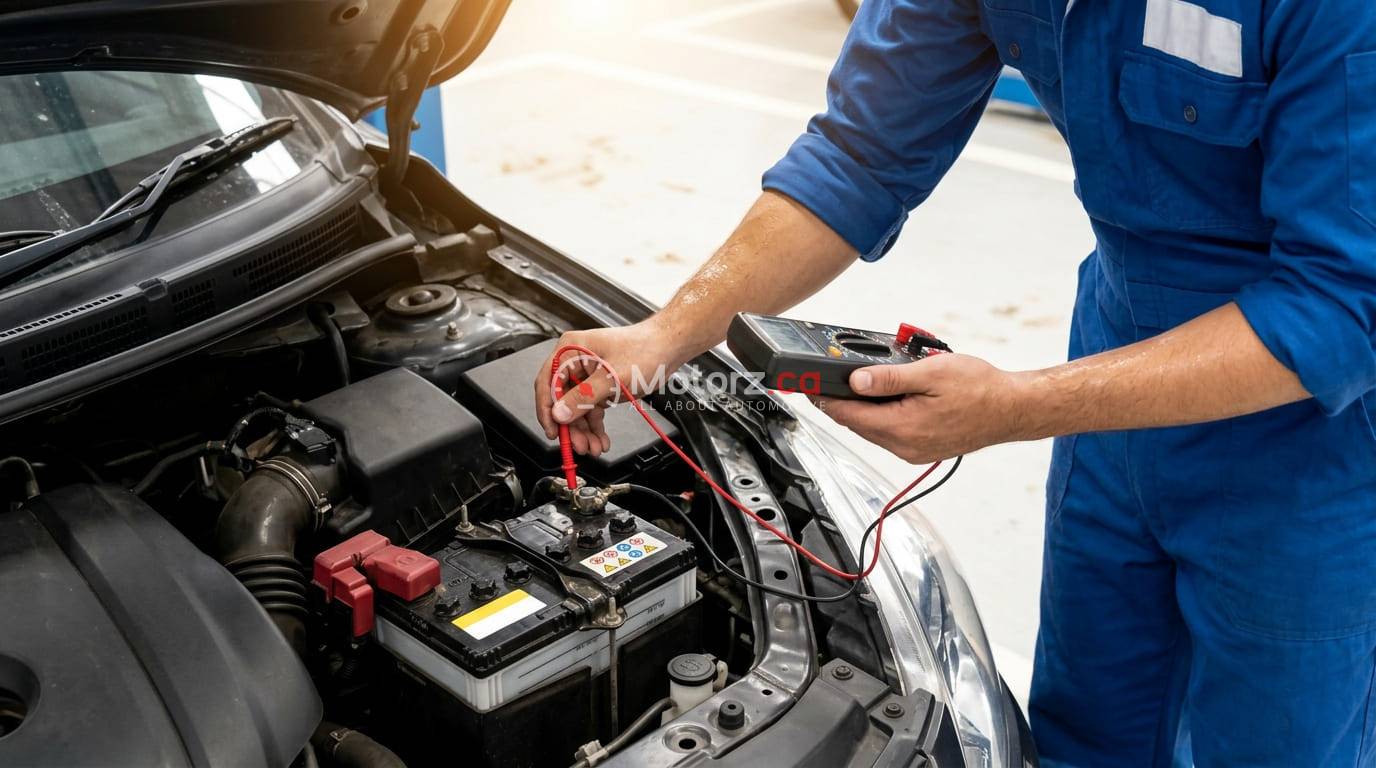
While many drivers assume winter is the roughest season for automotive batteries, automotive technicians know that extreme summer heat is the real silent killer. High ambient temperatures accelerate internal chemical reactions inside a lead-acid battery, causing the internal liquid electrolyte to evaporate and speed up terminal corrosion.
Checking for Structural Damage and Corrosion
Pop your hood and examine the physical structure of your battery casing. If the plastic sides look swollen, bloated, or warped, the internal plates have expanded due to extreme heat, and the battery requires immediate replacement.
Next, look at the positive and negative terminals. If you notice a chalky white, blue, or green substance blooming around the metal posts, you are looking at lead sulfate corrosion. This crusty buildup creates electrical resistance, forcing your alternator to overwork and causing slow engine cranks.
Cleaning and Testing the Battery
You can easily clean terminal corrosion using a simple, cost-effective method:
Mix one tablespoon of baking soda into a cup of warm water.
Disconnect the battery terminals (always remove the negative cable first).
Scrub the metal posts and cable clamps using an old toothbrush dipped in the mixture.
Wipe the area dry with a clean cloth, reattach the cables tightly, and apply a thin layer of petroleum jelly or terminal spray to prevent future oxide formation.
If your battery is older than three years, visit an auto parts store or service center for a digital load test. A battery that functions adequately at 20 degrees Celsius can fail completely when subjected to consecutive days of 35-degree weather coupled with the heavy electrical demand of your vehicle’s cooling fans and climate control.
Protecting Your Tires from High-Asphalt Blowouts
Your tires are the only point of contact between your vehicle and Ontario’s baking road surfaces. During a severe heatwave, dark asphalt acts as a thermal heat sink, frequently registering surface temperatures much higher than the ambient air. This intense heat alters tire pressure and weakens the structural integrity of old rubber.
The Physics of Tire Pressure
As air heats up, it expands. As a general rule of thumb, tire pressure increases by approximately 1 to 2 pounds per square inch (PSI) for every 6 degrees Celsius increase in ambient temperature.
If you check your tire pressure in the middle of a hot afternoon after driving on the highway, you will receive an artificially high reading. To get an accurate measurement, always test your tire pressure first thing in the morning when the vehicle has been sitting idle for at least three hours.
Finding the Correct Specifications
Never read the maximum inflation pressure printed on the tire sidewall itself; this number represents the maximum pressure the tire can safely hold, not your vehicle’s optimal operating pressure. Instead, open your driver’s side door and locate the white-and-yellow vehicle certification label stuck to the door jamb.
Inflate your tires exactly to the front and rear specs listed on that placard. Do not forget to check the pressure inside your spare tire as well—extreme trunk heat can cause spare tires to lose pressure over time, leaving you helpless during a roadside emergency.
Air Conditioning Diagnostics and Cabin Comfort
A functioning air conditioning system is not just a luxury during an Ontario heatwave; it is vital safety equipment that prevents driver fatigue, dehydration, and heat stroke. If your vehicle’s cabin feels like a sauna despite turning the fan speed to maximum, your climate control loop needs attention.
Identifying Air Conditioning Issues
An air conditioning system that blows lukewarm air typically points to one of three common issues:
Low Refrigerant: The system has developed a microscopic leak over time, allowing the gaseous refrigerant to escape.
Restricted Airflow: The condenser, located directly behind your front grille, is clogged with leaves, dead highway bugs, or road debris, blocking proper heat exchange.
Mechanical Failure: The air conditioning compressor clutch is failing to engage, or an electrical blend door actuator inside your dashboard is stuck in the hot position.
If your system requires a refrigerant top-up, avoid cheap DIY pressurized cans found at local retail stores. Modern automotive air conditioning systems require precise levels of refrigerant measured down to the nearest gram. Overfilling a system can destroy the compressor, turning a minor maintenance task into an expensive mechanical repair. Have a licensed mechanic perform a professional evacuation, leak test, and recharge.
Replacing the Cabin Air Filter
If your system blows cold air but the actual volume of air exiting the dashboard vents feels weak and restricted, your cabin air filter is likely clogged.
Located behind the glove compartment in most modern vehicles, this paper filter screens out pollen, dust, and debris. Over spring, it can become packed with cottonwood seeds and environmental soot. Replacing it takes less than ten minutes and instantly restores full volumetric airflow to your climate control system.
Lubricants and Essential Fluids Management
Engine oil plays a dual role in your powertrain: it lubricates moving metal components to eliminate friction, and it carries heat away from the internal combustion chamber down to the oil pan for dissipation. Extreme ambient temperatures test the limits of your oil’s viscosity.
Understanding Oil Viscosity in High Heat
When engine oil gets hot, it thins out. If your oil is old, contaminated, or diluted by fuel, extreme summer temperatures can cause its viscosity to drop below safe operating parameters. This thinning reduces the protective oil film between vital moving components like crankshaft bearings and camshaft lobes, accelerating engine wear.
If you are approaching your next service interval, change your oil before a major heatwave arrives. Consider switching to a high-quality full synthetic oil if your manufacturer allows it. Synthetic oils offer superior thermal stability compared to conventional mineral oils, resisting molecular breakdown and sludge formation at elevated operating temperatures.
Secondary Fluids to Monitor
Do not overlook the auxiliary hydraulic fluids that keep your vehicle safely under control:
Brake Fluid: Brake fluid is hygroscopic, meaning it naturally absorbs moisture from the atmosphere over time. During heavy braking in hot weather, this absorbed moisture can boil inside the calipers, creating pockets of compressible gas. This results in a soft, spongy brake pedal and reduced stopping distances.
Windshield Washer Fluid: Swap out your winter de-icer fluid for a dedicated summer formula designed to dissolve bug splatters, tree sap, and road tar without streaking under intense sunlight.
Preserving Interiors and Paintwork from UV Radiation
The sun’s ultraviolet (UV) rays can cause severe cosmetic and structural damage to your vehicle over time. Prolonged exposure to intense sunlight degrades clear coats, fades interior plastics, and causes leather seating surfaces to crack and split.
Exterior Paint Maintenance
Think of automotive wax as sunscreen for your car’s body panels. A fresh coat of high-quality synthetic polymer sealant or carnauba wax provides a sacrificial protective layer that deflects harmful UV radiation.
Before applying wax, wash your vehicle thoroughly out of direct sunlight. Working on a hot metal surface causes car soaps and waxes to dry instantly, creating unsightly streaks and spots that are incredibly difficult to buff away.
Interior Protection Strategies
The interior cabin of a car parked in direct sunlight during a 35-degree Ontario summer day can easily top 65 degrees Celsius due to the greenhouse effect. You can protect your dashboard and electronics using a few simple habits:
Use a Reflective Front Sunshade: A custom-fit, reflective foil sunshade placed inside your front windshield blocks direct solar radiation from cooking your steering wheel and upper dashboard panel.
Condition Soft Surfaces: Apply a high-quality UV-blocking conditioner to leather seats and vinyl trim panels to replenish natural oils and prevent heat-induced drying.
Park Strategically: Whenever possible, park in multi-level parking garages, under building shadows, or beneath mature trees. Be aware, however, that parking under trees exposes your paint to acidic bird droppings and sticky tree sap, both of which bake into warm clear coats and should be washed away quickly.
Creating a Summer Heat Roadside Emergency Kit
Even the most meticulously maintained vehicles can suffer an unexpected breakdown during severe weather conditions. If you find yourself waiting for a tow truck on the side of a shimmering, hot highway asphalt shoulder, having the right survival supplies on hand can save your day.
Update your vehicle’s winter emergency kit with these summer-specific essentials:
Hydration Supplies: Store at least four liters of fresh drinking water in your vehicle. High temperatures combined with stationary roadside breakdown conditions can cause rapid dehydration.
Thermal Protection: Pack a wide-brimmed hat, lightweight long-sleeve clothing, a pair of polarized sunglasses, and a fresh bottle of broad-spectrum sunscreen.
Backup Power: Keep a dedicated, fully charged portable USB power bank in your glove box to ensure your mobile phone stays functional while arranging emergency roadside towing services.
Basic Mechanical Tools: Include a reliable, manual tire pressure gauge, a portable twelve-volt air compressor, a set of heavy-duty battery jumper cables, and a clean microfiber cloth.
What to Do If Your Engine Starts Overheating
Despite your best efforts, you might spot your dashboard engine temperature needle creeping toward the solid red zone, or notice a flashing coolant warning light. Knowing how to react in this scenario can mean the difference between a simple coolant top-up and an expensive engine replacement bill.
Turn Off the Air Conditioning
The moment you see the temperature rise, turn off your air conditioning immediately. The air conditioning compressor puts a massive mechanical load on the engine, and its condenser radiates immense heat directly in front of your radiator. Turning it off instantly reduces engine strain.
Blast the Cabin Heater
It sounds counterintuitive during a summer heatwave, but turning your climate control settings to full heat and maximum fan speed acts as a secondary radiator. This draws blistering heat away from the engine block and blows it directly into the vehicle’s cabin. Roll down all your windows to let the hot air escape.
Safely Pull Over and Shut Down
If the temperature needle remains pinned in the red zone, pull over to a safe shoulder location immediately. Put the car in park, set the emergency brake, and turn off the engine.
Do not attempt to open the hood until the visible steam stops rising. Let the vehicle sit undisturbed for at least twenty to thirty minutes before investigating fluid levels or calling for a flatbed tow truck to take your car to a trusted mechanic.
By taking these preventative maintenance steps early in the season, you can protect your financial investment, ensure passenger comfort, and confidently navigate Ontario’s increasingly intense summer heatwaves.