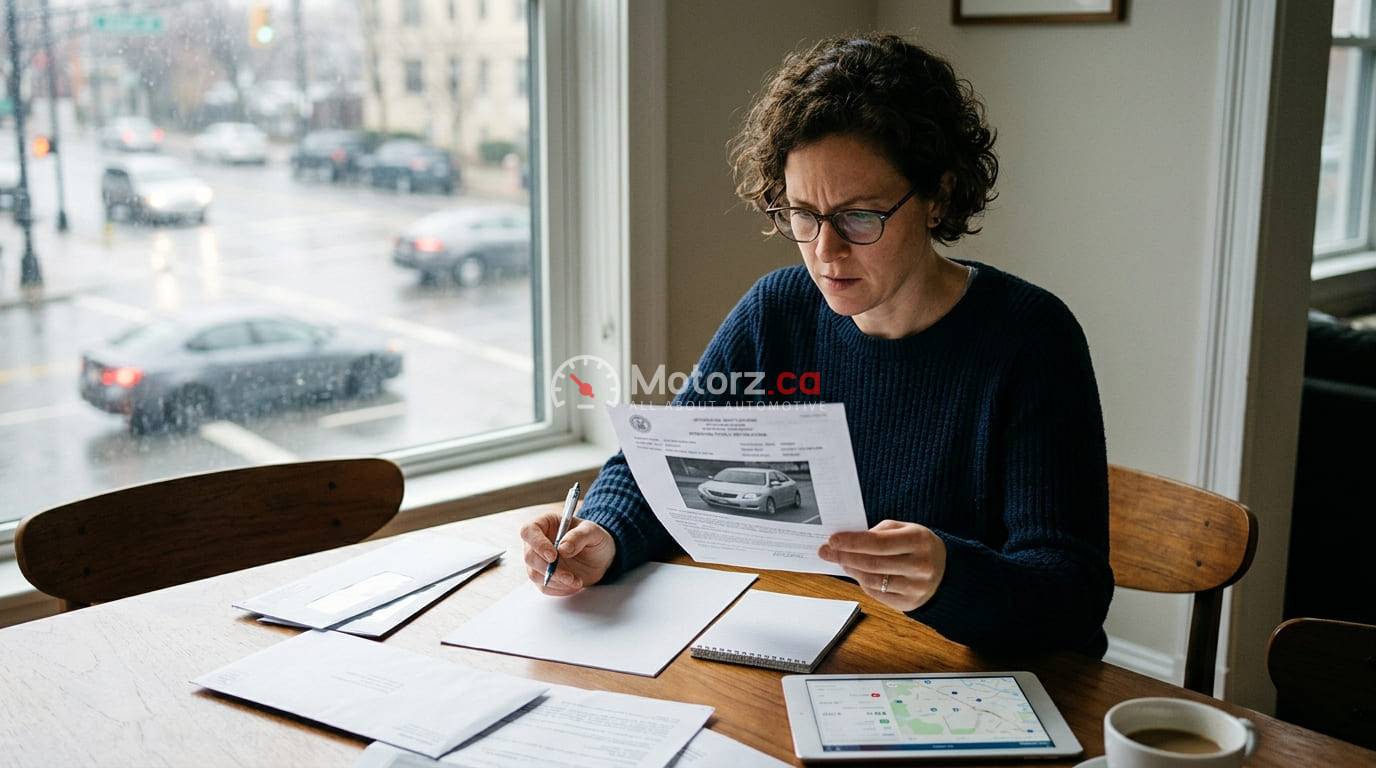
You open your Radar Speeding Ticket in Brampton, sorting through flyers and bills, only to find a stark white envelope from the City of Brampton. Inside is an Offence Notice complete with a high-resolution, black-and-white photograph of your vehicle’s rear licence plate. Below the image, the fine print details a specific time, a location along a designated community safety zone, and a calculated speed that allegedly exceeded the posted limit.
You have just been hit with an Automated Speed Enforcement (ASE) ticket, commonly known as a photo radar ticket.
The immediate reaction for most Brampton drivers is a mix of frustration and resignation. It feels impossible to argue against a machine. After all, the camera does not blink, it does not forget, and it possesses photographic evidence of your car at the exact millisecond of the alleged infraction.
However, receiving a photo radar ticket in Brampton does not mean you are automatically defenseless. Ontario’s legal structure provides clear, legitimate pathways for vehicle owners to challenge these system-generated notices.
Whether your goal is to have the charge dropped entirely, negotiate the financial penalty down, or uncover fatal technical flaws in the camera’s deployment data, this definitive guide walks you through the step-by-step framework of disputing a photo radar ticket at the Brampton Provincial Offences Court.
How Photo Radar Speeding Ticket in Brampton Police Speeding Tickets
Before building a defense strategy, you must understand that an ASE ticket operates on an entirely different legal plane than a traditional speeding ticket handed to you by a Peel Regional Police officer. Knowing these differences shapes your entire approach in court.
The Identity Factor: Owner vs. Driver
When a police officer pulls you over on Williams Parkway, they verify your identity via your physical driver’s licence. The ticket is tied directly to you as a person.
Conversely, an automated speed camera cannot see who is sitting behind the wheel. It merely reads the registration of the rear licence plate. Consequently, the photo radar ticket is issued strictly to the registered owner of the vehicle, regardless of who was actually pressing the gas pedal at that moment.
The Silver Lining: Demerit Points and Insurance Realities
Because the province cannot legally prove beyond a reasonable doubt who was operating the motor vehicle, photo radar tickets carry two major legal exemptions:
Zero Demerit Points: No demerit points are attached to an ASE conviction.
No Direct Insurance Surges: Because the infraction is registered against the vehicle plate rather than your personal driver’s licence profile, it does not appear on your public Ontario driving abstract. This means your regular auto insurance provider will not automatically raise your premiums upon payment of the ticket.
Critical Warning: While the ticket does not harm your personal driving history, ignoring it completely triggers alternative penalties. Failure to pay or formally dispute the notice within the mandatory window results in the Ontario Registrar of Motor Vehicles placing a structural lock on your file, actively denying the renewal of your vehicle licence plates until all outstanding balances and court costs are fully cleared.
Navigating Your Initial Choices: The Three Columns on Your Offence Notice
When you flip over your Brampton photo radar ticket, you are faced with a strict 15-day deadline to select one of three statutory legal options. Failing to act within this narrow window allows a Justice of the Peace to convict you in absentia, adding administrative late fees directly to your original fine.
Option 1: Plea of Guilty – Voluntary Payment
By selecting this route, you surrender your right to a defense, admit to the full scope of the infraction, and pay the exact amount listed via online portals or at the court office. Choose this only if you want immediate closure and are comfortable losing the funds.
Option 2: Early Resolution – Meet with a Prosecutor
This choice is heavily utilized by local drivers. It means you do not dispute that the vehicle was speeding, but you wish to request an informal meeting with a municipal prosecutor before scheduling a formal trial. At this meeting, you can present mitigating circumstances (such as extreme financial hardship) to negotiate a lower fine or secure an extended timeline to pay the balance.
Option 3: Trial Option – Notice of Intention to Appear
If your objective is to challenge the legal validity of the ticket, secure full disclosure of the camera’s internal diagnostic records, or attempt to have the ticket thrown out entirely, you must select Option 3. This choice informs the Brampton court administration that you are pleading not guilty and require a formal trial date.
The Structural Step-by-Step Trial Request Workflow
To successfully dispute the ticket without getting tripped up by administrative technicalities, you must navigate the local court process systematically.
Unlocking the Evidence: Crafting Defensible Arguments via Disclosure
You cannot win a photo radar dispute by simply walking into the courtroom at 5 Ray Lawson Blvd and claiming, “I don’t think my car was going that fast.” The court views the automated data stream as prima facie evidence—meaning it is accepted as completely accurate unless you provide concrete evidence to cast reasonable doubt on it.
Your defense strategy relies entirely on parsing the Disclosure Package to check for missing documentation or technical inconsistencies.
The Certificate of the Provincial Offences Officer
For an automated ticket to be legally valid in an Ontario court, a human Provincial Offences Officer must manually review the camera data, verify that the licence plate image matches the registration details, and sign a formal Certificate of Offence.
The Defense Check: Check the disclosure file to ensure this certificate was filled out correctly, signed, and dated within the tight timelines required by the Provincial Offences Act. Clerical errors regarding dates or locations can completely compromise the prosecution’s case.
Manufacturer Calibration and Testing Certificates
Ontario Regulation 398/19 dictates that automated speed enforcement systems must undergo rigorous, regular diagnostic testing by qualified technicians.
The Defense Check: Look closely at the date of the last formal accuracy calibration test on that specific camera unit. If the municipality failed to test and re-certify the camera within its legally mandated operational window, the accuracy of your recorded speed is no longer legally sound, providing strong grounds to request an immediate dismissal of the charge.
Signage and Community Safety Zone Declarations
Photo radar units in Ontario are only legally permitted to operate within designated School Zones and Community Safety Zones where speed boundaries drop below 80 km/h. Furthermore, strict municipal guidelines require prominent advisory signs to be visibly posted a set distance ahead of the camera zone.
The Defense Check: If you can prove via photographic evidence or city infrastructure logs that the mandatory warning signs were knocked down, obscured by overgrown tree branches, or improperly spaced on the day of the alleged violation, the camera configuration may be ruled non-compliant with provincial regulations.
Legitimate Defenses vs. Myths That Fail in Brampton Court
Because photo radar enforcement generates a lot of local discussion, several pervasive urban legends persist regarding how to easily beat these tickets. Relying on incorrect advice can lead to an immediate conviction.
Arguments That WILL NOT Work
“I wasn’t the person driving the car.” As discussed, the law does not care who was driving. Because the ticket targets the plate owner, proving your cousin or friend was behind the wheel does not absolve you of the financial liability.
“I was simply keeping up with the natural flow of traffic.” Speed limits in community safety zones are absolute thresholds. Matching the speed of surrounding vehicles is not a valid legal defense for exceeding the posted limit.
“The ticket took too long to arrive in my mailbox.” While traditional tickets are handed over instantly, Ontario law provides an extended administrative window (often up to 30 days or more depending on mail delivery rules) for automated notices to reach a vehicle’s registered owner. Unless the delay is extreme and violates your statutory rights, timing arguments rarely succeed.
Arguments That CAN Work
Stolen Vehicle or Plate Fraud: If your vehicle or physical licence plates were stolen at the time of the infraction, you are completely exempt from liability. You must present a formal, verified Peel Regional Police report alongside corresponding occurrence numbers to the court to have the ticket dismissed.
Incomplete or Illegible Photographic Evidence: If the photograph included in the disclosure package is blurry, heavily obstructed by falling snow, or dark enough that individual letters or numbers on the licence plate cannot be clearly identified, the prosecution cannot fulfill its fundamental requirement of identifying your vehicle.
Unreasonable Trial Delays: Under the Canadian Charter of Rights and Freedoms, you have a constitutional right to be tried within a reasonable timeframe. If the administrative backlog at the Brampton court pushes your actual trial date out further than 11 to 12 months from your initial filing date—with no delays caused by your own requests—you can file a formal constitutional application to have the ticket stayed due to unreasonable delay.
Financial Mechanics: Understanding Brampton’s Set Fines and Surcharges
If your defense strategy focuses on damage control and minimizing your financial obligation rather than fighting for a total dismissal, you need to understand how Ontario calculates automated speeding penalties. Photo radar fines are calculated systematically using a tiered structure based on how many kilometres per hour you traveled over the limit:
The Mandatory Ontario Victim Fine Surcharge
The amount printed on the front of your ticket is never just the base fine. The province automatically applies a mandatory Victim Fine Surcharge to every single provincial driving infraction. This surcharge scales progressively based on the size of the base fine, adding anywhere from 15 to 25% or more to your final out-of-pocket obligation.
For example, if the camera logs your car traveling 25 km/h over the limit in a school zone, the calculation looks like this:
Base Set Fine: 25 km/h multiplied by 7.50 = 187.50
Court Costs: Standard administrative fees = 5.00
Victim Fine Surcharge: Provincially mandated addition = 35.00
Total Payable Balance: 227.50
By choosing Option 2 (Early Resolution), you can speak directly with a prosecutor to show proof of financial difficulties. While they rarely lower the set fee per kilometre, they can extend your payment timeline by several months, giving your budget room to breathe.
The Evolution of Photo Radar in Brampton
Brampton’s automated speed enforcement landscape has undergone significant changes that directly impact how past and current tickets are handled.
Following provincial policy shifts, Brampton’s municipal Automated Speed Enforcement cameras officially stopped issuing new speed tickets on November 14, 2025. The physical cameras were turned off across all regional school and community safety zones as part of updated Ontario frameworks.
However, this change does not grant a retroactive pass for outstanding notices. The City of Brampton maintains a strict policy: any photo radar infraction captured and issued prior to the November 14, 2025 cutoff remains fully valid, active, and legally binding.
If you have an outstanding or unresolved ticket from that enforcement period, you are still legally required to choose an option—either paying the balance or proceeding through the Ray Lawson Provincial Offences Court dispute queue. Ignoring an older ticket will still result in the province blocking your vehicle licence plate renewals during your upcoming MTO validation cycle.
Approach Court Prepared
Disputing a Brampton photo radar ticket requires a calm, organized approach. While the lack of demerit points and insurance penalties reduces the immediate pressure on your driving record, the financial costs and plate renewal blocks make these tickets too important to ignore.
If you plan to challenge your ticket, make sure to file your trial request within the mandatory 15-day window, request full disclosure from the prosecutor’s office, and carefully check the documentation for technical or administrative errors. Taking the time to understand the court process ensures you can navigate your dispute effectively and protect your wallet.