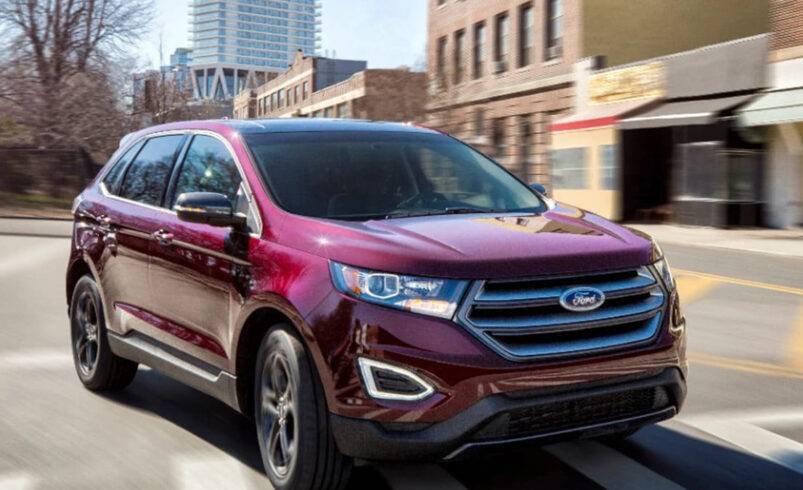

If you own a newer Ford SUV Brake Recalls, you might want to pay close attention the next time you press down on the brake pedal. In a series of major safety announcements spanning from late 2025 into early 2026, Ford Motor Company has issued several high-priority recalls affecting millions of vehicles. The core issue? Potential brake failure that could significantly increase your stopping distance or leave you without trailer brakes during a critical moment.
Safety is the one area where “good enough” is never enough. Whether you’re commuting in a 2025 Ford Explorer or towing a camper with an Expedition, understanding the specifics of these recalls—and how to address them—is vital.
In this comprehensive guide, we will break down the three major brake-related recalls currently affecting Ford’s SUV lineup, the warning signs your vehicle might show, and the steps you need to take to get your car repaired for free.
The 4.3 Million Vehicle Recall: Software and Trailer Brakes
The most expansive recall of 2026 involves a staggering 4.3 million trucks and SUVs. Issued in February 2026, this recall centers on a software vulnerability within the Integrated Trailer Module (ITRM).
Affected Models (2021–2026)
This recall covers a broad range of Ford’s most popular vehicles, including:
Ford Expedition (2022–2026)
Ford Bronco and Ranger (2024–2026)
Ford F-150 and F-250 Super Duty (2021–2026)
The Risk: Losing Ford SUV Brake Recalls
The problem stems from a “race condition” in the software that occurs when the vehicle powers up. If this glitch happens, the trailer module fails to communicate with the vehicle. The result? Your trailer may lose its brake function and exterior signal lights entirely.
If you are hauling heavy equipment or a family trailer through a mountain pass, a sudden loss of trailer brakes could lead to a jackknife or a catastrophic collision.
The 2025 Electronic Brake Booster (EBB) Fault
While the trailer module recall affects those who tow, a separate recall issued in December 2025 targets the primary braking system of roughly 300,000 newer vehicles. This issue is more immediate for daily drivers because it directly impacts your power brake assist.
The Technical Glitch
A manufacturing flaw in the electronic brake booster (EBB) integrated circuit—supplied by Robert Bosch LLC—can cause the system to erroneously enter a “fail-safe” mode. When this happens:
Loss of Power Assist: The brakes revert to manual, hydraulic-only assist.
Increased Effort: You will have to press the pedal significantly harder to stop the car.
Longer Stopping Distance: The time it takes for your SUV to come to a complete halt will increase, potentially leading to rear-end accidents.
Models to Watch
This specific hardware defect is concentrated in 2025 models produced between late 2024 and October 2025, including the Bronco, Expedition, Ranger, and Lincoln Navigator.
3 Warning Signs Your Ford Brakes Are Failing
Ford has noted that drivers will receive immediate feedback if their brake booster or trailer module fails. If you see or feel any of the following, pull over safely and contact your dealer.
Dashboard Warning Lights and Messages
If the EBB module enters a fault state, your instrument cluster will light up like a Christmas tree. Watch for:
ABS (Anti-lock Brake System) telltale light.
ESC (Electronic Stability Control) warning.
“Brake System Fault” or “Trailer Brake Module Fault” pop-up messages.
Changes in Pedal Feel
During an EBB failure, the brake pedal will feel “spongy” or have significantly more “travel” than usual (meaning you have to push it closer to the floor). In some cases, the pedal may feel incredibly stiff, as if you are trying to stop the car with the engine turned off.
Audible Alerts and Fast Flashing
For the trailer module recall, owners often report an audible chime accompanied by a “fast flash” of the turn signal indicator. This is the car’s way of telling you the trailer is no longer communicating with the vehicle’s lighting and braking brain.
How to Check if Your Ford SUV Is Recalled
You don’t need to wait for a letter in the mail. You can be proactive by using the VIN (Vehicle Identification Number).
Locate your VIN: It is a 17-digit code found on the driver’s side dashboard or inside the door jamb.
Visit NHTSA.gov: Enter your VIN into the National Highway Traffic Safety Administration’s recall look-up tool.
Check Ford’s Support Site: You can also go to Ford’s official “Recall Support” page to see if your specific SUV has any open campaigns.
The Repair: Software Updates and Hardware Swaps
The good news is that these repairs are 100% free for vehicle owners. Ford has outlined two primary ways these issues are being fixed in 2026.
Over-The-Air (OTA) Software Updates
For the trailer module and certain electronic brake booster issues, Ford can push a software fix directly to your vehicle via its cellular connection. If your SUV is “OTA compatible,” you may only need to approve the update through your infotainment screen while parked in your driveway.
Physical Module Replacement
For vehicles with the hardware integrated circuit flaw (the December 2025 EBB recall), a software patch isn’t enough. Dealers will need to physically replace the electronic brake booster module with a new unit manufactured with corrected resistors.
Expert Tip: If your vehicle requires a hardware fix, ask your dealer about Ford’s “Pick Up & Delivery” service. Many dealerships will now come to your home, take the car for repair, and return it to you to minimize the disruption to your day.
Don’t Delay Your Brake Service
Your brakes are the most critical safety system on your vehicle. While Ford has stated that no major accidents have been linked to these specific 2026 recalls yet, the risk is real.
If you own a 2021–2026 Expedition, Navigator, Bronco, or Explorer, take five minutes today to check your VIN. Getting a free software update or a new brake booster today could prevent a major accident tomorrow.