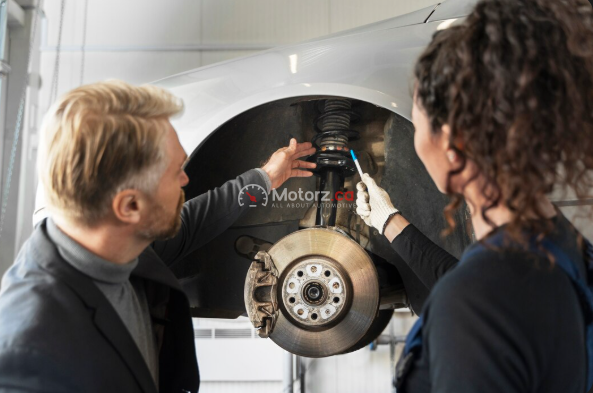
For decades, the standard Hybrid Brake Maintenance Guide was entirely predictable. When you approached a red light or a sudden slowdown on the highway, you pressed the brake pedal. This action forced hydraulic fluid to push a set of high-friction sacrificial pads directly against a spinning metal rotor. The physical friction slowed the vehicle down, converting its forward kinetic energy into massive amounts of heat energy that simply dissipated into the surrounding air.
When you transition into a modern hybrid vehicle, that entire physical process changes. You might notice right away that the brake pedal feels a bit different. It might feel slightly more firm, hyper-responsive, or even highly sensitive during the first few millimeters of travel.
Worse yet, you might look at your vehicle maintenance schedule and see conflicting advice. Some drivers claim that hybrid brakes last almost forever, while others warn that ignoring them can lead to sudden, expensive repair bills.
What is the truth? How does a hybrid vehicle stop itself, and how does this change your routine maintenance habits?
Understanding the unique relationship between traditional mechanical braking and advanced regenerative braking is the secret to protecting your vehicle’s safety, maximizing your fuel efficiency, and keeping your maintenance costs as low as possible. Let’s look at the engineering under your floorboards and map out the exact care your hybrid braking system requires.
The Dual Architecture: How Hybrid Brake Maintenance Guide Your Car
To understand hybrid brake maintenance, you have to realize that your vehicle features two completely independent braking systems that work together through a computerized handoff. This is known as a blended braking system.
Regenerative Braking: Capturing Kinetic Energy
The primary way your hybrid vehicle slows down during daily driving is through regenerative braking. When you lift your foot off the accelerator pedal or press gently on the brake pedal, the vehicle’s onboard computer does not immediately activate the hydraulic brake pads.
Instead, it reverses the operational role of your vehicle’s electric propulsion motor. The motor switches from pulling energy out of your high-voltage battery to acting as an electrical generator.
As the spinning wheels force this generator to turn, it creates massive internal magnetic resistance. This magnetic drag slows down the forward momentum of the vehicle smoothly. Concurrently, the electricity generated by this process is routed back into your hybrid battery pack, saving energy that would otherwise be completely wasted.
Traditional Friction Braking: The Mechanical Safety Net
Your hybrid vehicle still retains a complete, traditional hydraulic friction braking system. It features a master cylinder, vacuum or electronic boosters, brake lines filled with hydraulic fluid, steel rotors, and brake pads nestled inside mechanical calipers.
This traditional system steps in during three specific driving scenarios:
Emergency Stops: When you press the brake pedal down rapidly and with extreme force, the vehicle computer recognizes an emergency scenario and instantly engages maximum hydraulic pressure to stop the vehicle.
Low-Speed Creeping: Regenerative braking requires a minimum amount of wheel rotation speed to generate magnetic resistance. When your hybrid slows to a crawl (typically below ten kilometers per hour), the system transitions over to the physical brake pads to bring you to a complete stop.
Full Battery States: If your hybrid battery pack is already filled to one hundred percent capacity, it cannot accept any more incoming electrical current. The computer will temporarily turn off regenerative braking and rely entirely on traditional friction brakes to slow the vehicle down.
The Paradox of Longevity: Why Hybrid Brakes Last Longer but Need More Care
Because regenerative braking handles roughly seventy to eighty percent of your daily stopping duties, your physical brake pads and rotors experience a fraction of the physical wear seen on a standard gas-powered car.
On a traditional vehicle, you might expect to replace worn-out brake pads every fifty thousand to eighty thousand kilometers. On a well-driven hybrid, it is not uncommon for the factory brake pads to last well past one hundred and fifty thousand kilometers.
This extended lifespan creates a dangerous paradox. Because the pads last so long, many hybrid owners assume they can ignore their braking system entirely. This neglect leads to a unique set of maintenance issues caused by lack of use.
The Threat of Corrosion and Rust Accumulation
Because your friction brakes are rarely used hard enough to heat up, moisture and humidity can easily build up along the surface of the metal brake rotors. On a traditional vehicle, frequent friction scrapes away this moisture and surface rust continuously.
On a hybrid, that surface rust can sit undisturbed, slowly eating deep pits into the steel rotor surface. Over time, this corrosion can cause the brake pads to wear unevenly, leading to a vibrating pedal feel or a significant reduction in total emergency stopping power.
Seized Caliper Slider Pins
Brake calipers rely on small, grease-lubricated guide pins to slide back and forth smoothly when you press and release the pedal. Because hybrid calipers sit idle for long stretches, the protective grease can dry out, and road dirt or winter salt can enter the rubber slider boots.
If these pins rust and freeze in place, the brake pad can become stuck permanently against the spinning rotor, causing a continuous mechanical drag. This drag lowers your fuel efficiency and burns out a single brake pad prematurely while the other pads look brand new.
Critical Maintenance Task 1: Annual Caliper Cleaning and Lubrication
To prevent corrosion from destroying your hybrid’s long-lasting braking components, you must transition from a schedule focused on pad replacement to a schedule focused on proactive brake servicing.
The Cleaning Process Explained
At least once a year—ideally before or after the harsh winter season—you should have a licensed technician perform a comprehensive brake cleaning and lubrication service.
During this service, the mechanic will completely disassemble the brake caliper housing, slide the brake pads out of their mounting brackets, and inspect the slider pins. They will use specialized wire brushes and brake cleaning solvents to remove accumulated road grime, brake dust, and rust flakes from the metal sliding tracks.
Applying the Right Lubricant
Once the components are clean, the technician applies a high-grade, high-temperature synthetic or silicone-based brake grease to the slider pins and the rear backing plates of the pads.
This grease ensures the caliper moves with zero mechanical resistance, allowing the pads to retract completely away from the rotor when regenerative braking is active. This simple maintenance step costs a fraction of a full brake replacement and ensures your friction brakes are fully ready when you need to make a sudden emergency stop.
Critical Maintenance Task 2: Managing Brake Fluid Health
Brake fluid is the vital hydraulic lifeblood of your stopping system. When you press the pedal, this fluid transfers the physical force from your foot directly down to the wheel calipers. Managing this fluid is even more critical in a hybrid due to the lack of daily operating heat.
The Problem with Hydroscopic Fluid
Modern automotive brake fluid is glycol-based and highly hydroscopic. This means it naturally absorbs moisture from the surrounding air over time, even through the microscopic pores of your rubber brake hoses.
On a standard internal combustion vehicle, the heat generated by frequent friction braking transfers into the brake fluid, helping to boil off minor internal moisture condensation. Because hybrid brakes run exceptionally cool, this internal moisture accumulates undisturbed.
The Risks of Internal Corrosion
If the water content inside your brake fluid rises too high, it introduces two serious safety hazards:
Internal Component Rusting: The water will cause internal oxidation inside your expensive anti-lock braking system (ABS) valving, electronic stability control modules, and hydraulic master cylinder. Replacing these computerized hydraulic blocks is vastly more expensive than a standard brake job.
Vapor Lock Failure: Water has a much lower boiling point than pure brake fluid. If you are forced to drive down a long, steep mountain pass or carry a heavy cargo load where your friction brakes must step in continuously, the water inside the lines can instantly boil into gas bubbles. Because gas can be compressed easily unlike liquid, your brake pedal will suddenly feel soft and sink all the way to the floorboards, causing a dangerous loss of stopping power.
To prevent this, ensure your hybrid’s brake fluid is tested for moisture content regularly and completely flushed and replaced with fresh fluid every two to three years, regardless of how few kilometers you have driven.
Driving Habits to Keep Your Hybrid Braking System Healthy
While regular garage service is vital, you can alter your daily driving style to actively maintain your hybrid’s unique braking balance and preserve your system’s operational health.
Executing Controlled “Friction Burns”
Because lack of use is the number one enemy of hybrid brakes, you should intentionally clear off your brake rotors periodically. Find a safe, open stretch of road with no trailing traffic behind you. Accelerate the vehicle up to moderate highway speeds, shift the vehicle’s transmission out of its standard drive gear into Neutral, and press firmly on the brake pedal to slow down.
Shifting your hybrid into Neutral temporarily disconnects the electric generator motor from the drivetrain wheels. When you apply the brakes in Neutral, the onboard computer is forced to bypass regenerative braking entirely and engage the physical friction pads against the rotors.
Doing this a couple of times creates enough physical friction and heat to burn off surface rust, scrape away glazing buildup, and keep your pads perfectly flat and clean.
Practicing Smooth Progressive Braking for Efficiency
If your goal is to maximize your hybrid’s fuel economy and battery regeneration, your daily driving should focus on smooth, progressive stopping maneuvers. Sudden, late braking forces the computer to abandon regenerative capture and activate the mechanical friction pads to slow you down in time.
Look far down the road and anticipate incoming stops early. By applying light, steady pressure to the brake pedal over a longer distance, you keep the vehicle inside its maximum regenerative braking window. This allows the electric motor to harvest the highest possible percentage of kinetic energy, keeping your hybrid battery topped up with free electricity while completely saving your physical brake pads from wear.
Diagnosing Common Hybrid Brake Noises and Warning Signs
Because hybrid systems feature complex electronics and a quiet electric powertrain, paying attention to unusual sounds or dashboard warning indicators can help you catch minor maintenance issues before they turn into major safety risks.
The High-Pitched Morning Squeal
If you hear a sharp, high-pitched squealing or scraping noise during the first two or three stops of the morning, it is often nothing to worry about. This is typically just the brake pads scraping away a thin layer of overnight moisture or surface dew from the steel rotors.
However, if that sharp metallic squealing sound continues continuously throughout your entire trip, your brake pads have likely reached the end of their operational life, and the built-in metal wear indicator tab is actively scraping the rotor to warn you that a replacement is required.
A Clicking sound During Pedal Transition
Some hybrid owners notice a faint clicking or whirring sound right as they press the brake pedal down. This sound is usually completely normal. It is the sound of the vehicle’s electronic brake actuator and hydraulic fluid valves opening and closing as the computer coordinates the smooth handoff between regenerative and friction braking modes.
The Appearance of Braking Dashboard Lights
If your instrument panel flashes a yellow or red brake warning light, or activates your ABS or slip indicators, your hybrid requires immediate diagnostic attention.
Because modern hybrid braking is heavily reliant on electronic sensors, a malfunctioning wheel speed sensor, a failing brake pedal position sensor, or a drop in system voltage can disrupt the blended braking logic. A professional scan tool must be connected to read the specific fault codes stored within the vehicle’s chassis control module.
Your Hybrid Brake Maintenance Routine
To keep your hybrid braking system operating at peak safety and maximum energy efficiency, implement this structured care program:
Schedule an annual service: Have a technician perform a full brake teardown, cleaning, and slider lubrication service every twelve months to combat rust accumulation.
Test the hydraulic fluid: Flush and replace your brake fluid every two to three years to remove harmful internal moisture.
Perform routine friction burns: Safely use the neutral-gear braking technique periodically to clear surface rust and glazing off your metal rotors.
Drive progressively: Apply light, early pedal pressure to maximize your battery energy regeneration and limit unnecessary pad wear.
Monitor warning signs: Never ignore persistent metallic scraping noises, a spongy brake pedal feel, or dashboard warning lights.