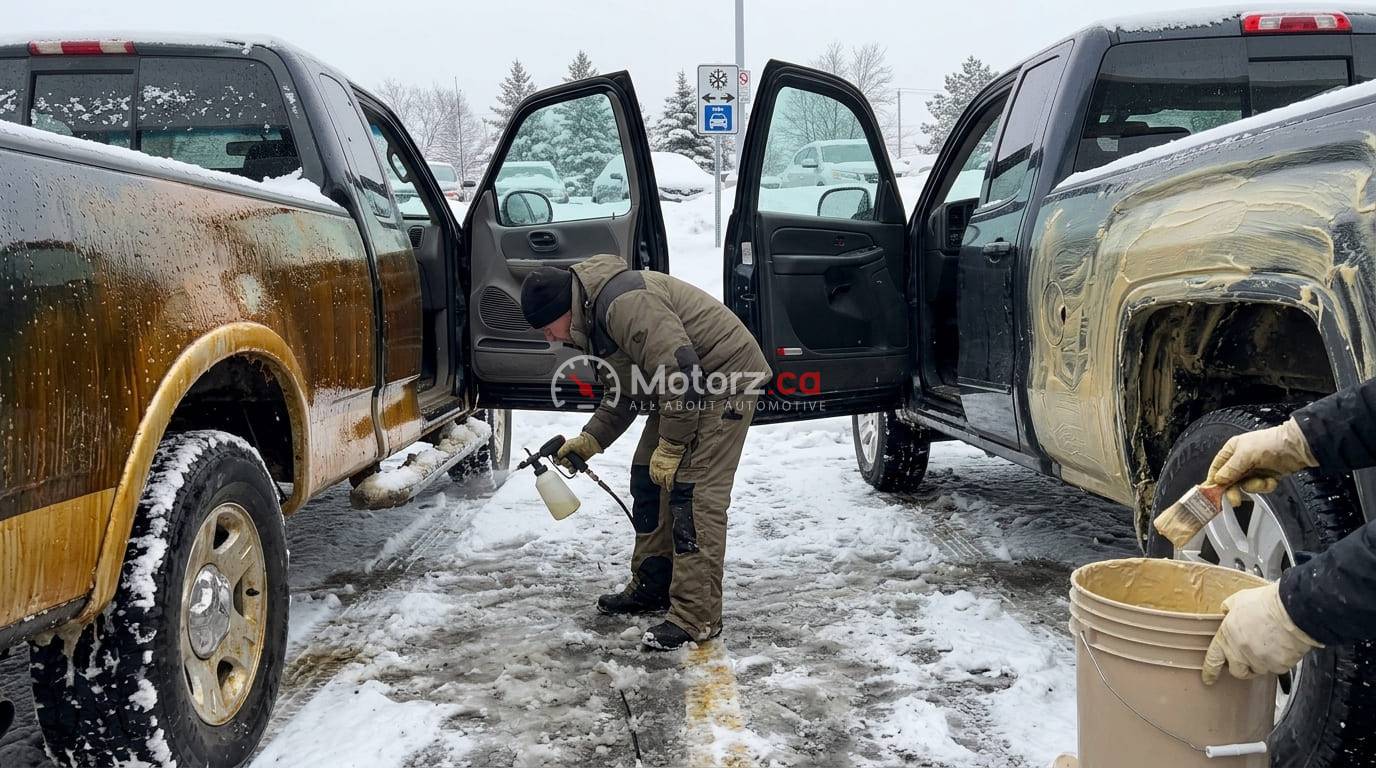
For any Winter Protection, the changing colors of autumn serve as a beautiful but sobering warning. Soon, municipal trucks will hit the roads, covering our highways and local streets with a heavy layer of rock salt and liquid de-icing brines. While these melting agents are critical for winter road safety, they are absolutely devastating to your vehicle’s metal underbody.
The automotive environment in Ontario represents a worst-case scenario for corrosion. The combination of heavy moisture, fluctuating winter temperatures that accelerate oxidation, and highly aggressive chemical de-icers like calcium chloride can transform a clean vehicle chassis into a rusted liability in just a few short seasons.
To protect their investments, smart Ontario drivers look to annual preventative undercoatings. In the world of rust protection, two massive names consistently dominate the conversation: Krown Rust Control and Fluid Film.
While both brands promise to shield your car, truck, or sport utility vehicle from the dreaded brown plague, they utilize completely different chemical compositions, application methods, and protection strategies.
Choosing the wrong type for your specific driving pattern, vehicle age, or parking situation can result in a messy driveway, swollen rubber seals, or incomplete protection. Let us take a deep, unbiased dive into the mechanics of Krown versus Fluid Film to determine exactly which product deserves a spot under your vehicle this winter.
The Chemistry of Corrosion Defense: Petroleum vs. Lanolin
To understand how these products perform on a salted highway, you have to look at the chemical science powering their formulas. Both are designed to repel moisture and oxygen from raw metal, but they do so using completely different base materials.
The Winter Protection: Highly Penetrating Petroleum Base
Krown is a Canadian-born product engineered specifically to handle the harsh realities of our northern climate. It is a highly refined, solvent-free, petroleum-based oil spray.
The defining characteristic of Krown’s formulation is its ultra-low viscosity, meaning it is a very thin fluid. This thin consistency allows the product to utilize capillary action—the chemical phenomenon where a liquid naturally flows into tight spaces against gravity.
When sprayed onto a vehicle, Krown does not just sit on the surface; it actively creeps into tight metal seams, spot welds, door sills, and inner body cavities, instantly displacing any trapped moisture or condensation on contact.
The Fluid Film Formula: Heavy-Duty Lanolin Base
Fluid Film takes a completely non-petroleum approach to rust prevention. Its core ingredient is lanolin—a natural, non-toxic, biodegradable wax-like grease extracted directly from sheep’s wool.
Because it relies on wool grease, Fluid Film is significantly thicker and more viscous than Krown. Instead of acting like a creeping oil, it goes on as a self-healing, gel-like barrier film. It creates an incredibly durable, air-tight physical shield over the metal that is exceptionally resistant to getting washed off by heavy slush, road spray, and puddle impacts.
Application Methods: Professional Franchises vs. DIY Accessibility
How a rustproofing product is applied to your vehicle is just as important as the fluid itself. A premium formula is useless if it cannot reach the hidden interior cavities where rust typically begins.
The Krown Application Process: Precision and Drilling
Krown operates through a vast network of dedicated, corporate-certified technician facilities across Ontario. Because their oil formula is engineered to protect the inner structural panels of your vehicle, the application process requires specific, specialized techniques.
To gain access to hidden internal spaces, a Krown technician will use specialized drill bits to create small, clean access holes in strategic locations, such as your door jambs, rocker panels, and tailgate inner frames. They then insert long, flexible high-pressure wands equipped with specialized 360-degree spray nozzles to coat the inner metal surfaces.
Once the interior application is complete, the technician treats the raw edges of the drilled holes with a specialized grease and seals them with custom-fit, low-profile black rubber plugs. The undercarriage, engine bay, brake lines, and electrical connections are then thoroughly coated.
The Fluid Film Approach: Heavy Underbody Coatings and DIY Freedom
Fluid Film can be applied by a professional, but it is also widely popular in the do-it-yourself (DIY) automotive community. It is readily available in convenient aerosol spray cans or bulk gallon pails that can be applied using a basic compressor-driven spray gun in a residential garage or driveway.
Because Fluid Film is a thicker substance, installers rarely drill holes into body panels. Instead, the application focus centers heavily on the vehicle’s completely exposed underbody structures—the frame rails, floorboards, suspension components, wheel wells, and fuel tank straps.
It goes on significantly thicker than Krown, leaving a visible, translucent waxy coating that fills in metal pores and covers existing surface rust with a heavy, protective blanket.
The Creep Factor: Reaching Hidden Seams and Cavities
Rust rarely starts in the middle of a wide-open, flat metal panel. It almost always originates in tight, hidden overlapping seams where two panels are spot-welded together, or inside hollow frame sections where road salt and wet moisture get trapped over time.
Why Krown Wins on Creeping Ability
If your main goal is to protect hidden seams, Krown holds a distinct mechanical advantage due to its thin, highly fluid composition. After the application is complete, Krown continuously “creeps” and migrates across the metal surfaces for several weeks.
It will climb upward into tight spot welds, travel deep around door handles, and flow into the absolute tightest folds of your hood and trunk lids. If a small rock chip creates a minor scratch in the coating on your frame, Krown’s fluid nature allows the surrounding oil to naturally flow into the void, self-healing the defensive barrier automatically.
How Fluid Film Handles Tight Spaces
Fluid Film does possess a minor creeping ability, but because the formula is much thicker, its migration pattern is significantly slower and more limited. It excels at staying exactly where the technician sprays it, making it perfect for exposed high-impact areas like wheel arches and underbody frame surfaces.
However, it will not travel as deep into tight, microscopic body seams or migrate through complex internal door cavities as effortlessly as a lighter petroleum spray.
The Post-Application Realities: Dripping and Driveway Stains
One of the most practical everyday differences between these two rustproofing methods is how your vehicle behaves immediately after leaving the service bay.
The Krown Drip Period
Because Krown is an ultra-thin oil designed to displace moisture, any excess product that does not cling to the vehicle must drain out. This means that after a Krown application, your vehicle will drip oil for roughly twenty-four to forty-eight hours.
If you park a freshly treated vehicle on a pristine interlock brick driveway or a clean poured-concrete garage floor, it will leave noticeable oil stains. Krown facilities typically recommend parking on a gravel road, a public street, or placing a large piece of protective cardboard beneath your vehicle for the first two days after application until the active dripping stops.
Fluid Film’s Clean Application Profile
Fluid Film is widely recognized as a dripless or minimal-drip product. Thanks to its high-viscosity lanolin base, the gel-like formula grips the metal immediately upon contact.
You can have your vehicle treated with Fluid Film and safely park it on your residential driveway that very same afternoon without worrying about creating a messy cleanup. For urban homeowners, condominium residents, or anyone without access to alternative street parking, this clean operational profile is a massive benefit.
Material Compatibility: Protecting Rubber Seals and Wiring
Modern vehicles are constructed using a complex mix of high-strength steel, aluminum, electronic wiring harnesses, and various synthetic rubber seals and weatherstripping. Ensuring your rustproofing product does not damage these non-metal components is critical.
Krown and the Rubber Swelling Concern
Because Krown is a petroleum-based fluid, it can interact negatively with certain types of non-stabilized natural rubber compounds. If the thin oil runs continuously over door weatherstripping, trunk seals, or suspension bushings, it can cause the rubber material to slowly absorb the oil, swell out of shape, and become soft or loose over time.
To combat this known issue, Krown technicians are trained to apply specialized silicone protective dressings to all exposed rubber weatherstripping during the application process. This silicone layer acts as a barrier shield, preventing the petroleum oil from making direct contact with sensitive rubber components.
Additionally, EV and hybrid owners should note that Krown is completely non-conductive, making it safe to spray around high-voltage orange electrical cables and chassis grounding points.
Fluid Film’s Safe Lanolin Nature
Fluid Film’s natural lanolin base is completely benign and safe around the vast majority of automotive rubbers, plastics, and paints. It does not cause the aggressive swelling or structural softening of weatherstripping sometimes associated with petroleum sprays.
It is also an exceptional dielectric barrier, meaning it does not conduct electricity. Sprayed directly over electrical connections, battery terminals, and alternator housings, Fluid Film prevents moisture from causing electrical arcs or corrosion-induced sensor faults—an increasingly common issue on modern, sensor-heavy vehicles operating on salty roads.
Durability and Wash-Off Resistance on Ontario Highways
The underbody of a vehicle traveling at one hundred kilometers per hour down Highway 401 during a winter slush storm experiences a continuous high-velocity blast of freezing water, sharp sand, and chemical brine. This environment tests the physical durability of any rustproofing material.
Fluid Film’s Superior Adhesion
This high-impact washing action is where Fluid Film truly shines. Because its thick lanolin base creates a heavy, tenacious physical film, it resists the abrasive wash-off action of winter road spray incredibly well.
It clings tightly to exposed metal frames and wheel wells, maintaining a thick protective layer even after months of driving through heavy slush and snow drifts. In fact, in areas of the underbody that do not experience direct, continuous tire spray, a single application of Fluid Film can easily last up to twenty-four months before requiring a complete reapplication.
Krown’s Annual Maintenance Discipline
Because Krown is a much thinner fluid, its exposed outer surface layer will slowly erode over twelve months of continuous driving. While the product remains permanently locked deep inside the protected inner body seams and drilled cavities, its thickness on exposed underbody surfaces decreases over time.
To maintain total protection against Ontario’s aggressive winter environments, Krown requires a strict twelve-month reapplication schedule. Missing your annual application window leaves exposed chassis components vulnerable to the next winter season.
Age and Vehicle Condition: New vs. Used Cars
Your vehicle’s current structural condition should play a major role in deciding which product to apply.
The Best Choice for Brand New Vehicles
If you have just driven a brand-new vehicle off a dealership lot in Toronto or Ottawa, your primary goal is preventative preservation. The metal is pristine, the seams are completely clean, and no oxidation has started.
For these clean vehicles, Krown is highly recommended. Its exceptional creeping ability ensures that every interior spot weld and deep inner frame cavity is fully coated right from the beginning, preventing rust from ever gaining an initial foothold in the vehicle’s hidden structure.
The Best Choice for Used and High-Mileage Cars
If you are trying to protect an older, used vehicle that already displays visible surface rust, flaking paint, or scaly frame oxidation, Fluid Film is often the superior choice.
A thin fluid like Krown can quickly penetrate light surface rust, but it can struggle to stay put on heavily scaled or deeply pitted metal surfaces under a constant assault of road spray. Fluid Film’s thick, gel-like structure acts like a heavy blanket over existing rust. It completely saturates the rough, porous oxidized metal, cutting off the oxygen and moisture required for the rust to spread, effectively freezing the vehicle’s corrosion state in place.
Environmental and Health Considerations
For a growing number of Ontario drivers, the environmental impact of automotive maintenance products is an important factor to consider.
Fluid Film’s Eco-Friendly Profile
Fluid Film holds a clear advantage regarding environmental safety. Because its primary formulation relies on natural lanolin grease extracted from sheep’s wool, it is classified as non-toxic, non-hazardous, and completely biodegradable.
If you apply Fluid Film yourself in your driveway and a small amount washes off or contacts your lawn, it poses no danger to local plants, pets, or municipal waterways. It contains no volatile organic compounds (VOCs) and has zero chemical solvent odor, making it pleasant and safe to work with in enclosed spaces.
Krown’s Modern Solvent-Free Engineering
Krown is a petroleum product, but the company has spent decades refining its chemistry to minimize its environmental footprint. The modern Krown formula is entirely solvent-free, non-flammable, and contains no toxic heavy metals or ozone-depleting chemicals.
While you must handle any petroleum fluid carefully to prevent large spills into local storm drains, Krown’s refined formulation is designed to be as eco-friendly as a petroleum-based product can possibly be.
Final Verdict: Which Rustproofing Wins for Ontario Drivers?
When the final analysis is complete, neither Krown nor Fluid Film can be declared an absolute winner for every single scenario. The best choice depends heavily on your vehicle’s current condition, your willingness to deal with temporary dripping, and how the product is applied.
Go with Krown Rust Control If:
Your Vehicle is New or Completely Rust-Free: You want a deep, creeping preventative oil that will seal every hidden weld and internal seam before corrosion can start.
You Prefer Professional, Turnkey Maintenance: You want a certified technician to handle the entire application process using specialized tools and high-pressure equipment.
You Have Alternative Parking Options: You have a secondary location or a street parking spot to utilize for forty-eight hours while the vehicle finishes its initial dripping phase.
Go with Fluid Film If:
Your Vehicle is Older or Has Existing Surface Rust: You need a thick, heavy-duty barrier coating that will completely saturate rough, scaled metal and halt existing rust in its tracks.
You Prefer a Completely Mess-Free Driveway: You want to avoid any dripping issues and need to park your vehicle on clean residential concrete or interlocking brick immediately after service.
You Enjoy DIY Automotive Projects: You want to save money by purchasing your own bulk supplies or aerosol cans to handle the application yourself in your own garage.
Both products offer exceptional defense against Ontario’s harsh winter elements. By matching their distinct chemical strengths to your personal driving circumstances, you can keep your vehicle structurally safe, mechanically sound, and completely rust-free for many winter seasons to come.