



We have all been there. You are driving down a straight stretch of highway, but your steering wheel is tilted to the left, or perhaps the car is constantly drifting toward the shoulder. Your first thought is likely, “I just need a quick wheel alignment.” You head to the shop, expecting a simple adjustment and a small bill, only to have the technician come back with a list of worn-out parts that need replacing before they can even touch the alignment rack.
It can feel like a “upsell” tactic, but in the world of automotive steering and suspension, an alignment is only as good as the components holding the wheels in place. If your ball joints are loose or your bushings are torn, a wheel alignment is essentially a Band-Aid on a broken bone. In 2026, with heavier vehicles and more sensitive electronic steering systems, understanding the difference between a simple adjustment and a major suspension repair is crucial for your safety and your wallet.
In this comprehensive guide, we will explore the red flags that suggest your car has deep-seated suspension issues, why alignment machines cannot fix broken parts, and how to tell if your mechanic is giving you the straight truth about your vehicle’s undercarriage.
What a Wheel Alignment Actually Does (and Doesn’t) Do
To understand why you might need more than an alignment, we have to look at what happens during the service. A wheel alignment is the process of adjusting the angles of the wheels so they are parallel to each other and perpendicular to the ground.
The Three Pillars: Camber, Caster, and Toe
Technicians focus on three primary measurements:
Camber: The inward or outward tilt of the tire when viewed from the front.
Caster: The angle of the steering axis when viewed from the side, which affects steering stability.
Toe: The extent to which the tires turn inward or outward when viewed from above.
The Limitation of the Alignment Rack
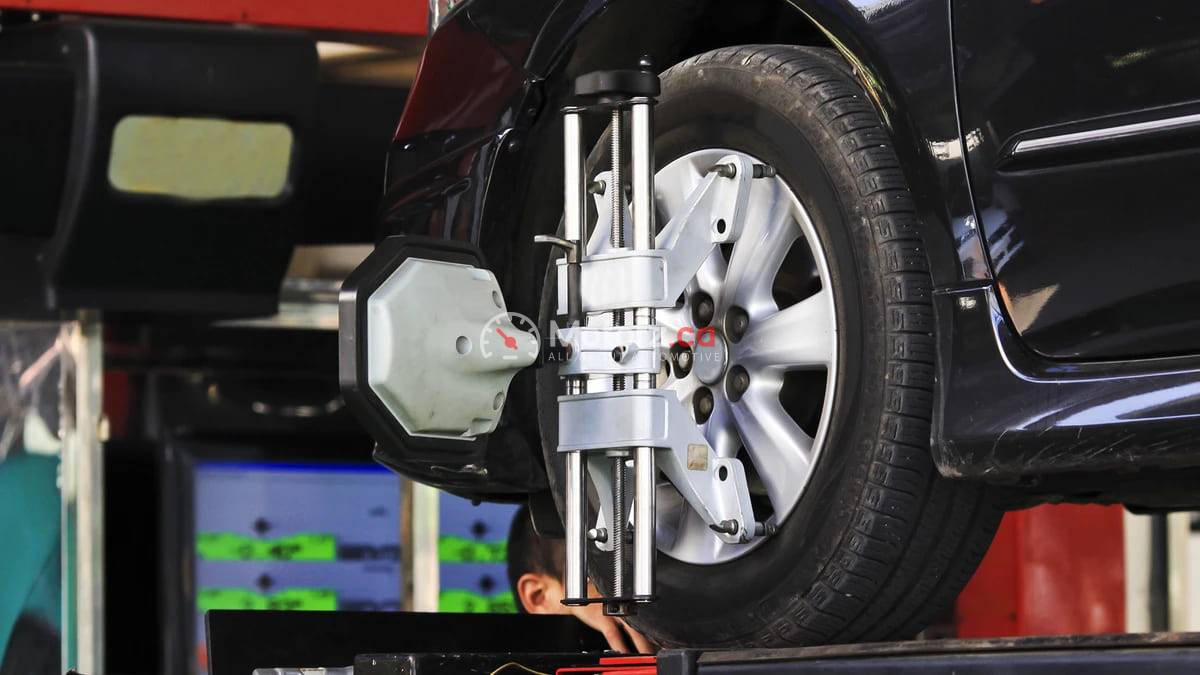
The alignment machine uses high-precision lasers to measure these angles, and the technician turns adjustable bolts to bring them back to factory specifications. However, these adjustments assume that the mechanical “joints” of your car are tight. If a part has “play” or movement, the angles will change the second you drive off the rack and hit a pothole. This is why a technician must perform a “shakedown” inspection before starting the job.
The Silent Culprits: Parts That Mimic Alignment Issues
If your car is pulling to one side or your tires are wearing unevenly, the problem might be a mechanical failure rather than a simple loss of alignment.
Worn Ball Joints: The “Pivot” Problem
Think of a ball joint like your human hip socket. It allows the wheel to move up and down and turn left and right simultaneously. When the grease inside dries out or the metal wears down, the ball develops “play” inside the socket.
The Symptom: You might hear a “clunk” when going over bumps or feel a wandering sensation at high speeds.
The Alignment Connection: You cannot align a car with bad ball joints because the wheel position is constantly shifting.
Torn Control Arm Bushings: The “Sway” Factor
Bushings are the rubber cushions that allow suspension parts to move without grinding metal-on-metal. Over time, heat and road salt cause this rubber to crack and tear.
The Symptom: Your steering might feel “mushy” or unresponsive, and you might hear a “squeak” during braking or acceleration.
The Alignment Connection: If the bushings are torn, the control arm can shift forward or backward, constantly changing your “Toe” angle while you drive.
Tie Rod End Failure: The Steering Link
The tie rods are what actually connect your steering rack to your wheels. They are the “hands” that turn the tires.
The Symptom: A vibrating steering wheel or a “loose” feeling where you can move the wheel an inch or two before the car actually reacts.
The Alignment Connection: Tie rod ends are the primary adjustment point for “Toe.” If the joint is worn out, any adjustment made on the rack is useless.
Why New Tires Won’t Fix a Bad Suspension
A common misconception is that buying a fresh set of tires will solve a “pulling” issue. While a belt separation in an old tire can cause a pull, putting new rubber on a car with worn suspension components is an expensive mistake.
Rapid Tread Wear
If your alignment is off because of a bad part, your new tires will begin to “feather” or “cup” within a few hundred kilometers. You might see the inner edge of the tire wearing down to the wires while the outside looks brand new.
The Safety Hazard of “Sawtooth” Wear
When suspension parts are loose, the tire doesn’t roll smoothly; it “scubs” across the pavement. This creates a sawtooth pattern on the tread blocks. Not only does this make the car incredibly noisy (often sounding like a bad wheel bearing), but it also significantly reduces your traction in wet or snowy conditions.
Helpful Insights: How to Test Your Suspension at Home
You don’t need a laser-guided machine to find basic suspension problems. Before you book that alignment, try these three simple checks:
The Bounce Test: Go to each corner of your car and push down hard on the bumper. The car should rise and settle almost immediately. If it bounces two or three times, your struts or shocks are worn out.
The 12-and-6 Shake: Safely jack up one front wheel. Put your hands at the 12 o’clock and 6 o’clock positions on the tire and try to rock it. If you feel a “click” or movement, your ball joints or wheel bearings are likely failing.
The 9-and-3 Shake: Using the same method, put your hands at 9 and 3. Shake the wheel side-to-side. Any movement here usually points to a failing tie rod end.
Frequently Asked Questions (FAQ)
How often should I get a wheel alignment?
Most experts recommend a check-up every 12 months or every time you install new tires. However, if you hit a major pothole or a curb, you should have it checked immediately.
Why is an alignment more expensive on modern cars?
Many vehicles produced after 2020 feature Electronic Power Steering (EPS) and Advanced Driver Assistance Systems (ADAS). When the mechanical alignment is changed, the technician often has to “reset” the steering angle sensor so the car’s computer knows the wheels are straight.
Can a bad alignment cause a vibration?
Usually, no. A vibration is typically caused by unbalanced tires or a bent rim. However, if the alignment is so far off that it has caused “cupping” in the tire tread, that uneven wear will create a vibration.
Investing in the “Whole” System
A wheel alignment is a vital part of vehicle maintenance, but it is not a magic wand. If your car is showing signs of age or has been subjected to harsh Canadian winter roads, there is a high probability that your “pulling” problem is being caused by a worn-out mechanical part.
By addressing the root cause—the ball joints, tie rods, or bushings—before you perform the alignment, you ensure that your car drives straight, your steering stays crisp, and your expensive tires last as long as possible. Don’t just settle for an adjustment; make sure your vehicle’s foundation is solid.