



As Fuel-Efficient Gas Vehicles, the conversation at the dinner table often shifts toward one unavoidable topic: the cost of living. With the federal carbon tax continuing its scheduled increases and gasoline prices fluctuating across the provinces, the “fuel economy” rating on a new car window sticker has become more than just a number—it is a critical financial strategy.
While electric vehicles and hybrids dominate the headlines, a significant portion of Canadian drivers still prefer the simplicity, lower upfront cost, and reliable cold-weather performance of a traditional internal combustion engine. Fortunately, automotive engineering has reached a point where modern gasoline engines are incredibly frugal.
In this comprehensive guide, we analyze the top nine gasoline-only (non-hybrid) vehicles available in Canada for the 2025 model year. These rankings are based on data from Natural Resources Canada (NRCan), focusing on combined city and highway fuel consumption measured in litres per 100 kilometres (L/100km).
Why Fuel-Efficient Gas Vehicles Top Priority for Canadians in 2025
Before we dive into the specific models, it is essential to understand why choosing a fuel-efficient gas vehicle is particularly impactful right now. Canada’s unique climate and geography present challenges that make fuel efficiency a high-value feature.
The Impact of the Carbon Tax and Fuel Prices
In 2025, the Canadian carbon tax is set to increase the cost of a litre of gasoline by approximately three to four cents compared to the previous year. For a commuter driving 20,000 kilometres annually, the difference between a vehicle that consumes 6.5 L/100km and one that consumes 9.0 L/100km can result in savings of over 800 Canadian dollars per year. Over a five-year ownership period, that is 4,000 dollars back in your pocket.
Performance in Canadian Winters
Electric vehicles often see a significant drop in range when the mercury dips to minus 20 Celsius. While gas vehicles also lose some efficiency in the winter due to idling and increased friction, they remain the “safe bet” for those living in rural areas or regions with limited charging infrastructure. The vehicles on this list are chosen because they offer the best possible efficiency without the higher purchase price of a hybrid battery system.
The Top 9 Most Fuel-Efficient Gas Cars in Canada
The following vehicles represent the pinnacle of gasoline-only efficiency. We have excluded plug-in hybrids and full hybrids to provide a clear list for those seeking the lowest possible entry price for a new car.
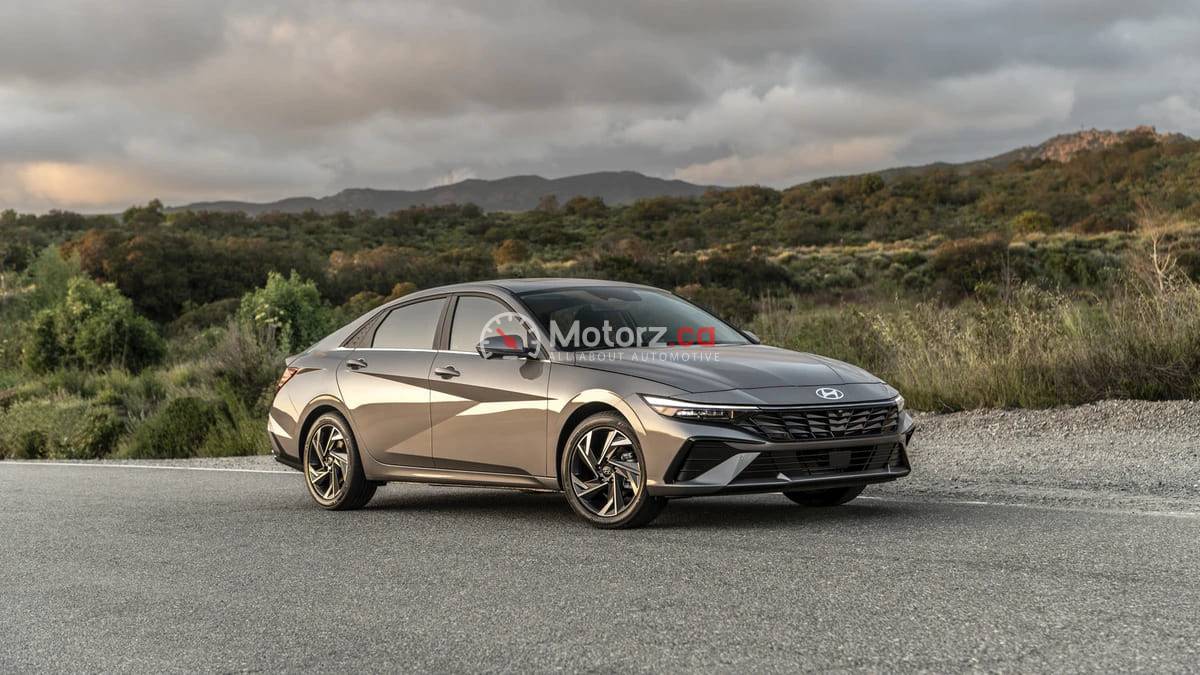
Hyundai Elantra (6.5 L/100km Combined)
The 2025 Hyundai Elantra takes the crown for the most fuel-efficient non-hybrid sedan in Canada. Specifically, the trims equipped with the Intelligent Variable Transmission (IVT) and the Idle Stop and Go (ISG) system achieve an impressive 6.5 L/100km combined.
Engine: 2.0-litre 4-cylinder
City/Highway: 7.4 / 5.4 L/100km
Why it wins: Beyond the fuel savings, the Elantra offers a massive interior for its class and a standard suite of safety features that makes it a top choice for young families and commuters alike.
Nissan Sentra (6.6 L/100km Combined)
Nissan has refined the Sentra to be a legitimate threat to the fuel-economy throne. The 2025 Nissan Sentra utilizes a smooth Xtronic CVT to keep the engine in its most efficient power band.
Engine: 2.0-litre 4-cylinder
City/Highway: 7.3 / 5.8 L/100km
Key Advantage: Unlike some budget compacts, the Sentra features a multi-link rear suspension, giving it a much more refined ride on the pothole-ridden streets of Montreal or Toronto.
Toyota Corolla (6.7 L/100km Combined)
The Toyota Corolla is synonymous with reliability, but its efficiency is equally legendary. Even without opting for the hybrid variant, the gasoline-only Corolla is remarkably sips fuel.
Engine: 2.0-litre Dynamic Force 4-cylinder
City/Highway: 7.4 / 5.7 L/100km
Reliability Factor: The Corolla’s engine is naturally aspirated (non-turbo), which often means lower long-term maintenance costs for Canadians planning to keep their car for 10 years or more.
Honda Civic Sedan (6.9 L/100km Combined)
While the 2025 model year marks the return of the Civic Hybrid, the standard gas-only Honda Civic Sedan remains a top performer. It manages to balance “fun to drive” dynamics with excellent efficiency.
Engine: 2.0-litre 4-cylinder (standard on LX and Sport trims)
City/Highway: 7.6 / 6.0 L/100km
Inside Scoop: The Civic often holds its resale value better than any other car on this list, making your total cost of ownership even lower when it comes time to trade it in.
Nissan Versa (6.8 L/100km Combined)
With the discontinuation of the Mitsubishi Mirage and the Chevrolet Spark, the Nissan Versa is officially the last remaining subcompact sedan in the Canadian market. It is the most affordable car on this list, starting well under 23,000 Canadian dollars (including freight).
Engine: 1.6-litre 4-cylinder
City/Highway: 7.5 / 5.9 L/100km
Budget Brilliance: If you are looking for the lowest monthly payment and the lowest fuel bill simultaneously, the Versa is your best friend.
Kia K4 (7.0 L/100km Combined)
Replacing the aging Kia Forte, the all-new 2025 Kia K4 brings futuristic styling and a slightly larger footprint to the compact segment. Despite being larger than the car it replaces, its improved aerodynamics help it stay incredibly efficient.
Engine: 2.0-litre 4-cylinder
Estimated Combined: 7.0 L/100km
Tech Highlight: The K4 features a massive integrated screen and advanced driver-assist tech, making it feel like a luxury vehicle while maintaining an economy-car fuel bill.
Nissan Kicks Play (7.2 L/100km Combined)
For the 2025 model year, Nissan is offering two versions of the Kicks. The “Kicks Play” is a carryover of the previous generation, designed for those who want a compact crossover footprint with the fuel consumption of a small car.
Engine: 1.6-litre 4-cylinder
City/Highway: 7.7 / 6.6 L/100km
SUV Utility: This is the most efficient non-hybrid “SUV-style” vehicle in Canada, offering a higher seating position without the 10 L/100km penalty typical of larger crossovers.
MINI Cooper S 5-Door (7.3 L/100km Combined)
Who says efficiency has to be boring? The 2025 MINI Cooper S proves that a turbocharged premium car can still be easy on the wallet at the gas station.
Engine: 2.0-litre Turbocharged 4-cylinder
Efficiency Tip: To achieve these numbers, you’ll need to use the “Green Mode” setting, which optimizes the throttle and transmission for maximum economy.
Fuel Requirement: Note that while efficient, the MINI prefers premium fuel, which costs more at the pump.
Volkswagen Jetta (7.4 L/100km Combined)
The 2025 Volkswagen Jetta remains the only German sedan in this price bracket. Its small-displacement turbocharged engine provides excellent highway efficiency, making it the perfect choice for those who commute between cities.
Engine: 1.5-litre Turbocharged 4-cylinder
City/Highway: 8.2 / 5.8 L/100km
Highway Hero: On the 401 or the Trans-Canada Highway, the Jetta can often dip below 5.5 L/100km, rivaling some hybrids in pure cruising efficiency.
Expert Tips to Maximize Your Gas Mileage in Canada
Buying a fuel-efficient car is only half the battle. How you drive and maintain your vehicle in the Canadian climate will determine your actual monthly savings.
Tire Pressure and Canadian Winters
Cold air is denser, which means your tire pressure will drop as the temperature falls. Driving on under-inflated tires increases rolling resistance and can worsen your fuel economy by up to five percent. Check your tire pressure every time the temperature drops by 10 degrees.
The Block Heater Advantage
If you live in the Prairies or Northern Ontario, use your block heater when it is colder than minus 15 Celsius. A warm engine reaches its peak efficiency much faster than a cold one, reducing the amount of fuel wasted during the first ten minutes of your drive.
Avoid Excessive Idling
Canadians love to “warm up” their cars. However, modern engines are designed to be driven almost immediately. Idling for 10 minutes can burn a significant amount of fuel while producing zero kilometres. Use your heated seats and steering wheel instead of letting the engine run for extended periods.
Gas vs. Hybrid: Is the Extra Cost Worth It?
A common question for 2025 buyers is whether they should spend the extra 3,000 to 5,000 Canadian dollars to upgrade to a hybrid version of the cars listed above.
The Math: If a hybrid saves you 2.0 L/100km, and you drive 20,000 km per year, you save about 400 litres of gas annually. At 1.65 per litre, that is 660 dollars in savings per year.
The Payback Period: It would take roughly five to seven years to “break even” on the higher purchase price of the hybrid.
Conclusion: If you do mostly city driving (stop-and-go), the hybrid is worth it. If you are a highway commuter, a fuel-efficient gas car like the VW Jetta or Toyota Corolla is often the smarter financial choice.
Choosing the Right Car for Your Budget
The “best” car on this list is the one that fits your specific lifestyle. If you want the absolute lowest fuel bill, the Hyundai Elantra is your winner. If you are on a strict budget, the Nissan Versa offers unbeatable value. For those who want reliability above all else, the Toyota Corolla remains the gold standard.
Regardless of which model you choose, opting for a vehicle that consumes less than 7.5 L/100km is one of the most effective ways to shield yourself from the rising costs of living in Canada today.